

Coronavirus is contagious — but so is panic
A deadly force we can’t see or fully comprehend is threatening us, our loved ones and life as we know it.
No one knows how to defeat it, when it will end, or how bad things will get.
Biologically speaking, a fear response makes perfect sense.
“Anytime someone perceives a risk to themselves or that which is most precious to them, family, their homes, the core stuff, those fears tend to bypass the logic centers of the brain and go straight to fight or flight,” said the Rev. Nathan Mesnikoff, director of spiritual care at UCHealth Memorial Hospital. “And anything that feels uncontrollable, unpredictable, that happens fast and that we think of as dangerous, we react very strongly to, whether or not it is a real problem in our lives at that moment.”
As the number of confirmed coronavirus cases continues to rise nationwide – and El Paso County officials announced Colorado’s first virus-related death Friday – COVID-19 may be feeling more like a real problem, in this moment, for more people.
The headlines and scenes certainly have an increasingly apocalyptic feel. Classes, church services, concerts, conventions, Broadway shows and professional, college and high school sports have been canceled or put on hold. The stock market had its worst day since the 2008 crash. “Social distancing” and working from home are being encouraged. Forgo that advice and cough or sneeze in public, what’s going through everyone’s minds is probably not “gesundheit.”
At the same time: Wash your hands a lot, avoid crowds, and if you’re healthy, odds are you can ride this out. If you are exposed, there are plenty of tests. But no there aren’t. They’ll be free, but maybe not to you.
Confusion, on so many fronts, can fuel overreaction, which in turn fuels itself, Mesnikoff said.
“And what freaks people even more is they see kind of mixed messages coming from the federal government: Are you going to pay for testing? Are you not going to pay for testing? How much are the treatment costs? Will you have paid sick time? Will you not have paid sick time?” he said. “All of that uncertainty, especially for people who are uninsured, under-insured or live paycheck to paycheck, which is a huge number of Americans, is going to further spike fear.”
The fact that the totality of global information about the outbreak is flowing at us on a near constant basis is both good and bad, said Mark Mayfield, of the Springs’ Mayfield Counseling Centers.
While it can lead to smarter decisions that minimize risk and limit further spread, the ceaseless drip of information and updates can push things into the red, especially for people who are already dealing with psychological issues.
“Being human and being in this world can be scary, and most of the time, for many of us, we manage that fairly well. I think when we have something like this that for all intents and purposes is outside our control, it can get overwhelming,” Mayfield said.
In Colorado Springs, for example, some students told their parents that having to watch their teachers pack up ahead of a mandatory two-week shutdown heightened their anxiety.
Mayfield said it’s reminiscent of the aftermath of 9/11, and the leadup to Y2K.
“We’re getting that constant feed of information without a filter, without a break,” he said. “I vividly remember the Y2Kers, a group of people that were really freaked out about it and stocking up. I was even concerned, going to bed at night. I think that if we had had social media at that time I’m sure it would have been close to this level.”
While stressing that he wasn’t downplaying the seriousness of the outbreak, Mayfield offered some perspective:
On any given day, more people die by suicide, in car wrecks and from the common flu.
“I think the difference between this and the common flu or cold is that it’s on television, on social media, 24/7. It’s at everyone’s fingertips, and that’s why I think it’s causing such depth and breadth of fear.”
And until we get a solid sense of where the pandemic’s heading, it’s impossible to predict how those ripples will play out or how long they’ll last, said adult and child psychoanalyst Mark Smaller.
That doesn’t do much for confidence levels in those waking up under a national emergency declaration.
“I think we’re all going to have to be very sensitive and patient with one another, and realize that we’re all trying to do the best we can. We’re going into uncharted waters and people get very anxious when there’s too much unpredictability,” said Smaller, past president of the Chicago-based American Psychoanalytic Association. “It makes them feel hopeless and afraid. They’re going to buy up and stockpile things with the idea or fantasy that if they do, they’ll be more in control.”
Ideally, a certain level of retail therapy can be calming to us and those around us. When the response reaches extremes, though, it can potentially pose as much a risk to public health as the fear that originally inspired it.
Coronavirus is contagious, but so is panic.
“It’s probably actually more contagious,” Mesnikoff said. “It spreads from person to person. You talk to someone who’s worried, then you start worrying. We’re very social animals. We pay a lot of attention to social cues.”
To get a sense how wide and deep pandemic panic is trending in America, just look to those shopping habits.
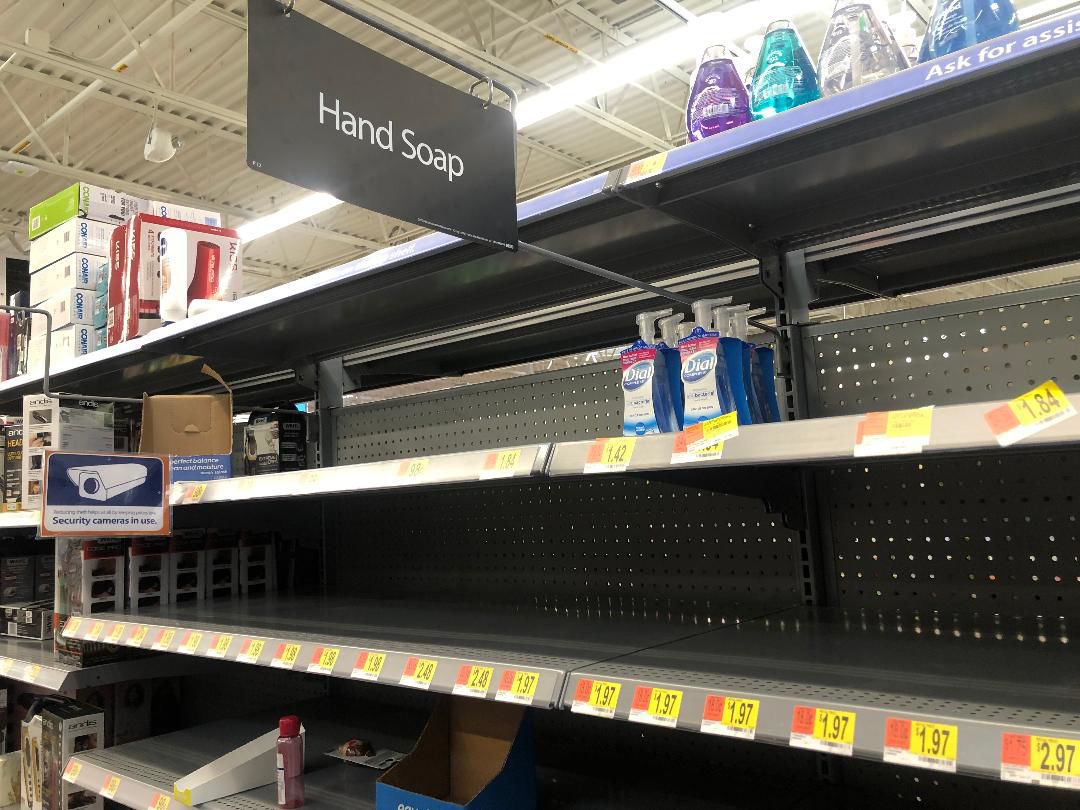
Fight or flight isn’t a great mindset to be in when making decisions (retail or otherwise), but it’s what lies behind the compulsion to panic buy months’ worth of toilet paper, soap, frozen pizzas, and other things we believe will provide some kind of insulation.
When the tools we’ve got to fight a mysterious and devious foe (hand washing, elbow sneezing) don’t feel real or powerful enough, doomsday prepping can help provide a critical illusion of control.
Once we’ve started buying in, though, the momentum can become a monster of its own – and lead to fist fights in Costco.
“We get into this kind of weird version of keeping up with the Joneses. If everyone is stocking up on toilet paper, I need to stock up on toilet paper. If everyone else is stocking up on hand sanitizer, I have to,” said Mesnikoff, a former critical care and hospice chaplain who began working with people in high-stress environments and traumatic stress more than 25 years ago as an EMT. “But that also makes it harder for everyone else.”
So his advice is wash your hands, don’t touch your face, and before you join the frenzy maybe take a pause and really think about the metrics.
“Step back and you realize that taking care of our community takes care of us too. If everyone has access to hand sanitizer, that probably means all of us are safer together,” he said. “So just take a break, take a breath … in a place that’s at least six feet from everyone else.”

The coming election and mischief in the making | SONDERMANN
Eric Sondermann
eric-sondermann@coloradopolitics.com
Updated 3 days ago
America’s tribalism is such these days that we struggle to even agree on the basic rules. Elections have always been hotly contested. As the saying goes, “Politics ain’t beanbag.” The process has long involved elements of nastiness and underhanded conduct....
Colorado Politics Calendar Aug. 31-Sept. 6
Rachael Wright, Special to Colorado Politics
rachael.wright@coloradopolitics.com
Updated 3 days ago
CoPo’s weekly political calendar will help you find political and public-policy events throughout Colorado. It includes candidate and issue campaign events, public policy meetings, court hearings, state and local party conventions, assemblies, debates, rallies, parades, speaking engagements, traveling dignitary appearances,...
Tancredo in Running for Dept. of Ed. Position | A LOOK BACK
Rachael Wright, Special to Colorado Politics
rachael.wright@coloradopolitics.com
Updated 3 days ago
Forty-five years ago this week: “I know that my name has been placed before the Secretary of Education, and I know that I’m one of three or four being considered for the Department of Education’s Region 8,” said state Rep....
Colorado measure adding ID checks to mail-in voting qualifies for ballot
Marissa Ventrelli
marissa.ventrelli@coloradopolitics.com
Updated 13 hours ago
A ballot initiative that would require voters to include additional information on mail-in ballots has qualified for the November election, according to the Secretary of State’s Office. Backed by El Paso County Treasurer Chuck Broerman and former Deputy Secretary of...
Colorado election website error exposes personal data of confidential voters
Marissa Ventrelli
marissa.ventrelli@coloradopolitics.com
Updated 14 hours ago
A system update accidentally lifted protections on confidential records in Colorado, exposing dozens of voters’ personal information, according to the Secretary of State’s Office. The limit that normally blocks access to confidential voter profiles was inadvertently disabled during an update...
PUC adds weekly comment after killing private talks
Scott Weiser
scott.weiser@gazette.com
Updated 15 hours ago
The Colorado Public Utilities Commission will take public comment at the start of every commissioner’s weekly meeting beginning Sept. 9 as part of its new transparency mandate, the commission announced, expanding a slot previously limited to the second Wednesday of...
10th Circuit overturns framework for sentencing probation violators by 11-1
Michael Karlik
michael.karlik@coloradopolitics.com
Updated 15 hours ago
In a rare decision by all 12 of its full-time judges, the Denver-based federal appeals court ruled in a lopsided vote on Friday that one of its members created a sentencing process for probation violators that was out of step...

Federal judge dismisses excessive force lawsuit against Colorado Springs, officer
Michael Karlik
michael.karlik@coloradopolitics.com
Updated 14 hours ago
A federal judge concluded last week that a Colorado Springs police officer could not be held liable for shooting a suspect three times after the man menaced two victims with a gun and fled the scene. Al’morion Germany was involved...
DeFlock started from one man’s curiosity — now Flock cameras are a midterm issue
Claire Carter
claire.carter@washingtonexaminer.com
Updated 18 hours ago
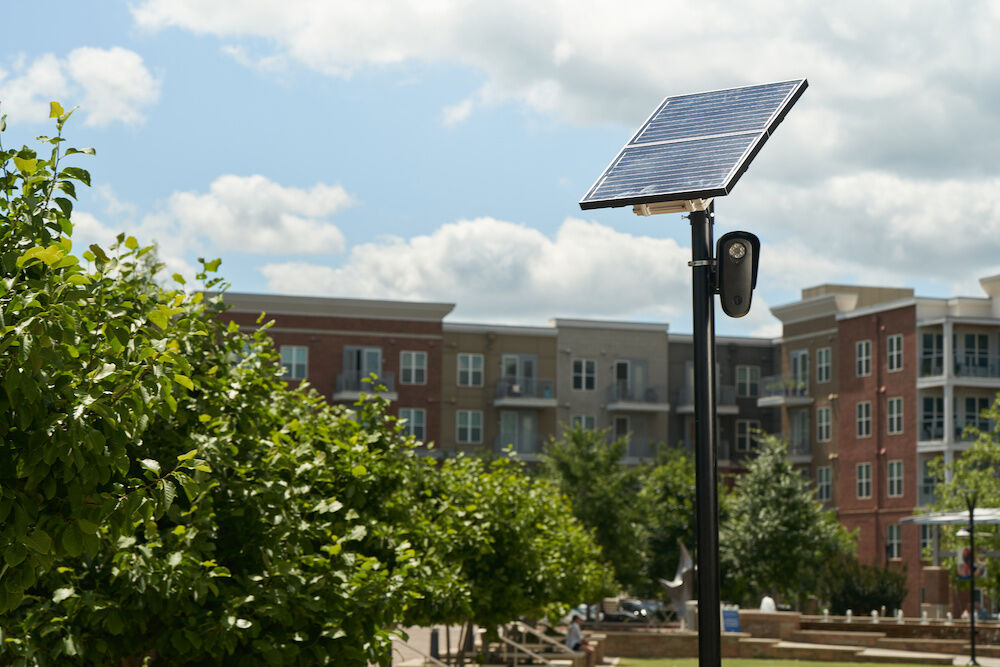
Will Freeman wasn’t looking to start a national movement when he launched DeFlock after noticing Flock Safety’s automatic license plate readers along the side of the road. The software engineer was driving across the country in 2024 when the cameras...

Aurora student journalist cleared of disciplinary charges after ignoring ‘gag order’
Kyla Pearce
kyla.pearce@gazette.com
Updated 15 hours ago
A Community College of Aurora student who accused the college of putting an “unconstitutional gag order” on his student-run publication was cleared of disciplinary charges against him. CCA student Andrew Green tried to register his independent student publication, called “FoxTalk,”...
PREV
PREVIOUS

Colorado House introduces resolutions to pause session and seek Supreme Court guidance
The Colorado House has taken the first step to shutting down business for two weeks in light of the growing COVID-19 outbreak: a resolution to pause the session and a request to the Colorado Supreme Court on a constitutional question about what happens when they come back. House Joint Resolution 1007 is a simple one-pager […]

Colorado General Assembly meets in rare Saturday session, then takes historic 2-week pause
The Colorado General Assembly met Saturday to work through as much as they could before enacting an unprecedented two-week shutdown over concerns for public health and tied to the novel coronavirus, or COVID-19, pandemic. But as is often the case, the unusual Saturday session was not without drama and politics. Six House members – half Democratic, […]