

Legislative emergency response team meets to discuss coronavirus action plan
A quasi-legislative committee dedicated to emergency planning during a disaster declaration met for the first time Wednesday morning to review the General Assembly’s plans and to figure out what they should be doing. Among the advice they got from a state public health official: don’t overreact.
The Legislative Emergency Preparedness, Response and Recovery Committee, known as LEPRRC – or the more unfortunate shorthand, “leprosy” – met with state public health and public safety leaders as well as staff from legislative services agencies Wednesday.
Among their questions, which echoed those from the legislature’s executive committee the day before: what should they be doing in light of Gov. Jared Polis’ declaration of a state of emergency on Tuesday, and what their authority was to enact procedures.
The declaration, which is considered to be an executive order, is tied to growing concerns about the spread of the novel coronavirus, COVID-19.
As of Tuesday night, the state had 17 presumed positive cases, including five more cases on Tuesday, although definitive results from the Centers for Disease Control and Prevention have been slow to come.
Public health experts said Tuesday that the number of presumed positive cases will increase as the state increases testing, including the opening of a drive-up testing center at 8100 E. Lowry Blvd. in Denver, scheduled to open Wednesday. Those who should be tested must bring a doctor’s order with them, according to public health officials.
The LEPRRC committee, which includes four lawmakers, made no recommendations on the legislature’s continuity of operations plan, which governs what the General Assembly does during an emergency and which depends on whether lawmakers are in session or not.
The committee and operations plan are governed by a 2008 statute, as well as in response to Joint Rule 44, which is triggered when the governor declares an emergency due to a public health crisis. But the governor’s declaration on Tuesday was verbal, which led both the Executive Committee of the Legislative Council (the six leaders of the General Assembly) and the LEPRRC to question whether they needed it in writing.
That’s coming, according to Sharon Eubanks, director of the legislature’s legal services agency. The statute is silent on whether that declaration, an executive order, has to be in written form, Eubanks said, However, Polis’ legal counsel, Jackie Cooper Melmed, told the executive committee Tuesday that a written executive order should be done within the next few days.
The committee also talked to Scott Bookman, director of the state public health lab at the Colorado Department of Public Health and Environment , and the incident commander on the state’s response to COVID-19.
“At what point should we consider that the Capitol is going to be uninhabitable?” asked committee chair Rep. Brianna Titone, D-Arvada. In particular, she asked, is it when someone who works in the statehouse is infected, or if there are infections among people who are in the vicinity of the Capitol.
The team is working on that guidance right now and looking at the experiences of other countries, Bookman said. But he also pointed out that the virus is transmitted by droplets and not airborne. “You have to be within six feet of someone who is actively ill,” he said, so the likelihood of contracting it is low. What works best, he added, is enhanced sanitation and deep cleaning.
If, however, someone tested positive and was symptomatic and was in close contact with someone who works at the Capitol, that would lead to serious conversations on next steps, he said. But they haven’t seen one person infecting large groups of people through casual contact.
Titone pointed out that the lobby outside the House and Senate chambers has a lot of close contact, not just lobbyists but members of the public. There’s a continuous flow of people through that tight area, she said. The Capitol often hosts large groups as well, as was the case on Tuesday, when it was Aerospace Day and the first floor was packed . More days like that are on the schedule.
Bookman said that there is no evidence of community transmission in the Denver area yet, although with more positive tests that kind of transmission becomes more likely. But that risk must be balanced with “maintaining the functions of our society and not overreacting and reacting appropriately. We look at that on a daily basis,” he said.
Among others issues for LEPRRC members was what to do about remote or electronic participation, both by lawmakers and by the public, and where the legislature would meet if the Capitol was declared uninhabitable, which is determined by the CDPHE.
An electronic session – where lawmakers would meet remotely – isn’t feasible, according to the plan and Natalie Mullis, director of the Legislative Council staff.
That was driven home by Manish Jani, the information technology deputy director for the Legislative Council staff, who told the committee Wednesday that the operations plan for a remote session would be too costly and, more important, logistically difficult.
One of the biggest hurdles is in identification of lawmakers. Every participant would have to be authenticated, Jani said, as well as the bill reader, who would act as a sort of presiding officer.
Roll call votes for the House would have to be done individually, he explained. Minimally, every legislator or participant would have to have a computer with a camera or a phone with a camera. Audio quality also would have to be tested to satisfy recording requirements. And then there’s how to handle bill amendments, and the upcoming state budget bill, he said.
“Doable? Yes. Practical? Not so much,” Jani said.
On the issue of public testimony, there are 11 remote sites at college campuses around the state, but it’s questionable on whether they would be available if those colleges were closed due to the emergency.
“It’s pretty much impossible to conduct sessions” using those remote locations, said Rep. Lori Saine, R-Firestone.
What became clear to the members is that they really don’t have much to do right now. “We don’t have the authority to do any planning pre-disaster,” Titone said. She suggested they could run a bill to ask the executive committee authorize more meetings for the LEPRRC in preparation for a disaster, although what that response would look like, beyond the operations plan, was unclear.
Mullis suggested the committee gather data during the emergency, and after that what they would recommend on changing the operations plan and changes to rules or statute that would help improve the plan for future legislators.


Trump lowers flags to half-staff for Dolly Parton: ‘The World loves you’
Naomi Lim
naomi-lim@coloradopolitics.com
Updated 12 hours ago
President Donald Trump is honoring the life of country music legend and philanthropist Dolly Parton by ordering federal buildings across the country to lower flags to half-staff for a week. “Very sad to report that Dolly Parton, one of the...
Ted Cruz suggests GOP realignment coming after Trump leaves office
Emily Hallas
emily-hallas@coloradopolitics.com
Updated 12 hours ago
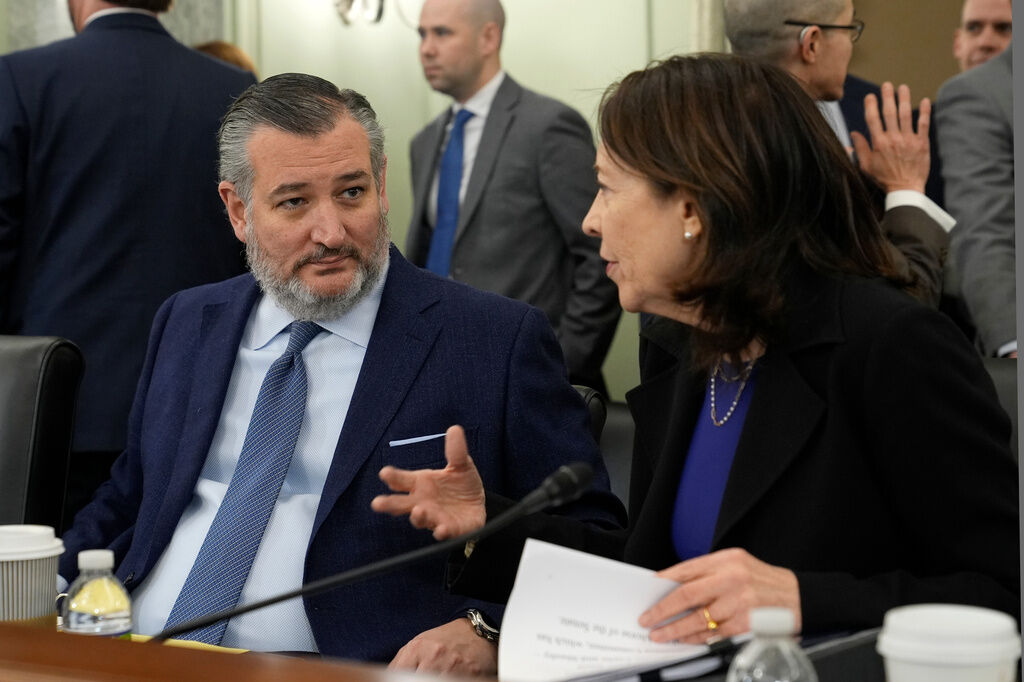
Sen. Ted Cruz (R-TX) on Monday suggested the Republican Party could embrace a directional shift after President Donald Trump leaves office, a transition that promises to leave a gaping hole in the GOP. Cruz is known as a critical ally...
2 Colorado State troopers shot near Woodland Park; suspect killed
DEBBIE KELLEY
debbie-kelley@coloradopolitics.com
Updated 11 hours ago
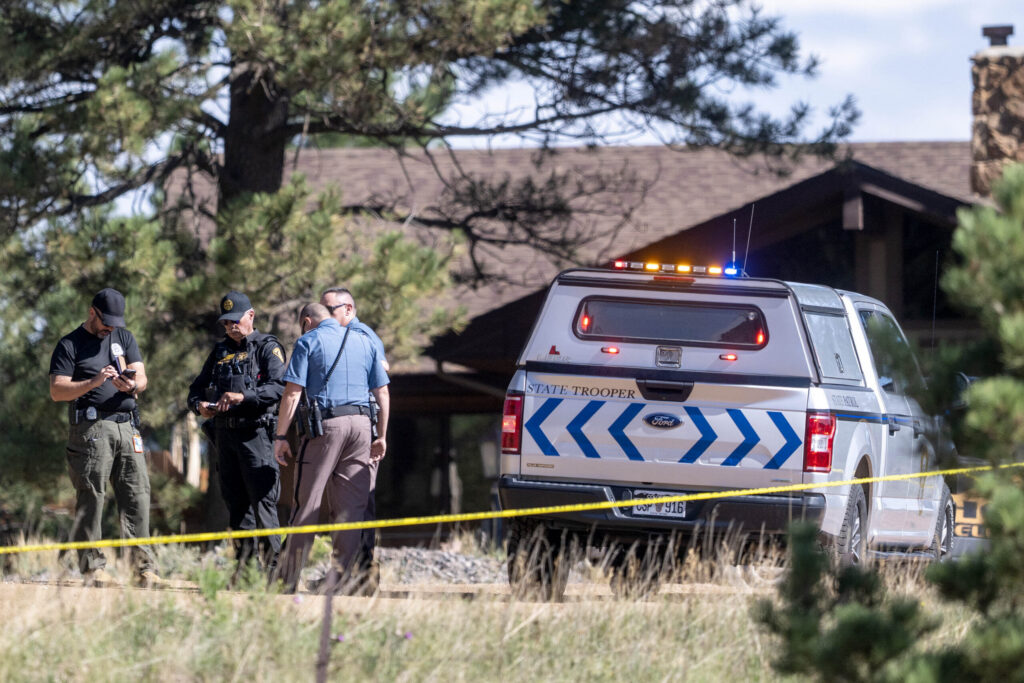
Two Colorado State Patrol troopers were hospitalized, and a suspect is dead after a shooting during a traffic stop Tuesday. The initial incident happened at about 7:15 a.m., when a resident reported suspicious activity in the area near milepost 286...
Aurora moves forward with data center regulations
Kyla Pearce
kyla.pearce@gazette.com
Updated 12 hours ago
The Aurora City Council approved moving forward with two new regulations on data centers and directed staff to come back at the next study session with others. At a council meeting in early August, council members directed city management to...

Aurora City Council considers stricter food truck regulations
Kyla Pearce
kyla.pearce@gazette.com
Updated 12 hours ago
The Aurora City Council is considering passing laws to limit the number of food trucks on properties in the city and how and when they operate. Councilmember Angela Lawson, who sponsored the ordinance, said she understands the importance of food...
Denver murder conviction reversed for incomplete self-defense instruction
Michael Karlik
michael.karlik@coloradopolitics.com
Updated 10 hours ago
Colorado’s second-highest court reversed a defendant’s murder conviction last week because a Denver judge gave an incomplete instruction to the jury about the man’s right to self-defense. Donald R. Gonzales and Gary McLaughlin met up in a Capitol Hill parking...
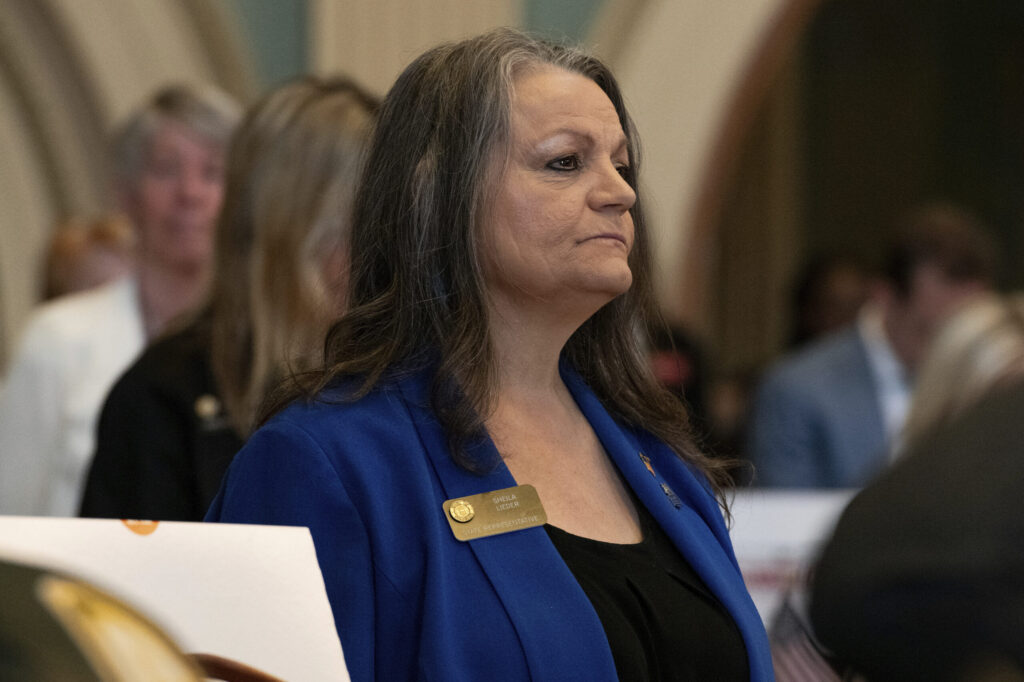
Colorado lawmaker, House leaders named in workplace-retaliation lawsuit
Marianne Goodland
marianne.goodland@coloradopolitics.com
Updated 12 hours ago
A former legislative aide has filed a lawsuit alleging she was mistreated, illegally directed to perform campaign work and harmed by a House leadership structure she charged was fragmented, politicized and ineffective at protecting employees. The lawsuit, filed by Jennifer...

Secret Service confirms awareness of Iranian state media video threatening Barron Trump’s life
The Associated Press
the-associated-press@coloradopolitics.com
Updated 17 hours ago
WASHINGTON (AP) — The U.S. Secret Service has confirmed it is aware that Iranian state media has aired a video that appears to threaten the life of Barron Trump, President Donald Trump’s youngest son. “The U.S. Secret Service is aware...
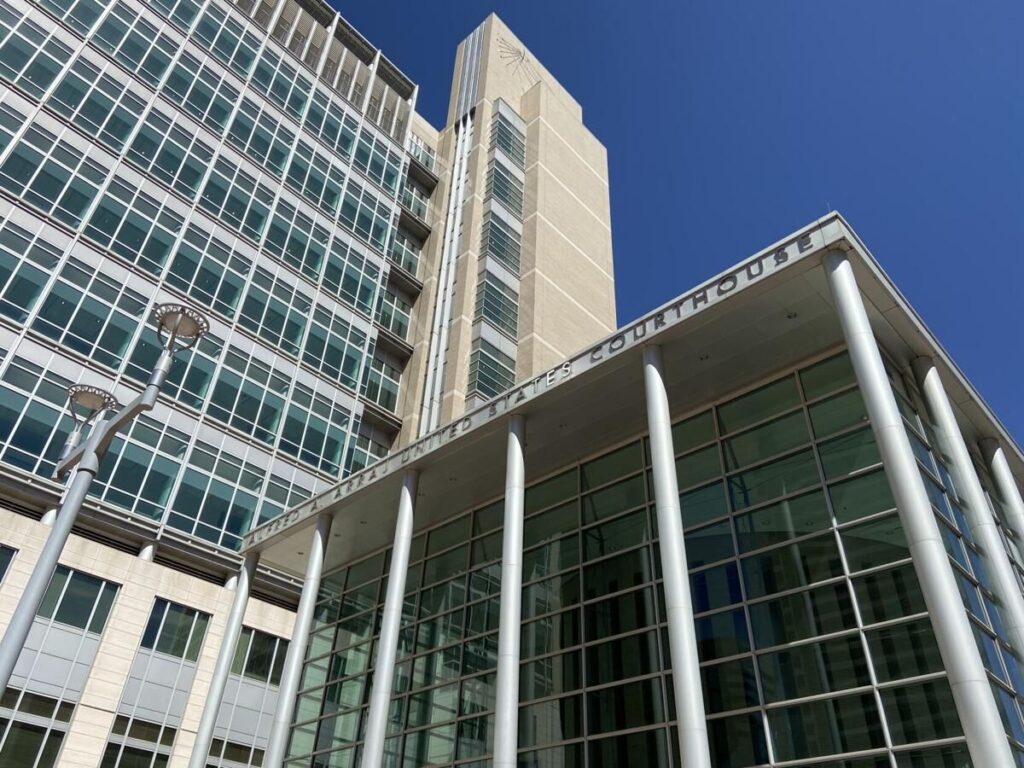
Federal judge hears arguments about Colorado’s 3-day gun purchase waiting period
Michael Karlik
michael.karlik@coloradopolitics.com
Updated 17 hours ago
A federal judge heard arguments on Monday about the constitutionality of a 2023 Colorado law that generally imposes a three-day waiting period on firearm purchases after the initiation of a background check. The test that the U.S. Supreme Court created...
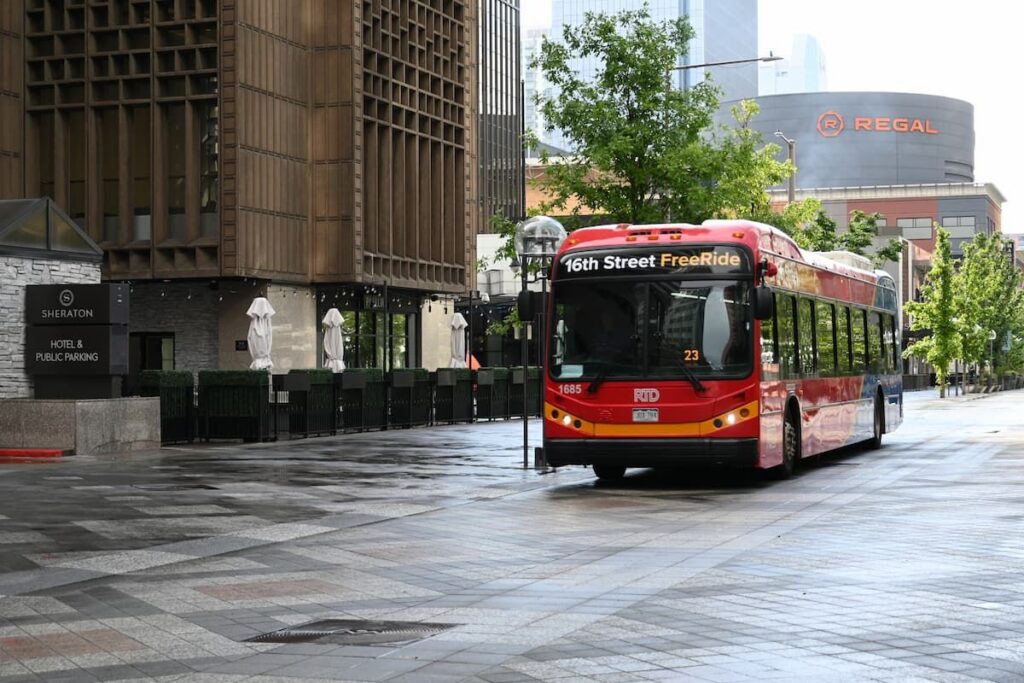
Denver auditor finds oversight failures in $175.6M 16th Street project
Nico Brambila
nico.brambila@denvergazette.com
Updated 11 hours ago
Surprise historic sewer discovery delayed completion a year, cost $18M The Denver Auditor recently found significant oversight and contracting problems with the $175.6 million 16th Street Improvement Project, including an $18 million contract increase and a nearly one-year extension that...
PREV
PREVIOUS

The Palm in Denver has closed, marking the end of the city's foremost power-lunch hot spot
The Palm, a tony chain restaurant that has a franchise in most metropolitan cities and gained renown as a power-lunch watering hole for lawyers, politicos and businessmen, has closed in Denver. Colorado Politics discovered the family-owned restaurant officially closed on Monday, marking the end of its Denver legacy. It isn’t the only franchise that’s closing: The […]
Coronavirus in Colorado: CoPo's Coverage
A history of Colorado’s responses to COVID-19 – from when CDHE reported the risk of a coronavirus spread was low, to legislators’ reactions as Coloradans began to test positive – can be found by perusing this collection of Colorado Politics’ reporting on the novel coronavirus. This collection will be added to as more news inevitably comes.