

Colorado ranks high on list for use of "drug of concern"

Colorado is one of the leading states in estimated usage of kratom, a federally-legal drug that can cause effects similar to opioids and that the U.S. Drug Enforcement Administration has labeled a “drug of concern.”
In a new report from the drug-testing company Millennium Health, 2.3% of anonymized urine samples tested in Colorado between 2017 and 2019 contained kratom, giving the state the fourth-highest positivity rate. Nationally, usage of the substance doubled in that time period.
A U.S. Food and Drug Administration analysis in 2019 found that various kratom products contained “significant levels of lead and nickel at concentrations that exceed safe exposure for oral daily drug intake.” The potential effects include metal poisoning, kidney damage and increased risk of certain cancers among long-term users.
Kratom, a tree native to southeast Asia, is available for purchase through the Internet in powder, capsule and extract form, commonly for purposes of pain management.
The Millennium Health report also noted that drug overdose deaths nationally declined in 2018 due to reductions in prescription-opioid and heroin-involved fatalities. However, synthetic opioid-related deaths are rising. The occurrence of fentanyl in people who also use heroin rose a staggering 6,480% in the Mountain states region between 2015 and 2019.
Drug overdoses are the leading cause of injury-related death, and the synthetic, highly-potent opioid fentanyl accounts for approximately 40% of such fatalities. Fentanyl is also cheap to produce, with the DEA estimating that a price of $3,300 to $5,000 for one kilogram of fentanyl can net a drug trafficking organization up to $2 million.
In its analysis of over 1 million urine tests, Millennium Health found heroin to be “falling out of favor” while methamphetamine use has “exploded” across the country. Among the top 10 states in each category of tested drug use – cocaine, methamphetamine, heroin and fentanyl – there were 24 states across eight regions, suggesting that there is no straightforward regional pattern to illicit drug consumption.
“While shifts in regional patterns may be explained by several factors, the DEA primarily identifies drug trafficking patterns and user preference as driving forces behind regional drug availability,” the report concluded.
Millennium Health report

Appeals court reinstates Garfield County arson charge
Michael Karlik
michael.karlik@coloradopolitics.com
Updated 11 hours ago
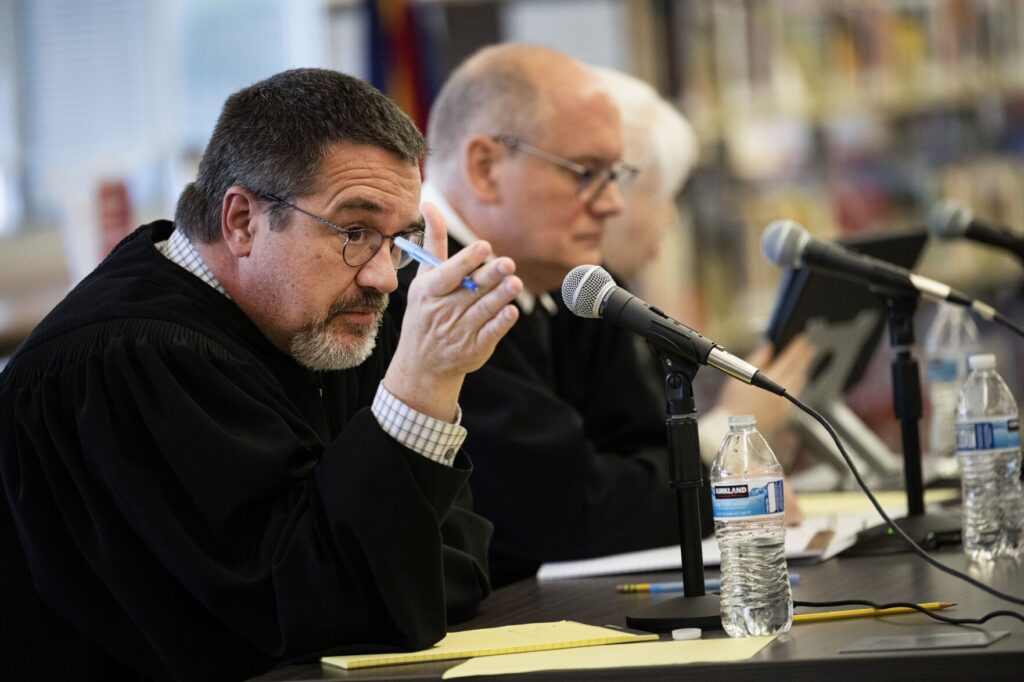
Colorado’s second-highest court reinstated a Garfield County defendant’s arson charge on Thursday, concluding a trial judge improperly credited a witness’s claim that she alone was responsible for starting the fire. A sheriff’s deputy responded to a brush fire near Parachute...

Democratic US Sen. John Hickenlooper qualifies for Colorado primary by petition, will skip assembly
Ernest Luning
ernest.luning@coloradopolitics.com
Updated 10 hours ago
U.S. Sen. John Hickenlooper has qualified for Colorado’s Democratic primary after the first-term incumbent submitted enough valid petition signatures to make the ballot, state officials said. Hickenlooper is facing primary challenges from state Sen. Julie Gonzales, D-Denver, and university professor...
Federal judges rebuke ex-Colorado judicial discipline director for conduct in lawsuit
Michael Karlik
michael.karlik@coloradopolitics.com
Updated 12 hours ago
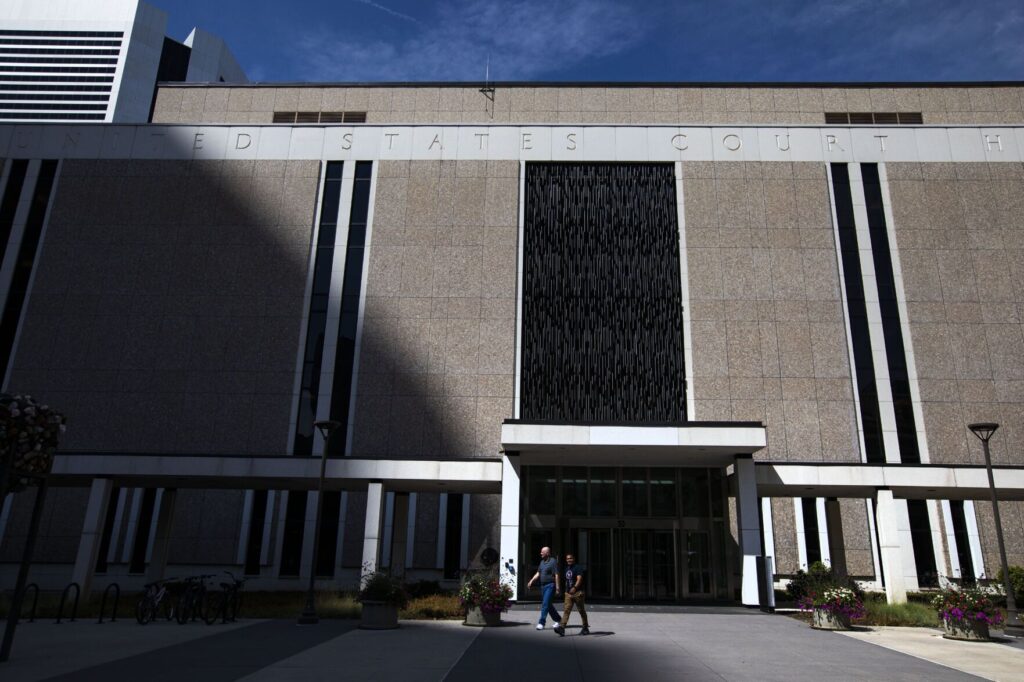
A pair of federal judges expressed a desire on Thursday to break the logjam on a lawsuit by Colorado’s former judicial discipline director against the state Supreme Court and related entities, while simultaneously showing little tolerance for the plaintiff’s scorched-earth...

Democratic bill would let recipients of ‘conversion therapy’ sue Colorado providers with no statute of limitations
Marissa Ventrelli
marissa.ventrelli@coloradopolitics.com
Updated 10 hours ago
Colorado lawmakers have advanced a proposal that would allow people who underwent conversion therapy to sue licensed providers for damages, moving the measure forward on a party-line vote in the House Judiciary Committee. House Bill 1322, proposed by Democratic Reps....
Pinnacol separation bill delayed as Colorado budget remains in flux due to $1.5B deficit
Marianne Goodland
marianne.goodland@coloradopolitics.com
Updated 10 hours ago
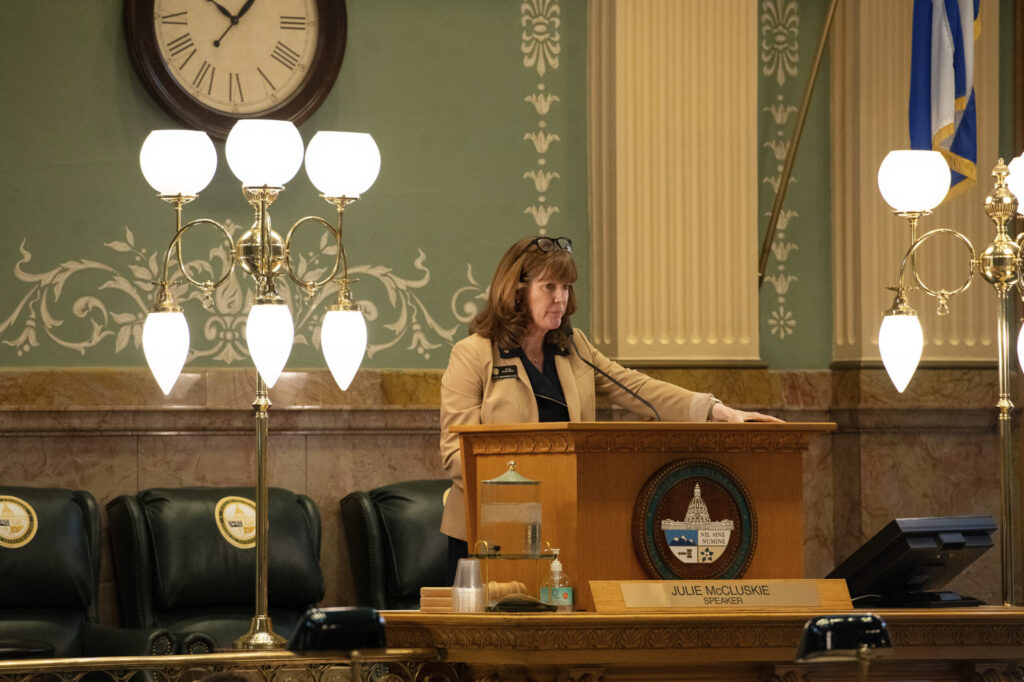
A bill that would allow Pinnacol Assurance to formally sever its remaining ties with the state appears unlikely to emerge anytime soon, as House leaders juggle a massive budget shortfall, unresolved negotiations with key stakeholders, and growing doubts about whether...

100 days until America250: Five host cities unveiled for July 4 celebrations
Emily Hallas, Washington Examiner
emily.hallas.washington.examiner@gazetteedit.wpenginepowered.com
Updated 16 hours ago
America250, the entity tasked by Congress with marking the United States’ semiquincentennial, on Thursday revealed further details about its sweeping plans to celebrate the milestone. America250 chairwoman Rosie Rios launched the official 100-day countdown to July 4, and said the...
U.S. Sen. Michael Bennet qualifies by petition for Colorado’s Democratic gubernatorial primary
Ernest Luning
ernest.luning@coloradopolitics.com
Updated 11 hours ago
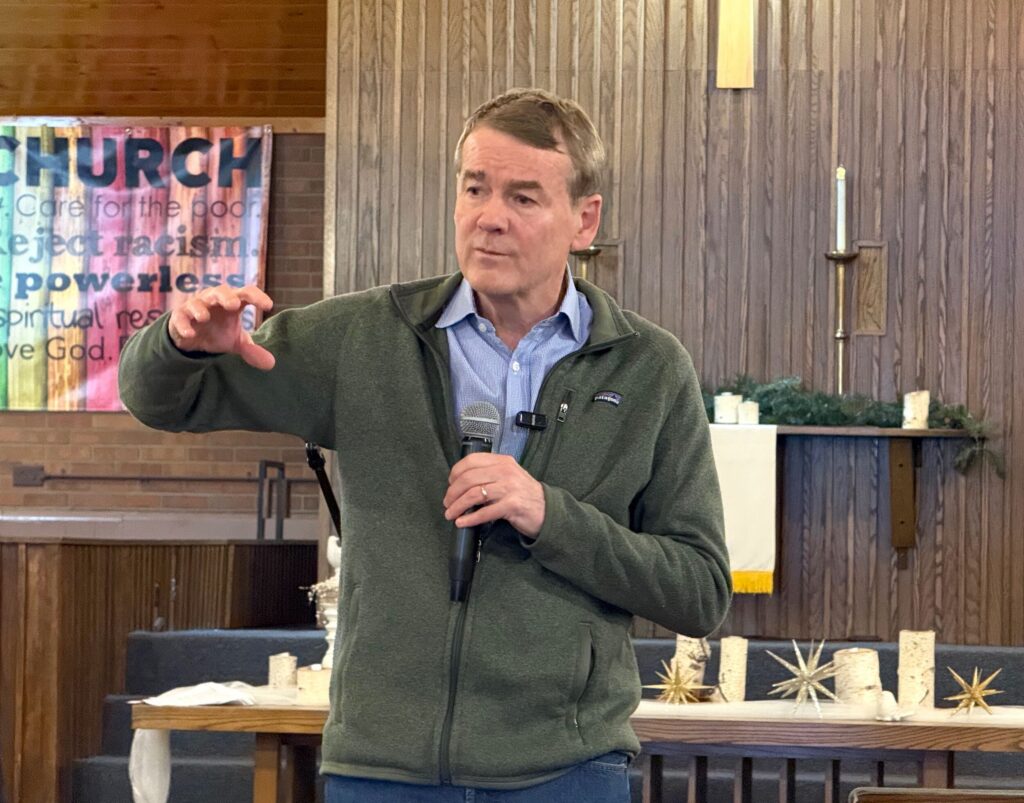
U.S. Sen. Michael Bennet on Tuesday became the first gubernatorial candidate to qualify for Colorado’s June primary ballot after state election officials determined the three-term Democrat’s campaign submitted enough valid petition signatures. Bennet is running against Attorney General Phil Weiser...

Thornton police investigating homicide
Matt Kyle
matt.kyle@denvergazette.com
Updated 12 hours ago
Police in Thornton are investigating a homicide that happened late Wednesday night. Thornton Police Department officers responded just before 11 p.m. near the intersection of East 88th Avenue and Grant Street after a 911 caller reported someone bleeding. Upon arrival,...
Colorado legislators consider $500 million in general fund cuts amid $1.5 billion deficit
Marianne Goodland
marianne.goodland@coloradopolitics.com
Updated 1 day ago
The legislature’s Joint Budget Committee is working through a list Wednesday of about 150 suggestions to cut as much as $1.5 billion in general fund dollars out of next year’s budget. The largest on the list prepared by JBC staff...
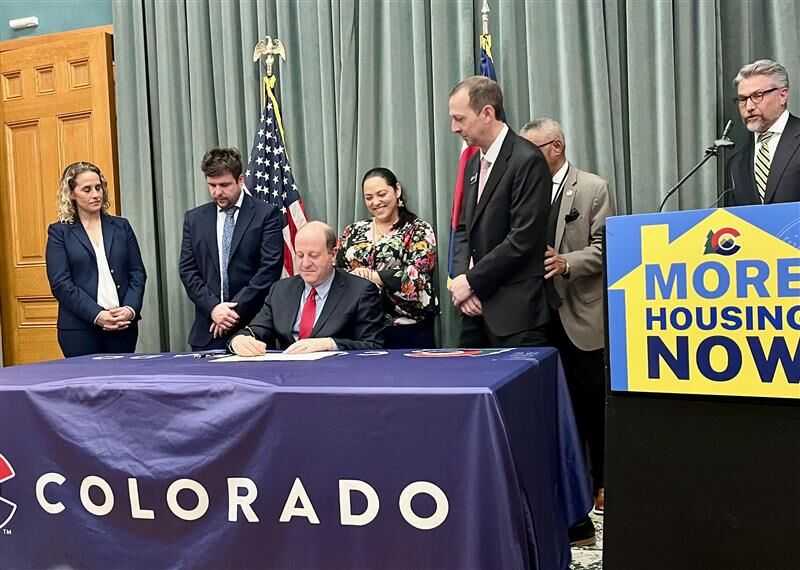
Gov. Jared Polis signs housing bills amid push for ‘affordability’
Marissa Ventrelli
marissa.ventrelli@coloradopolitics.com
Updated 11 hours ago
Gov. Jared Polis held the first public bill signing of the 2026 legislative session on Wednesday on a pair of housing measures that, sponsors said, are aimed at affordability. Part of Democrats’ “affordable” housing package this year, the bills —...
PREV
PREVIOUS

State offers new rules to control greenhouse gas emissions
The Colorado Department of Public Health and Environment has proposed new rules to require the reporting of greenhouse gas emissions and the reduction of one such category of gases, known as hydrofluorocarbons. The state’s Air Quality Control Commission, which heard the proposals on Thursday, will schedule a formal rulemaking meeting for May 21. “About a […]

Wildfire mitigation bill advances in House committee
Communities in wildfire-prone areas would be able use a new source of money to apply for federal risk-mitigation grants, according to a new proposal that passed the state House Committee Energy and Environment on Thursday. “Nearly half of Coloradans live in areas at risk from wildfires, a threat that won’t go away unless we act,” […]