

OPINION | Let’s give Coloradans a leg up in challenging corporate wrongdoing

Coloradans share the nightmare experience of being unfairly disempowered by big corporations through forced arbitration and unfair legal terms. Many think forced arbitration clauses and unfair terms are rare but they are found in the fine print of contracts for virtually everything, including nursing homes, childcare, employment, car and student loans, and cell phone agreements. This is why we have sponsored Senate Bill 93 – the Consumer and Employee Dispute Resolution Fairness Act – a bill that will give Coloradans an ethical, fair and transparent process when challenging corporate wrongdoing.
Countless numbers of consumers and employees are forced to bring complaints of arbitration in front of a private arbitrator instead of a judge or jury; unlike court decisions, arbitration may not be appealed. This means that when products or services fail or cause harm in some way, it’s extremely difficult for consumers and employees to hold corporations responsible for the wrongdoing. Corporations write forced arbitration clauses into contracts presented to a worker or consumer in a “take it or leave it” contract for a service, product or a job, and consumers must effectively opt out of the marketplace or job market in order to keep their basic right to a day in court.

A resident in Boulder encountered these fine print clauses when her health insurance company tried to hide its refusal to cover her broken jaw surgeries, despite her policy specifically covering accident-related injuries. A veteran, mom of two, and college student from Parker had her career and financial stability derailed when her private nursing college expelled her for a mildly-critical online review, also refusing to refund a penny of her tuition. Another 64,000 Coloradans fell victim to Wells Fargo’s scheme to open unauthorized accounts, charging many a fee for those fake accounts.
Examples of forced arbitration also include numerous cases of sexual harassment. In the wake of the #MeToo movement, women feel empowered to come forward with their cases of sexual assault and harassment in the workplace, but many have already renounced their right to a day in court without realizing it. One of the most well-known examples is former Fox News host Gretchen Carlson’s case against Fox Chairman and CEO Roger Ailes. These unfair legal terms provide corporations the ability to hide a pervasive culture of sexual harassment at the workplace.
While arbitration was designed to be a process in which two equally powerful parties could resolve disputes, it is now used by corporations to stack the deck against everyday folks. The problems inherent in arbitration for consumers and employees include:
? Possible Bias. There are few ethical standards for arbitrators like judges, making it possible for arbitrators to have conflicts of interest (even though some have adopted their own rules).
? Secrecy. There are no public records of arbitration, so it’s impossible for consumers to research patterns of bad behavior that could help hold corporations responsible for wrongdoing.
? Unfair Terms. When consumers have little to no input in drafting contracts, corporations often load them with terms aimed at deterring consumers or employees from bringing claims forward.
Senate Bill 93, the Consumer and Employee Dispute Resolution Fairness Act, will ensure that each Coloradan is provided a fair and transparent process in the chance that they may need to challenge corporate wrongdoing. If passed, it will level the playing field by establishing:
? Ethical Standards. Defined ethical standards will assure that arbitrators will conduct proceedings without prejudice, bias, or harassment because they will be required to disclose family, social, political, financial, or other interests or relationships that could influence their conduct or judgment.
? Disclosures: Consumers and employees who are going into forced arbitration will be able to learn whether a corporation has a history of similar wrongdoing through disclosure of information about the arbitration services providers.
? Unenforceable Unfair Terms. Corporations frequently insert unfair terms to discourage claims made against them, such as requiring travel out of state for arbitration proceedings, or that one part unilaterally may select the arbitrator. Senate Bill 93 would make this practice unenforceable.
Colorado consumers and employees deserve a fair shake when holding corporations responsible for substandard services, faulty products, or hostile work environments. We urge our elected colleagues to vote yes on Senate Bill 93.
Senate Majority Leader Steve Fenberg and state Sen. Mike Foote represent Boulder County.


Hunting is a privilege, not a constitutional right | GUEST COLUMN
Colorado Politics
colorado-politics@coloradopolitics.com
Updated 8 hours ago
By Roland Halpern Colorado voters may soon be asked to place hunting and fishing in the state constitution. Proposition 302 would establish the right to hunt, fish and take wildlife using “traditional methods,” while declaring hunting and fishing are the...

DEA’s Miguel Chino describes Colorado’s place on the ‘fentanyl pill superhighway’ | The OpEdge Podcast
Tony Olivero
tony.olivero@gazette.com
Updated 16 hours ago
Miguel Chino, Acting Special Agent in Charge of the Drug Enforcement Administration’s Rocky Mountain Field Division, joins The OpEdge to paint the picture of Colorado’s place on America’s “fentanyl pill superhighways.” Chino updates Gazette and Colorado Politics Deputy Opinion Editor...

A right to buy a product? | Hal Bidlack
Hal Bidlack
hal-bidlack@coloradopolitics.com
Updated 1 day ago
A recent story in Colorado Politics caught my eye, as I learned of a “citizen initiative” that has qualified for the November ballot. It seems supporters of Initiative 177 have collected enough signatures, 146,165 legitimate ones out of a total...

Fourteen years after Aurora — we can’t afford to go backward | GUEST COLUMN
Colorado Politics
colorado-politics@coloradopolitics.com
Updated 1 day ago
By John Hickenlooper and Gabby Giffords Two Saturdays ago, a gunman shot and killed three people and wounded several others in Twin Falls, Idaho. This latest deadly shooting comes only days after we remembered the lives we lost 14 years...

A daring and fearless rescuer — is afraid of a debate | Dick Wadhams
Dick Wadhams
dick-wadhams@coloradopolitics.com
Updated 4 days ago
Victor Marx, the Republican nominee for governor who says he can exorcize demons and who claimed he has fearlessly rescued 45,000 women and children during 150 “high-risk” missions around the world, appears to be intimidated by the notion of debating...

Colorado’s ballot-initiative process again a battleground for deep pockets, special interests — not the people | Miller Hudson
Miller Hudson
miller-hudson@coloradopolitics.com
Updated 2 days ago
The Oxford English Dictionary defines a constitution as, “The set of fundamental principles according to which a state is constituted and governed, a body of rules prescribing the major elements of the structure and activities of any organization.” Somewhere in...

Proposed EPA changes could save truckers billions | Rachel Gabel
Rachel Gabel
rachel-gabel@coloradopolitics.com
Updated 4 days ago
Agriculture is in distress across nearly every segment across much of the nation, and certainly to a more dire degree in the western United States. If it were not a historic drought, some pressures could be eased. Others can be...

Colorado Democrats, your time is coming | Jon Caldara
Jon Caldara
jon-caldara@coloradopolitics.com
Updated 4 days ago
Hey, Colorado Democrats! All the fun you’ve had watching Republican dysfunction in Colorado for the last 20 years was just a preview of what is about to happen to you. The Colorado Republican Party no longer exists as a competitive...

Perspective: Hunters and anglers are pushing back
Chris Dorsey
chrisd@gmail.com
Updated 2 days ago
For generations, Coloradans hunted elk, caught trout and managed wildlife without consulting a constitutional attorney. That was before wildlife management became a recurring statewide election issue, replete with consultants, national pressure groups and enough political mail to denude an aspen...
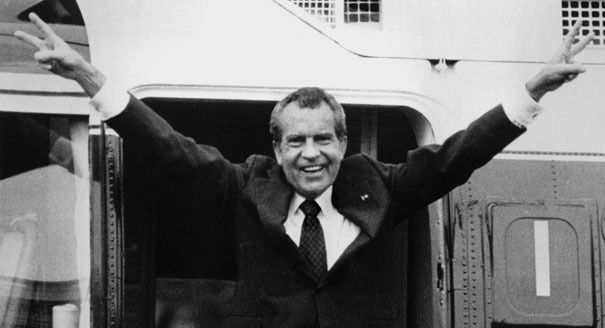
The relevance of Watergate more than a half-century later | SONDERMANN
By Eric Sondermann
by-eric-sondermann@coloradopolitics.com
Updated 7 days ago
It was the scandal for which all other scandals are now named. In June 1972, a small group of Cuban burglars with high-level connections broke into the headquarters of the Democratic National Committee. Those headquarters were located in the Watergate...
PREV
PREVIOUS

CALDARA | For real local control over utilities — let consumers choose
Jon Caldara Our progressive governor is from Boulder. So is our progressive attorney general, secretary of state, speaker of the House, senate majority leader. Is it any wonder why our state is turning into Boulder? I lived in Boulder since before it was elitist. I learned the hard way what “Boulder values” now mean. It’s […]

HUDSON | Hard work trumps hubris on a successful campaign
Miller Hudson When you spend your adult life active in politics, you inevitably encounter other activists, a few prominent but most invisible, who leave an indelible impression. You also become privy to bits of the story that puzzle the media. Why, for example, did Federico Peña’s first campaign for mayor in Denver deploy those eye-catching […]