

Denver considers ‘gun court’ to address rise in youth gun violence

Four days before Amanda Sandoval kicked off her 2019 campaign for Denver City Council, she was held at gunpoint in her driveway by two teenage brothers.
The young Latinos had no family, she said, and had been kicked out of the Denver Public School system.
Still, she said holding back tears, “I am not the victim. It happened to me, but they are the victims of the system.”
The councilwoman’s personal experience with youth gun violence was publicly revealed for the first time on Wednesday at a nearly two-and-a-half hour safety committee meeting during which Denver’s Office of the District Attorney, Denver Police Chief Paul Pazen and officials from the Hancock administration pitched a new approach to addressing the rise in youth gun-related crimes in Denver.
Between 2016 and 2019, the city has seen a 160% increase in juveniles charged with possession of a handgun, according to court statistics. Last year, five kids were charged with first-degree murder.
To lower these figures, the new idea, based on a model in Mobile, Ala., is to create a specialized “gun court” within Denver’s judicial system wherein a judge, prosecutors, public defenders and probation officers work together to treat – not punish – first-time juvenile gun offenders.
The goal is to prevent them from committing another gun-related crime and potentially living a life behind bars.
The specialized court would work similarly to other problem-solving courts within the city, such as ones for substance abuse that help rehabilitate offenders and keep them out of the justice system. The program would fast-track cases that can sometimes take weeks or even months to take up and enroll young people and their families in an intervention program that could last from six months to a year, depending on history and performance in the program.
As part of that program – which would be open to youth under 18 who are charged with possessing a handgun – there would be a five-week probation period serving 12 kids at a time that would include counseling, education, community service, random drug screenings, among other components.
Some of the concepts covered in the program would include victim empathy, self-care, legal and community consequences of crime, and the importance of positive peer relationships.
Incentives would be a shorter probation period, not going to juvenile hall and receiving gift cards for “working hard and demonstrating compliance,” according to city documents. There would still be punishment for poor-performing kids such as additional community service, earlier curfews, house arrest and detention.
“This program has a restorative justice lens,” said Shawn Cohn, chief probation officer at Denver Juvenile Probation. “The last thing we want to see happen to young people is for them to end up in the adult system.”
But Denver City Council members and local advocates weren’t convinced that this kind of intervention is addressing the root causes, at least on its own.
“To think that serving 12 participants is going to get us there is a slap in the face,” said Councilwoman Stacie Gilmore, who represents northeast Denver, including Montbello and Green Valley Ranch, two of the neighborhoods most affected by youth gun violence.
She said the approach seems to be “dancing around the issue” by trying to address it through the justice system rather than “pulling those layers back and addressing our families’ health.”
Youth have said they need safety at home, in school and in the community, she said. “Gangs exist because they’re a safe place for our children to be – because they feel protected.”
Gilmore said she is “begging” for more money and dedicated resources for her district, including financial literary courses, workforce development, access to health care, counseling, compassion and love.
Jonathan McMillan, who has worked to reduce youth violence in Denver for decades, said he “implore[s] everyone in this room to dig in a bit deeper and what can we do to make these kids feel like they’re heard, to know they’re understood.”
Councilwoman Robin Kniech thought everything discussed was necessary intervention, but incomplete.
“We want an answer from outside the system,” she said, suggesting the city identify gaps in social services and add resources for family connections, youth-led and community-led solutions.
Councilman Paul Kashmann, who chairs the safety committee, said he was “pleased” with some of the public safety solutions presented, but that “dollars outside that realm are critical.”
The DA’s program is still in the embryonic phase and likely won’t come to fruition without funding the Hancock administration and City Council.
Nevertheless, Sandoval said, the bottom line is clear: “Our youth are needing help.”



Overdose deaths from opioids dip in America — but not in Colorado, study says
Jacob Mauk
jacob.mauk@denvergazette.com
Updated 5 hours ago
Overdose deaths from opioids rose in Colorado, diverging from the national trend, which has been decreasing, according to a new study from a think tank. In its new report, the Common Sense Institute said synthetic opioid overdose deaths in Colorado...

Colorado voters will decide whether transgender students can join girls’ sports
Marissa Ventrelli
marissa.ventrelli@coloradopolitics.com
Updated 7 hours ago
A ballot initiative that would require student athletes to only join sports teams that correspond to their biological sex has qualified for the November ballot, the latest development in the culture war being waged in school districts, in the courts...

Error-prone Douglas County judge triggers another reversal of criminal convictions
Michael Karlik
michael.karlik@coloradopolitics.com
Updated 10 hours ago
Colorado’s second-highest court overturned a defendant’s Douglas County convictions on Thursday due to the error of a judge whose actions have triggered a disproportionate number of reversals to convictions and sentences in recent years. Since 2021, the Court of Appeals...
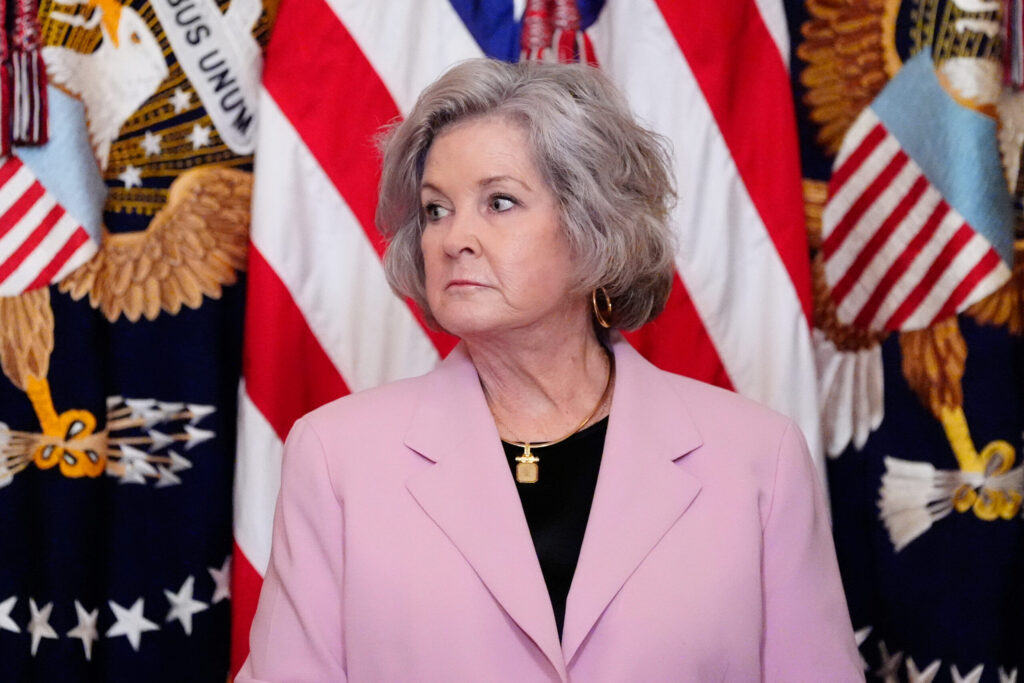
Susie Wiles diagnosed with ‘early stage’ breast cancer: Trump
David Zimmermann Washington Examiner
davidzimmermannwashingtonexaminer@wpstage.coloradopolitics.com
Updated 12 hours ago
President Donald Trump announced White House chief of staff Susie Wiles has been diagnosed with “early stage” breast cancer and that she decided to take on the illness immediately. Wiles will not step down from her administrative role at this...

Hacked crosswalks in Denver sound anti-Trump messages
Deborah Grigsby
deborah.smith@denvergazette.com
Updated 6 hours ago
Denver pedestrians got a surprise this weekend when the audio messages from push-button speakers on some crosswalks were mysteriously replaced with anti-President Donald Trump messages. “The walk signal is on, Trump … (reference to the Iran school that was bombed),”...

Federal judge formalizes injunction blocking USDA’s ‘pilot project’ for Colorado food assistance
Michael Karlik
michael.karlik@coloradopolitics.com
Updated 10 hours ago
A federal judge formalized his order on Monday to prevent the U.S. Department of Agriculture from requiring Colorado to participate in a food assistance “pilot project,” finding that it violates the law, the U.S. Constitution, and “the bounds of reasoned...

Colorado justices speak about inner workings of court, analysis of appellate opinions | COURT CRAWL
Michael Karlik
michael.karlik@coloradopolitics.com
Updated 15 hours ago
Welcome to Court Crawl, Colorado Politics’ roundup of news from the third branch of government. Members of the state Supreme Court provided an inside look at the workings of their institution, and a Colorado Politics analysis found that some appellate...
Appeals court finds no requirement for different judge to handle attorney-client conflict hearings
Michael Karlik
michael.karlik@coloradopolitics.com
Updated 16 hours ago
Colorado’s second-highest court rejected a defendant’s argument on Thursday that a judge improperly heard about a potential conflict between himself and his lawyer right before sentencing, and the man’s reaction could have “tainted” the sentencing decision. In September 2023, Anthony...

3,800 Colorado workers are on strike at JBS, one of the largest meatpacking plants in the US
Brittany Peterson
brittany.peterson@associatedpress.com
Updated 9 hours ago
GREELEY, Colo. (AP) — About 3,800 workers at one of the nation’s largest meatpacking plants went on strike Monday in Colorado in what union representatives said was the first walkout at a U.S. beef slaughterhouse in four decades. Hundreds of...
The influencers? Some Colorado appeals judges outpace colleagues in setting legal precedent
Michael Karlik
michael.karlik@coloradopolitics.com
Updated 15 hours ago
A handful of judges on Colorado’s second-highest court are producing substantially more precedent-setting opinions than their colleagues, which create binding interpretations of the law that reach beyond individual cases. The Court of Appeals issues approximately 1,700 opinions each year. A...
PREV
PREVIOUS

American Indian College Fund announces STEM scholarship for women
The American Indian College Fund on Thursday announced a new scholarship program for women earning college degrees in the STEM fields of science, technology, engineering, and math. The four-year, $300,000 grant will “help grow the number of Native American women – a group with the lowest representation in the STEM fields,” the Denver-based Fund said […]

Study: Daylight savings switch increases fatal car crashes
A new study from University of Colorado researchers has found a 6% rise in fatal car crashes in the United States during the week after the start of daylight savings time. “Prior to 2007, we saw the risk increase in April. And when daylight saving time moved to March, so did the risk increase,” said […]