

THE PODIUM | Victory over slavery underscored republic’s moral basis

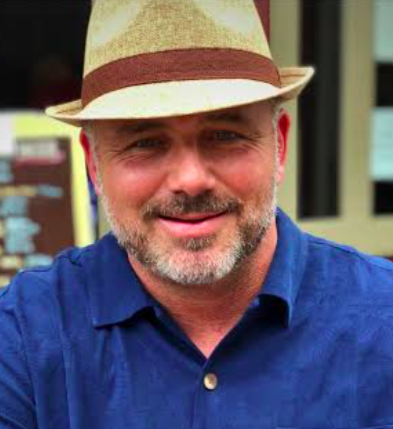
Thomas L. Krannawitter

Beginning Monday, at The Soiled Dove Underground in Denver, and continuing for 10 evenings over 10 months, “Tragedy & Triumph: The Story of Slavery in the United States,” will present the truth about slavery.
Contrary to the claims of progressive opportunists, the story of how Americans came to view slavery as a problem, and then quickly solved it, reveals America’s goodness more than any other subject. It’s an important reason for Americans to love their country.
The principles of the American founding in general, and the United States Constitution in particular, stand in the way of those who want to replace limited Constitutional government with a large bureaucratic state of unlimited power. They have a vested political interest, therefore, in trying to discredit the Founders and the Founders’ Constitution.
Blaming the Founders for the sin of slavery and denouncing the Constitution as irredeemably racist have proven to be effective tactics. Through “Tragedy & Triumph,” however, we in Colorado who still cherish the principles of freedom are pushing back. We hope you join us.
Prior to the American founding, most people in most regimes didn’t acknowledge, or didn’t know, that slavery is wrong, which is why few tried to abolish it. Throughout most of human history, most people did not see slavery as a problem in need of solving.
America, however, was destined for a tragic moral and political confrontation over slavery. America was founded on the simple, yet revolutionary idea that every human being has a natural, rightful claim to his own natural freedom, his own private property, his own person. That idea is incompatible with slavery, which means the American founding is incompatible with slavery.
When Americans today ask why the Americans of 1776 did not immediately abolish slavery, they’re asking the wrong question. The right question is: Why did the Americans of 1776 found a new regime upon the principle that the natural rights of Americans are the same as the natural rights of all human beings, everywhere, and that the only legitimate purpose of government is to protect the natural rights of the citizens who consent to form a government?
No people had ever attempted such a thing. Not in Africa, nor Europe, nor Asia — not in the peaks of Roman or Greek civilization — not anywhere was there a model of establishing a self-governing republic and combining equal protection for equal individual rights with the consent of the governed, all out of dedication to the principle that all men are created equal by nature. That’s American exceptionalism.
The Founders did more than make declarations. From 1776 through the early 1800s, America became the greatest anti-slavery movement in history, as half of the original states abolished slavery, the importation of foreign-born slaves was outlawed, and the spread of slavery to new federal territories was prohibited.
In “Tragedy & Triumph,” we will tell the stories of 19th century changes in technology, economics, political philosophy, Christian theology and biological science that gave rise to new defenses of slavery and corresponding rejections of the Founding principles.
Lincoln, however, would not let those principles be forgotten. He, and others, became guardians of the American idea during America’s darkest hours. In order to preserve the principles of the founding and rise to the standards of those principles, Lincoln led the United States through a terrible, bloody civil war. He was rewarded with a bullet blasted through his brain.
How Americans came to understand the wrongness of slavery — and the decisive, swift actions they took along with the great sacrifices they made to abolish slavery through the 13th Amendment — is an unprecedented, beautiful story filled with heroes, villains, tragedy and triumph.
It’s a story of which Americans should be proud. It’s among the many reasons Americans should love their country. It’s the story that will be told over the course of 10 lively, monthly meetings in “Tragedy & Triumph.”
Thomas L. Krannawitter, Ph.D., is president of Speakeasy Ideas, which is offering a 10-part live learning experience — “Tragedy & Triumph: The Story of Slavery in the U.S.” — beginning Monday, Jan. 27, at The Soiled Dove Underground in Denver. For tickets, event schedules, and more information, please visit speakeasyideas.com/tickets
Colorado Politics Must-Reads:

What courageous citizenship really looks like | Vince Bzdek
Vince Bzdek
vince.bzdek@gazette.com
Updated 4 hours ago
By Vince Bzdek What exactly is courage? Ernest Hemingway famously called it grace under pressure. Mark Twain wrote that “courage is resistance to fear, mastery of fear — not absence of fear.” C.S. Lewis refined that even more: “Courage is...

The coming election and mischief in the making | SONDERMANN
Eric Sondermann
eric-sondermann@coloradopolitics.com
Updated 3 days ago
America’s tribalism is such these days that we struggle to even agree on the basic rules. Elections have always been hotly contested. As the saying goes, “Politics ain’t beanbag.” The process has long involved elements of nastiness and underhanded conduct....
Colorado’s hunting and fishing traditions rest on science, conservation and a proven heritage | IN RESPONSE
Colorado Politics
colorado-politics@coloradopolitics.com
Updated 2 days ago
By John Howard Eric Washburn’s recent column warns Coloradans the right to hunt and fish amendment is a Trojan horse designed to resurrect “cruel” practices voters have already banned and to elevate killing above every other form of wildlife management....
Why does Colorado limit who can safeguard taxpayer dollars? | GUEST COLUMN
Colorado Politics
colorado-politics@coloradopolitics.com
Updated 2 days ago
By Devin Camacho Recently, PNC Bank announced its purchase of FirstBank Colorado. Not only did Colorado lose a local banking option, but nearly 1,000 people lost jobs, with more job losses coming as the big bank now closes branches too....

Colorado’s precarious position protecting from wildfires | Paula Noonan
Paula Noonan
paula-noonan@coloradopolitics.com
Updated 2 days ago
Fourteen firefighters died in the Storm King Mountain fire west of Glenwood Springs in 1994 when 2,115 acres burned. In August 2020, the Grizzly Creek fire burned 32,631 acres along the Interstate 70 corridor east of Glenwood causing mudslides from flooding...

We must deliver on cost of living | GUEST COLUMN
Colorado Politics
colorado-politics@coloradopolitics.com
Updated 3 days ago
By Ryan Gonzalez Insurance premiums are on the rise. Property taxes are increasing. Groceries are becoming more expensive. Gas prices are reaching record levels. Housing costs are becoming unsustainable. These are the concerns I hear from people in my district....

Dan Haley on the role of oil and gas in Colorado’s energy future | The OpEdge Podcast
Tony Olivero
tony.olivero@gazette.com
Updated 3 days ago
Dan Haley, executive director of Coloradans for Responsible Energy Development, joins The OpEdge to discuss the role of oil and natural gas in Colorado’s energy future amid the state’s aggressive push toward “net zero.” Haley tells host and investigative columnist...

Rural hospitals don’t want special treatment, just a chance to care for locals | PODIUM
Colorado Politics
colorado-politics@coloradopolitics.com
Updated 2 days ago
By Kevin Stansbury As chief executive of Lincoln Health, my responsibility is simple: ensure the people of eastern Colorado have access to high-quality healthcare close to home when they need it most. That mission has never been easy. Rural hospitals...
Blue states should avoid disasters | Hal Bidlack
Hal Bidlack
hal-bidlack@coloradopolitics.com
Updated 4 days ago
Back when I was teaching political science at the U.S. Air Force Academy (and amazingly to me, a week from this column’s publication will mark 20 years since my retirement from active duty. Where the heck did that time go?)...
Right-to-hunt ballot measure’s a cruel, anti-wildlife solution to a nonexistent problem | GUEST COLUMN
Colorado Politics
colorado-politics@coloradopolitics.com
Updated 5 days ago
By Eric Washburn I love to hunt. Every year I try to hunt big game in Colorado and waterfowl in Louisiana. This year, I applied for five Colorado big game licenses — elk, deer, pronghorn, moose and bighorn sheep. I...
PREV
PREVIOUS

BIDLACK | Some (unsolicited) advice for my fellow Democrats
Hal Bidlack Well, today the actual trial of President Trump is supposed to begin, and even though the Republican leadership has already told us he will be acquitted, likely without hearing any witnesses, the historic importance of this event is difficult to overstate, at least to a guy like me who used to teach American […]

SLOAN | Much more ado than is due in the impeachment proceedings
Kelly Sloan The impeachment trial is underway, and politics being what it is, the outcome is fairly well established. Still, these things don’t happen very often (though at this rate I estimate impeachment proceedings could become annual events within a generation). So, there are some ancillary areas to comment on, such as the overwrought political […]