

NOONAN | The path to success for a statewide school ballot issue begins in Jeffco
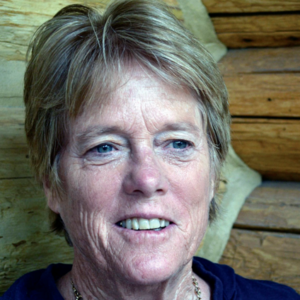

Paula Noonan

Proposition CC advocates, stymied by the apparently irresistible urge of Coloradans to vote against statewide tax increases, should do a deep dive into how school districts pass mills and bonds. They’d get a sense of the arduous effort it takes to educate the public as to the good uses of tax dollars.
Two sets of bond and mill elections in Jefferson County in the early 1990s and the early 2010s are instructive. The common element between the money requests is in the number of times the Jeffco school district asked voters for more money before they got it: three times in each case.
In the 1990s, Jefferson County was in fast growth mode. South Jeffco experienced tremendous, rapid housing expansion and there weren’t enough schools to accommodate all the kids. The district implemented year-round school schedules to get children through the grades. The middle and north part of the county had no need for more schools.
The first bond request to build a new high school and middle school in south Jeffco and to perform upgrades on other schools lost big. Not enough effort went into educating voters. The second attempt lost by only a couple of thousand votes. Progress.
On the third try, the district identified exact capital improvements necessary across the county so every area would benefit from a $150 million bond request. Specific dollars were allocated to teacher salary. Administration dollars, always the object of derision, were constrained. Finally, the bonds and mill increase passed handily.
In the 2010s, the story was exactly the same, except for a reversal of geography. The north section of the county experienced high growth and needed new schools. The request for $300 million in bonds and $39 million for a mill increase passed easily the third time round.
In both cases, on the third go, there was a massive commitment by service organizations, economic development councils, chambers of commerce, district leaders and elected officials to get the taxes passed. The public understood that the money would go to precisely targeted uses, and the district stuck to its promises.
This careful, all-in process is what’s needed to pass statewide tax initiatives. Here are some specific education needs:
- Since 2009, school districts haven’t received enough money to educate all kids to meet the state’s standards, even though that objective is the ostensible goal. Thousands of kids graduate high school requiring remedial work before they can take full-credit college courses. The students have to pay for the remedial classes. At minimum, Coloradans owe these students the cost of the remedial classes and to remain competitive, two years of free community college tuition. Such dollars are specific and productive and can partly fix the education damage done from underfunding public schools.
- Currently, public schools are underfunded by about $3,000 per student when compared to the national average. That means that dollars to support kids who need extra help to meet the state’s education standards are insufficient, and a tax increase could make a big difference.
- Colorado’s public schools don’t pay teachers enough to even vaguely compete with other professions. Many teachers are also burdened by the college debt they take on. New teachers also pay for health care costs and the PERA burden of correcting underfunding in the 1990s and 2000s. A tax request to increase salaries for new teachers and to reduce or eliminate their student debt burden will attract more people to the profession.
Education advocates took their first shot with Proposition CC, which lacked the dedicated commitment of many people, especially in high government office, to its success. To win on the second shot, education advocates should select precise needs for money that Coloradans can collectively agree make sense. They should create a revenue source that addresses those specific needs, whether it’s a sales tax or income tax, as examples. They should insure that the funds will go into accounts that address only those needs, with no mixing into the general fund.
Finally, they’ll need to get every school district, service organization, education association, charter school association, and state government leader all in on the request. Then they’ll get their victory.
Paula Noonan owns Colorado Capitol Watch, the state’s premier legislature tracking platform.
Colorado Politics Must-Reads:

Registered voters on the eve of the 2026 primaries | Cronin & Loevy
Tom Cronin Bob Loevy
tom-cronin-bob-loevy@coloradopolitics.com
Updated 23 hours ago
The Colorado Secretary of State’s Office has published the latest voter registration figures for the state and its counties as of June. Colorado ranks among the highest states for independent, or unaffiliated, voters. Only Alaska and Massachusetts have more. New Hampshire, New Jersey, Maine and Oregon also rank highly. So here...

A room for Sundance, a reality check for big-government Boulder | Jon Caldara
Jon Caldara
jon-caldara@coloradopolitics.com
Updated 3 days ago
There are few things more satisfying to watch than socialists getting mugged by reality. The Sundance Film Festival is invading my hometown of Boulder early next year. Sundance drew 85,000 attendees last year in Park City, Utah. Boulder’s hotel room...
Rep. Jeff Crank thinks Democrats are too focused on Trump, not enough on Colorado Springs | Vince Bzdek
Vince Bzdek
vince.bzdek@gazette.com
Updated 20 hours ago
For U.S. Rep. Jeff Crank, who’s unopposed in the Republican primary for the 5th Congressional District but the main target of both candidates in the lively Democratic primary, the big question in the midterms is not who will stand up...
Does character matter anymore? | SONDERMANN
By Eric Sondermann
by-eric-sondermann@coloradopolitics.com
Updated 4 days ago
The last few weeks have been illuminating in the manner of a headlamp pointing the way to some deep, dark, murky netherworld. Graham Platner, a hero to the populist set on the Democratic side, became his party’s Senate nominee in...

Private equity has no place in health care | GUEST COLUMN
Colorado Politics
colorado-politics@coloradopolitics.com
Updated 3 days ago
By Miah Ntepp Of all the financial pressures placed on working people in this country, the skyrocketing costs of health care rank near the top. As families struggle under the cuts to Medicaid made by the Trump administration, they are...
Some pointed questions for the gubernatorial hopefuls | George Brauchler
George Brauchler
george-brauchler@gazette.com
Updated 4 days ago
Earlier this month, the Republican and Democratic candidates for governor participated in a televised interview moderated by well-known, left-leaning legacy media folks. Predictably, the questions asked of the GOP candidates were more aggressive, pointed, biographical and almost entirely disconnected from...
Chaotic funding throws monkey wrench into governor’s-race money madness | Paula Noonan
Paula Noonan
paula-noonan@coloradopolitics.com
Updated 4 days ago
Chaos Monkey, Inc., gave a trifle $20,000 donation to Rocky Mountain Way (RMW), the independent expenditure committee (IEC) supporting U.S. Sen. Michael Bennet for Colorado governor. But why, Coloradans should ask, would a guy who has assigned his contributor name...

Lindsay Datko on school safety, misconduct and transparency in Jeffco schools | The OpEdge Podcast
Tony Olivero
tony.olivero@gazette.com
Updated 5 days ago
Jeffco Kids First founder Lindsay Datko joins The OpEdge to explore concerns about school safety, staff misconduct and transparency in Jefferson County Schools. Datko tells host and investigative columnist Jimmy Sengenberger why she believes Colorado’s second-largest district has too often...

Candidate’s disturbing anti-animal agriculture history | Rachel Gabel
Rachel Gabel
rachel-gabel@coloradopolitics.com
Updated 7 days ago
Rep. Manny Rutinel has busted out a cowboy hat for campaign photos and has thrown it into the ring to represent Colorado’s 8th Congressional District in D.C. He is endorsed by U.S. Sen. Cory Booker, a New Jersey democrat who serves on the Committee...

Marx, Bottoms, a primary death wish for Colorado GOP | Dick Wadhams
Dick Wadhams
dick-wadhams@coloradopolitics.com
Updated 7 days ago
Colorado Republicans stand on the brink of total irrelevance and embarrassment if they nominate one of the two nonsensical, buffoonish candidates running for governor, Victor Marx and Scott Bottoms. Republicans are already in a very defensive, tenuous position as Democrats...
PREV
PREVIOUS
SLOAN | Kimmi Lewis was at home on the land she represented
Kelly Sloan State Rep. Kimmi Clark Lewis died last week, having received the last rites of the Catholic Church, whose God she devoted her life to serving by being a faithful steward of His land, and a passionate advocate for her fellow stewards. Her passing brought comment from colleagues on both sides of the political […]

OPINION | Let Colorado's D.C. delegation unite to protect our public lands
Jeff Wasden Colorado’s iconic landscapes are a part of who we are as a state. They are essential for our economy and our lifestyles, for clean water and for wildlife, and so much more. For decades, Colorado’s elected leaders have worked together on a bipartisan basis to protect our public lands so that future generations can […]