

Secretary of State’s Office begins post-election ballot audit

Secretary of State Jena Griswold on Friday directed county clerks to begin the audit of a random selection of ballots after this month’s general election.
A press release said that this risk-limiting audit, the only statewide one in the country following most elections, provides a “high statistical level of confidence that the outcome of an election is correct and reflects the will of the voters.”
Colorado conducted its first statewide audit in 2017, covering all counties that used machines to tally their votes.
Two counties, Jackson and San Juan, do not perform an audit because their ballots are hand counted.
The secretary of state’s office randomly chose the ballots for each clerk to review using a 20-digit number, generated from multiple rolls of a 10-sided die.
“If what the audit board reports matches how the voting system tabulated the ballots, the audit concludes,” Griswold’s website explains. “If there are discrepancies, additional ballots are randomly selected to compare until the outcome has been confirmed. If the wrong outcome was reported eventually all of the ballots will be examined and a new outcome will be determined.”
The risk limit is set at 5%, meaning that if an election result was reported erroneously, the audit would catch the error with 95% certainty.
“What distinguishes a risk-limiting audit is it has a large, pre-specified chance of correcting the outcome if the outcome is wrong,” Philip Stark, who designed an system, told The Colorado Statesman in 2014. “These don’t just do a quick spot-check of the function of machines and then stop; instead, they keep looking at more and more evidence until you have convincing statistical evidence that if you keep looking at more, you’re just going to confirm the answer that you’ve already got.”
Washington County Clerk and Recorder Annie Kuntz, whose audit occurred on Friday, described performing the audit every election for the past few years.
“One judge reads the answers, how the person voted. And the other judge enters it into the database,” she said. “It probably took 10, 15 minutes.”
Kuntz called the process “pretty painless.” From a county of 1,790 voters, she had only 11 ballots to review.


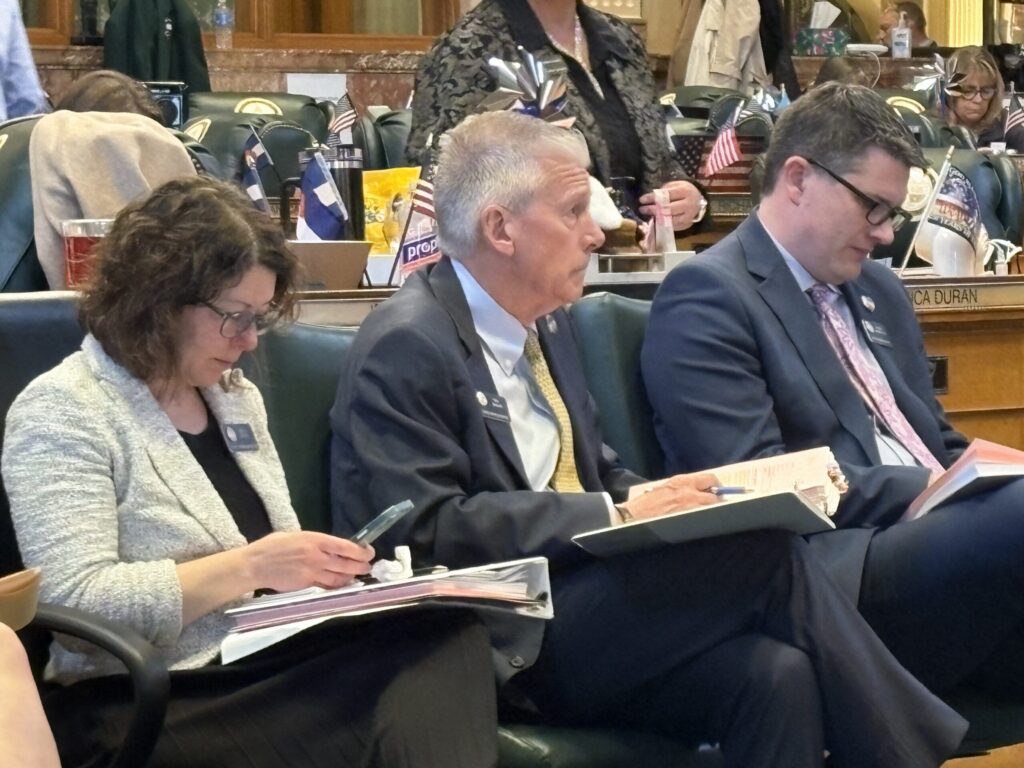
Colorado lawmakers grapple with spending cuts amid $1 billion-plus deficit
Marianne Goodland
marianne.goodland@coloradopolitics.com
Updated 6 hours ago
The battle over Colorado’s budget for next year — which stalled in the House over a procedural maneuver — entered a more difficult phase on Thursday, when legislators grappled with hundreds of millions of dollars in proposed reductions to balance...

New rules for private judges in Colorado include discipline oversight, campaign contributions
David Migoya
david.migoya@gazette.com
Updated 9 hours ago
The Colorado Supreme Court recently determined the state’s private judges — retired jurists appointed to oversee civil cases that rarely get public scrutiny — can now make political contributions freely and without reserve, overruling a prohibition that had been in...

Colorado bill reshaping RTD board advances
Marissa Ventrelli
marissa.ventrelli@coloradopolitics.com
Updated 9 hours ago
A proposal to reshape the Regional Transportation District’s leadership easily cleared a committee vote Wednesday, advancing the bill sponsors say is needed to revive a transit system still struggling to regain riders and public trust. Critics have countered that, while...

Colorado Democrat John Hickenlooper pulls in nearly $1.4M in 1st quarter, heads into primary with $4M
Ernest Luning
ernest.luning@coloradopolitics.com
Updated 6 hours ago
U.S. Sen. John Hickenlooper’s campaign raised nearly $1.4 million in the first quarter of 2026 and plans to report more than $4 million on hand heading into Colorado’s June primary, the first-term Democrat’s campaign said Thursday. That brings Hickenlooper’s total...
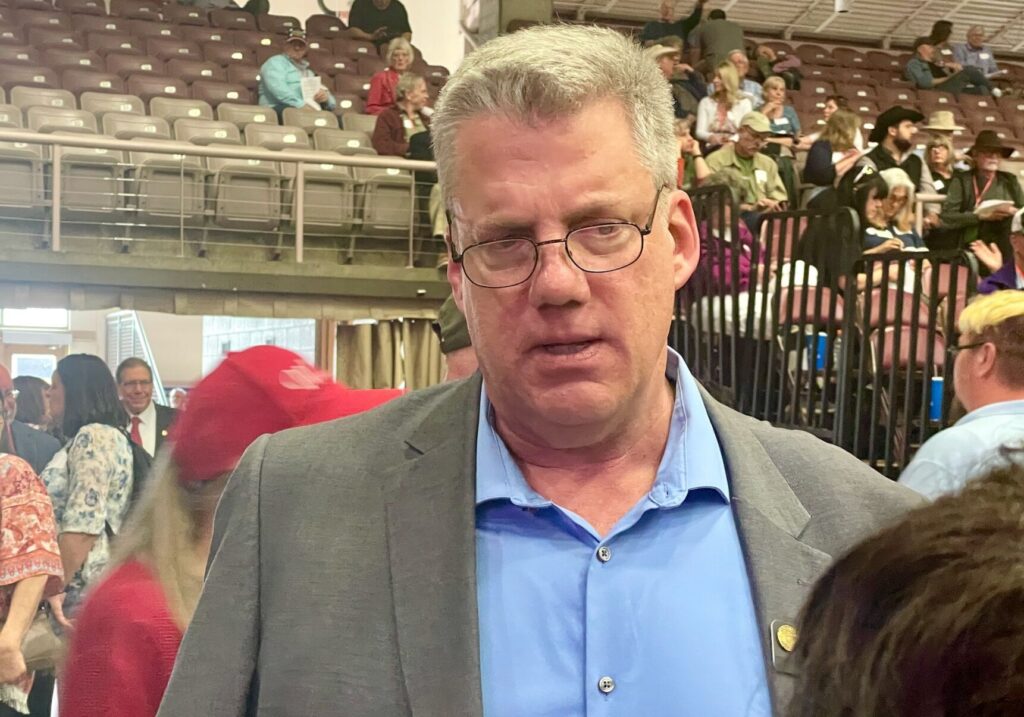
Republican Ron Hanks plans ‘grassroots’ primary challenge to US Rep. Jeff Hurd in Colorado’s 3rd CD
Ernest Luning
ernest.luning@coloradopolitics.com
Updated 10 hours ago
Colorado Republican Ron Hanks, a former state lawmaker, plans to challenge first-term U.S. Rep. Jeff Hurd in the 3rd Congressional District primary by seeking a spot on the June ballot at the GOP’s district assembly in Pueblo on Friday, Colorado...
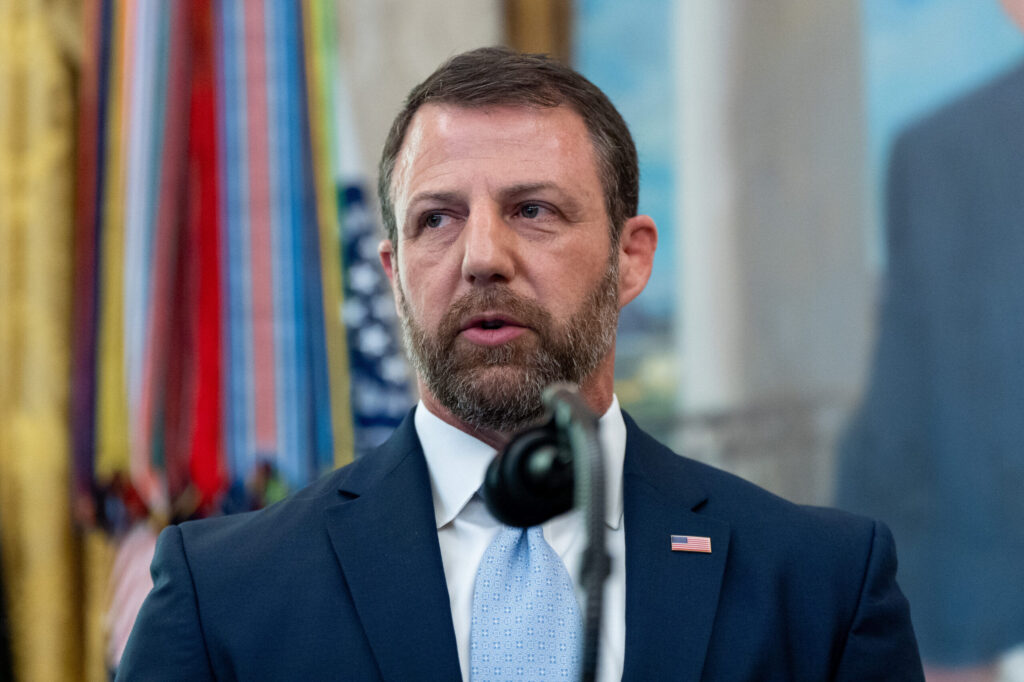
Five ways Mullin is already pushing DHS in a new direction
Anna Giaritelli Washington Examiner
anna-giaritelli-washington-examiner@coloradopolitics.com
Updated 13 hours ago
The Trump administration’s newest Cabinet secretary, Markwayne Mullin, has already begun to implement major changes across the Department of Homeland Security Mullin replaced President Donald Trump’s first DHS secretary, Kristi Noem, and was an unexpected pick to lead the department...
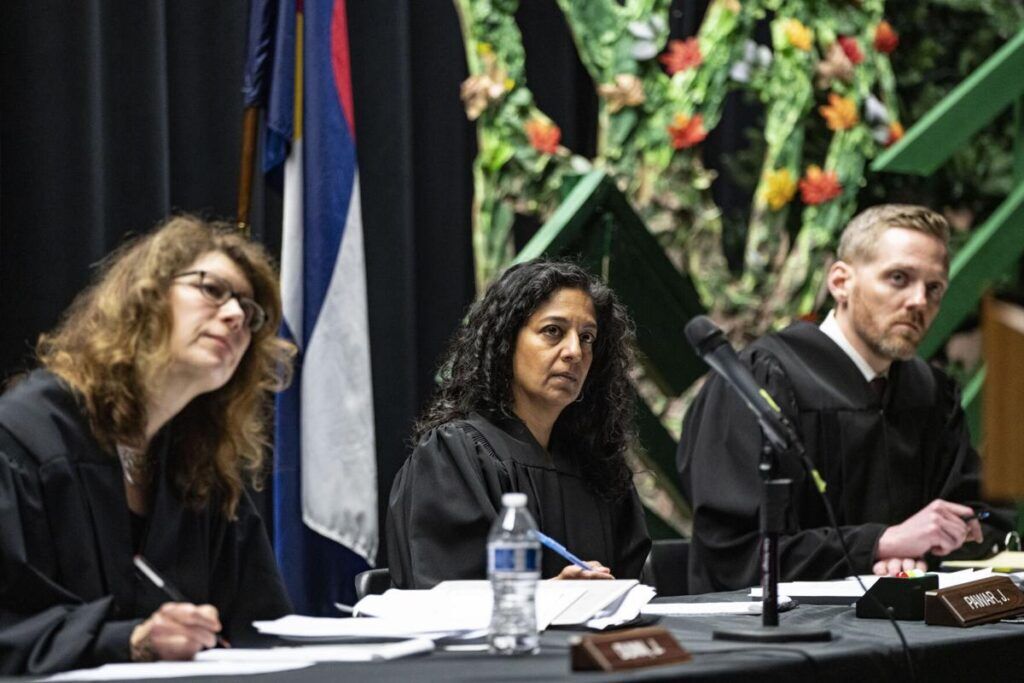
Appeals court finds Prowers County judge incorrectly analyzed firetruck collision lawsuit
Michael Karlik
michael.karlik@coloradopolitics.com
Updated 13 hours ago
Colorado’s second-highest court directed a Prowers County judge last month to take a second look at whether a firetruck operator and the county itself can be held liable for a collision with a motorist. Donald Williamson was driving through a...
Appeals court reverses assault convictions after jury received no definition of ‘harm’
Michael Karlik
michael.karlik@coloradopolitics.com
Updated 15 hours ago
Colorado’s second-highest court reversed an Arapahoe County defendant’s assault convictions last week, concluding the trial judge neglected to define a key, ambiguous term for jurors. Police officers arrested David Cristobal Aragon at a house party for allegedly violating a restraining...
Colorado counties cannot challenge state law restricting immigration contracts, appeals court says
Michael Karlik
michael.karlik@coloradopolitics.com
Updated 10 hours ago
Colorado’s second-highest court ruled on Thursday that counties lack standing to challenge a 2023 state law that restricts their ability to contract with the federal government or private entities for immigration detention. A three-judge Court of Appeals panel agreed with...

Wayne Williams joins city as Colorado Springs Mayor Mobolade’s new chief of staff
Brennen Kauffman
brennen-kauffman@coloradopolitics.com
Updated 12 hours ago
Wayne Williams will be the next chief of staff for Colorado Springs Mayor Yemi Mobolade, turning the two former election opponents into partners in city government. The two officially announced the hire Thursday, citing Williams’ decades of experience with city,...
PREV
PREVIOUS

Q&A with Heidi Ganahl | Teach how to think, not what to think
Heidi Ganahl is regarded as one of Colorado’s rising Republican stars – probably one of the few at the moment, given Democratic dominance in state politics – but it was her success as an entrepreneur that started her on her political path. Well before the first-term University of Colorado regent, elected in 2016, was a […]

Conservation easement group to recommend millions be paid in reparations
The group working on a fix for the state’s conservation easement program intends to recommend to the General Assembly that the state pay back millions of dollars in tax credits to landowners who believe they were unfairly denied those credits, according to a draft of the group’s final report. The program, where a landowner permanently donates […]