

Report: Premature births increase in Colorado

Editor’s note: This story has been updated.
Colorado’s rate of premature births increased in 2018, to 9.2%, up from the prior year’s 8.8%.
March of Dimes, a national nonprofit advocacy group for maternal health, reported the rise even as rates of uninsurance and poverty among women of childbearing age are lower in Colorado than nationally.
“Every American should be alarmed about the state of maternal and infant health in this country, because it is an issue that touches each one of us,” said the March of Dimes’ president and CEO Stacey D. Stewart.
The Colorado Department of Public Health and Environment found that 400 infants die in Colorado every year. Conditions arising from prematurity (births before 37 weeks of gestation) cause 38% of those deaths.
The preterm birth rate declined in Colorado until 2014, hitting a low point of 8.4%. It has subsequently increased.
As of 2015, the United States ranked 131st out of 184 countries in infant mortality. CDPHE identifies chronic stress, access to services, tobacco use and lack of family planning as risk factors for mothers.
“A lifelong accumulated experience of racial discrimination by African American women constitutes an independent risk factor for preterm delivery,” the department concluded, based on the stress racism causes.
The March of Dimes report corroborates that finding: Black Colorado women have an incidence of premature birth approximately one-third higher than white women.
The group recommends a maternal mortality review committee and the extension of Medicaid maternity coverage up to a year after birth as policy solutions. The General Assembly this year established such a committee to report on its findings by July 2020. Medicaid coverage for maternity care, however, only lasts roughly 60 days after the child’s birth in Colorado.
Sen. Rhonda Fields was one of the sponsors of the mortality review committee.
“I’m concerned about the impact this has on women of color,” she said. “My concern is: is it an access issue?”
Fields, D-Aurora, supports an expansion of maternal Medicaid coverage.
“It’s just not a lot of time,” she said of the 60-day limit. “There’s so many dynamics that could be going on in those homes with that family when you’re introducing a new baby. They’re struggling.”


Colorado lawmakers push limits on data-driven pricing as critics push back
Marissa Ventrelli
marissa.ventrelli@coloradopolitics.com
Updated 5 hours ago
Colorado lawmakers are weighing a proposal to restrict the use of algorithms in setting prices and wages, as advocates warn the technology enables hidden discrimination while business groups argue the bill overreaches and interferes with legitimate data‑driven practices. House Bill...

10th Circuit upholds verdict against Denver, officer for protest-related violations
Michael Karlik
michael.karlik@coloradopolitics.com
Updated 4 hours ago
The Colorado-based federal appeals court on Tuesday turned aside multiple challenges to a 2022 jury verdict that found Denver and one of its officers violated the constitutional rights of protesters and were liable for $14 million. In the first of...

Colorado Senate candidate charged with felony child neglect after daughter nearly drowns in Florida pool, police say
Marianne Goodland
marianne.goodland@coloradopolitics.com
Updated 5 hours ago
Frederick Alfred, Jr., the sole Republican candidate for Senate District 21 in the June primary and November general election, was arrested in Key West, Florida, late Monday night. Alfred, 38, was charged with two counts of felony child neglect and...
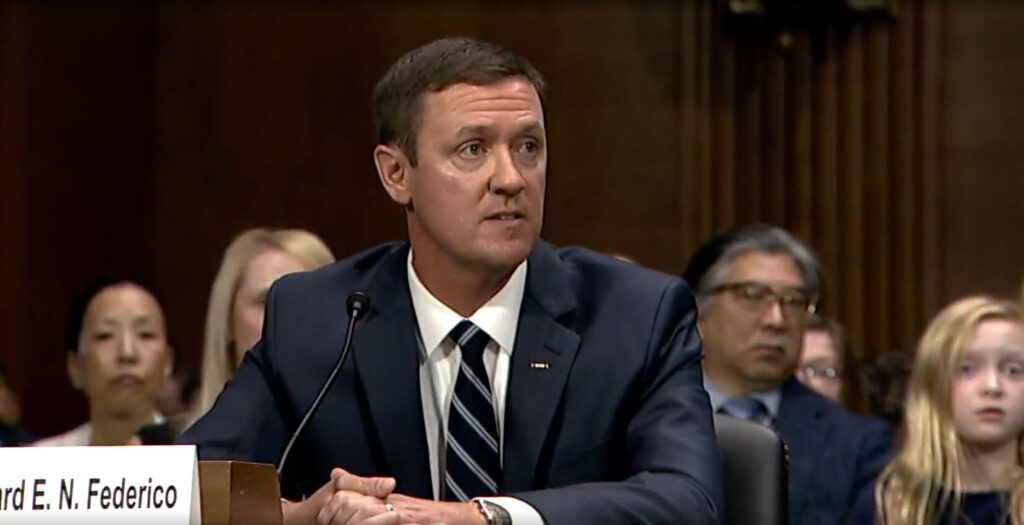
Divided 10th Circuit takes no issue with surprise police encounter with suspect
Michael Karlik
michael.karlik@coloradopolitics.com
Updated 1 hour ago
Police officers who unexpectedly encountered a Durango-area man while they were preparing to search his nearby home did not commit a constitutional violation by seizing his phone during the ensuing traffic stop, the Denver-based federal appeals court ruled last week....

Colorado lawmakers set Jan. 11 start date for 2027 General Assembly
Marianne Goodland
marianne.goodland@coloradopolitics.com
Updated 5 hours ago
Legislative leaders on Tuesday confirmed that the 2027 session of the Colorado General Assembly will begin on Monday, Jan. 11. Ordinarily, legislative sessions start on the second Wednesday in January. That schedule shifts in years when a new governor is...
10th Circuit rules State Farm not required to pay benefits in I‑25 swerving crash
Michael Karlik
michael.karlik@coloradopolitics.com
Updated 9 hours ago
The Denver-based federal appeals court concluded last week that two vehicle occupants who were injured while swerving to avoid a man in the middle of Interstate 25 are not entitled to insurance benefits. Plaintiffs Stephanie Mazur and Julia Wunder were...
Colorado ethics panel to review complaint alleging misuse of Democratic caucus funds by chair
Marianne Goodland
marianne.goodland@coloradopolitics.com
Updated 5 hours ago
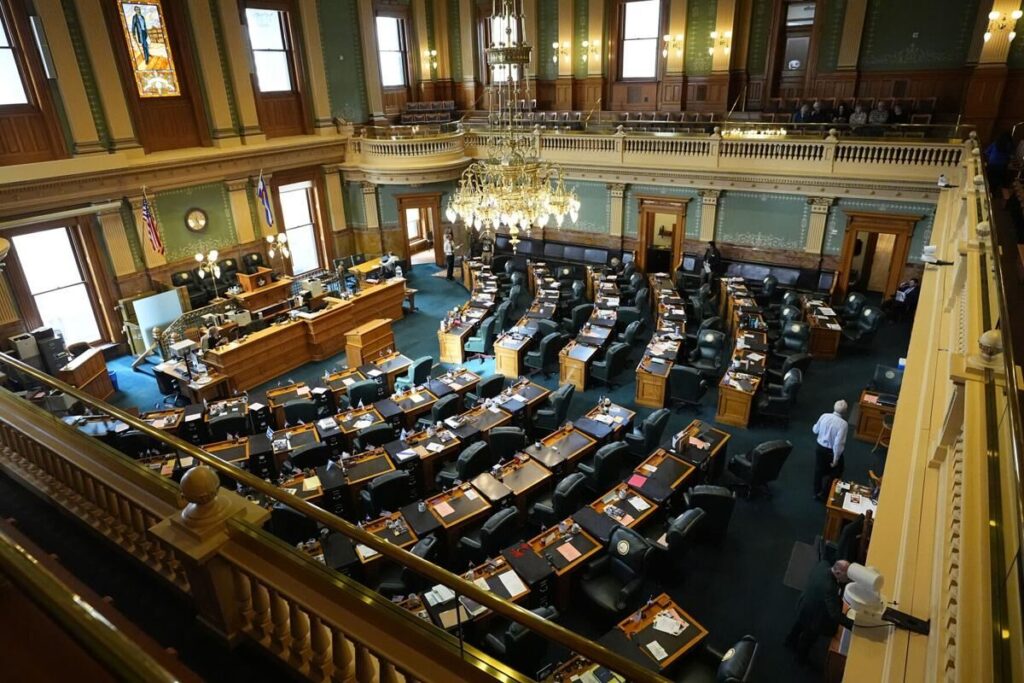
A legislative ethics panel in Colorado is scheduled to meet Wednesday to review a complaint alleging that Aurora Democrat Rep. Mandy Lindsay misused House Democratic caucus funds. Rep. Bob Marshall, D‑Highlands Ranch, filed the complaint on Jan. 26. Marshall’s complaint...
Proposal to ban appointed Colorado legislators from serving in next term fails to advance
Marissa Ventrelli
marissa.ventrelli@coloradopolitics.com
Updated 10 hours ago
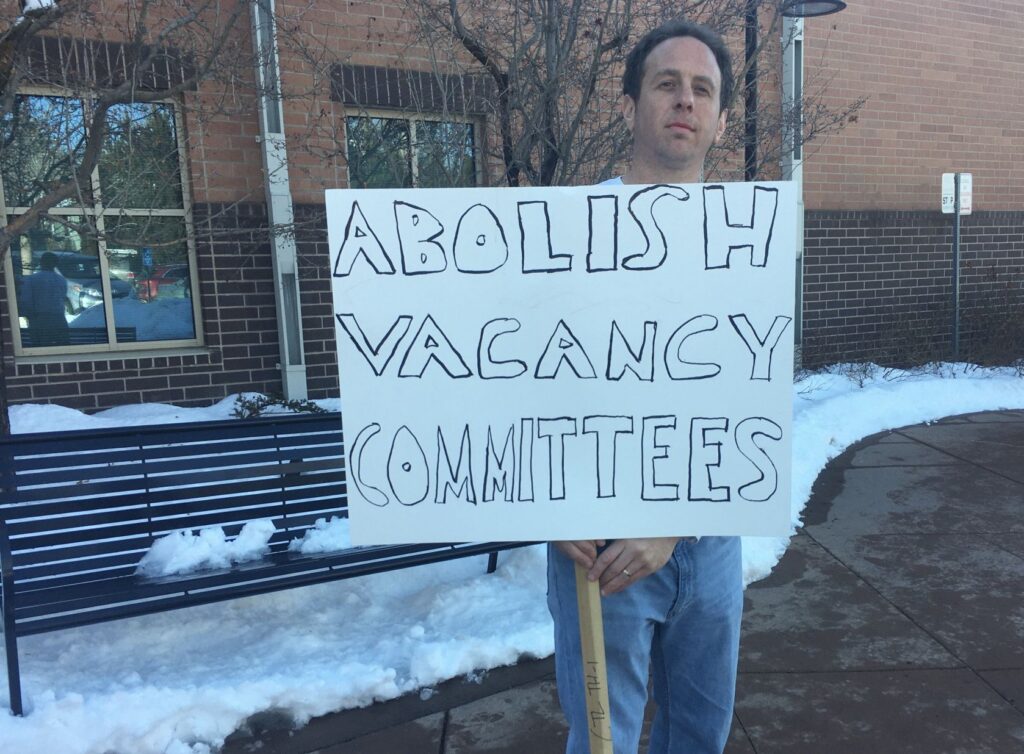
For the third year in a row, lawmakers have struck down a proposal that would have prohibited members of the Colorado General Assembly who were appointed through a vacancy committee from serving in the term immediately after. Sponsored by Rep....

Trump says Strait of Hormuz won’t reopen until Iran strikes a deal with US
Mabinty Quarshie, Washington Examiner
mabinty.quarshie.washington.examiner@gazetteedit.wpenginepowered.com
Updated 9 hours ago
President Donald Trump said in a new interview that the Strait of Hormuz will remain closed until the United States and Iran reach a peace deal to end the ongoing war. The two nations are set to begin a second...

US and Iran signal new ceasefire talks in Islamabad as truce nears end
Jon Gambrell
jon.gambrell@associatedpress.com
Updated 14 hours ago
ISLAMABAD (AP) — The United States and Iran have signaled they will hold a new round of ceasefire talks in Pakistan, two regional officials said Tuesday, as leaders on both sides warned they were prepared for more fighting if a...
PREV
PREVIOUS

Final Denver minimum wage proposal released
Editor’s note: This story has been updated. On New Year’s Day, Denver’s minimum wage could rise to $12.85 per hour, before jumping to $15.87 in two years. After six weeks of community meetings, Denver Mayor Michael Hancock and Councilwoman Robin Kniech announced the full proposal to increase the city’s minimum wage over three years, then index […]

State lawmakers approve work experience for college credit, endorse $20 million higher ed pilot
The Making Higher Education Attainable Interim Study Committee on Monday signed off on three proposals to get students successfully through higher ed institutions, even before they step foot on campus. A bill passed unanimously would direct the Colorado Commission on Higher Education to incorporate work experience into post-secondary academic credit. “It’s helping people who have […]