

HUDSON | Senate race highlights need for ranked-order voting in Colorado
It’s not exactly a secret that our “first across the finish line” election system permitting plurality winners has its downsides. A growing body of political science research attributes the rapidly growing polarization in American politics to this longstanding practice. While certainly a factor, there must be more than this at work since the nation has enjoyed several extended periods of relative partisan peace.
A few states require runoff elections to obtain majority victors. Others, however, are considering structural changes ranging from approval balloting, where each voter indicates every acceptable candidate, to ranked order or ranked choice elections designed to make an “instant runoff” result possible. Australia has relied on this latter system for more than a century together with a few local governments including a pending implementation by the state of Maine.
Perhaps the most radical proponents of electoral reform are those who call for a shift from our congressional to a parliamentary system, where members then select their leadership. The ascent of Boris Johnson as prime minister “across the pond” offers little to inspire confidence in the wisdom of this approach.
Colorado voters’ approval of unaffiliated participation in party primaries raises the question of whether these newly enfranchised voters could force a candidate upon Democrats or Republicans who would never command majority support from the party itself. This change was justified on the grounds that ballots cast by unaffiliated voters would help moderate the drift of our parties towards the right and left ends of the political spectrum. This remains a theory.
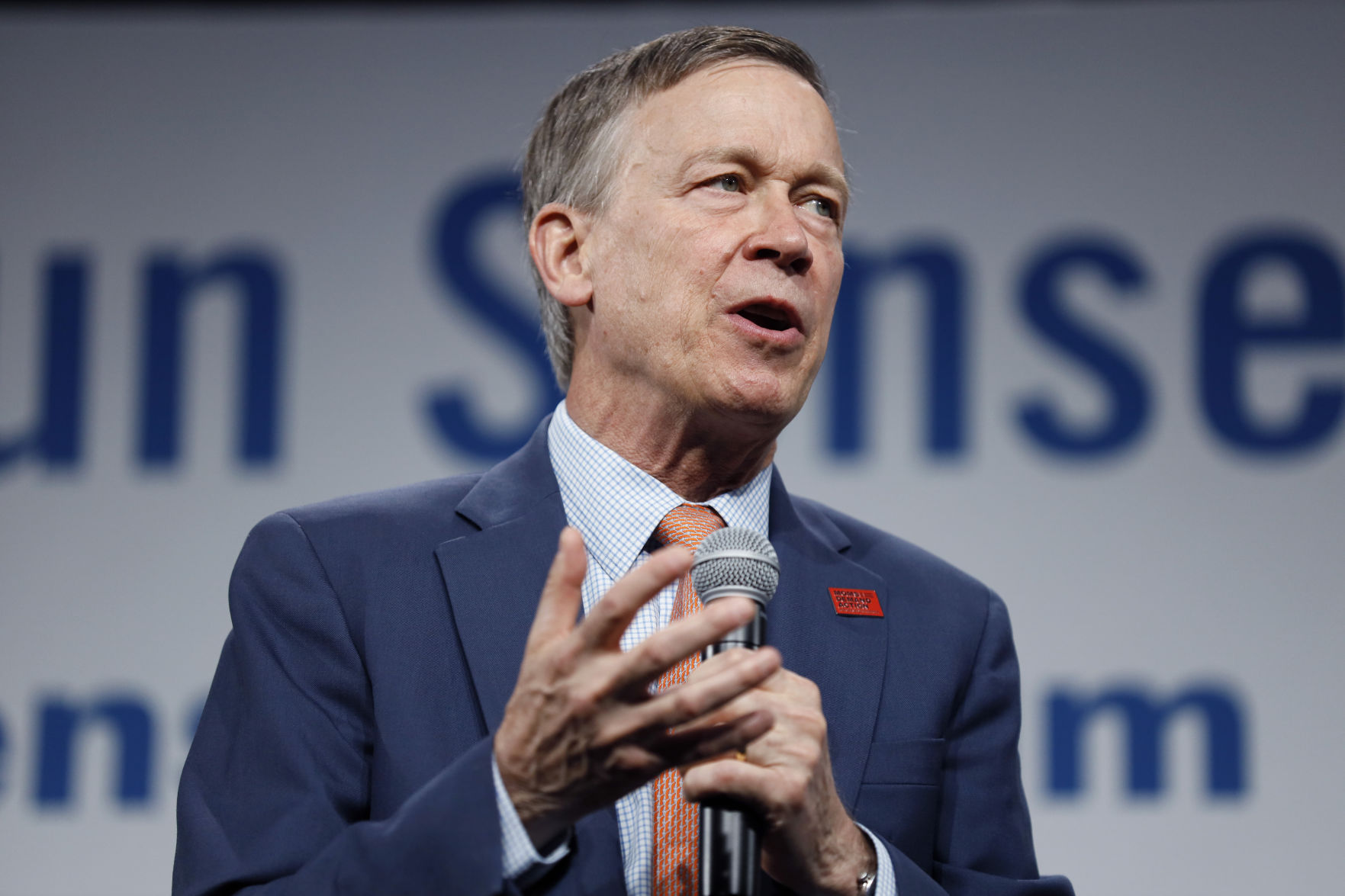
In 2018 Republicans experienced the penalty of advancing plurality candidates to the ballot selected by 40% of their most activist partisans. There is evidence the unaffiliated voters who bothered to return ballots were already inclined to lean either left or right. Very few appear to have been asserting their political independence in an effort to moderate either party’s candidate preferences. Yet, the recruitment of John Hickenlooper into the 2020 Colorado Senate race is premised on his alleged appeal as a centrist.
Time still remains for the Colorado legislature to adopt an instant runoff format for the 2020 June 30 primaries once they convene in January. It’s likely this is the single rule change that offers hope for the eleven candidates who entered the Democratic primary before our peripatetic former governor decided he might be well-suited to serve in the U. S. Senate after all. The chances of legislative success are likely slim, but not inconceivable. Democratic legislators will be under heavy pressure to leave well enough alone. All the King’s horses and all the King’s men (as well as their wallets) believe Hick is the cruise missile Chuck Schumer needs to blast Cory Gardner out of his seat.
There is ample reason for Republicans to support a ranked order voting system. While there is reason to suspect any Democrat with a pulse can capture Gardner’s Senate seat, none of the remaining candidates loom as formidably as Hickenlooper. And, over the long run, during a surprising period of enthusiasm when elections are attracting a surfeit of candidates in both parties, Republicans would only benefit from an assurance their candidates enjoy majority support among registered partisans. Beyond that, Republican legislators will almost certainly be required to override a probable veto from the governor.
This idea won’t be taken seriously unless and until the Democratic candidates who choose to remain in the Senate primary lock arms and make a unified demand for support from their colleagues in the legislature. Angela Williams can even carry legislation for them in the Senate. There is good reason to believe John Hickenlooper, who showed so little interest in serving as governor of Colorado that he appointed Donna Lynne as lieutenant governor and his chief operations officer, might struggle to reach 50% support. If he isn’t your first choice, it’s doubtful he will be your second choice.
Requiring additional runoff elections would almost certainly fail because of the costs imposed on county clerks. Rank order voting makes more fiscal sense. It also may be the right thing to approve this change before voters makes a mistake that forces us into a hasty reform. All things being equal, our election system currently favors celebrity and money over policy or experience. There’s something a little dumb about that.
Miller Hudson is a public affairs consultant and a former state legislator. He can be reached at mnhwriter@msn.com.


Gaylord — you never check in, but still pay | Jon Caldara
Jon Caldara
jon-caldara@coloradopolitics.com
Updated 3 days ago
I go to a lot of conferences, often in beautiful cities I never actually see. Friends hear where I’ve been and ask depressing questions like, “Did you visit the famous museum?” No. I saw Ballroom C, the lobby bar and...
Reflections on Weiser-Lopez, Crank-Killian debates | Tom Cronin
Tom Cronin
tom-cronin@coloradopolitics.com
Updated 1 day ago
Thursday night, The Gazette and KOAA TV hosted two important candidate debates. The first featured incumbent Republican U.S. Rep. Jeff Crank, who is just completing his first term representing El Paso County in Congress, and Jessica Killian, a Democrat who has...
What courageous citizenship really looks like | Vince Bzdek
Vince Bzdek
vince.bzdek@gazette.com
Updated 19 hours ago
By Vince Bzdek What exactly is courage? Ernest Hemingway famously called it grace under pressure. Mark Twain wrote that “courage is resistance to fear, mastery of fear — not absence of fear.” C.S. Lewis refined that even more: “Courage is...
The coming election and mischief in the making | SONDERMANN
Eric Sondermann
eric-sondermann@coloradopolitics.com
Updated 4 days ago
America’s tribalism is such these days that we struggle to even agree on the basic rules. Elections have always been hotly contested. As the saying goes, “Politics ain’t beanbag.” The process has long involved elements of nastiness and underhanded conduct....
Colorado’s hunting and fishing traditions rest on science, conservation and a proven heritage | IN RESPONSE
Colorado Politics
colorado-politics@coloradopolitics.com
Updated 2 days ago
By John Howard Eric Washburn’s recent column warns Coloradans the right to hunt and fish amendment is a Trojan horse designed to resurrect “cruel” practices voters have already banned and to elevate killing above every other form of wildlife management....
Why does Colorado limit who can safeguard taxpayer dollars? | GUEST COLUMN
Colorado Politics
colorado-politics@coloradopolitics.com
Updated 2 days ago
By Devin Camacho Recently, PNC Bank announced its purchase of FirstBank Colorado. Not only did Colorado lose a local banking option, but nearly 1,000 people lost jobs, with more job losses coming as the big bank now closes branches too....
Colorado’s precarious position protecting from wildfires | Paula Noonan
Paula Noonan
paula-noonan@coloradopolitics.com
Updated 3 days ago
Fourteen firefighters died in the Storm King Mountain fire west of Glenwood Springs in 1994 when 2,115 acres burned. In August 2020, the Grizzly Creek fire burned 32,631 acres along the Interstate 70 corridor east of Glenwood causing mudslides from flooding...

We must deliver on cost of living | GUEST COLUMN
Colorado Politics
colorado-politics@coloradopolitics.com
Updated 3 days ago
By Ryan Gonzalez Insurance premiums are on the rise. Property taxes are increasing. Groceries are becoming more expensive. Gas prices are reaching record levels. Housing costs are becoming unsustainable. These are the concerns I hear from people in my district....

Dan Haley on the role of oil and gas in Colorado’s energy future | The OpEdge Podcast
Tony Olivero
tony.olivero@gazette.com
Updated 4 days ago
Dan Haley, executive director of Coloradans for Responsible Energy Development, joins The OpEdge to discuss the role of oil and natural gas in Colorado’s energy future amid the state’s aggressive push toward “net zero.” Haley tells host and investigative columnist...

Rural hospitals don’t want special treatment, just a chance to care for locals | PODIUM
Colorado Politics
colorado-politics@coloradopolitics.com
Updated 3 days ago
By Kevin Stansbury As chief executive of Lincoln Health, my responsibility is simple: ensure the people of eastern Colorado have access to high-quality healthcare close to home when they need it most. That mission has never been easy. Rural hospitals...
PREV
PREVIOUS

FEEDBACK | Darts for Denver's proposed energy tax; Bidlack's take on guns
Denver council members ignored stakeholders As Coloradans and as Denver residents, we appreciate all things Colorado – our quality of life, our pristine environment and our ability to defy the national political climate and come together to develop policies and laws in the best interest of our state and our residents. Last week, instead of […]

BIDLACK | Trump's trade war will backfire on Colorado
Hal Bidlack I’m a bit of a history buff, and I enjoy reading about the lives and ideas of those who have come before. I’ve spent the last 25 years or so pretending to be Alexander Hamilton for audiences around the country, and one of the reasons I’ve been successful, I believe, is that when […]