

Q&A with Micki Hackenberger | A power lobbyist recalls when ‘civility was a priority’


Mention the name Micki Hackenberger around the state Capitol, and heads will turn and ears perk up. In any given session, she’s likely to be lobbying the legislature on the big bills involving the big issues of the day.
That’s because Hackenberger — president and founder of premium Colorado lobbying firm Axiom Politics — is not only good at what she does, but she also has been doing it for quite a long time. Long enough to be in the center of the big policy debates – long enough to offer us some long-haul perspective on how her profession, and the political culture in which it operates, have changed over the decades.
She started out with faxes and pagers and brick-size cell phones, she notes in today’s Q&A – and more fundamentally, the political chemistry was very different.
“The pace was slower,” she says. “There weren’t term limits so legislators didn’t necessarily feel this rush to have to make an impact immediately.” In other words, not as many new freshman officeholders itching to make names for themselves – or to pick fights with the other side.
Colorado Politics: Given your longevity in the lobbying corps, your clout at Colorado’s Capitol, and your client list of heavy hitters, you are the walking definition of the power lobbyist – one of the best known in the state. So, we first have to get your take on how lobbying has changed in Colorado during your decades in the business. New ethics rules; sexual-harassment scandals; the overall evolution of Colorado’s politics – this isn’t the Capitol culture in which you got your start, is it?
Micki Hackenberger: The obvious answer to describing the evolution of lobbying over the past three decades and how it’s changed is technology. How we communicate with lawmakers and other lobbyists is distinctly different than when I was a young lobbyist. The lobby core was about one-third of the size it is now – so keeping track of every single person and who they represented was very easy. I remember using pagers and fax machines – and everything was typed and handed out in person. I was among the first lobbyists to get a cell phone (which didn’t fit in my purse and was the size and had the durability of a brick). Today, email is second nature and we lobby via text message more times than not.
There were a lot more face-to-face interactions and a lot more opportunities to build relationships with legislators. The pace was slower, and you didn’t see the sheer number of bills we see today. There weren’t term limits, so legislators didn’t necessarily feel this rush to have to make an impact immediately. Civility was a priority. Leadership was respected by everyone regardless of party. There weren’t social media trolls and influencers harassing legislators.
There have always been ethics rules, and there was a high level of accountability. If you lied to a legislator as a lobbyist, your career was over. If you did something unethical, it was quickly known.
Today, information is instantaneous and available with a click – so I no longer spend hours in the legislative archives looking things up. It’s really hard to compare then and now, because things have changed that, significantly based upon technology. In addition, term limits have had a significant impact.
In addition, while I try to be a mentor to the young lobby core coming up, especially the ones who work with me, I feel very lucky that I had a great mentor when I started – Karen Reinertson, who was a legend at the time and highly regarded in the field. Today I see a lot more people showing up to the building, very green, with no mentors, and it can be very hard to achieve success without having someone who has walked in those shoes guiding you.
Micki Hackenberger
- President and founder of Colorado lobbying firm Axiom Politics, since 1999. Axiom’s A-list clients span the business community and beyond
- Previously served as executive vice president of prominent contract lobbying firm Hays, Hays and Wilson.
- Managing director of Colorado public affairs for Qwest Communications, 1994-1998.
- Legislative director, Colorado Counties Inc., 1989-1994.
- Holds a bachelor’s degree in communications from Regis University in Denver.
CP: Axiom touts its ability to work both sides of the aisle at the Capitol and has the staff to do so. How would you describe your personal political leanings, and what role do your views play in cultivating clients and doing your work in general?
Hackenberger: My personal political leanings or the leanings of the Axiom team members don’t play a role in cultivating clients. Having a bipartisan staff is important in crafting the best solutions for our clients. It is very important for Axiom and our clients to have a diverse-thinking team committed to achieving their public policy goals in Colorado. You are only as good as your reputation and no one handles or deserves credit singlehandedly – it’s always a team effort
CP: What has Colorado’s shift to the left last November done to your clients’ interests? From liquor wholesalers to commercial real estate investors, your clients are among the key stakeholders in the business community. There were some big changes in the 2019 session in the wake of last year’s election, and more change could be in store – little of it to the liking of businesses. Are you engaged in damage control and trying to limit lost ground, or on the other hand, are things not as bad for business as the political rhetoric makes it sound?
Hackenberger: I think political rhetoric and political theater are at an all-time high. Perhaps that is a trickle-down of what’s going on at the national level, or the consumption of social media in our lives, or both. I think it was a tough session for everyone, not just business interests or lobbyists.
I think what made this session particularly tough is that there were bills that dealt with very big issues pertaining to every single sector of the economy. It wasn’t just one big issue, or two, it was dozens. In addition to that just being exhausting for everyone engaging in these issues, it creates a fatigue and a fear of the unknown and very little predictability for the industries having to grapple with these large changes.
This isn’t the first time there has been a trifecta of power – both Republicans and Democrats have controlled the process. We have to remember change is hard, and sometimes a lot of change in a short amount of time is a lot for any one industry to handle. I don’t begrudge legislators for trying to tackle hard issues. It was just the first time I had seen so much at one time.
Again, Axiom and I have dealt with these changing dynamics for decades, and will continue to work to ensure our clients have a seat at the table. We work with all legislators, regardless of political leanings, because our clients are not partisan. They are employers, they are stakeholders, they are stewards of the community and they are experts in their field. Issues aren’t partisan; people are. And during the session, there really is no place for partisan politics. Public policy affects every Coloradan.
?CP: Some would say that so long as there are people in power, others who seek favors from them – and alcohol all around them – there will be sexual misconduct in politics. Did the controversies involving sexual harassment at the Capitol over the past few years expose a few aberrant incidents – or a long-standing problem that some say just recently came to light? If it’s the latter, then will the recent revelations and their public airing improve things in the Capitol culture? Is it a particularly tough place to work for women – even now, with women the majority in the state House and well represented in the lobbying corps?
Hackenberger: I think that question paints a sordid picture of a workplace that is certainly not reflective of my experience or the environment that most people I work with, both legislators and lobbyists, associated with the Capitol workforce. While there certainly have been examples of bad behavior over the years and highlighted in the past couple of sessions, overall lawmakers and lobbyists have a great respect for the building, the institution it represents, the legislative process and a focus on their job.
Sexual harassment has been a problem for women throughout history – with recent focus on these issues. A recognition of it as a legally recognized form of discrimination – whereas some years ago it wasn’t – will continue to ensure every workplace is a safer place for women.
I think the issues that have been brought forth were painful for all of us who work in the Capitol because it makes us all stop and recognize that these problems still exist and are around us even if we aren’t directly experiencing it. I think it’s appropriate that our legislative leadership has taken the steps it has to create a better process for employees and individuals to come forward.
?CP: What are the three biggest policy challenges facing Colorado?
Hackenberger: That is a matter of personal perspective. I have a range of clients that would answer that question very differently. I think it comes down to Colorado’s rapidly growing population and how we handle the challenges that come with that, and our robust economy and ensuring that it remains that way. How do we ensure that Coloradans maintain their quality of life while trying to balance a lot of change? Each one of our clients is very focused on finding solutions for their respective industries that benefit all of Colorado, be that health care, energy, education, affordable housing or transportation.
?CP: Tell us about your background and how you got involved in the world of politics and policy?
Hackenberger: I’ve been in politics as long as I can remember – beginning in the dark ages – having worked in public policy in two states. I don’t remember a time I didn’t work in politics.
CP: What are some of the biggest misconceptions people outside politics seem to have about the lobbying profession? Does the profession need improvements in any way?
Hackenberger: I’ve always found it interesting that people believe lobbyists as individuals come up with their own objectives. Many don’t understand the process or the lobbyists’ role in that process. Lobbyists represent a range of interests – from an industry, to a nonprofit, a company, a school district, a local government, etc. We really are information brokers who provide a value to lawmakers to help them in their decision making. Without lobbyists, there would be an information void. Public policy affects everyone – the possibility for unintended consequences is vast, so you want experts engaged, and lobbyists help bridge that gap.
I think generally the public thinks special interests have an unfair advantage in the process rather than to represent the individual’s goals and objectives, but I would argue that everyone has a voice in the process and lobbyists represent all of those interests.
What profession wouldn’t benefit from improvements? I do think that lobbyists are held to a higher standard compared to other industries on reporting whom they work for, how much they are paid, what issues they are working on, etc. I think if there’s improvements, it would be in the mechanics on making the reporting formats consistent and easier to navigate.

Colorado Politics Calendar Sept. 7-13
Rachael Wright, Special to Colorado Politics
rachael.wright@coloradopolitics.com
Updated 6 days ago
CoPo’s weekly political calendar will help you find political and public-policy events throughout Colorado. It includes candidate and issue campaign events, public policy meetings, court hearings, state and local party conventions, assemblies, debates, rallies, parades, speaking engagements, traveling dignitary appearances,...

Blue-collar support trends highlighted GOP gains among rank‑and‑file workers | A LOOK BACK
Rachael Wright, Special to Colorado Politics
rachael.wright@coloradopolitics.com
Updated 5 days ago
Forty-five years ago this week: Kathy Oatis of the Colorado AFL-CIO’s Committee on Political Education said that organized labor had a negative image with the American voter. “I don’t think the country is against us,” said Oatis. “I think the...

The dissonance of an American Jew thinking about Israel | SONDERMANN
Eric Sondermann
eric-sondermann@coloradopolitics.com
Updated 5 days ago
The Jewish High Holidays will soon be upon us. The third anniversary of Oct. 7 will then quickly follow. Three weeks later, Israeli voters will head to the polls to elect all 120 members of its parliament, the Knesset and...

Parenting from prison: Inmates hope to be present in their children’s lives, while physically absent
Marianne Goodland
marianne.goodland@coloradopolitics.com
Updated 11 hours ago
The room was decorated with balloons, the tables sparking bright with colors as the smell of pizza and cake wafted through the air. As did music. This was, after all, a father-daughter dance. Except this was not a typical father-daughter...
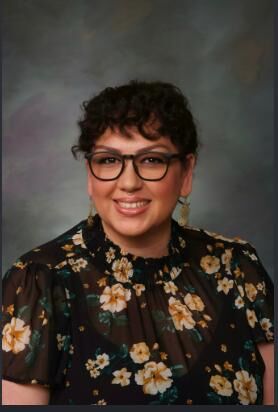
Colorado House ethics committee issues ‘stern letter’ to Democrat over caucus funds mismanagement
Marianne Goodland
marianne.goodland@coloradopolitics.com
Updated 2 days ago
The Colorado House ethics committee on Friday voted unanimously to issue a “stern letter” to Rep. Mandy Lindsay, D-Aurora, regarding her mismanagement of House Democratic caucus funds. The committee further voted to request that Lindsay resign as Democratic Caucus co-chair...
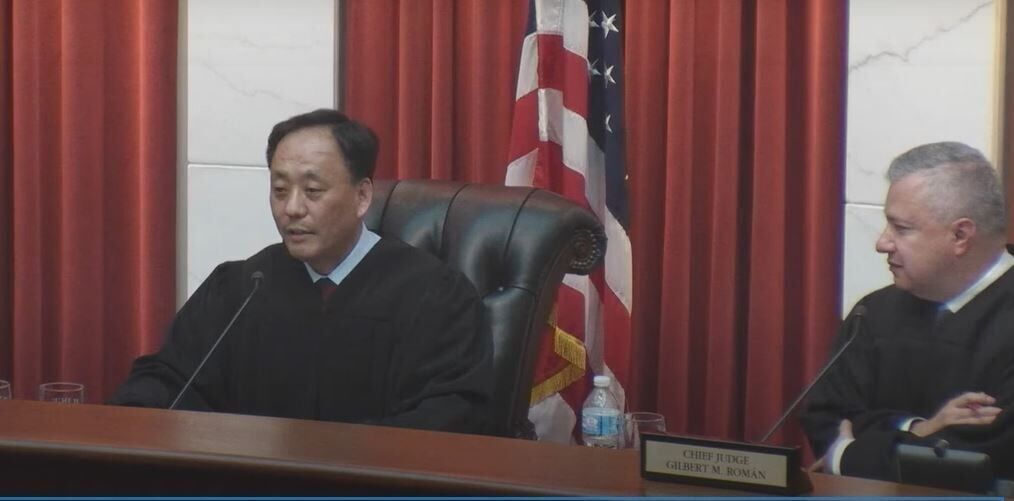
Appeals court confirms Colorado judges can compel electronic records from out of state
Michael Karlik
michael.karlik@coloradopolitics.com
Updated 2 days ago
Colorado’s second-highest court clarified on Thursday that judges are empowered to compel out-of-state companies to produce electronic records under state law. El Paso County jurors convicted Mischa Jargowsky on three counts of money laundering and one violation of Colorado’s organized...

Federal judge extends block on Trump executive order seeking to limit mail voting in the midterms
The Associated Press
the-associated-press@coloradopolitics.com
Updated 4 days ago
A federal judge on Friday extended her prohibition against the U.S. Postal Service implementing President Donald Trump’s executive order seeking to limit mail voting during the midterms, putting another major obstacle in the way of the administration as the first...
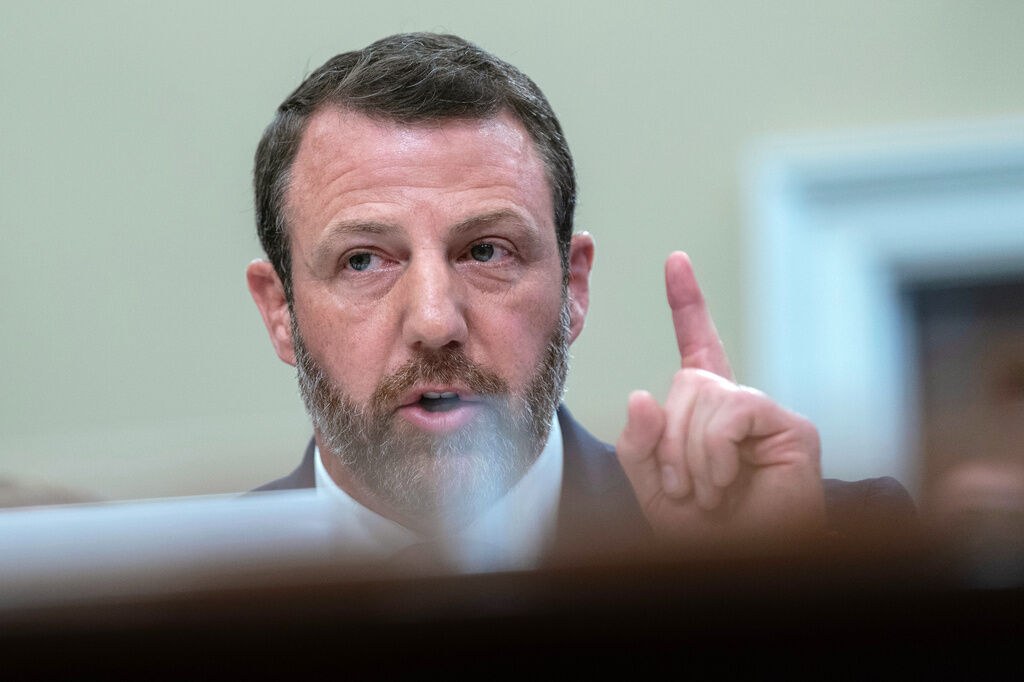
Mullin asks DOJ to review voter data sharing tied to Zuckerberg-funded nonprofit group
The Washington Examiner
the-washington-examiner@coloradopolitics.com
Updated 2 days ago
Washington Examiner Homeland Security Secretary Markwayne Mullin asked the Justice Department this week to review whether election-related nonprofit groups, some with multimillion-dollar backing from a Mark Zuckerberg-linked nonprofit, improperly received sensitive state motor vehicle and voter-registration data. In a letter...

Colorado secures FEMA support for wildfire, flooding and mudslide recovery
Marissa Ventrelli
marissa.ventrelli@coloradopolitics.com
Updated 2 days ago
Federal authorities on Friday approved Colorado’s request for federal public assistance to help communities devastated by the Aspen Acres and Gold Mountain Fires. The Federal Emergency Management Agency did not announce how much the state would receive but confirmed that...
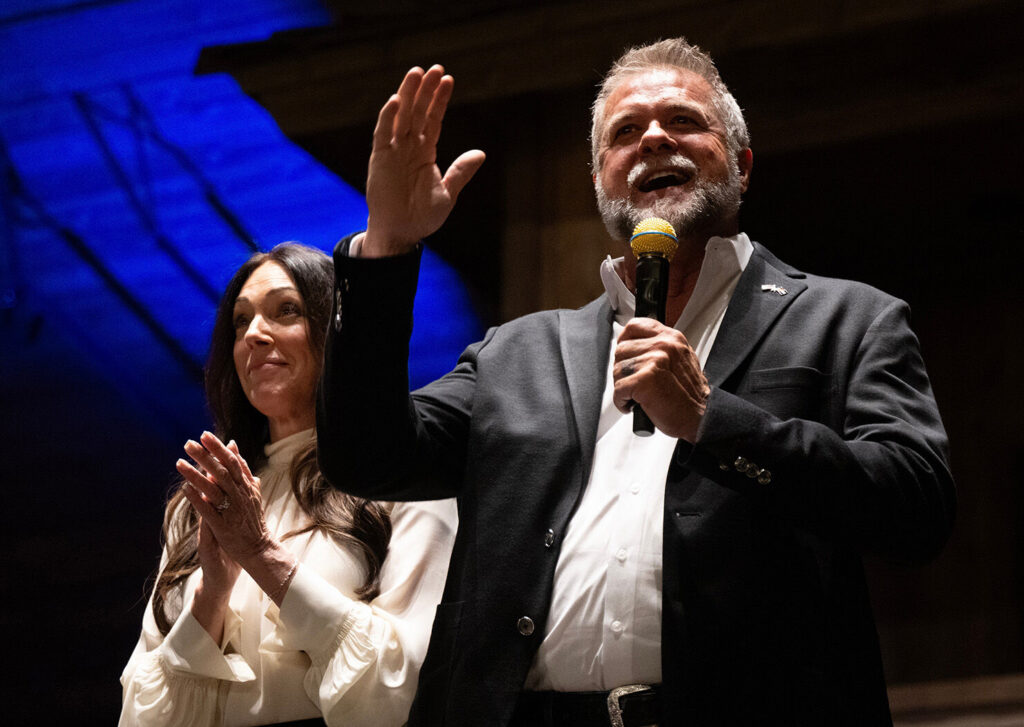
State seeks $50K penalty against GOP candidate Victor Marx over alleged campaign finance violations
Deborah Grigsby
deborah.smith@denvergazette.com
Updated 3 days ago
Republican gubernatorial candidate Victor Marx is looking at more than $50,000 in fines in what the Elections Division of the Office of the Secretary of State calls “unprecedented” campaign finance violations. The state has not imposed that fine yet, and...
PREV
PREVIOUS
DENVER CANDIDATES' SPOUSES: Mary Louise Lee, city's first lady, on the toll the campaign takes on family life
Shortly after Mary Louise Lee’s husband, Michael Hancock, was elected mayor of Denver in June 2011, the couple had dinner with former Mayor Wellington Webb and his wife, former first lady Wilma Webb. It was a direct and intimate conversation in which the Webbs, who had lived through 12 years of Wellington as mayor, let […]

Polis vetoes draw rare praise from Colorado GOP lawmakers
Following a Colorado legislative session when Republicans rarely saw eye to eye with Democratic Gov. Jared Polis, his vetoes of three occupational licensing bills produced a rare moment of agreement. On Friday, Polis vetoed: Senate Bill 133, which would have regulated genetic counselors; Senate Bill 99, which would have required agents for athletes to register […]