

HUDSON | Global economy, changing technology offer little to displaced workers
In August of 1970, after being released from the U. S. Navy, I drove cross-country from San Diego to Washington, D.C. The nearly month long trek included visits with family members I hadn’t seen for several years while serving overseas, yet my most memorable encounter is the mechanized family that pulled into the parking area at Jenny Lake in Grand Teton National Park. I’d read about John Steinbeck’s pick-up camper in “Travels With Charley” but they were still relatively rare. Therefore, when the huge GMC pick-up truck rolled to a stop it dumbfounded me, adorned with a motorcycle racked on the front bumper, a fishing boat lashed upside down on the top of its camper shell and towing a small Jeep. Three children and a spouse spilled out of the camper as the driver jumped down on the asphalt.
The owner of this recreational extravaganza was an assembly line worker at a General Motors plant in the Midwest. He had assembled his American made traveling fleet with discounts available for union members from the United Auto Workers. None of this seemed particularly exceptional at the time. Manufacturing jobs were known to pay well and middle class families launched off annually on ambitious vacations. This family was headed west for Disneyland. Neither of us recognized we were surfing the crest of an economy about to begin shrinking incomes for most working Americans. Truth be told, I was a bit envious.
All of this came to mind as I watched Lynn Nottage’s Pulitzer Prize winning play, SWEAT, at the Denver Center this past weekend. Nottage has picked up where African American playwright August Wilson left off with his cycle of dramas set in the black neighborhoods of Pittsburgh during each decade of the 20th Century. Her 2017 Broadway hit has only become available to regional theaters during the past year and is receiving rave reviews everywhere it is staged. This is Nottage’s second Pulitzer following her 2010 prizewinner, Ruined, which now equals Wilson’s pair of Pulitzers. SWEAT offers a nearly stroboscopic series of brief scenes exploring the lives and relationships among a group of manufacturing workers in Reading, Pennsylvania. This group of friends is seen in both 2000 and 2008, hopscotching back and forth as their plant closes and their lives fray in the bar at Mike’s Tavern.
In two and a half swift hours the audience learns more about the collapse of living standards and the ensuing desperation of Americans whose lives have been turned upside down by globalization than might be gained from perusing the recent books featuring profiles of Trump voters. Drama often struggles to discuss political issues without preaching, but Nottage avoids this trap. While racism, despair, even opioids edge onto her stage, they arrive as the natural and understandable consequences of lives slipping into chaos and poverty. These are men and women who are being victimized by forces and distant managers over whom they not only have no control, but little contact. Even the worker promoted into management and then assigned to lock out her comrades can offer them no solace. Neither can their union.
Caught in a whirlpool of economic disintegration each worker becomes ever more isolated and self-destructive as they grasp for personal survival. Even the newly minted manager is performing janitorial work by 2008, discarded in favor of the factory’s transfer to Tijuana. Their anger elicits violence and existential fear undermines their previous decency as no life rafts appear. Nottage’s cast is not predominantly African American, but her story examines the genuine affection that can be built across the barriers of race. Alas, she finds those alliances can prove fragile when the door to a future that felt so predictable slams shut.
Looking back across the past half century, it’s easy to criticize our political leaders for being asleep at the wheel while the American Dream withered. But that complaint employs the bias of 20/20 hindsight. It was difficult to grasp that the American cornucopia was running out of dynamism in the 20th century. By many measures American productivity has actually continued to grow at a healthy pace. We simply stopped distributing the profits from a changing economy equitably. The Colorado legislature funded job training for coal miners this year. That’s a worthy cause, but it represents small potatoes. It seems like time for some anticipatory democracy. What about the truck drivers who will be replaced by autonomous vehicles during the next decade? Lyft and Uber are spending research dollars figuring out how to replace their drivers. Artificial intelligence and robotics will extinguish even more jobs. We can continue to look away – pretending job loss is the fault of its victims. Or not.
Nottage demonstrates that art can be more compelling and more persuasive than fact. SWEAT runs for three more weeks. Catch it.
Miller Hudson is a public affairs consultant and a former state legislator. He can be reached at mnhwriter@msn.com.

Registered voters on the eve of the 2026 primaries | Cronin & Loevy
Tom Cronin Bob Loevy
tom-cronin-bob-loevy@coloradopolitics.com
Updated 1 day ago
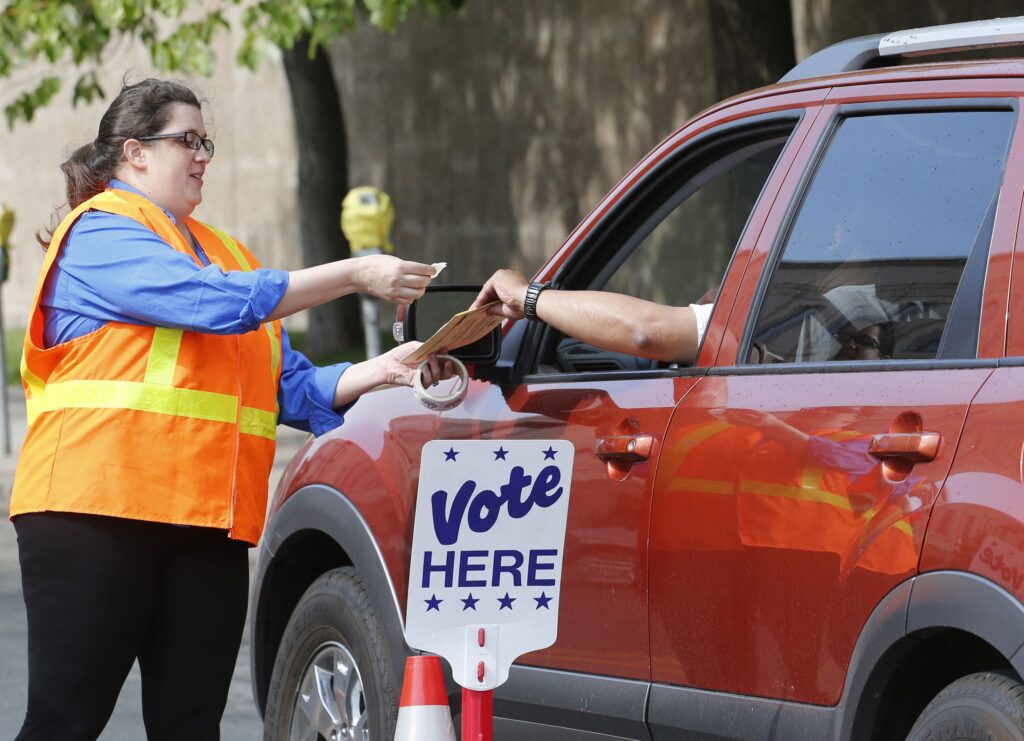
The Colorado Secretary of State’s Office has published the latest voter registration figures for the state and its counties as of June. Colorado ranks among the highest states for independent, or unaffiliated, voters. Only Alaska and Massachusetts have more. New Hampshire, New Jersey, Maine and Oregon also rank highly. So here...

A room for Sundance, a reality check for big-government Boulder | Jon Caldara
Jon Caldara
jon-caldara@coloradopolitics.com
Updated 3 days ago
There are few things more satisfying to watch than socialists getting mugged by reality. The Sundance Film Festival is invading my hometown of Boulder early next year. Sundance drew 85,000 attendees last year in Park City, Utah. Boulder’s hotel room...
Rep. Jeff Crank thinks Democrats are too focused on Trump, not enough on Colorado Springs | Vince Bzdek
Vince Bzdek
vince.bzdek@gazette.com
Updated 8 hours ago
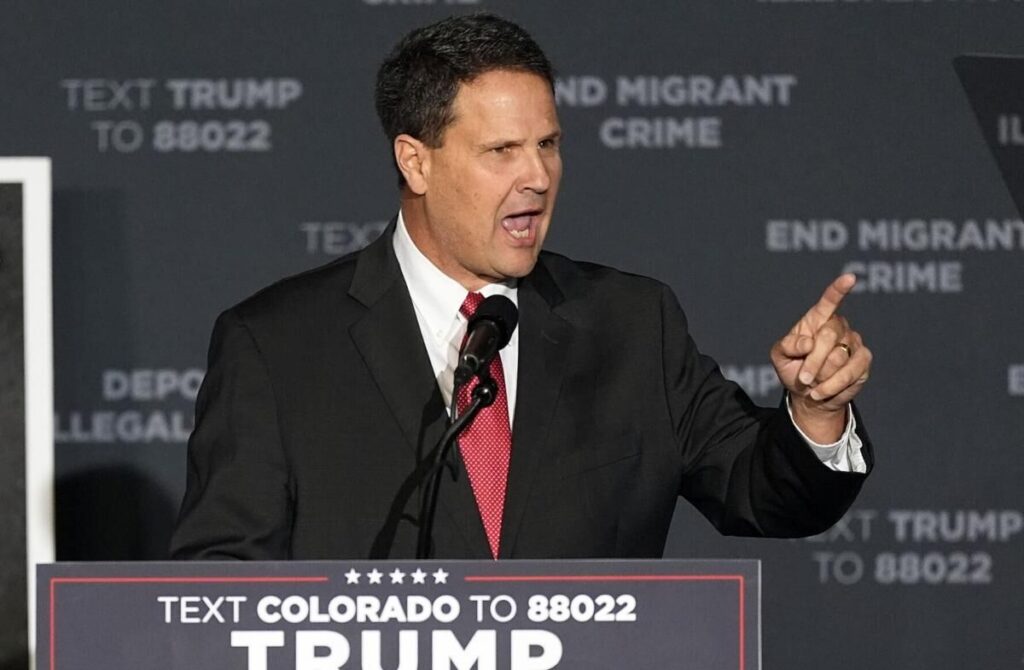
For U.S. Rep. Jeff Crank, who’s unopposed in the Republican primary for the 5th Congressional District but the main target of both candidates in the lively Democratic primary, the big question in the midterms is not who will stand up...
Does character matter anymore? | SONDERMANN
By Eric Sondermann
by-eric-sondermann@coloradopolitics.com
Updated 4 days ago
The last few weeks have been illuminating in the manner of a headlamp pointing the way to some deep, dark, murky netherworld. Graham Platner, a hero to the populist set on the Democratic side, became his party’s Senate nominee in...

Private equity has no place in health care | GUEST COLUMN
Colorado Politics
colorado-politics@coloradopolitics.com
Updated 3 days ago
By Miah Ntepp Of all the financial pressures placed on working people in this country, the skyrocketing costs of health care rank near the top. As families struggle under the cuts to Medicaid made by the Trump administration, they are...
Some pointed questions for the gubernatorial hopefuls | George Brauchler
George Brauchler
george-brauchler@gazette.com
Updated 4 days ago
Earlier this month, the Republican and Democratic candidates for governor participated in a televised interview moderated by well-known, left-leaning legacy media folks. Predictably, the questions asked of the GOP candidates were more aggressive, pointed, biographical and almost entirely disconnected from...
Chaotic funding throws monkey wrench into governor’s-race money madness | Paula Noonan
Paula Noonan
paula-noonan@coloradopolitics.com
Updated 4 days ago
Chaos Monkey, Inc., gave a trifle $20,000 donation to Rocky Mountain Way (RMW), the independent expenditure committee (IEC) supporting U.S. Sen. Michael Bennet for Colorado governor. But why, Coloradans should ask, would a guy who has assigned his contributor name...

Lindsay Datko on school safety, misconduct and transparency in Jeffco schools | The OpEdge Podcast
Tony Olivero
tony.olivero@gazette.com
Updated 5 days ago
Jeffco Kids First founder Lindsay Datko joins The OpEdge to explore concerns about school safety, staff misconduct and transparency in Jefferson County Schools. Datko tells host and investigative columnist Jimmy Sengenberger why she believes Colorado’s second-largest district has too often...

Candidate’s disturbing anti-animal agriculture history | Rachel Gabel
Rachel Gabel
rachel-gabel@coloradopolitics.com
Updated 1 week ago
Rep. Manny Rutinel has busted out a cowboy hat for campaign photos and has thrown it into the ring to represent Colorado’s 8th Congressional District in D.C. He is endorsed by U.S. Sen. Cory Booker, a New Jersey democrat who serves on the Committee...

Marx, Bottoms, a primary death wish for Colorado GOP | Dick Wadhams
Dick Wadhams
dick-wadhams@coloradopolitics.com
Updated 1 week ago
Colorado Republicans stand on the brink of total irrelevance and embarrassment if they nominate one of the two nonsensical, buffoonish candidates running for governor, Victor Marx and Scott Bottoms. Republicans are already in a very defensive, tenuous position as Democrats...
PREV
PREVIOUS

BIDLACK | President wouldn't pass muster among the cadets he will address
Hal Bidlack You will have to forgive me for being a bit over the top on military service academies. The bulk of my 25-plus year military career was spent at the Air Force Academy. In those many years my thinking on service academies, and of course the Air Force Academy (USAFA) in particular, evolved when […]

OPINION | Let facts and logic — not politics and fear — guide state's new oil & gas regulations
Dan Haley Where do we go from here? That question has been top of mind for Colorado’s oil and natural gas industry the past few weeks. For far too long, an unhealthy brew of partisan politics and fear-based rhetoric has heated up the debate over oil and gas in our state. Ballot measure after ballot […]