

Colorado Democrats cheer legislative accomplishments
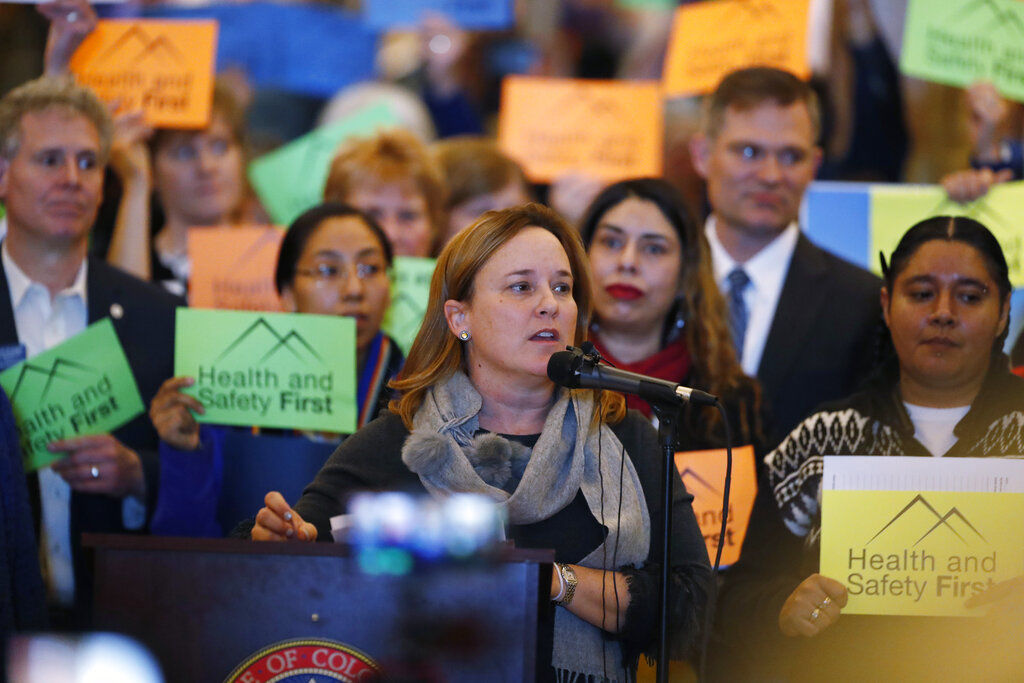
Colorado House and Senate Democratic leaders Monday gave themselves a pat on the back after Friday’s 2019 legislative session wrap-up, pointing to “promises made, promises kept” on equal pay, local minimum wage, full day kindergarten and climate change.
“We worked across the aisle as much as we could,” Speaker of the House KC Becker told reporters Monday.
The session encompassed promises made to voters on the 2018 campaign trail, said House Majority Leader Alec Garnett of Denver. That applied most to the areas of education and health care, the Democrats’ top priorities (and the governor’s, too).
On health care, Garnett pointed to bills on lowering prescription drug costs, whether it’s insulin or other high-cost drugs that could be imported from Canada, as well as a measure that will eliminate out-of-network surprise billing.
Senate Majority Leader Steve Fenberg of Boulder called the session one of the “most transformative” ever.
“There isn’t a single person in Colorado who won’t be impacted by this session,” he said.
The Democratic leaders also addressed Republican efforts to slow down the agenda, particularly on some of the hot-button issues they most opposed such as oil and gas – and Senate Bill 181, which the governor signed on April 12.
Fenberg claimed many of the bills most opposed by Republicans finished in a different form than when they were introduced.
“We listened to people who disagreed with us,” Fenberg said, adding that 95 percent of the bills passed had bipartisan votes.
Many of the issues addressed in 2019 were repeats from previous sessions, Fenberg pointed out. As a result, bills on those issues were ready to go early on.
The General Assembly also passed a bill and two resolutions dealing with workplace culture within the state Capitol.
Senate Bill 244 put into place the legislature’s workplace harassment policy, the result of work from a 2018 interim committee created following last year’s rash of harassment complaints at the Capitol. In the session’s final days, the legislature also passed a joint resolution that included a prohibition against harassment committed by lobbyists.
Democrats also addressed the upcoming November election, which will include a ballot question sent by the General Assembly on allowing sports betting, which would be taxed to help support the state water plan and to combat gambling addiction.
Another measure would allow the state to spend the tax revenue it collects without refunding it back to taxpayers when the revenue exceeds spending limits set forth under the Taxpayer’s Bill of Rights (TABOR).
Becker said that polling completed by outside groups indicates those measures have broad support, and Senate President Leroy Garcia said the time for those conversations is now.
“As long as there’s a plan” behind those measures, voters will see them as fair, he said.
The state water plan, which will need at least $3 billion in state funding over the next 20 years, is part of how Democrats are selling the sports betting question.
Garnett, one of the bill’s sponsors, said the revenue from that measure is expected to reach as much as $11 million in its first year and could provide a revenue stream of up to $25 million in out-years.
“This will go a long way to funding the water plan,” he said.
While the plan has so far put money into water quality, the new revenue could fund stream management, including for the Colorado River, Becker added.
“Even $10 million will make a difference,” she said.
The Democrats also pushed back against claims made by Republicans that they were unapproachable during the session. Fenberg pointed to more than 100 meetings around the oil and gas measure and almost as many amendments, as well as major changes to the FAMLI leave and sex ed bills.
“I’m not saying everyone is happy with the result,” he said. “It would be a mischaracterization to say sponsors put on blinders and didn’t listen.”
“The legislative process worked. We did it the Colorado way,” added Garnett.
And how did threats of recalls affect the session? According to Garnett, the strategy employed by Republicans – when a bill came up they didn’t like, they often threatened a recall – underestimated the broad support for many of the policies and bills.
“If they overreach” in trying for taxpayer-funded recall elections, it’s “a sign of the end of the Republican Party,” Garnett said.


Colorado lawmakers push limits on data-driven pricing as critics push back
Marissa Ventrelli
marissa.ventrelli@coloradopolitics.com
Updated 2 hours ago
Colorado lawmakers are weighing a proposal to restrict the use of algorithms in setting prices and wages, as advocates warn the technology enables hidden discrimination while business groups argue the bill overreaches and interferes with legitimate data‑driven practices. House Bill...

10th Circuit upholds verdict against Denver, officer for protest-related violations
Michael Karlik
michael.karlik@coloradopolitics.com
Updated 2 hours ago
The Colorado-based federal appeals court on Tuesday turned aside multiple challenges to a 2022 jury verdict that found Denver and one of its officers violated the constitutional rights of protesters and were liable for $14 million. In the first of...
Colorado Senate candidate charged with felony child neglect after daughter nearly drowns in Florida pool, police say
Marianne Goodland
marianne.goodland@coloradopolitics.com
Updated 3 hours ago
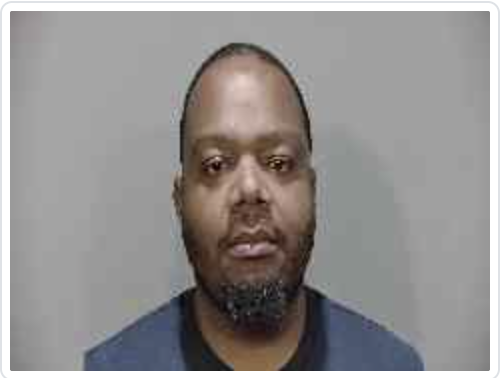
Frederick Alfred, Jr., the sole Republican candidate for Senate District 21 in the June primary and November general election, was arrested in Key West, Florida, late Monday night. Alfred, 38, was charged with two counts of felony child neglect and...
Divided 10th Circuit takes no issue with surprise police encounter with suspect
Michael Karlik
michael.karlik@coloradopolitics.com
Updated 52 minutes ago
Police officers who unexpectedly encountered a Durango-area man while they were preparing to search his nearby home did not commit a constitutional violation by seizing his phone during the ensuing traffic stop, the Denver-based federal appeals court ruled last week....
Colorado lawmakers set Jan. 11 start date for 2027 General Assembly
Marianne Goodland
marianne.goodland@coloradopolitics.com
Updated 3 hours ago
Legislative leaders on Tuesday confirmed that the 2027 session of the Colorado General Assembly will begin on Monday, Jan. 11. Ordinarily, legislative sessions start on the second Wednesday in January. That schedule shifts in years when a new governor is...

10th Circuit rules State Farm not required to pay benefits in I‑25 swerving crash
Michael Karlik
michael.karlik@coloradopolitics.com
Updated 7 hours ago
The Denver-based federal appeals court concluded last week that two vehicle occupants who were injured while swerving to avoid a man in the middle of Interstate 25 are not entitled to insurance benefits. Plaintiffs Stephanie Mazur and Julia Wunder were...
Colorado ethics panel to review complaint alleging misuse of Democratic caucus funds by chair
Marianne Goodland
marianne.goodland@coloradopolitics.com
Updated 3 hours ago
A legislative ethics panel in Colorado is scheduled to meet Wednesday to review a complaint alleging that Aurora Democrat Rep. Mandy Lindsay misused House Democratic caucus funds. Rep. Bob Marshall, D‑Highlands Ranch, filed the complaint on Jan. 26. Marshall’s complaint...
Proposal to ban appointed Colorado legislators from serving in next term fails to advance
Marissa Ventrelli
marissa.ventrelli@coloradopolitics.com
Updated 8 hours ago
For the third year in a row, lawmakers have struck down a proposal that would have prohibited members of the Colorado General Assembly who were appointed through a vacancy committee from serving in the term immediately after. Sponsored by Rep....

Trump says Strait of Hormuz won’t reopen until Iran strikes a deal with US
Mabinty Quarshie, Washington Examiner
mabinty.quarshie.washington.examiner@gazetteedit.wpenginepowered.com
Updated 7 hours ago
President Donald Trump said in a new interview that the Strait of Hormuz will remain closed until the United States and Iran reach a peace deal to end the ongoing war. The two nations are set to begin a second...

US and Iran signal new ceasefire talks in Islamabad as truce nears end
Jon Gambrell
jon.gambrell@associatedpress.com
Updated 12 hours ago
ISLAMABAD (AP) — The United States and Iran have signaled they will hold a new round of ceasefire talks in Pakistan, two regional officials said Tuesday, as leaders on both sides warned they were prepared for more fighting if a...
PREV
PREVIOUS

Colorado State Board weighs outside manager for troubled Adams 14
Colorado’s top education officials have already said they don’t think Florida-based MGT Consulting has the necessary experience to turn around the state’s most troubled district. This week, they’ll have to decide if they’ll approve the for-profit company anyway. This isn’t the first time this year that Adams 14 has come before the State Board of […]

Microsoft offers software tools to secure elections
Microsoft announced an ambitious effort it says will make voting secure, verifiable and more transparent with open-source software. Two of the three top U.S elections vendors have expressed interest in potentially incorporating the software into their voting systems. The software kit is being developed with Galois, an Oregon-based company separately creating a secure voting system prototype under […]