

House Republicans target oil and gas measure with filibuster

State House Republicans appear to have few options for preventing an overhaul of Colorado’s oil and gas industry backed by majority Democrats, so on Tuesday they stalled.
The filibuster to delay action on the measure came after GOP lawmakers fought unsuccessfully to have a clause added to the oil and gas bill that would allow opponents try to block it through a voter petition drive.
Senate Bill 181 would hand local governments control over industry development and operations, increase emission monitoring and direct the Colorado Oil and Gas Conservation Commission to prioritize public health and the environment over fostering the industry.
The House Finance Committee approved the measure Monday evening, passing it to the Appropriations Committee. That party-line vote has been the story of the measure since it was introduced last month. Democrats have pushed the measure through the legislature with Republicans in vehement opposition.
House Republicans continued that opposition Tuesday by dragging out the chamber’s agenda with lofty diatribes at the well and requesting that bills be read at length before voting.
> RELATED: Costs and benefits to Colorado weighed at another oil and gas hearing
House Speaker Rep. KC Becker, D-Boulder, had expected to bring the oil and gas measure to the floor for a second reading either Wednesday or Thursday, but that plan might well have been delayed even further by the hours of speeches, tenuously linked to the bills at hand, and the texts of those bills being read quickly by a computer.
Throughout the afternoon, Republicans uttered familiar phrases at the chamber’s well: “I just want to get up here and talk,” they said. Or: “I just wanna say again…”
At one point, the House was considering a bill concerning the regulation of seed potato growers and House Republican leader Patrick Neville of Castle Rock reminded the chamber that potatoes have twice as much potassium as bananas before discussing the glycemic index.
Becker asked Neville to keep his talking points to the bill itself.
“This is to the bill because it’s about potatoes,” Neville said.
“Just because it’s about potatoes doesn’t mean it’s about the bill,” Becker shot back.
Republicans are working on behalf of voters who successfully beat back a ballot measure on setbacks last fall that would have greatly restricted oil and gas operations, only to have Democrats pushing through something similar now, Neville told Colorado Politics.
“The main thing we’re asking for [is] fairness to voters who just voted [against] Proposition 112, which had the same outcome as 181,” Neville said. “In the bill right now there’s no way for them to petition their government so we’re asking for a petition clause to be fair to voters.”
He said the filibuster would continue for as long as it takes.
“It’s in our hands to try to slow the process down and do whatever we can to stop it,” Neville said of the House’s minority.
Throughout committee hearings and Senate votes, Republicans repeatedly asked that a petition clause be added to the oil and gas bill. Such a clause would allow those who oppose the bill to collect signatures to petition a question onto a statewide ballot that could overturn enacted legislation.
“We need to give our voters a say. Give them an out,” said Rep. Shane Sandridge, R-Colorado Springs. “And if they want to override us, they should be able to.”
Sandridge on Monday had asked Finance Committee members to add a petition clause to the oil and gas bill, to no avail. Tuesday he was among the other GOP representatives asking for bills to be read at length.
Petition clauses are rarely used, Sandridge said Monday. His colleague Rep. Matt Soper, R-Delta County, reiterated that comment Tuesday.
“Is someone really going to get out and get 250,000 signatures to challenge this bill and put it on the ballot? Probably not,” Soper said. “And are voters, if it were to make the ballot, going to vote against it? I would once again say probably not.”
But neither were exactly correct.
Just this year, the legislature passed — and Gov. Jared Polis signed — a controversial bill that would dedicate each of Colorado’s nine Electoral College votes to whichever presidential candidate earns the national popular vote. That bill contains a petition clause.
Before Polis signed the bill into law, an effort was already underway by the mayor of Monument and a Mesa County commissioner seeking to petition on to the 2020 ballot and asking voters to overturn the new law.
That effort would require less than 125,000 signatures to earn a spot on the ballot, not 250,000 signatures.
Indeed, those types of petitions are rare.
The last time someone petitioned onto the ballot in an attempt to overturn legislation was 1932 over a margarine tax increase, said Serena Woods, a spokeswoman for the Secretary of State’s Office. The measure failed by more than 83,000 votes, however, and the tax increase remained.
Becker said she didn’t know what the majority could do to prevent the filibuster, but she was critical of Republicans’ effort to gum up the legislative works. She said elections have consequences, and voters put Democrats in charge of state government last November.
“It’s bringing Washington-style politics to Colorado,” Becker said. “It’s the same thing as doing a government shutdown, and people don’t like that.”
She said Republican stalling is “not what people want in their legislators.”
Tuesday’s slowdown echoed another bill earlier this month when Sen. John Cooke, R-Greeley, asked that the Senate clerk read the 2,023-page House Bill 1172 at length, bringing the chamber to a screeching halt.
Senate Democrats elected to use five computer-reading programs to read the bulk of the bill. The entire process took about seven hours and resulted in a lawsuit from the Republicans arguing that such a reading was unintelligible.
Last week a judge agreed, granting a preliminary injunction against Senate Democrats and the secretary of the Senate, requiring that bills be read at “an understandable speed.”

Homeless recruits of ‘The Program’ say they were told to sign NDAs amid investigations in Colorado
David Migoya
david.migoya@gazette.com
Updated 12 hours ago
Several formerly homeless people — each drawn into an Aurora-based enterprise known as “The Program” that promised free housing and cash in return for letting a home-health business administer prescriptions they were given — said they were pressed into signing...
Homeless recruits of ‘The Program’ say they were told to sign NDAs amid investigations in Colorado
David Migoya
david.migoya@gazette.com
Updated 12 hours ago
Several formerly homeless people — each drawn into an Aurora-based enterprise known as “The Program” that promised free housing and cash in return for letting a home-health business administer prescriptions they were given — said they were pressed into signing...
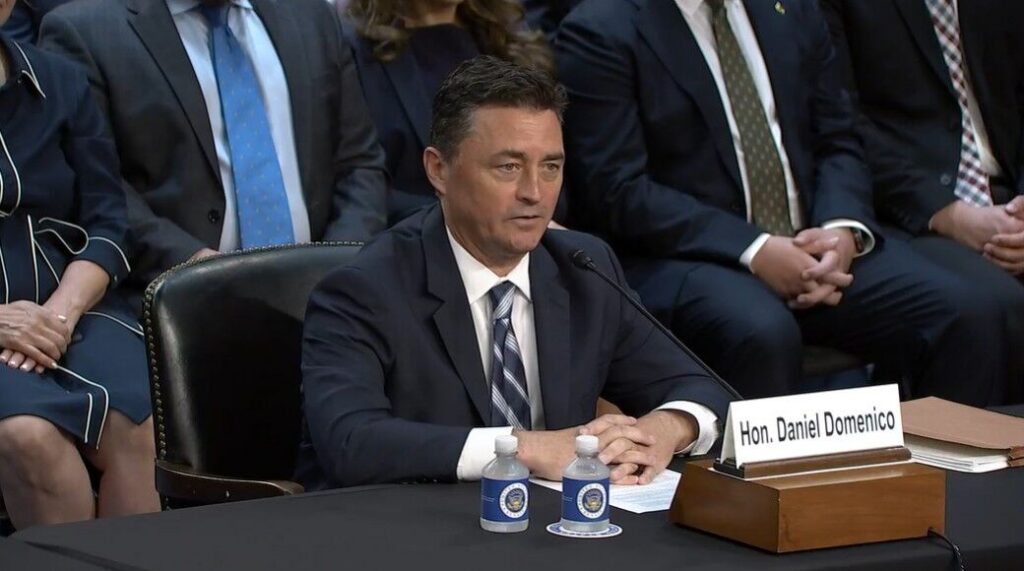
Trump’s 10th Circuit nominee declines to name 2020 election winner, defends immigration decisions
Michael Karlik
michael.karlik@coloradopolitics.com
Updated 12 hours ago
President Donald Trump’s nominee to the Denver-based federal appeals court declined to say who won the 2020 presidential election during his appearance before the U.S. Senate Judiciary Committee on Wednesday, and defended his recent rulings in immigration detention cases. U.S....
Colorado repeals attorney immigration attestation law after one year
Nico Brambila
nico.brambila@denvergazette.com
Updated 11 hours ago
One year and 12 days. That’s how long a Colorado law requiring attorneys to certify they would not use court data for federal immigration enforcement remained on the books before lawmakers repealed it. Gov. Jared Polis signed the initial legislation,...
Colorado’s ‘right to natural gas’ measure submits signatures to qualify for November ballot
Marissa Ventrelli
marissa.ventrelli@coloradopolitics.com
Updated 14 hours ago
A natural-gas rights initiative backed by Advance Colorado is likely headed to the November ballot, triggering a parallel campaign by environmental groups seeking to impose new liabilities on oil and gas operators. Petitions for Initiative No. 177 were turned in...

Economists: Colorado budget improves slightly, but deficits still loom
Marianne Goodland
marianne.goodland@coloradopolitics.com
Updated 14 hours ago
State economists reported a stronger-than-expected bump in general fund revenue driven largely by higher individual income tax collections, yet warned that Colorado remains on track to begin the next fiscal year with a sizable shortfall. State economists upgraded “significantly” the...

Colorado law allowing lawsuits against ‘conversion therapy’ providers takes effect July 1
Marissa Ventrelli
marissa.ventrelli@coloradopolitics.com
Updated 14 hours ago
With a new law taking effect July 1, Colorado is creating a legal pathway for people to sue licensed providers of “conversion therapy,” even as debate over the practice’s constitutionality continues in the wake of a recent U.S. Supreme Court...

Colorado justices expand ability for civil defendants to avoid participating, win after trial
Michael Karlik
michael.karlik@coloradopolitics.com
Updated 6 hours ago
The Colorado Supreme Court decided on Tuesday that a civil defendant, whose non-participation in the case meant that he legally admitted to the sexual assault allegations against him, could nonetheless prevail after he showed up to testify at trial. A...
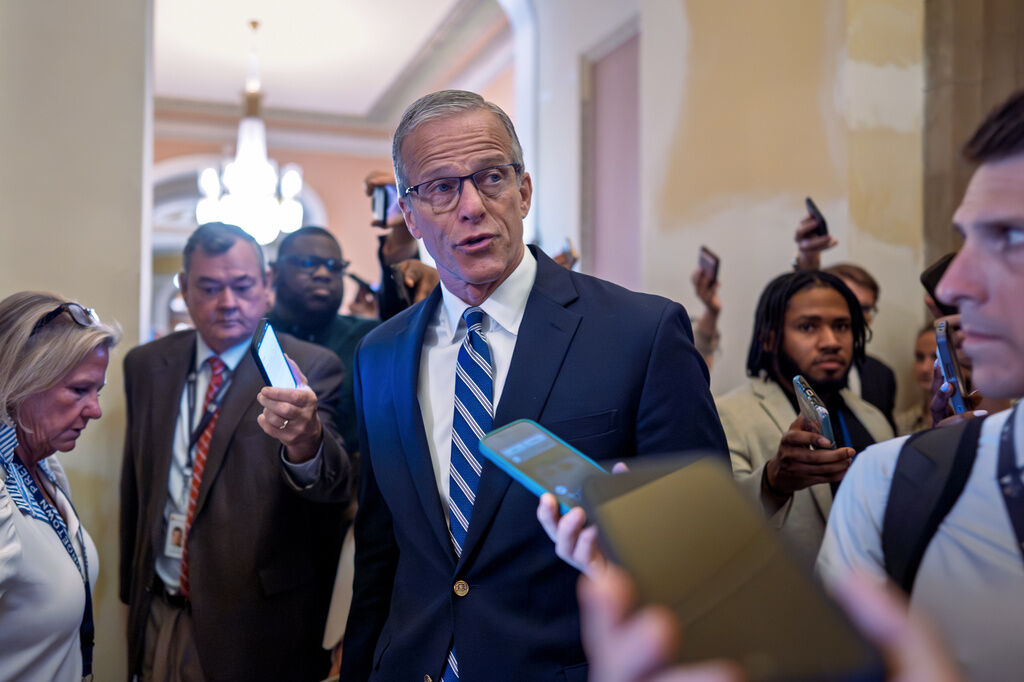
Trump heads to Senate as GOP grows more willing to challenge White House
Naomi Lim
naomi-lim@coloradopolitics.com
Updated 17 hours ago
President Donald Trump normally summons congressional Republicans to the White House, but on Wednesday, he is making a rare trip to Capitol Hill to have lunch with GOP senators. And at least publicly, there is one agenda item. “We’re just...

Trump blasts oil companies for not lowering prices to consumers, accuses them of price gouging
Washington Examiner Staff
washington-examiner-staff@coloradopolitics.com
Updated 17 hours ago
President Donald Trump criticized “big oil companies” for not lowering prices for consumers, even though oil purchase costs have dropped. He accused oil companies of price gouging consumers, ordered the Department of Justice to investigate current practices, and demanded that...
PREV
PREVIOUS

Polis: Sheriffs would have right to prioritize red-flag gun law
Colorado Gov. Jared Polis told reporters Tuesday that sheriffs in Colorado have the autonomy to set local law enforcement priorities. That would include the red-flag gun bill currently being hammered out by fellow Democrats in the Legislature. The governor’s position is notably short of that of another fellow Colorado Democrat: Attorney General Phil Weiser. Two […]

Candidate Hickenlooper opposes Green New Deal in op-ed
Democratic presidential candidate John Hickenlooper says in a newspaper opinion piece that he opposes the Green New Deal, saying the climate change proposal sets “unachievable goals” and shuns the private sector. The former Colorado governor announced his opposition to the resolution Tuesday, as Senate Republicans are forcing a vote on the proposal in hopes of […]