

U.S. Supreme Court to deliberate fate of partisan gerrymandering — again

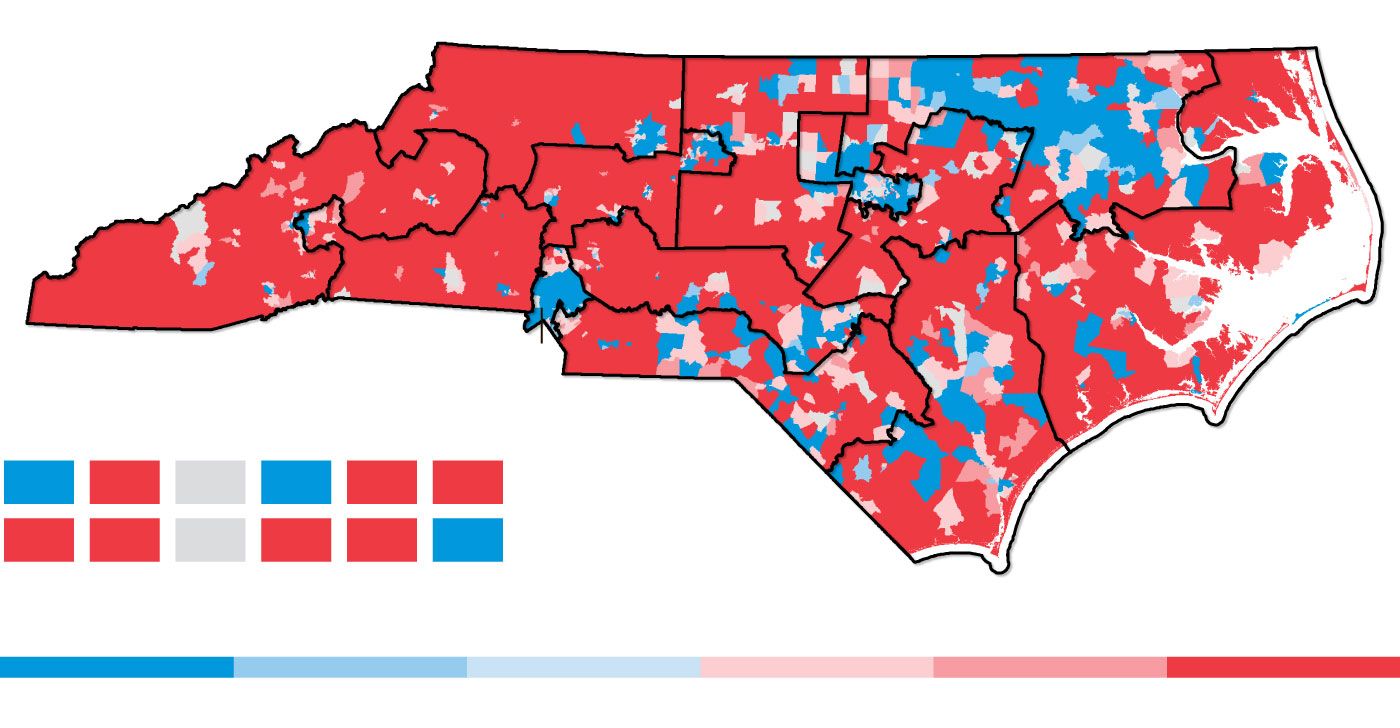
GREENVILLE, N.C. – A tour of local barbecue joints is a better way than many to understand why the outline of North Carolina’s First Congressional District is featured in a lawsuit.
More than 150 miles wide, the district dips down on its eastern flank to reach Greenville and B’s Barbecue, an old-fashioned dive on the outskirts of town where the pigs cook overnight and a line of patrons stretches into the dirt parking lot by midmorning. Two hours west in Durham sits the Pit, a modern place near downtown where urbanites can choose from 12 taps of craft beer to enhance their chopped-pork experience.
Though both restaurants are part of the same district, driving from one to the other involves crossing congressional district lines five different times.
After a panel of federal judges ruled North Carolina’s district lines were an unconstitutional power grab by Republican map makers, the case has come to Washington, where on Tuesday it faces a U.S. Supreme Court that has long been flummoxed by partisan redistricting.
Over several cases, the court has failed-most recently last June-to agree on what, if anything, it should do about electoral maps drawn to amplify one political party’s power far beyond its actual share of popular support. The North Carolina case, along with a second case from Maryland where Democratic map makers have drawn fire, finally could prompt the justices either to impose nationwide limits on partisan redistricting-or remove the federal courts entirely as a referee.
“It’s hard to be a fan of gerrymandering-it’s a pretty obnoxious practice,” said Ohio State University election-law professor Edward Foley. “But the challenge for the court is to turn that into a workable legal doctrine.”
Though North Carolina is closely divided between Republicans and Democrats, the GOP forged a 10-3 congressional advantage under a map its state legislative majority drew in 2016. Partisan maximization was an explicit goal. (Two seats are currently vacant.)
A three-judge court ruled last year that state Republicans violated several constitutional provisions by splitting certain Democratic communities into different districts and bending other district lines-like those in the First District-to pack an inordinate number of Democrats together, effectively preserving the rest of the state for the GOP.
Faulkner Fox, a Duke University creative-writing professor, local activist and plaintiff in the case, said the map has left the state without competitive races and with a Republican dominance the GOP hasn’t earned.
“We’re a very purple state,” she said. “Their voice should not be louder than ours if they don’t have the numbers.”
The North Carolina legislature, which said its districts compare favorably to some of the contorted shapes of previous state maps, argues the Constitution doesn’t impose limits on partisan motivations.
Courts “simply do not have any business making value-laden judgments about how much politics is too much in a process that will never be free of politics,” the state said in its high-court brief.
The Maryland case, which is making its third trip to the Supreme Court, flips the script, with Democratic lawmakers drawing congressional districts in 2011 in a way that weakened Republicans, who at the time held two of the state’s eight House seats.
With a 2-to-1 statewide edge in voter registration, Democrats had the numbers to construct majorities in at least seven districts. Then-Gov. Martin O’Malley did just that.
“The Governor’s map is not pretty,” said an October 2011 staff memo to the state Senate president. But “it gives Democrats a real opportunity to pick up a seventh seat,” the memo continued. “In the face of Republican gains in redistricting in other states around the nation, we have a serious obligation to create this opportunity.”
That involved redrawing the rural Sixth District, which stretches across the western Maryland panhandle. Democratic map makers altered the district’s eastern boundary, moving GOP precincts into the heavily Democratic Eighth District, while adding liberal Washington, D.C., suburbs into the Sixth.
The move worked, allowing a moderate Democrat to take the seat from a longtime GOP incumbent. After voters ratified the map in a statewide referendum, a group of Republican residents filed suit.
Despite several setbacks, the claim prevailed before a three-judge federal court, which found the new Sixth District violated Republican voters’ First Amendment rights to representation and association.
Maryland’s defense takes a softer tone than North Carolina’s, with the state acknowledging that gerrymandering poses a threat to democracy and that courts have an important role. But it argues that its map didn’t entrench one political party into minority status like other maps that have been challenged, noting that Republican Gov. Larry Hogan prevailed easily among Sixth District voters.
( Hogan, along with former California Republican Gov. Arnold Schwarzenegger, filed an amicus brief urging the Supreme Court to rule for the map challengers in both the Maryland and North Carolina cases, though other Republicans urged the court to side with the states.)
The two cases present the court with several different constitutional arguments against gerrymandering, much along the lines of Justice Stephen Breyer’s suggestion last term to combine all the challenges together into something like a seminar. “You could have a blackboard and have everyone’s theory on it,” he said.
The court’s difficulty with partisan gerrymandering contrasts with its treatment of racial gerrymandering, where justices have long found it unconstitutional to draw district lines that discriminate against minority voters. But while race is an immutable characteristic, political affiliations aren’t.
The First Amendment claim in the Maryland case came in response to musings by now-retired Justice Anthony Kennedy, who in previous cases suggested a map might be unlawful if it targeted voters because of their expression of political views. But Justice Kennedy didn’t write the theory into constitutional law when the case reached the court last term as his tenure wound down.
The North Carolina case, which consolidates two different lawsuits, presents several different theories, including First Amendment claims, as well as the more traditional argument against gerrymandering: That it violates the constitutional guarantee of equal protection.
But the plaintiffs also contend that gerrymandering violates two constitutional provisions related to congressional elections because rigged maps are an impermissible effort to dictate electoral outcomes.
Liberal justices long have been willing to say, in some circumstances, that partisan gerrymanders can go too far. The question is whether any conservative breaks with tradition to provide a fifth vote and seek a remedy. While Justice Kennedy appeared sympathetic to gerrymandering claims, his successor, Justice Brett Kavanaugh, has no previous record on the issue. Chief Justice John Roberts, the court’s new swing vote, has expressed deep discomfort with inserting the court into messy political disputes.
In the lower courts, rulings on partisan gerrymandering haven’t split rigidly along ideological lines. An Obama judicial appointee wrote the decision against the North Carolina map, while a George H.W. Bush appointee wrote the lead opinion striking down Maryland’s district lines.
The Supreme Court’s inaction has pushed anti-gerrymandering advocates to pursue other avenues. That includes suing in state courts, with some success: Pennsylvania’s Supreme Court last year imposed a new congressional map after finding the Republican legislature’s redistricting violated the state constitution’s “free and equal” elections clause.
Elsewhere, voters in four states passed initiatives last November that would address gerrymandering, either through the use of independent districting commissions or other means. They follow states like Arizona and California, where voter initiatives transferred redistricting to similar commissions from state lawmakers.
In Washington this month, the Democratic House of Representatives passed curbs on gerrymandering, including requiring each state to use independent commissions to draw congressional districts, as part of a broader legislative package of anticorruption measures. The Senate is unlikely to take up the measure.
Rep. Jamie Raskin (D., Md.), who has pushed several measures to counter gerrymandering, says political entrenchment has grown more extreme as technology for identifying and sorting voters has advanced.
And as long as politicians themselves control the process, “it’s safe to say that there’s really no difference between redistricting and gerrymandering anymore,” he said.

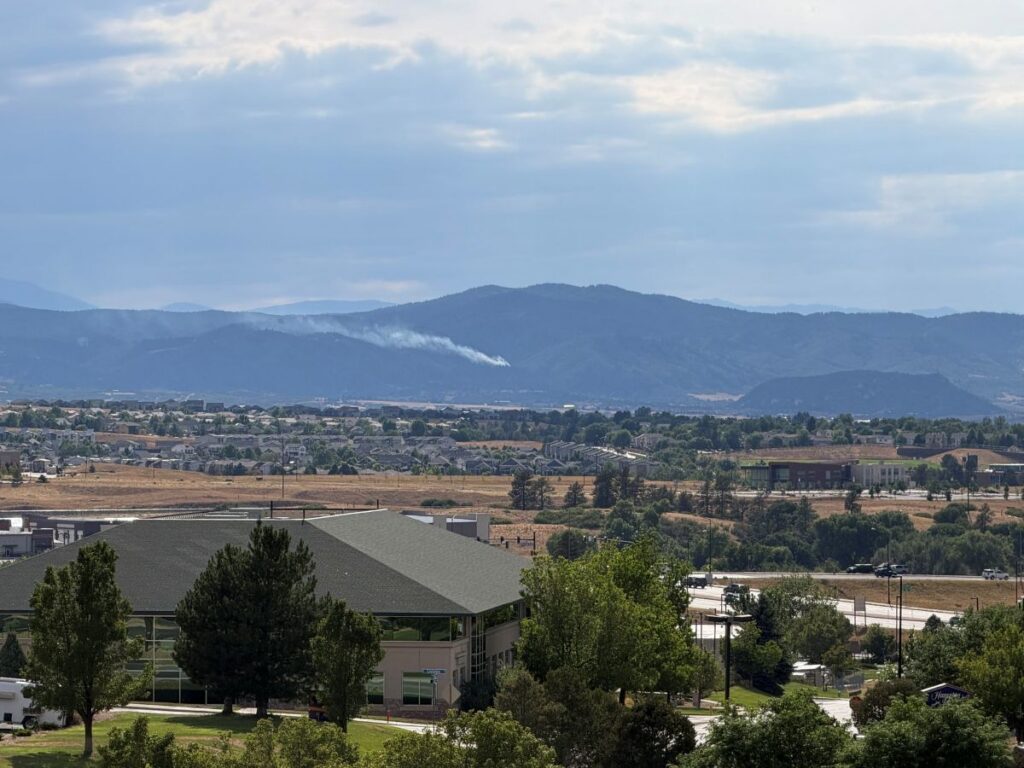
Forest fire west of Sedalia prompts evacuations in Douglas County
Nicholas Fogleman
nicholas.fogleman@denvergazette.com
Updated 2 hours ago
Emergency crews are responding to a forest fire burning west of Sedalia, prompting evacuation orders for nearby residents Sunday afternoon. At about 5 p.m. Sunday, the Douglas County Sheriff’s Office issued an evacuation order for residents within a 2-mile radius...

Airstrikes have paused and talks are pressing forward. But can the US and Iran take the off-ramp?
The Associated Press
the-associated-press@coloradopolitics.com
Updated 2 hours ago
WASHINGTON (AP) — The U.S. military has paused its airstrikes on Iran after nearly two weeks of intensifying bombing, while diplomatic efforts have pushed forward to try to avert a return to all-out war. But it remains to be seen...
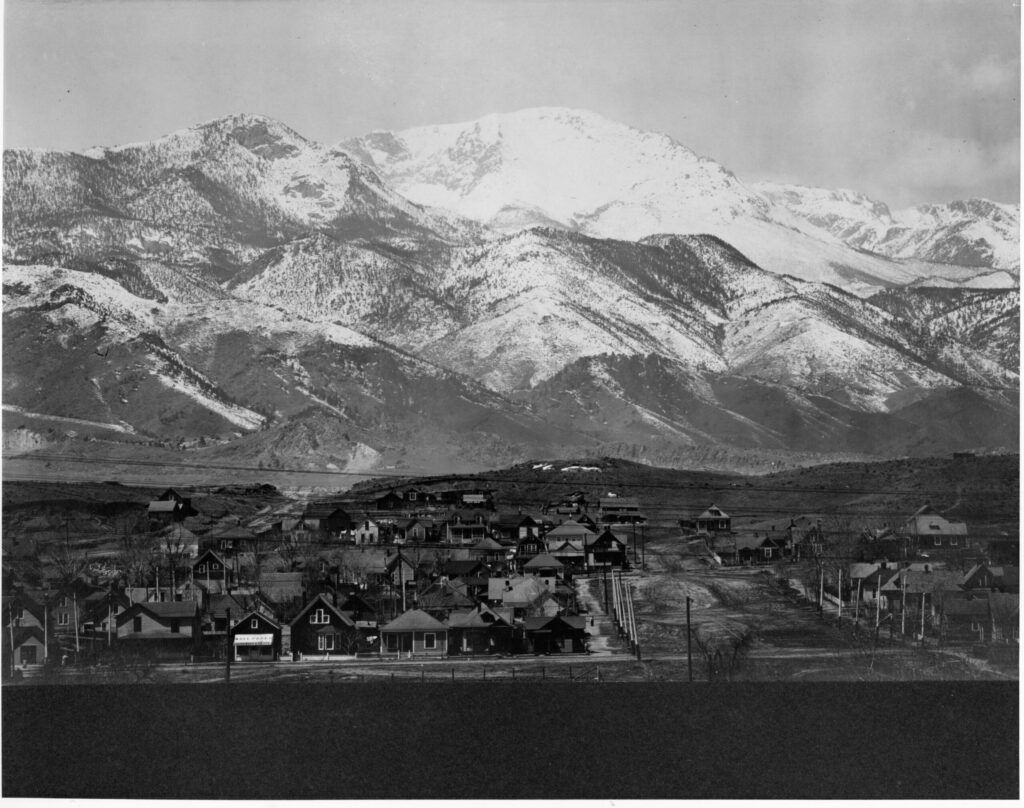
Penrose fortune paved the way for Colorado Springs to be a military, space and sports town
Mary Shinn
mary-shinn@coloradopolitics.com
Updated 2 hours ago
Colorado Springs is always working to catch the next big economic wave. “We’re always trying to figure out what the next thing is going to be,” explained Matt Mayberry, director of the Colorado Springs Pioneers Museum. In the early days,...

Colorado Politics Calendar July 27-Aug. 2
Rachael Wright, Special to Colorado Politics
rachael.wright@coloradopolitics.com
Updated 5 days ago
CoPo’s weekly political calendar will help you find political and public-policy events throughout Colorado. It includes candidate and issue campaign events, public policy meetings, court hearings, state and local party conventions, assemblies, debates, rallies, parades, speaking engagements, traveling dignitary appearances,...

Space Force needs to measure workforce needs, as it prepares to double in size, GAO report says
Mary Shinn
mary-shinn@coloradopolitics.com
Updated 2 hours ago
The Space Force needs more people. It’s just not precisely sure how many more. A Government Accountability Office report released earlier this month found that the youngest and smallest military branch does not have a process to consistently or accurately...

The through line from Donald Trump to Victor Marx | SONDERMANN
By Eric Sondermann
by-eric-sondermann@coloradopolitics.com
Updated 5 days ago
Over 10 years ago, before Donald Trump could ever defeat Hillary Rodham Clinton, he had to first engineer a hostile takeover of the Republican Party. Prior to his descent of that golden escalator, the previous seven Republican presidential nominees had...

Colorado districts prepare for school year amid mental health cuts. But will less cellphone distractions help?
Marissa Ventrelli
marissa.ventrelli@coloradopolitics.com
Updated 3 days ago
The signs of a new school year are everywhere — buses in the shop, teachers unpacking boxes, families ticking through supply lists — but behind the familiar rituals, Colorado districts are preparing for a year defined less by routine than...
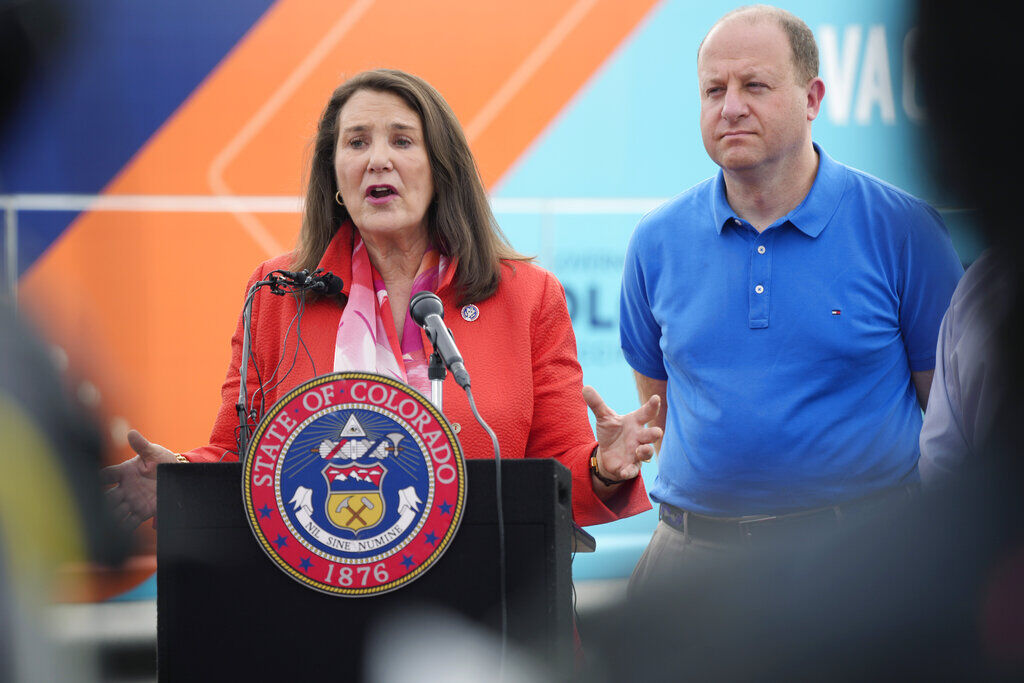
Armstrong staffer considers congressional bid, DeGette angers rural communities with wilderness act | A LOOK BACK
Rachael Wright, Special to Colorado Politics
rachael.wright@coloradopolitics.com
Updated 4 days ago
Forty-five years ago this week: If the lines were drawn just right, Republican Sen. Bill Armstrong stood the chance of losing his office manager, Ruth Fountain. Fountain admitted she was seriously thinking about running for Colorado’s new congressional seat in...
Busy wildfire season tests US fire bosses as they juggle resources to stay ahead | OUT WEST ROUNDUP
The Associated Press
the-associated-press@coloradopolitics.com
Updated 1 hour ago
NEW MEXICO Wildfires challenge resources ALBUQUERQUE — It’s already been a deadly year for firefighters, and authorities have been putting resources where they can more quickly pounce on wildfires before they get out of hand and increase the possibility of...

Aurora City Council to discuss accountability for homeless navigation campus
Kyla Pearce
kyla.pearce@gazette.com
Updated 2 hours ago
The Aurora City Council will discuss performance metrics and accountability for the homeless navigation campus, vote on election timing and hear updates on chamber accessibility in Monday night’s meetings. In Monday night’s study session, Councilmember Gianina Horton will propose a...
PREV
PREVIOUS

Denver school district commits to $15 minimum wage by 2023
In response to rising rents and living expenses in the gentrifying city, the Denver school board unanimously passed a resolution Thursday to raise the district’s minimum wage to $15 by 2023. The change will cost $9 million, the resolution says, and affect more than 3,000 food service workers, custodians, teachers aides, and other hourly employees […]

Ken Salazar throws support behind DeGette primary challenger Crisanta Duran
Former Interior secretary and U.S. Sen. Ken Salazar, one of Colorado’s most high-profile Democrats, is getting behind Crisanta Duran, the former House speaker challenging U.S. Rep. Diana DeGette in a primary. “In the Colorado House, Crisanta brought real common sense problem solving and the kind of grit and work ethic that is sorely lacking in […]