

House committee advances Colorado ‘red flag’ gun bill after 1st hearing (VIDEO)
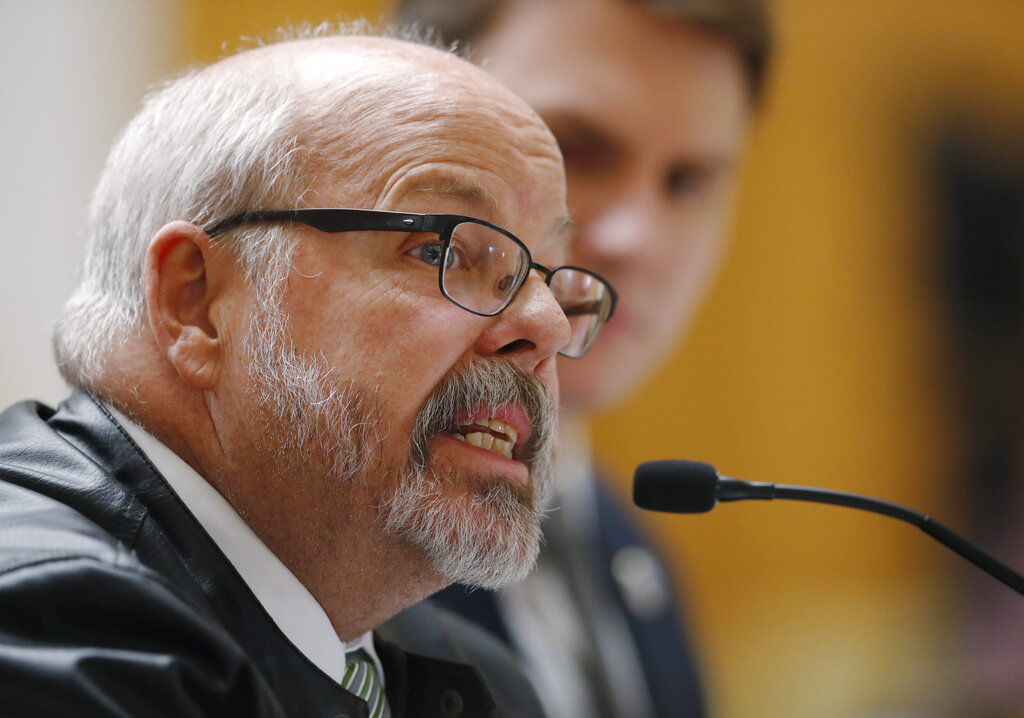
Legislation allowing the seizure of guns from people deemed to pose a threat to themselves or others cleared a Colorado House committee just before midnight Thursday.
Colorado Democrats see a big opportunity this year to pass the legislation after its defeat in last year’s divided legislature.
This year’s “red flag” bill – formally known as an “Extreme Risk Protective Order” (ERPO) – got its first hearing on Thursday before the state’s House Judiciary Committee.
House Bill 1177 cleared the committee just after 11:30 p.m. on a party-line 7-4 vote and was sent to the House Appropriations Committee for its next review.
The bill is named for Douglas County Deputy Zack Parrish, III, who was killed in an ambush on New Year’s Eve in 2017 by a veteran known to suffer from PTSD. Thursday would have been Parrish’s 31st birthday.
Under HB 1177, a family member, household member or law enforcement officer can petition the court for a temporary ERPO when they can demonstrate that a person poses a significant risk to themselves or others by having a firearm in his or her custody.
A second hearing, to be held within 14 days, would require either law enforcement officials or the family to show by “clear and convincing evidence” that the respondent is still a danger. At that time the weapons can be held for up to 364 days while that person seeks treatment.
Once the temporary order is issued, the respondent must turn over all weapons to law enforcement or a federally licensed firearm dealer. To get those weapons back, the respondent must prove they are no longer a danger, using a “beyond a reasonable doubt” standard.
Colorado’s Democratic attorney general, Phil Weiser, urged lawmakers to support the measure. In a letter sent Thursday to the committee, Weiser said that the bill is designed to save lives.
“According to one study that evaluated ERPOs in other states, researchers estimated that one life was saved for every 10 to 20 ERPOs issued by the court,” Weiser wrote.
“For this reason above all others, I strongly support HB19-1177.”
Weiser also said he believes the bill is constitutional and does not violate the Second Amendment. Democrats on the committee pointed out that even groups like the National Rifle Association didn’t claim a Second Amendment violation.
Nevertheless, opponents say the legislation infringes on citizens’ Second Amendment rights and could deter people from seeking care for mental health issues.
Republican lawmakers raised concerns that people would file frivolous petitions, although several district attorneys pointed out that would constitute perjury for which offending parties could be prosecuted.
House Minority Leader Patrick Neville, a survivor of the 1999 Columbine High School massacre, says the bill would discourage citizens from seeking help because of the “stigma” associated with mental illness.
“No one should feel they have to choose between their guns and getting the help they need,” Neville said in a statement.
At Thursday’s hearing, two Colorado sheriffs urged lawmakers to enact the bill.
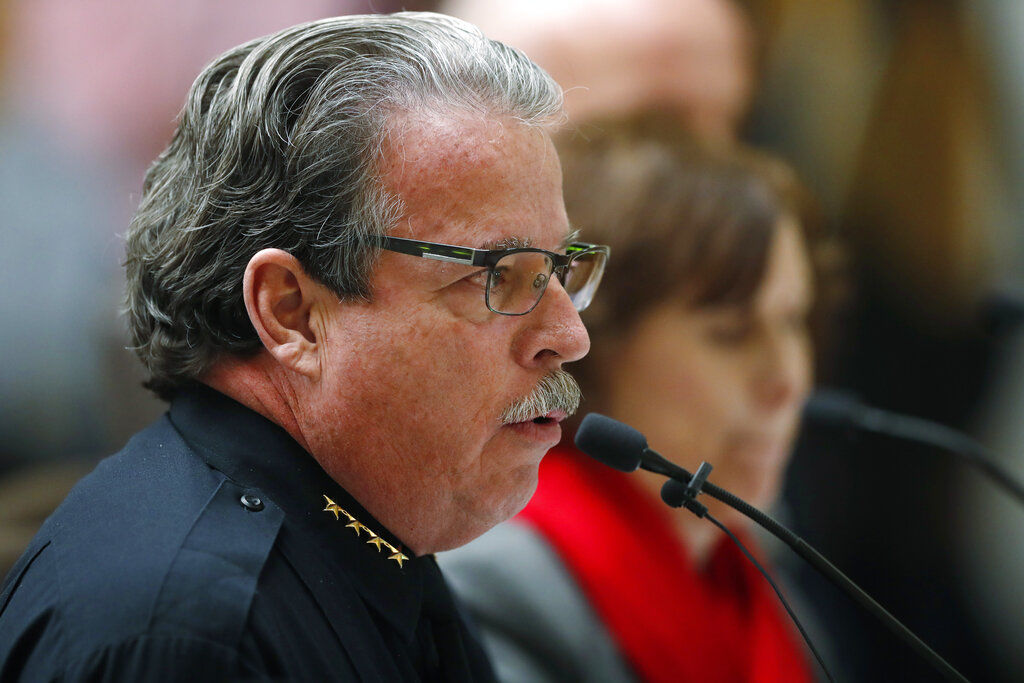
Douglas County Sheriff Tony Spurlock, whose department included Parrish, told the committee the bill makes it easier for police agencies to intervene to help those in crisis.
Boulder County Sheriff Joe Pelle said the measure will make communities – and officers – safer. Pelle’s son is also a deputy in Douglas County and was shot in the same incident as Parrish. He has since recovered.
Witnesses who own guns also testified in favor of the bill. Mary Parker, who works with abused children, told the committee that while she appreciates efforts by Republicans to protect her gun rights, some of the bill’s opponents value their guns more than they value life.
But there were plenty on hand – including law enforcement officials – to testify against the red flag bill.
That included Weld County Sheriff Steve Reams, who said lawmakers should focus on bolstering mental health care rather than “overreach” in removing guns owned by citizens deemed to be in mental crisis.
Reams said he also was speaking for sheriffs in El Paso, Larimer, Mesa and Teller counties.
John Anderson – a retired commander of the Castle Rock Police Department and a 20-year veteran of SWAT teams – testified that the bill, if adopted, could create dangerous situations if SWAT officers are sent to confiscate arms from citizens deemed a threat.
The bill, he said, assumes that “the accused is guilty until proven innocent.”
George Brauchler – Arapahoe County district attorney and the prosecutor of the Aurora theater shooter – last year supported the unsuccessful “red flag” legislation.
But Brauchler, a Republican who ran unsuccessfully for state attorney general, testified against this year’s version.
He said he wants a higher standard of evidence for anyone seeking a court order to remove guns from someone on the grounds that the person is in crisis.
Brauchler also objected to the bill’s requirement that the gun owner prove that he or she has overcome his or her crisis in order to get the weapons back. He also said a maximum 364-day duration for risk protection orders is too long.
Brauchler said if the bill passes, lawmakers should revisit it in two or three years to fix any shortcomings.
Witnesses on both sides of the argument pointed out that the bill does not address the underlying issue of Colorado’s lack of access to mental health treatment.
One witness, whose son has attempted suicide several times, including with a gun, pointed out that the state’s two mental hospitals reserve their few available beds for people who are there under criminal charges.
“This bill will help keep our loved ones alive, waiting for the day when you figure out how to address the lack of mental health treatment,” she said.
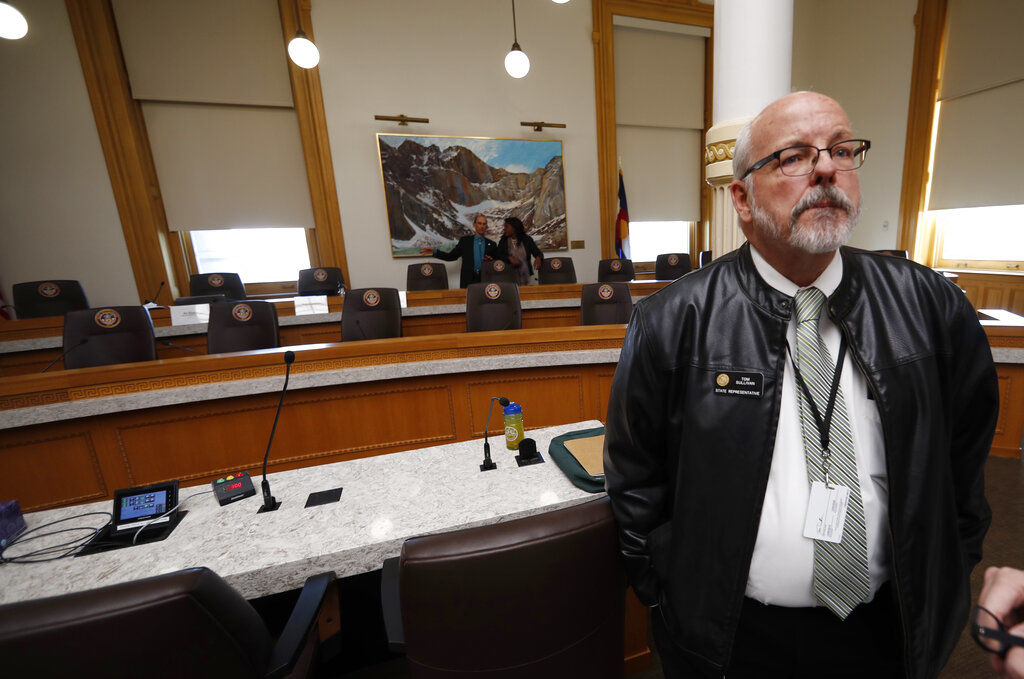
The bill’s sponsors – House Majority Leader Alec Garnett of Denver and Democratic Rep. Tom Sullivan of Centennial – offered a handful of amendments they hoped would assuage some of the concerns from opponents.
Those amendments included ensuring the subject of a protective order is notified that he or she would be appointed a lawyer for a formal hearing and that neither side would be charged fees.
All weapons would have to be returned within three days of the end of the order under another amendment approved by the committee.
Yet another amendment would ensure that a concealed carry permit would be returned along with any firearms, although Garnett said he would work with other lawmakers on language dealing with the reissuance of the permit to cover the time period that the permit was out of the respondent’s custody.
An additional amendment requires law enforcement to return the weapons in the condition in which they were seized.
But “that’s an almost impossible task,” said Republican Rep. Hugh McKean of Loveland, a firearms instructor.
The Associated Press contributed to this report.





Colorado’s Western Slope magistrate judges describe unique role in federal judiciary
Michael Karlik
michael.karlik@coloradopolitics.com
Updated 1 hour ago
Two of Colorado’s federal judges stationed on the Western Slope spoke to lawyers on Wednesday about their unique roles, the ways their workloads differ, and the need for more criminal defense lawyers to take cases outside the Front Range. “Here...
‘Ticked off’: Third-party US Senate candidate in Colorado launches $1.3 million TV ad campaign
Ernest Luning
ernest.luning@coloradopolitics.com
Updated 3 hours ago
Bob Chew, the Forward Party nominee for U.S. Senate in Colorado, sends household objects flying in a TV ad set to run statewide through September, backed by $1.3 million across multiple platforms, his campaign told Colorado Politics. Meant to demonstrate...
Federal judge rules that request for bond hearing not necessary to challenge immigration detention
Michael Karlik
michael.karlik@coloradopolitics.com
Updated 1 hour ago
A federal judge in Colorado ruled last week that it is not mandatory for a person to seek a bond hearing with an immigration judge before they challenge the lawfulness of their detention in federal court. For the past year,...

Colorado shifts vaccine authority to state as Trump administration revises childhood framework
Marissa Ventrelli
marissa.ventrelli@coloradopolitics.com
Updated 2 hours ago
As the Trump administration rolls out a revised childhood vaccine framework, Colorado’s law allowing the state to set its own immunization schedule has now taken effect. Issued Monday, President Donald Trump’s executive order separates childhood and adolescent vaccines into three...

Boulder Valley School District introduces new policies following antisemitism lawsuit
Marissa Ventrelli
marissa.ventrelli@coloradopolitics.com
Updated 3 hours ago
The chief of Boulder Valley School unveiled new policies for the 2026-2027 school year following a lawsuit filed on behalf of a student alleging antisemitic harassment. In June, the Anti-Defamation League filed a federal civil rights complaint against the school...

Golden city manager fired after ‘racist incident’ at fire station
Matt Kyle
matt.kyle@denvergazette.com
Updated 41 minutes ago
The Golden City Council on Tuesday voted to terminate City Manager Scott Vargo following a reported “racist incident” at a city fire station. The alleged incident happened in March. Reportedly, a “Snoop on a Stoop” doll, which resembles an “Elf...

Colorado NRA chapter seeks injunction against new gun‑training requirement
Marissa Ventrelli
marissa.ventrelli@coloradopolitics.com
Updated 2 hours ago
The Colorado chapter of the National Rifle Association is seeking an injunction to stop the state from enforcing a new law that took effect earlier this month. The new law requires anyone buying or selling certain firearms to first complete...

Trump’s approval rating sinks to new low at 33%
Molly Parks
molly.parks@washingtonexaminer.com
Updated 10 hours ago
President Donald Trump’s approval rating has reached a new low, sitting at 33% approval and 62% disapproval, according to the latest YouGov/Economist poll. The one-third approval standing in early August is the lowest net job approval Trump has seen across...

Denver moves to dismiss Trump challenge to ‘assault-style’ weapons ban
Deborah Grigsby
deborah.smith@denvergazette.com
Updated 2 hours ago
Denver has filed a motion to dismiss a lawsuit brought by the Trump administration challenging the city’s ban on “assault-style” weapons and magazines exceeding a 15-round capacity. The U.S. Department of Justice filed a suit in federal court in May,...
Denver City Council committee looks to ease affordable housing metrics
Deborah Grigsby
deborah.smith@denvergazette.com
Updated 1 day ago
Denver’s Department of Housing Stability is asking the city to rewrite some of the key performance metrics in the city’s agreement with the Denver Housing Authority to deliver affordable housing. HOST is asking the city to amend parts of a...
PREV
PREVIOUS

Bill would let Coloradans with mental health disorders create advance orders
A Colorado Senate committee approved a bill that would allow those with behavioral or mental health disorders to create an advance medical plan for possible future crises. Already adults can write advance medical orders on the type of treatment they prefer and establish a set of procedures in case they’re unable to provide consent or […]

Colorado country included in national health study on toxic chemicals in drinking water
Residents living downstream of Peterson Air Force Base were among eight communities selected for a national study examining the levels of toxic chemicals in their blood from contaminants in millions of Americans’ drinking water. Security, Widefield and Fountain residents were chosen to participate in the long-awaited, $10 million study by the Centers for Disease Control […]