

THE PODIUM | Popular pols can be abusive bosses — as I learned firsthand

U.S. Sen. Amy Klobuchar, who made her presidential bid official Feb. 10, faces troubling allegations of abusing her staff. According to reports in the nation’s news media, multiple sources credibly charge that Klobuchar subjected her staff to regular cruelty and humiliation: several staffers say the senator has thrown objects in an explosive rage and has even had staff do her dishes and laundry, violating Senate ethics rules.
In 2006, the head of the AFSCME local that represented Klobuchar’s employees as Hennepin County prosecutor urged the union not to endorse her for Senate, citing her “shameful treatment of her employees.” At least three people reportedly turned down the opportunity to manage Klobuchar’s presidential campaign. But despite high staff turnover and other evidence going back more than a decade, some slammed the reports as a sexist hit job, asking in so many words, “would anyone write the same story about a man?”
I would.
I once worked for a male politician whose charm and charisma made him a natural onstage but whose behavior behind closed doors made it impossible to run an effective campaign. As campaign stresses intensified, his interactions with staff turned erratic and pointlessly cruel: When presented with bad news during a meeting, he casually threatened to fire his whole team. His unpredictable blow-ups frequently derailed our plans and his hostile reactions made it hard for staff to discuss our concerns. Ultimately, his staff felt forced to resign: without staff, the campaign went off the rails, ending early and in debt.
Politicians who mistreat their staff have a demonstrated tendency to blow up their own organizations, so Democrats ignore such abuse at the peril of the movements we invest so much into. Without firsthand experience, it’s hard to understand how crippling an abusive workplace can be, but the problems within are far worse than hurt feelings: One Klobuchar staffer describes “an overwhelming sense of panic and not being able to plan.” Another says Klobuchar was “constantly lighting new fires” at the expense of legislative work. Abuse jeopardizes any operation; at the presidential level, it puts an ugly wild card into play when Democrats can least afford one.
Tolerating abuse of any kind is an affront to Democratic values, and as we turn away from corporate campaign cash, we’re drawing more resources from ordinary people for whom volunteering and donating represent a major sacrifice: we owe it to them to support leaders capable of running a tight ship without hindering the crew. Staff also represent a vast investment of time, training, and energy, and we can’t afford to lose our most talented and experienced operatives to burnout.
In implying that Klobuchar’s staff deserved the senator’s wrath, her defenders are essentially saying that if the right person is an abuser, the abuse is justified. But it’s easy to exploit political staffers: As young people, they’re much less likely to know from experience what a healthy workplace feels like. They work tirelessly, usually for low pay, for a chance to help make a positive change in the world. Many staff don’t have health insurance or other benefits and many rely on provided housing.
Staffers who speak out jeopardize their careers and risk enormous backlash. For every staffer who knows how a politician behaves offstage, there are thousands of adoring supporters who know only the onstage persona. No one gets far in politics without being superficially charismatic and likeable, so it can be impossible to convince outsiders that what they see and love is only part of the picture.
We’ve only recently made a commitment to stop interrogating and start believing survivors of sexual abuse. Failing to take all forms of abuse seriously discredits our promises to believe those who come forward and hold their abusers accountable. Leaders who abuse and intimidate are simply not as effective as leaders who encourage and inspire, and offices that are constantly losing staff to burnout also hemorrhage institutional knowledge: for an extreme example, look no further than the White House, with its high turnover rate and corresponding chaos.
Klobuchar boasts approval ratings most politicos can only dream about and with a few Republican senators backing her, she could be a powerful ally in the fight to return to a just and effective political center. But if the reports are true, Klobuchar must come correct. The things we are fighting for are far too important to hitch our hopes to any campaign that cannot inspire the full and enthusiastic support of the people most familiar with its inner workings. Our nominee needs a team she can count on – a team confident they can count on her, too.
Meg Brown is an independent investigative journalist living in Parker. She also writes, edits, and performs research for Democratic campaigns. Reach her at meg@boldtext.org


Processing plants are an important piece of the ag puzzle | Rachel Gabel
Rachel Gabel
rachel-gabel@coloradopolitics.com
Updated 19 hours ago
Concrete barricades blocked the entrance to the Cargill beef plant in Ft. Morgan, Colo., on May 20. About 1,700 workers had been locked out by the company after months of contract negotiations ended with workers voting to reject the company’s...

As AI advances, are the accompanying AI advances for the better? | Miller Hudson
Miller Hudson
miller-hudson@coloradopolitics.com
Updated 19 hours ago
You may have noted Elon Musk was in court suing Sam Altman of OpenAI. If you were praying there was a way both of these greed bros could lose, you nearly got your wish. Emails exchanged between the parties reflect...

Too much Tina | Jon Caldara
Jon Caldara
jon-caldara@coloradopolitics.com
Updated 4 days ago
Really? This much hullabaloo over Tina Peters? We enjoy being distracted by the silliest things, don’t we? Our governor’s commutation of Peters’ sentence is just that — a silly thing. Just as it was nonsensical for the “Free Tina Peters”...
A mistaken commutation and an over-the-top reaction | SONDERMANN
By Eric Sondermann
by-eric-sondermann@coloradopolitics.com
Updated 4 days ago
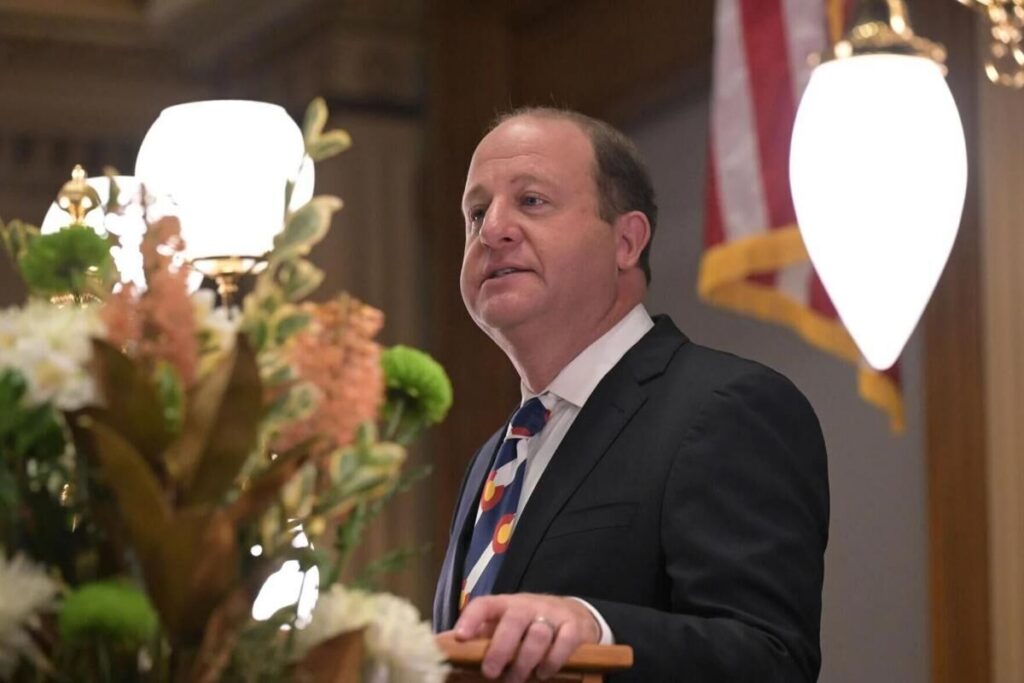
It seemed an itch that Gov. Jared Polis just had to scratch. After months of hints and speculation, Polis put his signature on a commutation of the prison sentence of Colorado’s election-denying queen, former Mesa County Clerk Tina Peters. True,...

Colorado is too wealthy to keep cutting basic services | GUEST COLUMN
Colorado Politics
colorado-politics@coloradopolitics.com
Updated 4 days ago
By Kathy White and Lydia McCoy Colorado is a wealthy state. It may be hard to believe right now because so many of us are feeling the strain. Costs are high. Many families are struggling to keep up. There is...

Polis’ — and the replacement candidates’ — positions on Colorado’s most contested 2026 legislation | Paula Noonan
Paula Noonan
paula-noonan@coloradopolitics.com
Updated 4 days ago
The knock on the word “assume” is it can make an “a**” out of “(yo)u” and “me.” Let’s nevertheless assume the 2026 General Assembly addressed big problems facing the state. Let’s further assume the current governor can move on these...
SPONSORED: What you’re missing about housing — an open letter to all of Colorado’s candidates for governor
Colorado Politics
colorado-politics@coloradopolitics.com
Updated 5 days ago
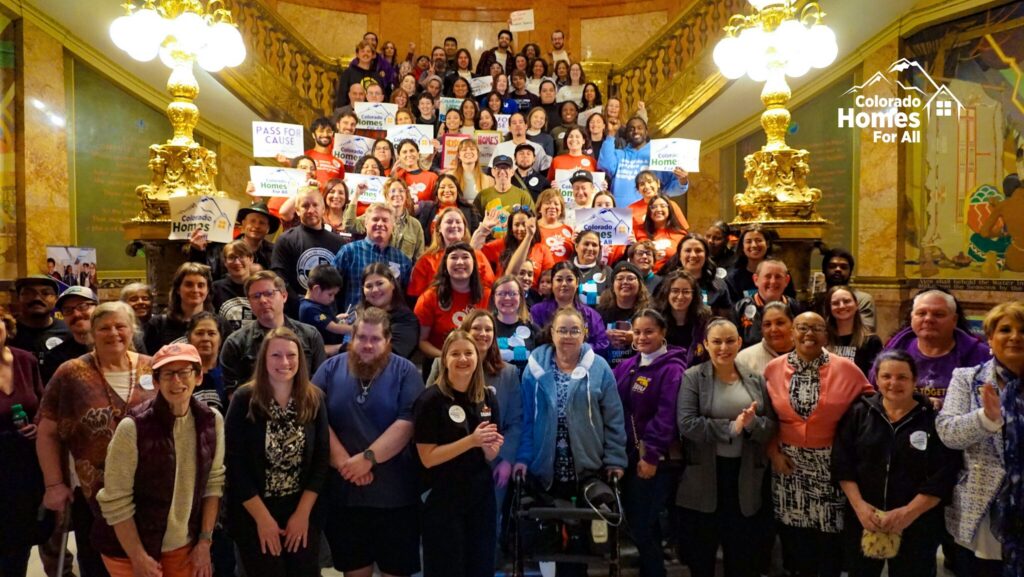
By Colorado Homes For All You say affordable housing, we say housing we can actually afford. As working-class people from across the state who are renters, we are struggling to keep up with our housing costs and we are being...

Colorado’s prisons are underfunded, not overcrowded | PODIUM
Colorado Politics
colorado-politics@coloradopolitics.com
Updated 5 days ago
By John Kellner The state does not have a “prison crowding” problem. It has a prison under-capacity problem. This is a crucial distinction for lawmakers and the public to understand. If it is not properly understood, the state risks falling...

DJ Summers dives into the costlier state of Colorado | The OpEdge Podcast
Tony Olivero
tony.olivero@gazette.com
Updated 6 days ago
Common Sense Institute’s Director of Communications & Research Operations DJ Summers dives deep with The OpEdge Podcast host and investigative columnist Jimmy Sengenberger regarding Colorado’s drop in the institute’s Free Enterprise Competitive Index. Summers shares shrewd insights regarding Colorado’s curious,...

Sorry, Governor — you are wrong on this one | Hal Bidlack
Hal Bidlack
hal-bidlack@coloradopolitics.com
Updated 7 days ago
If you have read even a handful of my several hundred columns during the past few years, you likely ran across me saying nice things about Gov. Jared Polis. I genuinely like the guy, whom I met during our mutual...
PREV
PREVIOUS
IN RESPONSE | Column miscast conservation effort for historic Colorado ranch
Paula Noonan’s recent column, “A crazy quilt of conservation easements confounds Coloradans,” Feb. 14, wrongly accuses The Nature Conservancy of actions related to our Medano Zapata Ranch. We want to set the record straight about this important land conservation project. Located in the San Luis Valley, the Medano Zapata Ranch was acquired by The Nature […]

NOONAN | Colorado's many unaffiliated voters are turning their backs on the GOP
Paula Noonan The grassroots Republican party in Colorado is not having an identity crisis. If it wants to win in 2020, that’s a challenge. Magellan Strategies, a GOP polling firm, has conducted two polls since the 2018 election: one right after the election of unaffiliated voters (UAFs) and the second in late January/early February 2019 […]