

CIRULI | Political trends — some old, some new — light up Colorado’s radar

The political earthquake that rearranged the political plates in November is just beginning to have impact on Colorado’s policy and politics. The shake up brought new leaders, new constituencies and new social movements to power. Political changes are accelerating in Colorado, and the policy shifts now visible reflect powerful, longer-term trends that portend disruption of the status quo. Many of the trends are perennial ones; some have been visible for decades, but not ascendant; others are recent. The 2018 election brought them into the forefront.
In a speech to the annual state convention of the Colorado Water Congress (CWC), I outlined what I consider the top trends driving Colorado politics in 2019:
Anti-growth (perennial). Loss of the Olympics and Amazon hardly registered a groan. After adding more than 700,000 residents over the past decade, Coloradans are ready for a slowdown. Most of the anti-growth aggravation is felt in municipalities, but economic development is no longer a state priority. Colorado is a boom and bust state, and anti-growth leaders and movements are as common in the booms as economic development champions are during the busts. In fact, the 1972 to 1974 change of political guard in Colorado was more about growth and the environment than any other issues. Will there be a statewide anti-growth initiative in 2020 similar to 2000 near the end of our last boom? Typically, as soon as Coloradans become completely fed up with growth, a recession starts and dissipates the pressure.
Anti-hydrocarbon (perennial). Governor Polis’ 100 percent renewable mandate by 2040 is the logical policy consequence of years of anti-oil and gas political criticism. It sounds like a benign aspirational goal, but it contains a host of possible regulatory aspects that will be disruptive and costly, including renewable mandates, fostered by the Public Utility Commission; more local control, which will limit fracking in several aggressive Front Range cities; and regulations related to setbacks and methane. Colorado historically has battled extraction industries due to labor agitation, toxic spills and lack of tax sharing. This is 2019’s version and repeats the ballot battles of 2014, but with a new team in charge.
Pro-weed (new). When marijuana was legalized in 2012, the political establishment didn’t welcome it. Governor Hickenlooper, in particular, told everyone to hold the Cheetos as he implemented a go slow, strict regulatory approach. Most Colorado counties and cities have also been slow to allow commercialization, even though use is legal. Polis and many legislators are much more supportive or even strong advocates of commercialization. From help with the financial transactions, to public places to partake, the industry and its lobbyists now have a supportive environment.
Anti-TABOR (long-term). Since the TABOR tax limitation initiative passed in 1992, there has been an anti-TABOR movement. Although frontal assaults have been rare, in 2005, a five-year time out initiative passed with the support of Republican Governor Bill Owens. Once again, a time out is being seriously discussed, along with changes in the amendment. No doubt, a time out could win legislative approval and may have Polis and elements of the business and local government community support. Colorado’s voter environment, while appearing friendly, could be more challenging given opposition remains active.
Elections have consequences. The newly controlled Democratic legislature and the changed political environment are already producing initiatives to limit gun access, lower health care costs, add money for the public school system with reform not an agenda item, and provide more benefits for workers, such as paid leave. The 2018 election brought new people and a new majority. Major trends undergird their victory and now align with their agenda. Expect change.
Floyd Ciruli is a veteran pollster and political analyst based in Denver. He is the director of the Crossley Center for Public Opinion Research at the University of Denver’s Josef Korbel School of International Studies and is an adjunct professor teaching public opinion and foreign policy. Read Ciruli’s blog at www.fciruli.blogspot.com


Hunting is a privilege, not a constitutional right | GUEST COLUMN
Colorado Politics
colorado-politics@coloradopolitics.com
Updated 7 hours ago
By Roland Halpern Colorado voters may soon be asked to place hunting and fishing in the state constitution. Proposition 302 would establish the right to hunt, fish and take wildlife using “traditional methods,” while declaring hunting and fishing are the...

DEA’s Miguel Chino describes Colorado’s place on the ‘fentanyl pill superhighway’ | The OpEdge Podcast
Tony Olivero
tony.olivero@gazette.com
Updated 14 hours ago
Miguel Chino, Acting Special Agent in Charge of the Drug Enforcement Administration’s Rocky Mountain Field Division, joins The OpEdge to paint the picture of Colorado’s place on America’s “fentanyl pill superhighways.” Chino updates Gazette and Colorado Politics Deputy Opinion Editor...
A right to buy a product? | Hal Bidlack
Hal Bidlack
hal-bidlack@coloradopolitics.com
Updated 1 day ago
A recent story in Colorado Politics caught my eye, as I learned of a “citizen initiative” that has qualified for the November ballot. It seems supporters of Initiative 177 have collected enough signatures, 146,165 legitimate ones out of a total...
Fourteen years after Aurora — we can’t afford to go backward | GUEST COLUMN
Colorado Politics
colorado-politics@coloradopolitics.com
Updated 1 day ago
By John Hickenlooper and Gabby Giffords Two Saturdays ago, a gunman shot and killed three people and wounded several others in Twin Falls, Idaho. This latest deadly shooting comes only days after we remembered the lives we lost 14 years...

A daring and fearless rescuer — is afraid of a debate | Dick Wadhams
Dick Wadhams
dick-wadhams@coloradopolitics.com
Updated 4 days ago
Victor Marx, the Republican nominee for governor who says he can exorcize demons and who claimed he has fearlessly rescued 45,000 women and children during 150 “high-risk” missions around the world, appears to be intimidated by the notion of debating...
Colorado’s ballot-initiative process again a battleground for deep pockets, special interests — not the people | Miller Hudson
Miller Hudson
miller-hudson@coloradopolitics.com
Updated 2 days ago
The Oxford English Dictionary defines a constitution as, “The set of fundamental principles according to which a state is constituted and governed, a body of rules prescribing the major elements of the structure and activities of any organization.” Somewhere in...

Proposed EPA changes could save truckers billions | Rachel Gabel
Rachel Gabel
rachel-gabel@coloradopolitics.com
Updated 4 days ago
Agriculture is in distress across nearly every segment across much of the nation, and certainly to a more dire degree in the western United States. If it were not a historic drought, some pressures could be eased. Others can be...

Colorado Democrats, your time is coming | Jon Caldara
Jon Caldara
jon-caldara@coloradopolitics.com
Updated 4 days ago
Hey, Colorado Democrats! All the fun you’ve had watching Republican dysfunction in Colorado for the last 20 years was just a preview of what is about to happen to you. The Colorado Republican Party no longer exists as a competitive...
Perspective: Hunters and anglers are pushing back
Chris Dorsey
chrisd@gmail.com
Updated 2 days ago
For generations, Coloradans hunted elk, caught trout and managed wildlife without consulting a constitutional attorney. That was before wildlife management became a recurring statewide election issue, replete with consultants, national pressure groups and enough political mail to denude an aspen...
The relevance of Watergate more than a half-century later | SONDERMANN
By Eric Sondermann
by-eric-sondermann@coloradopolitics.com
Updated 7 days ago
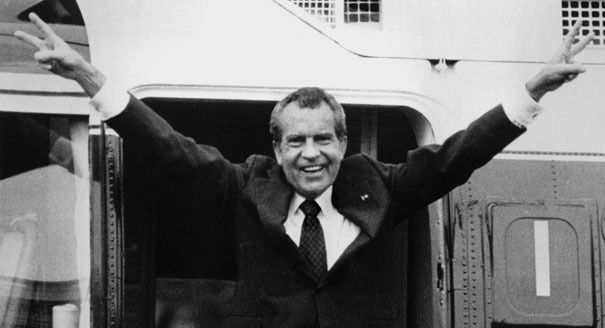
It was the scandal for which all other scandals are now named. In June 1972, a small group of Cuban burglars with high-level connections broke into the headquarters of the Democratic National Committee. Those headquarters were located in the Watergate...
PREV
PREVIOUS
HUDSON | These legislative Dems don't play to the crowd; they get things done
Miller Hudson There is an oft-used trope that distinguishes between politicians, sorting them out as either “show horses” or “work horses.” You can easily identify the show horses at the Colorado legislature. They are legislators who hold a press conference each time they sponsor a bill intended to please a narrow constituency or benefit a […]

BIDLACK | Be on the lookout for political misogyny in 2020
Hal Bidlack That’s a lot of pancakes. I remember thinking that when the nice person on the bus with me told me she had been to 86 pancake breakfasts during her first run for office. So, she had to eat a lot of pancakes. The place of my epiphany was onboard a nicely appointed campaign […]