

Farm bill passes Congress despite 3 ‘no’ votes from Colorado Republicans
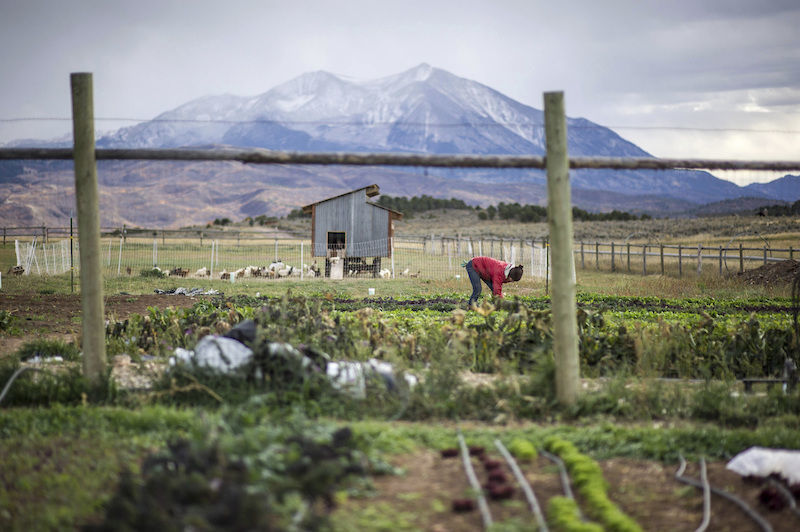
A long-awaited, $867 billion farm bill is on its way to President Trump’s desk with overwhelming bipartisan support — despite “no” votes from three Colorado Republican congressmen.
The U.S. House on Wednesday voted 369-47 to approve the farm bill and send it to the president for signing after the Senate approved the compromise version on Tuesday on an 87-13 vote.
Among those 47 “no” votes in the House: departing U.S. Rep. Mike Coffman of Aurora, Rep. Doug Lamborn of Colorado Springs and Rep. Ken Buck of Greeley.
Two Colorado Democrats — Reps. Diana DeGette of Denver and Ed Perlmutter of Arvada — and Republican Rep. Scott Tipton of Cortez were among those voting in favor. Democratic Rep. and Gov.-elect Jared Polis of Boulder did not vote; he was also absent when the House voted on its version back in May.
The farm bill — known as the Agriculture Improvement Act of 2018 — is a five-year extension of various agricultural programs as well as food assistance to low-income Americans. It replaces the previous farm bill that expired at the end of September.
All three Colorado lawmakers who voted “no” cited the removal of work requirements for food-stamp recipients under the Supplemental Nutrition Assistance Program (SNAP) program that were in an earlier version of the bill, among other objections.
An earlier House-passed version included enhanced requirements for SNAP, which was also supported by the Trump administration, but those changes were a non-starter in the Senate and was never included in its version, nor in the bill’s final compromise that emerged from a conference committee.
“I voted to pass the farm bill in the House when we had a good bill that helped farmers and enhanced work requirements for food stamp recipients,” Buck told Colorado Politics. “The bill we considered on the floor [Wednesday] stripped out work requirements, expanded subsidies to individuals not directly involved in farming, and tossed out important forestry provisions.”
Buck’s opposition to the subsidy changes applies to a House provision that expands the definition of family to include first cousins, nieces and nephews, making them eligible for payments under the program.
Coffman’s objection to the final version also centered on its approach to the SNAP program.
“The farm bill is 20 percent agriculture and 80 percent food stamps,” Coffman said in a statement to Colorado Politics. “The House-passed bill contained welfare reform provisions that strengthened the work requirements for abled-bodied recipients who did not have young children at home who required their care. If work was not available the recipient could volunteer at a nonprofit organization or participate in job training. I voted for the House-passed version of the farm bill.
“The Senate removed these provisions and a conference committee, between the House and Senate, watered them down to the point of being unrecognizable,” Coffman added. “I voted against the farm bill because I believe that every able-bodied individual on public assistance should be required to do something affirmative to show that they are trying to better themselves and become self sufficient.”
Lamborn told Colorado Politics that “I voted against the Farm Bill simply because the SNAP reforms were removed from the final legislation. This was a missed opportunity – the reforms were meant to improve the program and help hard-working Americans. Instead, the SNAP requirements were slashed and conservative policy ignored. Too many Americans are on food stamps because we have few restrictions on able-bodied people accessing the benefits that were originally intended for those who could not work or who had minor dependents.”
Polis is in Colorado this week, working on transition plans ahead of being sworn in as governor next month, his staff said.
Tipton, the lone Colorado Republican to vote in favor, said in a statement that the farm bill “maintains and strengthens critical safety nets for U.S. farmers who work to provide healthy, affordable food for families across the country and the world. The bill also includes important provisions to protect and restore threatened habitats, help prevent catastrophic wildfires across the West and create more economic opportunities for the 3rd Congressional District through the production of industrial hemp.”
The farm bill’s final version includes a Tipton amendment to “streamline an approval process for vegetation management projects to protect and restore the habitat of sage-grouse and mule deer.”
Tipton said the farm bill also includes provisions to help the U.S. Forest Service “proactively manage National Forests and prevent catastrophic wildfires. The bill will allow the USFS to establish a pilot program for clearing overgrown vegetation around power lines and other utility infrastructure, as well as allow for the removal of trees that have become hazardous fuel due to disease and insect infestation.”
State Commissioner of Agriculture Don Brown also weighed in Wednesday, in a statement provided by Sen. Michael Bennet’s office.
“The passage of the 2018 Farm Bill is more than a success for U.S. farm and ranch families; it’s a powerful win for all Americans,” Brown said. “This country relies on a strong, abundant supply of the food, fiber, and fuel provided by America’s agricultural community. The programs within the 2018 Farm Bill provide true value to the people of Colorado, including expanding the Conservation Reserve Program acreage and legalizing hemp to help create more consistent programs as a U.S. crop. In particular, adjusting the Agriculture Risk Coverage/Price Loss Coverage program provides a vital safety net for producers.”
“The critical drought resiliency provisions included in this bill will help to ensure Colorado’s farmers and ranchers can adapt to a changing climate while continuing to provide food and fiber to the nation,” said Andy Mueller, general manager of the Colorado River District. “We appreciate the commitment [that Sens. Bennet and Cory Gardner] have shown to our farmers, ranchers and rural communities.”
On Monday, the congressional conference committee working on a compromise released its recommendations on the final bill. It was almost immediately cheered by U.S. Agriculture Secretary Sonny Perdue, who said he will encourage Trump to sign it.
In a statement, Perdue said the bill “maintains a strong safety net for the farm economy, invests in critical agricultural research, and will promote agriculture exports through robust trade programs.
“While we would have liked to see more progress on work requirements for [food stamp] recipients and forest management reforms, the conference agreement does include several helpful provisions and we will continue to build upon these through our authorities,” he said.
Also among the bill’s most significant features: legalization of hemp.
The legislation would federally legalize cultivation and distribution of hemp, which is still classified by the Drug Enforcement Agency as a schedule 1 drug.
Polis “fought hard and successfully for several provisions in the Farm Bill,” including de-scheduling hemp and allowing for better wildfire mitigation, according to a statement from his office.
“He has advocated for these provisions for years” through measures such as the Hemp Farming Act and the National Forest System Vegetation Management Pilot Program Act, the statement added.
“This is a pivotal and long-overdue moment for hemp in America,” said Shawn Hauser, chair of the Hemp and Cannabinoids Practice Group at the Denver cannabis law firm Vicente Sederberg. “Following decades of prohibition under outdated drug laws, hemp will finally be treated like other crops and legal for U.S. farmers to grow. This historic legislation holds a lot of promise for our economy, the environment, and future generations.”
Bennet, a member of the Senate Committee on Agriculture, Nutrition, and Forestry said Tuesday, “We committed to passing a Farm Bill this year, and that’s exactly what we intend to do. We appreciate the conference committee’s hard work to reach a bipartisan bill that legalizes hemp, conserves land and water, combats climate change, and bolsters economic security in rural communities. The finish line is in sight. Now Congress needs to do what’s right for Colorado and send this bill to the President’s desk.”
Gardner, like Bennet, voted for the measure Tuesday.
“As a fifth generation Coloradan from a small town on the Eastern Plains where agriculture is a way of life, I know how important it is that Congress has reached a bipartisan agreement on the Farm Bill,” Gardner said in a statement. “As a result of low commodity prices, our agriculture community has been struggling for the past few years and this has had a profound impact on my own community and rural communities across the state and country. The Farm Bill provides long-term certainty to farmers and ranchers throughout Colorado and even includes provisions that will specifically help Colorado farmers and ranchers.
“Several provisions I worked on include providing farmers and ranchers relief from drought, using technology to better implement dryland farming practices, providing resources to combat deadly diseases that wipe out hop fields, and making industrial hemp legal to make sure Colorado farmers are free to use their land how they see fit,” Gardner added. “All of these initiatives will help Colorado’s agriculture community and this is another example of how Congress can work together in a bipartisan manner to help the American people.”
The Associated Press contributed to this story.


Trump lowers flags to half-staff for Dolly Parton: ‘The World loves you’
Naomi Lim
naomi-lim@coloradopolitics.com
Updated 1 hour ago
President Donald Trump is honoring the life of country music legend and philanthropist Dolly Parton by ordering federal buildings across the country to lower flags to half-staff for a week. “Very sad to report that Dolly Parton, one of the...
Ted Cruz suggests GOP realignment coming after Trump leaves office
Emily Hallas
emily-hallas@coloradopolitics.com
Updated 2 hours ago
Sen. Ted Cruz (R-TX) on Monday suggested the Republican Party could embrace a directional shift after President Donald Trump leaves office, a transition that promises to leave a gaping hole in the GOP. Cruz is known as a critical ally...
2 Colorado State troopers shot near Woodland Park; suspect killed
DEBBIE KELLEY
debbie-kelley@coloradopolitics.com
Updated 1 hour ago
Two Colorado State Patrol troopers were hospitalized, and a suspect is dead after a shooting during a traffic stop Tuesday. The initial incident happened at about 7:15 a.m., when a resident reported suspicious activity in the area near milepost 286...

Aurora moves forward with data center regulations
Kyla Pearce
kyla.pearce@gazette.com
Updated 1 hour ago
The Aurora City Council approved moving forward with two new regulations on data centers and directed staff to come back at the next study session with others. At a council meeting in early August, council members directed city management to...

Aurora City Council considers stricter food truck regulations
Kyla Pearce
kyla.pearce@gazette.com
Updated 1 hour ago
The Aurora City Council is considering passing laws to limit the number of food trucks on properties in the city and how and when they operate. Councilmember Angela Lawson, who sponsored the ordinance, said she understands the importance of food...
Denver murder conviction reversed for incomplete self-defense instruction
Michael Karlik
michael.karlik@coloradopolitics.com
Updated 5 hours ago
Colorado’s second-highest court reversed a defendant’s murder conviction last week because a Denver judge gave an incomplete instruction to the jury about the man’s right to self-defense. Donald R. Gonzales and Gary McLaughlin met up in a Capitol Hill parking...
Colorado lawmaker, House leaders named in workplace-retaliation lawsuit
Marianne Goodland
marianne.goodland@coloradopolitics.com
Updated 2 hours ago
A former legislative aide has filed a lawsuit alleging she was mistreated, illegally directed to perform campaign work and harmed by a House leadership structure she charged was fragmented, politicized and ineffective at protecting employees. The lawsuit, filed by Jennifer...

Secret Service confirms awareness of Iranian state media video threatening Barron Trump’s life
The Associated Press
the-associated-press@coloradopolitics.com
Updated 7 hours ago
WASHINGTON (AP) — The U.S. Secret Service has confirmed it is aware that Iranian state media has aired a video that appears to threaten the life of Barron Trump, President Donald Trump’s youngest son. “The U.S. Secret Service is aware...
Federal judge hears arguments about Colorado’s 3-day gun purchase waiting period
Michael Karlik
michael.karlik@coloradopolitics.com
Updated 7 hours ago
A federal judge heard arguments on Monday about the constitutionality of a 2023 Colorado law that generally imposes a three-day waiting period on firearm purchases after the initiation of a background check. The test that the U.S. Supreme Court created...

Denver auditor finds oversight failures in $175.6M 16th Street project
Nico Brambila
nico.brambila@denvergazette.com
Updated 1 hour ago
Surprise historic sewer discovery delayed completion a year, cost $18M The Denver Auditor recently found significant oversight and contracting problems with the $175.6 million 16th Street Improvement Project, including an $18 million contract increase and a nearly one-year extension that...
PREV
PREVIOUS

Speed dating: Hickenlooper, other presidential hopefuls scramble to make a match with operatives
Seventy years after his father proposed there to his mother, Colorado Gov. John Hickenlooper found himself in the penthouse restaurant of Philadelphia’s Bellevue Hotel on Nov. 30, looking to make a very different kind of match. Like dozens of other Democrats preparing a campaign for president, Hickenlooper is scrambling to launch a multimillion-dollar startup from […]

2 more candidates enter Senate District 26 race in Denver suburbs
Colorado Democratic state Rep. Jeff Bridges of Greenwood Village is no longer alone in his bid to succeed outgoing state Sen. Daniel Kagan. Kagan announced Dec. 5 he would step down from his Senate District 26 seat on Jan. 11, one week into the 2019 legislative session. The district includes areas of Denver’s south and southeast […]