

OUT WEST ROUNDUP | Plan seeks to designate Route 66 as National Historic Trail

NEW MEXICO
Plan seeks to designate Route 66 as National Historic Trail
ALBUQUERQUE – A new proposal moving through Congress seeks to designate Route 66, the highway that connected Chicago to Los Angeles and was once an economic driver for small towns across a post-World War II nation, as a National Historic Trail.
U.S. Sens. Tom Udall and Jim Inhofe announced they’re introducing a bipartisan bill that would amend the National Trails System Act and include Route 66 in an effort to help revitalize cities and small towns that sit along the historic corridor.
Udall, a New Mexico Democrat, said that Route 66 symbolizes freedom that allowed motorists to visit mom-and-pop diners, small businesses, and scenic byways through eight states.
“Just as importantly, this bill would safeguard Route 66 as [a] cultural landmark, preserving its significance as the ‘Main Street of America’ for future generations of adventurers, migrants, hitchhikers, and tourists venturing westward,” Udall said.
Inhofe, an Oklahoma Republican, said it was important for Congress to try to preserve the historic road with such a deep history.
The U.S. House of Representatives passed a similar bill in June.
Under the proposal, the National Park Service would administer Route 66 as a National Historic Trail and would help spur critical preservation efforts along the highway.
Route 66, also called the “Mother Road,” was born in 1926 after the Bureau of Public Roads launched the nation’s first federal highway system, bringing together existing local and state roads from Chicago through St. Louis to Los Angeles. Small towns opened shops, motels and gas stations to pump revenue into local economies just as the nation’s car culture took off.
The 2,400-mile highway even sparked a “Route 66” song first performed by Nat King Cole, and it was later covered by a host of artists, including Chuck Berry, the Rolling Stones, Depeche Mode and the Manhattan Transfer. The route also was the basis of an early-1960s TV drama series.
NEW MEXICO
Legislator seeks donations after harassment case dismissed
SANTA FE – A New Mexico state legislator launched a GoFundMe campaign to recover legal defense costs as a panel of lawmakers formally dismissed sexual harassment charges against him earlier this month.
State Rep. Carl Trujillo, who lost his re-election bid in the wake of sexual harassment accusations by a former political lobbyist, said his name had been cleared with the decision by an eight-member legislative panel to dismiss charges.
Lawmakers dismissed the charges, but they outlined the procedural basis for the decision in a five-page order. Trujillo was the first lawmaker to face a formal investigation under the Legislature’s new anti-harassment policy, adopted in January amid efforts to make the Capitol work environment safer for women and less discriminatory.
Former lobbyist Laura Bonar has accused Trujillo of touching and propositioning her as the two worked together on legislation in 2013 and 2014.
She recently declined to provide a deposition or testify under oath at a scheduled hearing, prompting legislators to dismiss charges.
Bonar’s attorney, Levi Monagle, said that Bonar refused the deposition because it would have required that she disclose the identities of personal confidants – some of them victims of unrelated sexual harassment.
Trujillo, a three-term Democratic lawmaker, disputed that characterization of the proceedings, and he asserted that there was never proper evidence of probable cause to investigate him.
Trujillo lost a June Democratic primary election weeks after Bonar posted her allegations of harassment online.
“The whole plan was that I would just resign and that this woman wouldn’t have to testify,” Trujillo said. “I’ve lost my election, but I’m an innocent man.”
UTAH
Groups sue to block medical marijuana compromise in Utah
SALT LAKE CITY – A pair of advocacy groups in Utah have sued to block a compromise agreement legalizing medical marijuana in the state, accusing the Mormon church of unconstitutional domination and interference in a process that led to the gutting of a measure approved by voters.
The lawsuit alleges the revised initiative creates overwhelming obstacles for suffering patients who want to obtain the drug. It also asks a judge to set aside the revision passed by lawmakers and keep the original version that won with 53 percent of the vote in November.
The Church of Jesus Christ of Latter-day Saints didn’t immediately comment.
Mormons have long frowned upon marijuana use because of a key church health code called the “Word of Wisdom,” which prohibits the use of alcohol, tobacco and illegal drugs. However, it previously stood behind the work it did before the election to help craft the compromise it considers a safer medical marijuana program.
The changes signed into law ban many marijuana edibles, prevent people from growing their own marijuana if they live far from a dispensary, and narrow the list of eligible medical conditions for which the drug can be obtained. Smoking marijuana wasn’t allowed in the original ballot measure and won’t be permitted under the new version.
Utah law gives state legislators the authority to change the language of laws passed by voters.
Supporters of the compromise, including some advocates of medical marijuana, say it was a key to guaranteeing quick legalization and convincing conservative lawmakers not to repeal the law.
Utah Gov. Gary Herbert signed the revised compromise law after he called a special legislative session.
“The concern we had was this is too loose, which leads to recreational marijuana,” he said.
Patients can now use medical marijuana legally in Utah but likely won’t be able to buy it legally in-state until at least 2020, officials said.
MONTANA
Keystone XL pipeline builder asks judge to allow some work
HELENA, Montana – The Canadian company that wants to build the Keystone XL pipeline is asking a judge to change his order blocking the project to allow pre-construction work to continue, such as purchasing materials and finalizing contracts.
Attorneys for the company argued in a recent telephone conference that U.S. District Judge Brian Morris should clarify or amend his ruling to say the injunction does not apply to activities such as finalizing contracts, purchasing materials, conducting land surveys and discussing federal permits.
TransCanada Corp. wants to keep that preliminary work on track so that the Calgary-based company can be prepared to start pipeline construction as early as mid-February.
Blocking the pre-construction work even for several weeks would likely cause the company to miss the entire 2019 construction season and delay its 2021 target for oil to start flowing through the pipeline.
On Nov. 8, Morris blocked TransCanada’s permit to build the pipeline from Alberta’s oil sands through a half-dozen U.S. states to the Gulf of Mexico.
The judge had ruled the Trump administration had not fully considered the environmental effects of the pipeline.
WYOMING
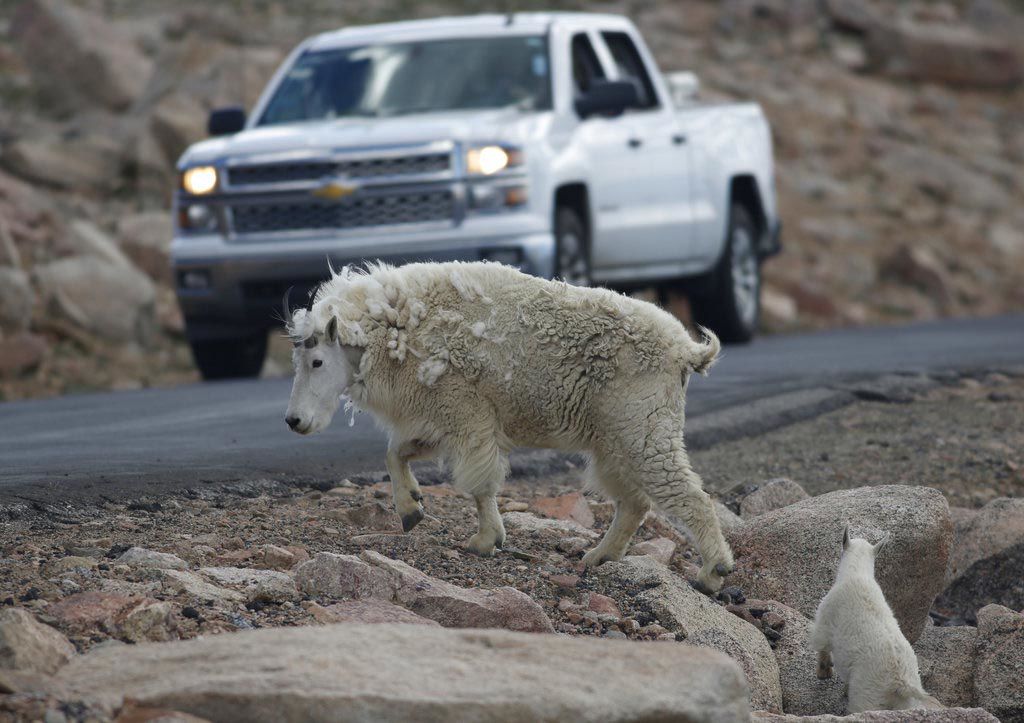
Grand Teton plan would trap or kill goats to help bighorns
CHEYENNE – Spotting a mountain goat perched high on a cliff might thrill many of the millions of tourists who visit Grand Teton National Park every year, but park officials say it might be time for the agile, bearded animals to go.
Park officials have announced they’re taking public comment on a plan to kill or relocate the mountain goats.
The problem, according to the park, is Grand Teton’s 100 or so mountain goats threaten a herd of about 80 bighorn sheep. The bighorn sheep numbered as many as 125 animals just a few years ago.
The thriving goats spread disease and compete with the bighorns for food. Pneumonia, which also can be carried by herds of domestic sheep in the backcountry, is an especially severe threat for bighorn sheep populations in Wyoming and elsewhere.
Mountain goats and bighorn sheep are both native to the Rocky Mountain region. Grand Teton’s mountain goats aren’t native to the park, however. They descended from mountain goats introduced southwest of the park in the 1960s and 1970s.
Grand Teton’s bighorn sheep herd, on the other hand, is native the park and one of the smallest and most isolated bighorn sheep herds in Wyoming.
After hearing from the public on the proposal through Jan. 6, park officials expect to decide as soon as mid-February on what to do about the mountain goats, Grand Teton spokeswoman Denise Germann said.
The goats are reproducing rapidly. Now might be the best time to reduce or eliminate the animals before they’re too numerous to bring under control, according to the Park Service.


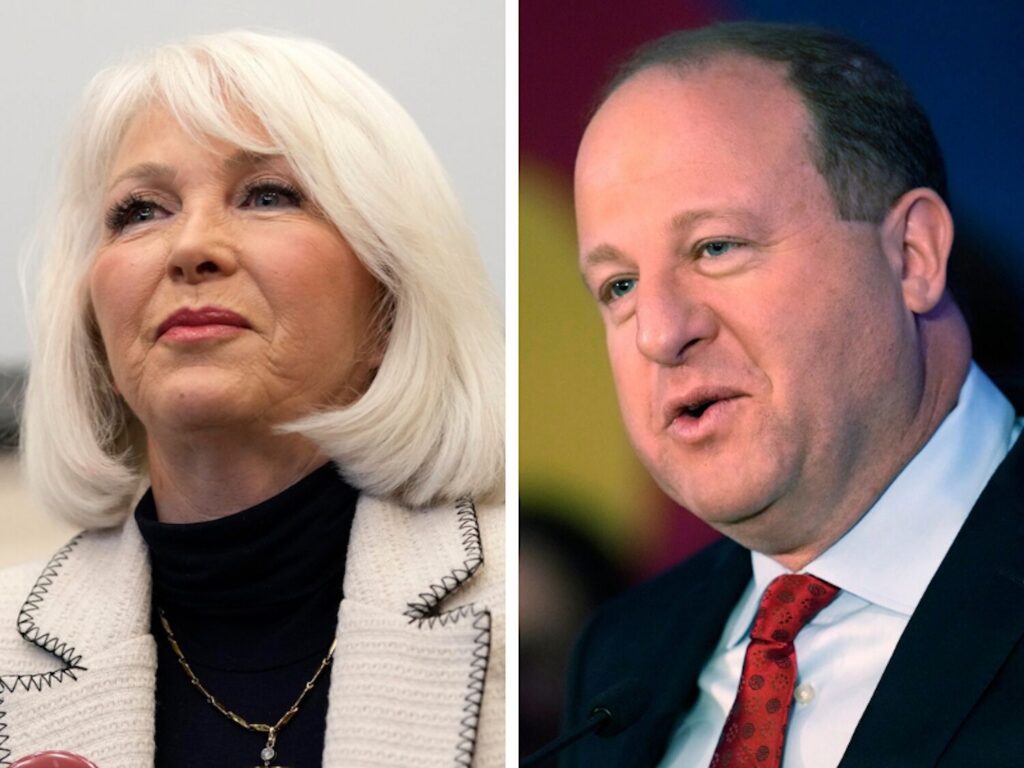
Tina Peters thanks Polis for shortening her sentence, calls Colorado Democrats’ censure a ‘travesty’
Ernest Luning
ernest.luning@coloradopolitics.com
Updated 4 hours ago
Two days after the Colorado Democratic Party formally condemned Gov. Jared Polis over his decision last week to shorten Tina Peters’ prison sentence for tampering with election equipment, Peters heaped praise on the term-limited Democrat and slammed his party for...

Federal judge green-lights jury visit to Aurora detention center in forced-labor lawsuit
Michael Karlik
michael.karlik@coloradopolitics.com
Updated 6 hours ago
A federal judge granted a request on Thursday to have jurors visit the privately run U.S. Immigration and Customs Enforcement detention center in Aurora as part of an upcoming civil trial over alleged forced labor practices. U.S. District Court Senior...

Federal judges’ responses vary to immigration authorities’ disregard of orders
Michael Karlik
michael.karlik@coloradopolitics.com
Updated 3 hours ago
Colorado’s U.S. District Court judges have responded in recent days to the government’s violations of, or unclear compliance with, their orders in immigration detention cases, resulting in directives to immediately free the petitioners. “I’m just struggling to understand how he...
Colorado Supreme Court ditches debt collection case
Michael Karlik
michael.karlik@coloradopolitics.com
Updated 8 hours ago
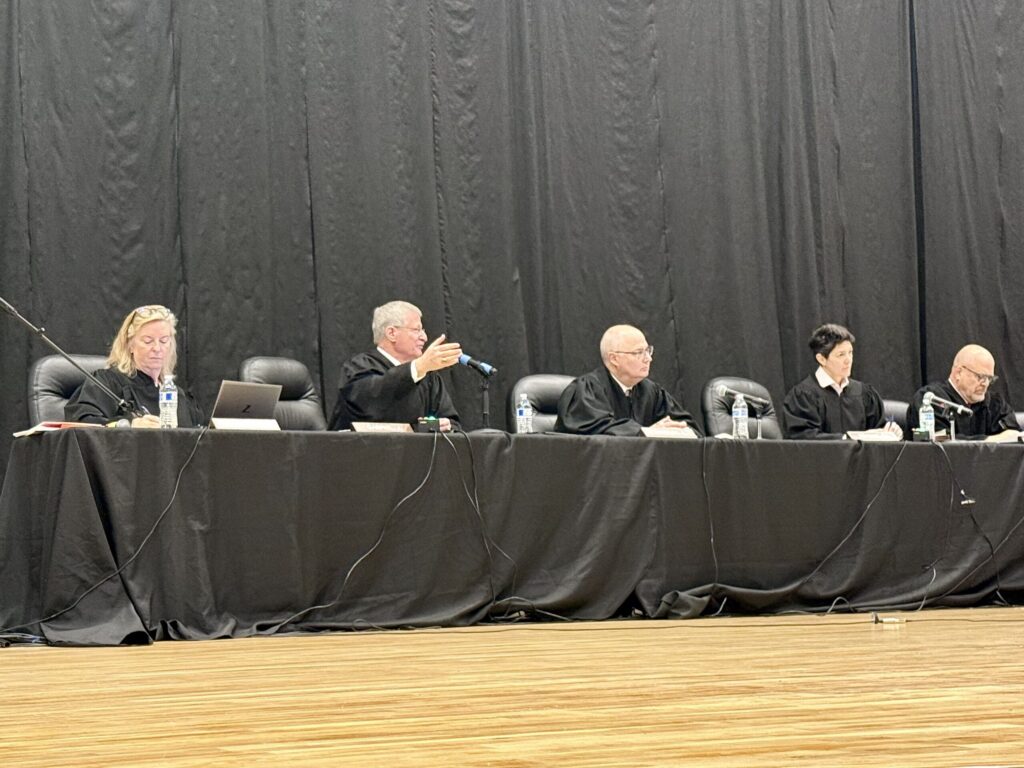
The Colorado Supreme Court declined to rule on Friday in a case questioning the procedure a creditor may use to obtain records from entities related to a debtor, in which the court initially expressed its interest. Joel Farkas is liable...
Trump administration releases $40 million for Colorado water project
Marianne Goodland
marianne.goodland@coloradopolitics.com
Updated 6 hours ago
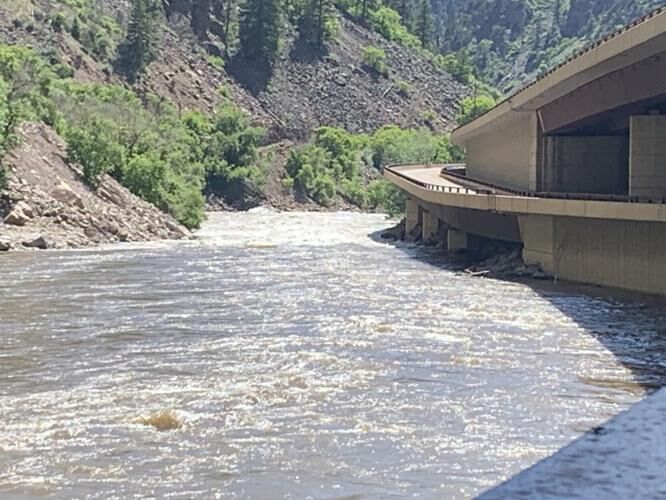
The Trump administration on Friday released $40 million, clearing the way for a water district and its partners to finish funding the purchase of some of the state’s most senior Colorado River water rights, Gov. Jared Polis announced. Federal funding...
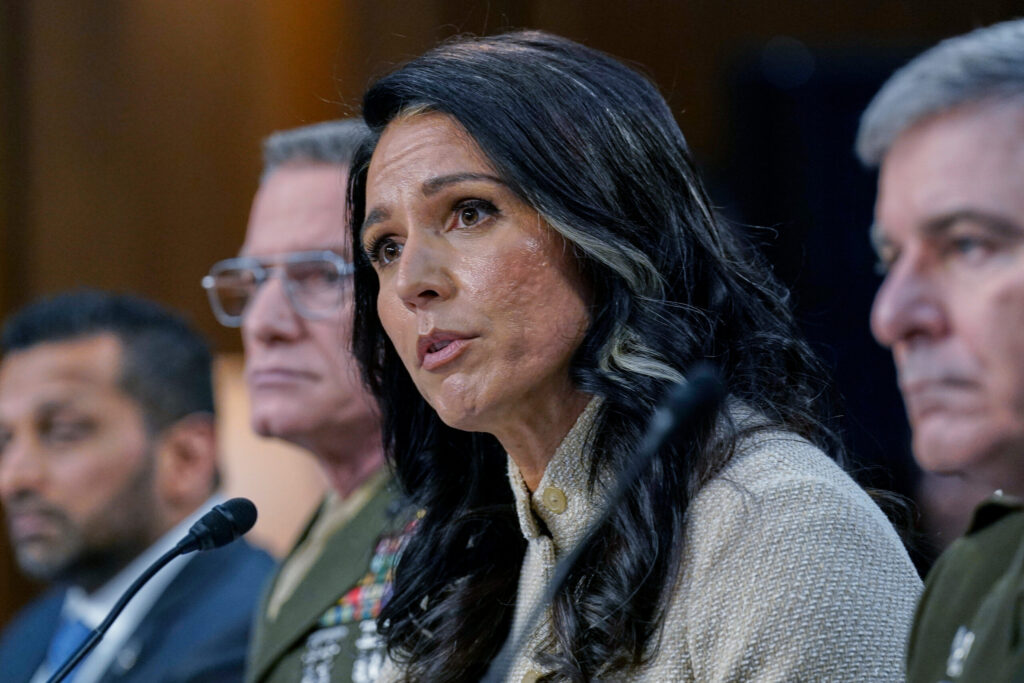
Tulsi Gabbard’s exit from the Trump administration fuels questions of who is next
Lauren Green, Washington Examiner
lauren.green.washington.examiner@gazetteedit.wpenginepowered.com
Updated 8 hours ago
Tulsi Gabbard’s exit as director of national intelligence from the Trump administration is sparking questions about who could be next. Gabbard announced Friday that she would step down, effective June 30, citing her husband’s diagnosis with a rare form of...

Attorney general candidate Doshi puts ‘Hetal to the metal’ in Colorado Democrat’s 1st TV ad
Ernest Luning
ernest.luning@coloradopolitics.com
Updated 8 hours ago
Democratic attorney general candidate Hetal Doshi makes clear how to pronounce her first name in the former federal prosecutor’s first TV and digital ad, which launched statewide on Friday, just over two weeks before ballots start going out to Colorado...

Colorado governor signs into law proposal to close gaps in court competency system
Marissa Ventrelli
marissa.ventrelli@coloradopolitics.com
Updated 6 hours ago
Gov. Jared Polis has signed a bill that supporters say would close gaps in Colorado’s criminal justice system for people whose charges are dismissed after they are found incompetent to stand trial. “This is a major step forward to keep...
Colorado Supreme Court to evaluate test for alimony after remarriage
Michael Karlik
michael.karlik@coloradopolitics.com
Updated 3 hours ago
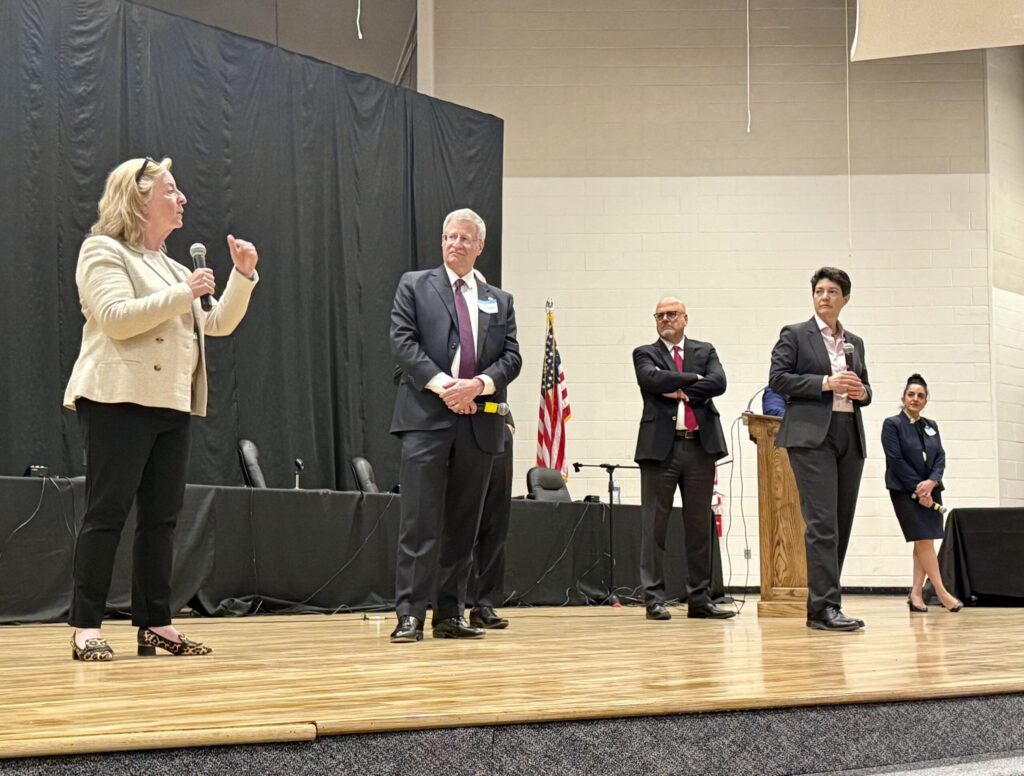
The Colorado Supreme Court announced on Monday that it will evaluate whether divorcing spouses must explicitly agree that alimony payments from one partner to the other will continue after one person remarries, or whether a “clear implication” will suffice. The...
Tulsi Gabbard resigns as director of national intelligence, citing her husband’s health
Will Weissert
will.weissert@associatedpress.com
Updated 11 hours ago
WASHINGTON (AP) — Tulsi Gabbard resigned as President Donald Trump’s director of national intelligence on Friday, saying she needed to step away as her husband battles cancer. She is the fourth Cabinet official to depart during Trump’s second term. In...
PREV
PREVIOUS
Trump administration moves to rescind Waters of the US rule, cheered by farmers, booed by environmentalists
The Trump administration this week began the process of rescinding the controversial Waters of the USA (WOTUS) rule, part of the federal Clean Water Act, to the delight of the agricultural community – and to the dismay of environmentalists and other clear water advocates. The 1972 Clean Water Act set up a structure regulating pollution discharge […]

Electric-car tax credits are popular — and Congress can't decide whether to expand or abolish them
Carmakers haven’t given up on expanding a federal consumer tax credit for electric vehicles. Current law, adopted in 2008, allows for a $7,500-per-vehicle tax credit for electric and plug-in hybrid vehicles – up to 200,000 vehicles per manufacturer. Once the cap is met, the subsidy is reduced every six months until it no longer exists. […]