

OUT WEST ROUNDUP | Mushrooms could help clean toxic groundwater in New Mexico
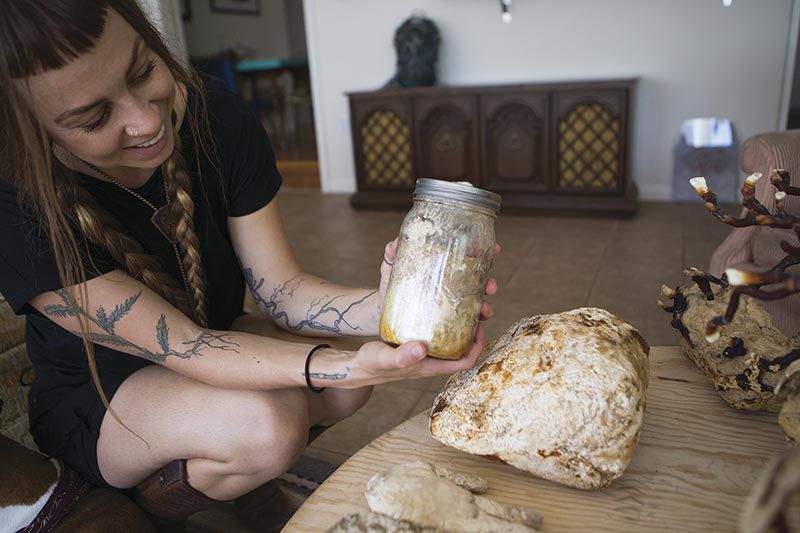
Mushrooms could help clean toxic groundwater
SANTA FE – Water conservationists and a Native American women’s advocacy group believe they’ve found a potential solution to a massive, decades-old underground plume of toxic chromium that likely has spread from property owned by Los Alamos National Laboratory to San Ildefonso Pueblo land.
The key ingredient? Mushrooms. They want the lab to give their fungi-based idea a try.
The nonprofit Tewa Women United and Communities for Clean Water will try to convince lab officials to start a pilot project to test whether a bioremediation technique based on mushrooms could help decontaminate the aquifer of highly carcinogenic hexavalent chromium that lab workers over several decades dumped into a canyon from cooling towers at an old power plant.
It may sound far-fetched, but advocates say the technique, called mycoremediation, could be healthier for the environment and less costly than efforts the lab is currently using to treat contaminated water pumped out of the plume.
Peter McCoy – a Portland, Oregon-based mycologist, a scientist who studies fungus – has experimented with mushrooms for about 17 years and has been leading smaller-scale mycoremediation projects for years.
The technique uses mycelium, the vegetative body of a fungus, which acts as a magnet to extract heavy metals from soil and water. The method has been used to break down diesel fuel, harmful bacteria and even diapers.
The strategy also has been used in the Ecuadorian Amazon, where Chevron is accused of dumping billions of gallons of oil-drilling waste into unlined pits.
Court rules against ban on sleeping on public sites
BOISE – Cities can’t prosecute people for sleeping on the streets if they have nowhere else to go because it amounts to cruel and unusual punishment, which is unconstitutional, a federal appeals court said.
The 9th U.S. Circuit Court of Appeals sided with six homeless people from Boise who sued the city in 2009 over a local ordinance that banned sleeping in public spaces. The ruling could affect several other cities that have similar laws.
It comes as many places across the West are struggling with homelessness brought on by rising housing costs and income inequality.
When the Boise lawsuit was filed, attorneys for the homeless residents said as many as 4,500 people didn’t have a place to sleep in Idaho’s capital city and homeless shelters only had about 700 available beds or mats. The case bounced back and forth in the courts for years, and Boise modified its rules in 2014 to say homeless people couldn’t be prosecuted for sleeping outside when shelters were full.
But that didn’t solve the problem, the attorneys said, because Boise’s shelters limit the number of days that homeless residents can stay. Two of the city’s three shelters also require some form of religious participation for some programs, making those shelters unsuitable for people with different beliefs, the homeless residents said.
The three-judge panel for the 9th Circuit found that the shelter rules meant homeless people would still be at risk of prosecution even on days when beds were open. The judges also said the religious programming woven into some shelter programs was a problem.
The biggest issue was that the city’s rule violated the U.S. Constitution’s Eighth Amendment against cruel and unusual punishment, the court found. The amendment limits what the government can criminalize, it said.
“As a result, just as the state may not criminalize the state of being ‘homeless in public places,’ the state may not ‘criminalize conduct that is an unavoidable consequence of being homeless – namely sitting, lying, or sleeping on the streets,'” Berzon wrote.
UTAH
State told to pay $475,000 in legal fees in ‘Deadpool’ case
SALT LAKE CITY – A judge has ordered the state of Utah to pay more than $475,000 in legal fees after it lost a court fight over a law that banned serving alcohol during the racy, foul-mouthed superhero film “Deadpool.”
U.S. District Judge David Nuffer handed down a strongly worded decision denying state arguments that the price was too high.
“The political judgment of the state that it will enact a statute contrary to existing law and risk payment of legal fees is a legitimate choice, but it has consequences,” he wrote.
Lawmakers and the governor in the conservative, predominantly Mormon state had backed a law that’s largely aimed at strip clubs but also prohibited serving booze during films with simulated sex or full-frontal nudity. A movie theater sued in 2016 after Utah regulators threatened to fine it up to $25,000.
The state defended the measure in court, calling liquor and sex an “explosive combination.”
Nuffer struck down the law last year as a violation of First Amendment rights, ruling the theater Brewvies is not an adult-oriented establishment and “Deadpool” is a mainstream, R-rated movie.
Liquor authorities were concerned about a suggestive scene in the film’s credits involving a cartoon unicorn, among other things. The theater’s attorney and former Salt Lake City Mayor Rocky Anderson argued that the law was so vague it would apply to Michelangelo’s sculpture “David.”
Massive 2013 oil spill finally cleaned up
BISMARCK, North Dakota – Five years and almost $100 million later, cleanup is complete on a massive oil pipeline leak in North Dakota that has been called one of the biggest onshore spills in U.S. history, industry and state officials said last week.
The spill by Tesoro, now known as Andeavor, was found by a farmer in September 2013. Crews had been working around the clock to clean it.
Farmer Steve Jenkins had smelled the crude oil for days before discovering the spill in his wheat field after his combine’s tires were covered in it.
The spill was not far from where oil was first discovered in North Dakota in 1951. The Texas-based company and regulators have said a lightning strike may have caused the rupture in the 6-inch diameter steel pipeline, which runs from Tioga to a rail facility outside of Columbus, near the Canadian border.
Health Department environmental scientist Bill Suess said less than a third of the 840,000 gallons that spilled was recovered. The remaining oil was cooked from the soil in a process called thermal desorption.
Suess said about 1.4 million tons was excavated from the site and treated. Crews had to dig as deep as 60 feet to remove oil-tainted soil. No water sources or wildlife was affected, he said.
The company originally thought it could clean up the site in two years for about $4 million. It later estimated the cost at $93 million. The state fined the company $454,000 for the spill.
Jury: Jehovah’s Witnesses must pay $35M to abuse survivor
HELENA, Montana – The Jehovah’s Witnesses must pay $35 million to a woman who says the church’s national organization ordered Montana clergy members not to report her sexual abuse as a child at the hands of a congregation member, a jury ruled in a verdict.
A judge must review the penalty, and the Jehovah’s Witnesses’ national organization – Watchtower Bible and Tract Society of New York – plans to appeal.
Still, the 21-year-old woman’s attorneys say the verdict sends a message to the church to report child abuse to outside authorities.
The Montana case is one of dozens that have been filed nationwide over the past decade alleging Jehovah’s Witnesses mismanaged or covered up the sexual abuse of children.
The case that prompted the ruling involved two women, now 32 and 21, who allege a family member sexually abused them and a third family member in Thompson Falls in the 1990s and 2000s.
The women say they reported the abuse to church elders, who handled the matter internally after consulting with the national organization.
The elders expelled the abuser from the congregation in 2004 then reinstated him the next year, the lawsuit states, and the abuse of the girl, who is now 21, continued.
The lawsuit claimed the local and national Jehovah’s Witnesses organizations were negligent and violated a Montana law that requires them to report abuse to outside authorities.
Attorneys for the Jehovah’s Witnesses said in court filings that Montana law exempts elders from reporting “internal ecclesiastical proceedings on a congregation member’s serious sin.”
The Associated Press generally does not name people who say they are a victim of a sex crime.

USPS ballot rule faces lawsuit from Colorado, other states
Thelma Grimes
thelma.grimes@coloradopolitics.com
Updated 32 minutes ago
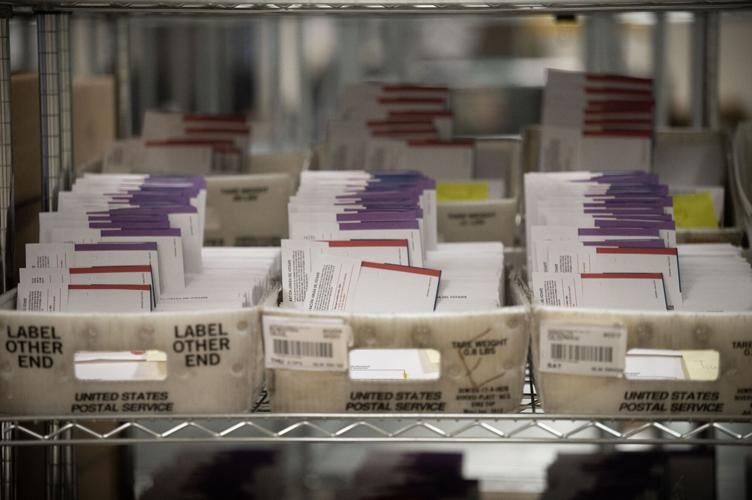
Colorado, along with 25 other states, filed a lawsuit against the U.S. Postal Service to challenge a new rule that seeks to restrict the mailing of ballots to American citizens in an eligible voters list. Colorado relies heavily on the...

Trump defends pause on beef tariffs: Prices are ‘coming down very rapidly’
Naomi Lim
naomi-lim@coloradopolitics.com
Updated 1 hour ago
President Donald Trump defended his decision to pause tariffs on some beef imports, even as Republicans criticize the decision. “Prices are coming down very rapidly, and now beef is starting to come down,” Trump told The Glenn Beck Program on...
Denver murder, assault convictions reversed due to faulty jury instructions
Michael Karlik
michael.karlik@coloradopolitics.com
Updated 2 hours ago
Colorado’s second-highest court reversed a defendant’s convictions for murder and assault last week after concluding a Denver judge incorrectly omitted key jury instructions that could have affected the verdict and sentencing. Stephen C. Swainson fatally stabbed Israel Casillas in downtown...

This is how much Colorado will receive from massive Meta child safety settlement
Thelma Grimes
thelma.grimes@coloradopolitics.com
Updated 16 minutes ago
As part of a sweeping multistate agreement, Meta Platforms, Inc. — the parent company of Facebook and Instagram — has agreed to pay more than $17 billion and adopt extensive child-safety changes to its operations. Colorado Attorney General Phil Weiser...
‘Understand people for who they are’: 2 federal judges talk about compassion in courtroom
Michael Karlik
michael.karlik@coloradopolitics.com
Updated 4 hours ago
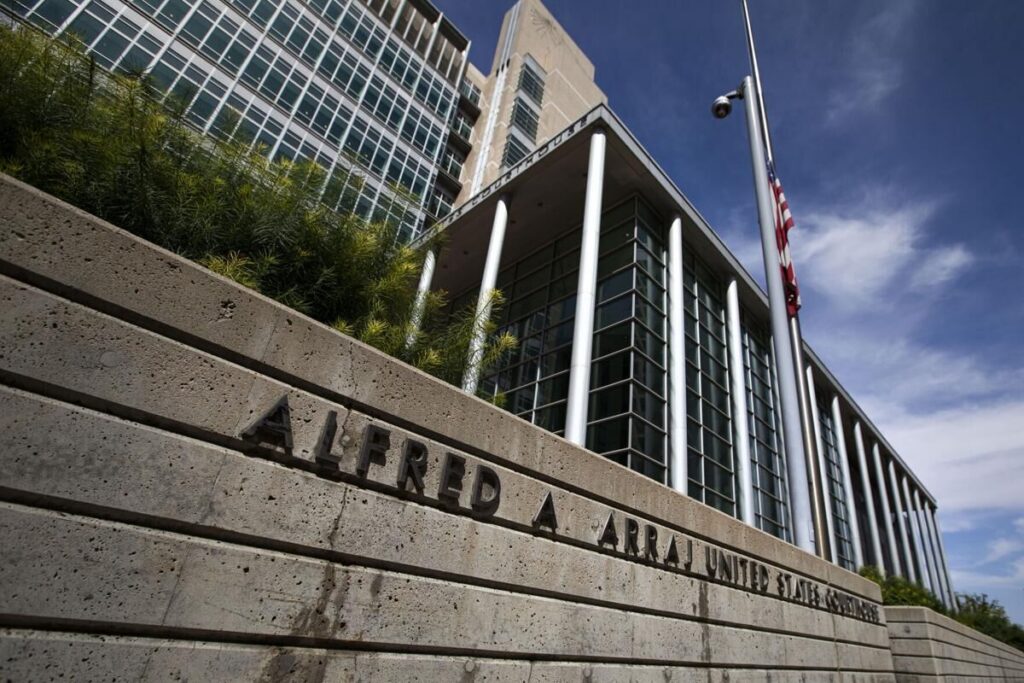
Before taking the bench in 2022, U.S. District Court Judge Charlotte N. Sweeney was an employment discrimination attorney. While the cases could be emotionally charged, they were different from the criminal proceedings she is now handling. “It wasn’t necessarily affecting...

Trump lowers flags to half-staff for Dolly Parton: ‘The World loves you’
Naomi Lim
naomi-lim@coloradopolitics.com
Updated 23 hours ago
President Donald Trump is honoring the life of country music legend and philanthropist Dolly Parton by ordering federal buildings across the country to lower flags to half-staff for a week. “Very sad to report that Dolly Parton, one of the...
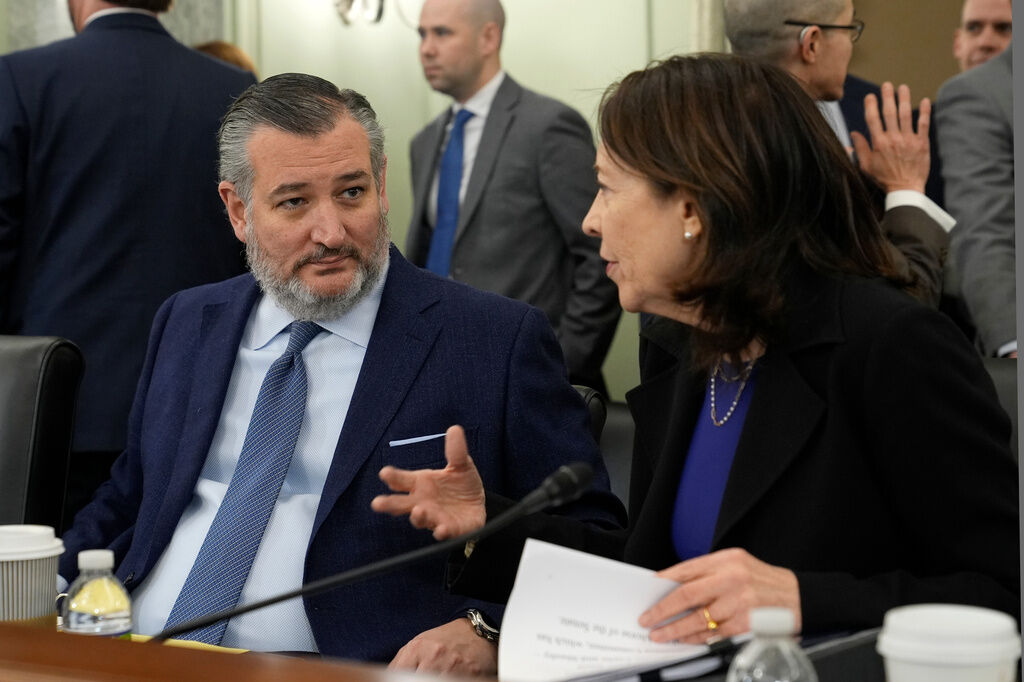
Ted Cruz suggests GOP realignment coming after Trump leaves office
Emily Hallas
emily-hallas@coloradopolitics.com
Updated 23 hours ago
Sen. Ted Cruz (R-TX) on Monday suggested the Republican Party could embrace a directional shift after President Donald Trump leaves office, a transition that promises to leave a gaping hole in the GOP. Cruz is known as a critical ally...
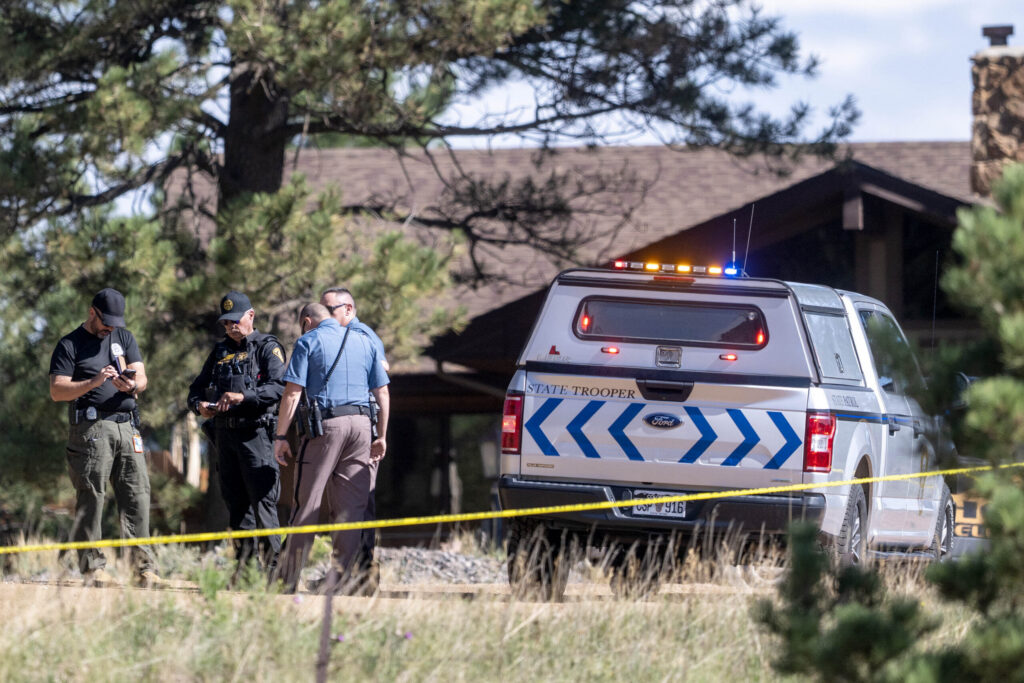
2 Colorado State troopers shot near Woodland Park; suspect killed
DEBBIE KELLEY
debbie-kelley@coloradopolitics.com
Updated 23 hours ago
Two Colorado State Patrol troopers were hospitalized, and a suspect is dead after a shooting during a traffic stop Tuesday. The initial incident happened at about 7:15 a.m., when a resident reported suspicious activity in the area near milepost 286...

Aurora moves forward with data center regulations
Kyla Pearce
kyla.pearce@gazette.com
Updated 23 hours ago
The Aurora City Council approved moving forward with two new regulations on data centers and directed staff to come back at the next study session with others. At a council meeting in early August, council members directed city management to...

Aurora City Council considers stricter food truck regulations
Kyla Pearce
kyla.pearce@gazette.com
Updated 23 hours ago
The Aurora City Council is considering passing laws to limit the number of food trucks on properties in the city and how and when they operate. Councilmember Angela Lawson, who sponsored the ordinance, said she understands the importance of food...
PREV
PREVIOUS

Senator suggests possible end of USOC's tax-exempt status
A senator floated the idea of revoking the U.S. Olympic Committee’s tax-exempt status if it fails to effectively combat the sex-abuse problem in Olympic sports. At a hearing Wednesday, Sen. Richard Blumenthal, D-Connecticut, said the USOC’s tax-exempt status and antitrust exemption could be at risk when Congress revisits the law that governs the federation. The […]

Congress OKs safety upgrades after Colorado helicopter crash
FRISCO – Congress has passed a measure requiring safer fuel systems in new helicopters, a response to a crash in Colorado. The Summit Daily News reports the Senate gave final approval to the provision Wednesday. President Donald Trump is expected to sign it into law. Colorado Democratic congressmen Ed Perlmutter and Jared Polis added the […]