

State revenue forecasts show uptick in economy, tax dollars
DENVER – The news about Colorado state revenues is either good, or very good, according to the number-crunchers at the state Capitol who keep an eye on Colorado’s revenue picture.
In both cases, the news was good enough for Gov. John Hickenlooper to hike the amount of money he wants to put into transportation, both in 2018-19 and 2019-20. In a letter sent to members of the Joint Budget Committee Monday, Hickenlooper proposed a one-time boost of $500 million in 2018-19, up from the $148.2 million he proposed last December.
Hickenlooper also wants to direct $200 million to the State Education Fund and $100 million toward reducing the so-called negative factor, a cut to K-12 education from 2010 that currently leaves funding at about $828 million below what’s required by Amendment 23.
In 2019-20, and based on revenue forecasts, Hickenlooper wants to put $150 million into transportation, $100 million to the state education fund and $15 million toward water infrastructure.
There were significant differences between the forecast presented by the Legislative Council economists and those from the governor’s Office of State Planning and Budgeting (OSPB). Among the biggest is that a TABOR refund could hit as early as 2018-19, according to the General Assembly’s economists. Or not at all, according to OSPB.
The Legislative Council forecast predicts a small TABOR refund in 2018-19 of $8.4 million. Under current law, the first round of refunds would go to seniors under the state’s Senior Homestead Act, a property tax refund that goes to seniors age 65 or older and who have been in their homes at least a decade. In 2019-20, the forecast said, the refund could end up at around $156.4 million, with possible TABOR refunds going to others in addition to seniors.
OSPB Director Henry Sobanet told reporters the difference between the two forecasts on the TABOR refund issue is when the dollars actually reach the state coffers. His forecast predicts more revenue in 2017-18 and a little less the following year, hence no refund.
The news that the state could be issuing refunds as early as next year took some lawmakers by surprise. JBC Chair Rep. Millie Hamner, a Dillon Democrat, said she didn’t think the state would have to issue TABOR refunds so soon.
That’s because last year, the General Assembly put into motion a change to the state’s hospital provider fee, converting it to an enterprise. The bill included a provision for lowering the state’s revenue limits, established under TABOR, by $200 million, hence leaving room for revenue growth. However, economists noted that without the passage of the 2017 legislation, the state would be paying out hundreds of millions of dollars in TABOR refunds this year.
Compared to the December forecast, according to chief Legislative Council economist Kate Watkins, the state could see a revenue surplus of $1.3 billion in 2018-19, up from just under $1 billion in the December estimate. The OSPB forecast estimated revenue increases in 2017-18 of $309 million and $207.3 million the following year. Sobanet attributed much of the hike in revenues in 2017-18 to the federal Tax Cuts and Jobs Act and all of the 2018-19 boost to the new federal tax law.
There was a little good news on the severance tax front, too. Larson Silbaugh of Legislative Council said the price of crude oil has rebounded significantly in the past couple of months and that means better news for communities that rely on severance taxes to mitigate oil and gas activity. For 2017-18, the revenue estimate from severance taxes increased by $13.9 million, to $62.2 million. That’s still down significantly from the $150 million the state collected just two years ago. In 2018-19, the state could see a return to more normal revenues, with collections of $122.3 million, up $58.2 million from the December estimate.
Senate President Kevin Grantham of Cañon City said Monday before the forecasts were released that he expected “good numbers” from the March revenue forecasts, which would strengthen his case for seeking a $300 million general fund annual boost to transportation as contained in Senate Bill 1. That bill is expected to clear the Senate this week but heads to an uncertain future in the House, where Democrats have yet to say just how much general fund support, if any, they would put into transportation. He told reporters he has yet to get an indication that House Democrats are “warming” to the $300 million proposal.
Sandra Hagen Solin of Fix Colorado Roads told Colorado Politics that while she appreciated Hickenlooper’s larger proposal on transportation, she still wants to see a substantial long-term commitment to transportation that is not reflected in the governor’s revised proposal. “We look forward to continuing the conversation,” she added.
The March 19 forecast is one of the last steps before the Joint Budget Committee issues its 2018-19 proposed state budget, which is scheduled for March 26.

Tiered or capped? Battle over Colorado’s income taxes might come down to one number
Marianne Goodland
marianne.goodland@coloradopolitics.com
Updated 3 hours ago
The battle between two competing ballot measures — one seeking to cap Colorado’s income tax rate, the other pushing for a tiered system depending on income levels — might come down to whichever ballot proposal gets one more vote. The...
10th Circuit says landowner cannot sue ex-Routt County judge for statements in decision
Michael Karlik
michael.karlik@coloradopolitics.com
Updated 1 hour ago
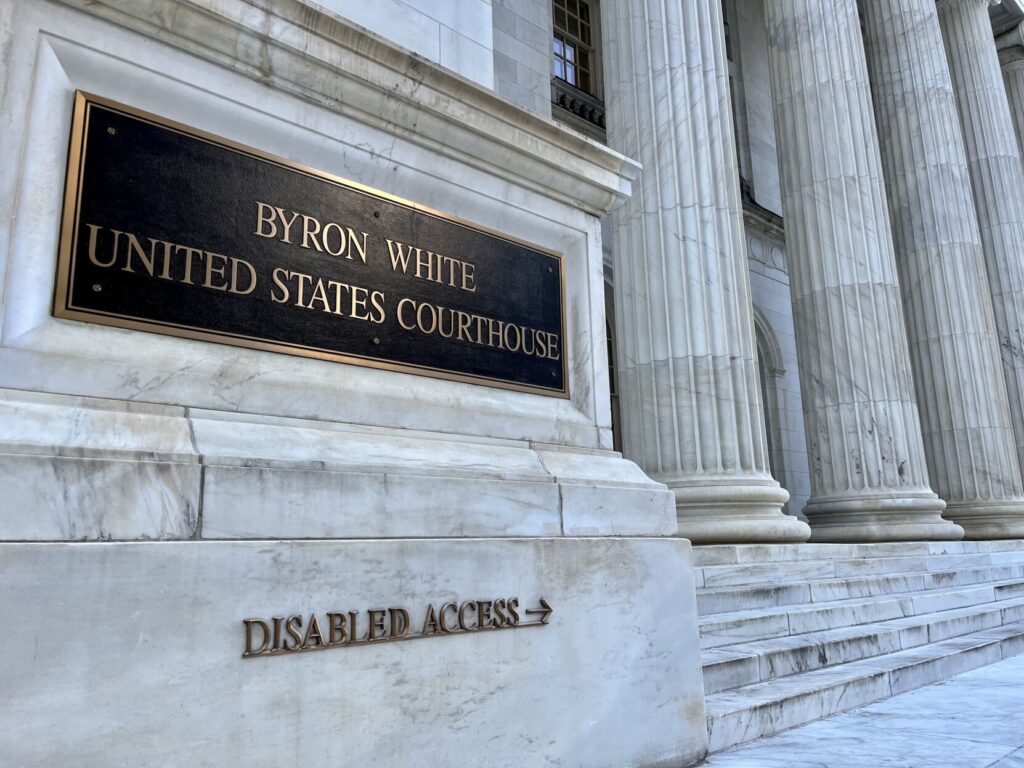
A Routt County landowner cannot sue a former judge for his allegedly inaccurate statements in a case where the landowner was not a party, the Denver-based federal appeals court decided on Wednesday. Anne Fitzsimmons, who lives in Germany, owns a...
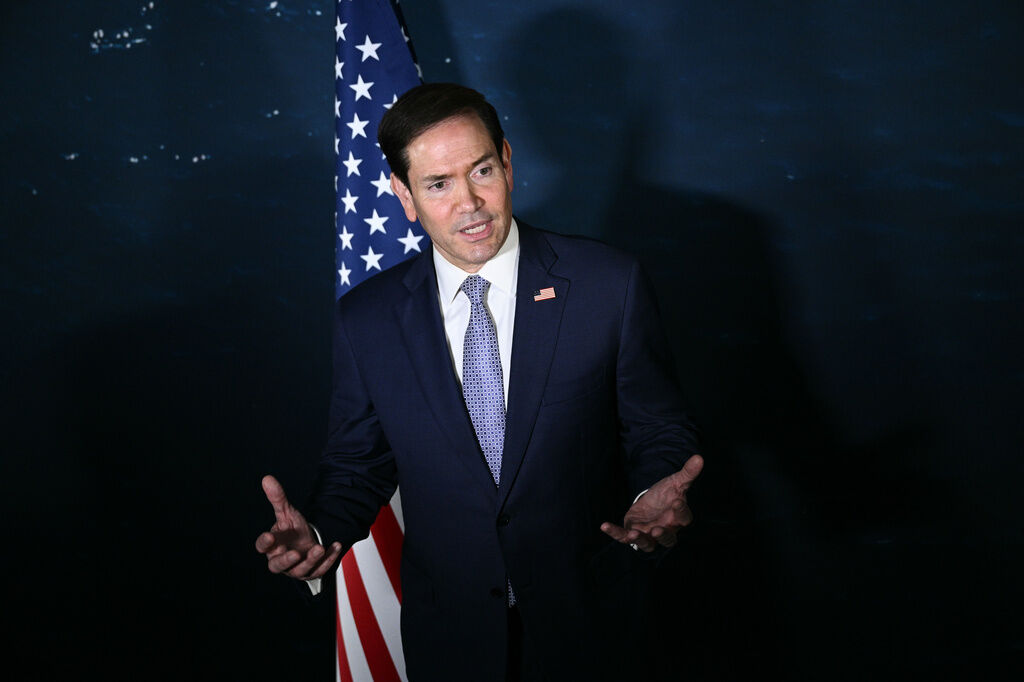
Rubio crushes Vance in Western Conservative Summit 2028 straw poll
Kiara Moore
kiara.moore@washingtonexaminer.com
Updated 5 hours ago
Secretary of State Marco Rubio came out on top in this past weekend’s nonpartisan straw poll at the Western Conservative Summit, outpacing a packed field of would-be 2028 presidential hopefuls. Hosted by the Centennial Institute, Colorado Christian University’s public policy...
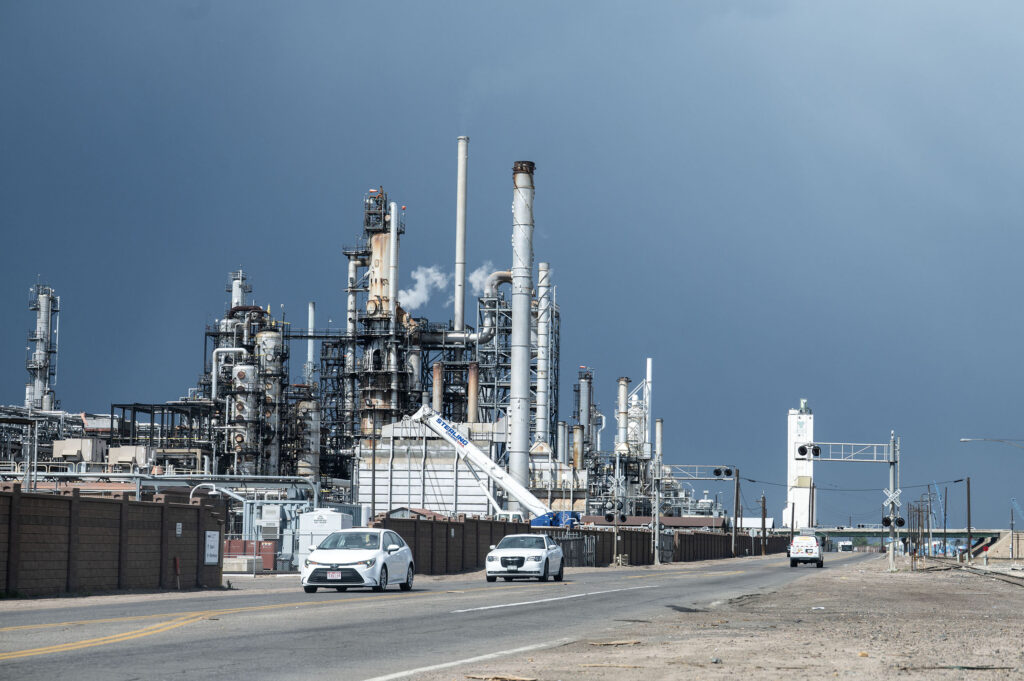
Supreme Court to open next term with major climate change case
Jack Birle
jack-birle@coloradopolitics.com
Updated 4 hours ago
The Supreme Court’s next term will begin in October with major cases about costly climate change lawsuits and immigration. The high court announced the cases it will hear in the first month of its upcoming term, as the justices remain...

New Colorado laws going into effect cover AI disclosures, medical marijuana access and gambling limits
Marissa Ventrelli
marissa.ventrelli@coloradopolitics.com
Updated 5 hours ago
More than 100 new Colorado laws take effect Aug. 12, bringing changes to chatbot safety rules, psychedelic research, campus wellness checks and sports betting restrictions. Here is a look at some of those laws set to take effect. The law:...

National House Democrats add Colorado seats held by Lauren Boebert, Jeff Hurd to target list
Ernest Luning
ernest.luning@coloradopolitics.com
Updated 3 hours ago
The national House Democrats’ campaign arm on Wednesday added the Colorado congressional district held by Republican U.S. Reps. Jeff Hurd and Lauren Boebert to the list of targeted seats the party believes are vulnerable in this year’s midterms. The Democratic...
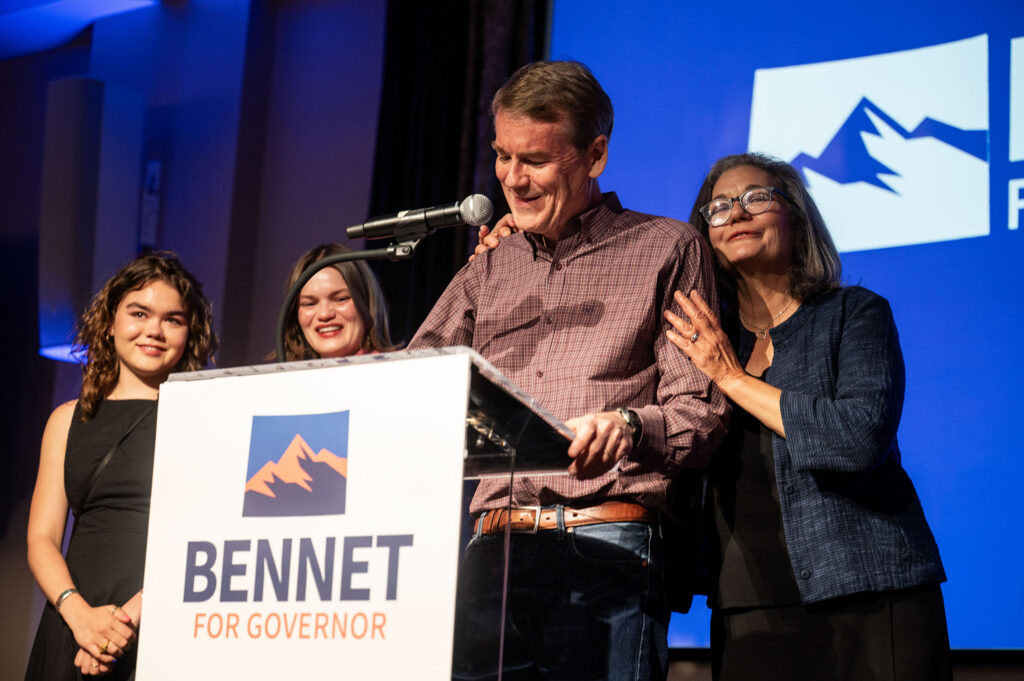
Bennet settles campaign finance complaints, admits violating state law
Marianne Goodland
marianne.goodland@coloradopolitics.com
Updated 1 hour ago
U.S. Sen. Michael Bennet’s gubernatorial campaign has agreed to pay a $7,433 fine for using his Senate campaign account to pay for gubernatorial campaign travel expenses. The July 31 settlement includes an admission by Bennet and his campaign that they...

Colorado to implement new laws on jail standards, safe haven rules, and agricultural labeling
Marissa Ventrelli
marissa.ventrelli@coloradopolitics.com
Updated 7 hours ago
In mid-August every year, a slew of recently passed laws in Colorado go into effect 90 days after the end of the legislative session. This year, all bills without a specified effective date or safety clause — a provision stating...
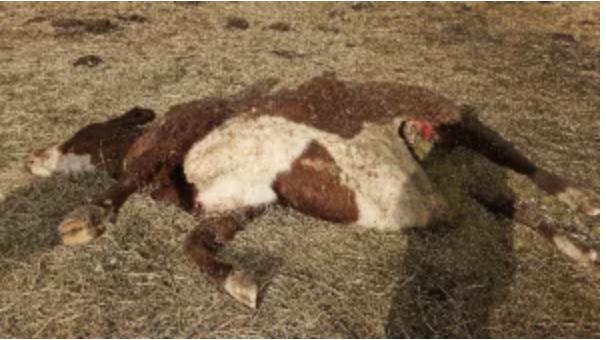
Colorado records 17th wolf death, a yearling tied to livestock losses
Marianne Goodland
marianne.goodland@coloradopolitics.com
Updated 3 hours ago
A yearling male wolf in Grand County has become the 17th wolf to die in Colorado in the past two years. Colorado Parks and Wildlife announced that its staff killed the wolf on Aug. 4 because it was believed to...
Parole, appeals deadlines and restitution: Colorado justices accept cases
Michael Karlik
michael.karlik@coloradopolitics.com
Updated 23 hours ago
The Colorado Supreme Court announced on Monday that it will determine how a defendant’s parole-eligibility date should be calculated in instances where a new trial results in a sentence being imposed retroactively to the date of the original, since-overturned sentence....
PREV
PREVIOUS

Harassment in Colorado government goes beyond statehouse
Nearly three of every thousand Colorado state government agency workers have filed a sexual harassment claim at work in the past five years, a Rocky Mountain PBS investigation found. Sexual harassment allegations rocked the General Assembly this year and led it to oust one of its own members, Rep. Steve Lebsock, for the first time […]

Senate Republicans sink bump stocks ban, advance magazine limit repeal
DENVER – In the same committee hearing Monday afternoon, Senate Republicans rejected a ban on bump stocks – devices that give legal rifles the ability to fire more bullets like an illegal one – and advanced a bill to repeal the 15-round limit on ammunition magazines passed by Democrats in 2013. “We can’t afford to wait […]