

Colorado regional advisory councils for BLM frustrated with Trump administration
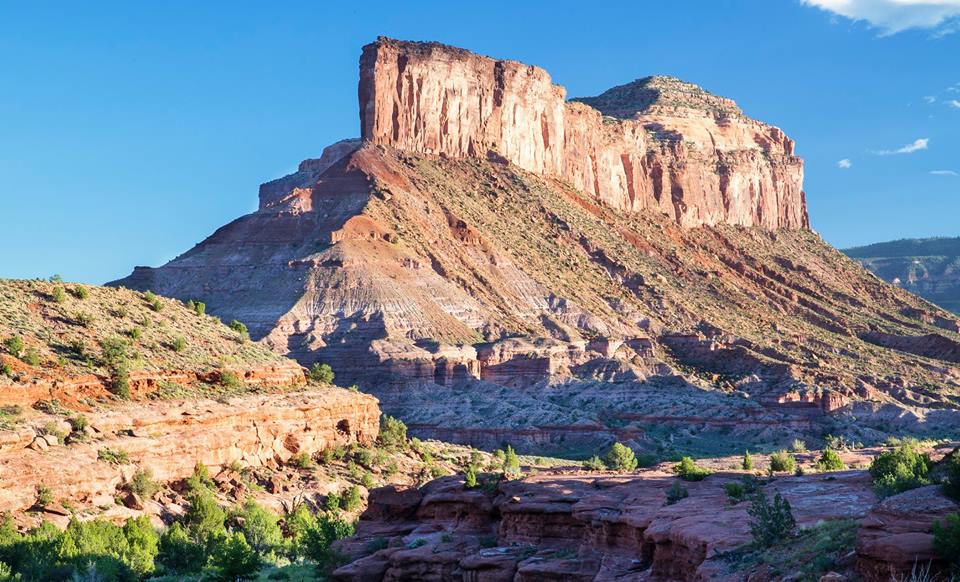
The citizen councils in Colorado created to advise the federal Bureau of Land Management (BLM) on local issues have been blocked from meeting for a year by Trump administration reviews and delays, setting off protests and resignations.
The regional advisory councils, or RACs, were created by statute in 1995. There are three in Colorado-one each for the Northwest, the Southwest and Rocky Mountain regions.
The councils try to develop consensus positions to offer the BLM on local issues from wild-horse and burro management to regulating heavily used recreation areas to oil and gas development.
Frustrated with the situation, two members of the Northwest RAC have resigned, and members of the Rocky Mountain council have drafted a letter of “concern” to Interior Secretary Ryan Zinke. The letter is being circulated among all RAC members in the state.
The delays in getting meeting dates, issuing council charters and filling council vacancies is part of a pattern, said Nada Culver, director of the Wilderness Society’s BLM Action Center.
“It is part of a pattern of cutting out input from a broad range of people,” Culver said. “We are seeing people get the message that their services are no longer required.”
In January, 10 of the 12 members of the National Park System Advisory Board resigned in protest after failing to get a meeting on issues of concern.
“Our requests to engage have been ignored and the matters on which we wanted to brief the new Department team are clearly not part of its agenda,” board chairman Tony Knowles, a former Alaska governor, wrote in a letter to Zinke.
Since last March, only one of the RACs, the Northwest, has held a meeting. A meeting for the Rocky Mountain RAC set for January was canceled by the BLM and a February meeting for the Northwest council was also canceled.
The reason was that the RACs can’t meet until their new charters have been issued by Washington, said Steven Hall, a BLM spokesman.
“Most RAC activities have to be approved by Washington,” Hall said. The charters and nominations for council vacancies are being worked on and will be issued. “I don’t have an estimate for when that’s going to occur.”
Last spring, Zinke suspended the RACs while a review was done. The suspension was lifted in the fall, although no report was issued.
The RACs were permitted to meet in December, but they need new annual charters to begin meeting in 2018. A third of the seats on the Northwest and Southwest RACs are vacant and have to be filled.
Two members of the Northwest council have resigned. In November, Pitkin County Commissioner George Newman left the board, and in February, Barbara Vasquez, the chairman of the RAC, resigned.
“It didn’t make sense to sit on an advisory committee whose advice wasn’t going to be asked for,” Newman said. “The administration is one sided that side is to do whatever they can do to deregulate for the benefit of the oil and gas industry at the sacrifice of the long-time environmental needs.”
Vasquez said, “It is rather discouraging that on one hand, they say that public input is desired and on the other, one of the best ways of doing that is shut down.”
One of the issues the Northwest RAC has been involved in was the Greater Sage Grouse Plan developed by the western states and the Obama administration. When Zinke announced in the fall that Interior was looking to revise the plan, the RAC was on hiatus.
“It became clear that the ‘public’ input was chosen to further directions already decided prior to the reviews. That the Greater Sage Grouse Plan was summarily put aside is a sad example of ignoring public input, as it was the result of intense stakeholder involvement with significant public input over multiple years. The NW Colorado District and RAC had significant involvement in that effort,” Vasquez said in her letter of resignation.
David Ludlum, the executive director of the West Slope Colorado Oil & Gas Association and a Northwest RAC member, said that his council colleagues are overreacting.
“For many years, there were people on the RAC who didn’t agree with policies and ideology, but felt it important to stay as a voice of dissent and keep the RACs balanced,” Ludlam said. “When the administration changed, they take their ball and go home.”
Ludlam said that there are major reforms underway at Interior and the BLM, including proposals to relocate BLM headquarters and restructure programs.
“It makes sense that with all this going on the RACs would also see some delays,” Ludlam said.
After its meeting was canceled in January, a group of Rocky Mountain RAC members held an “impromptu” meeting and drafted a letter a letter to Zinke, which is being circulated for signatures among all the RACs, according to Bill Dvorak, a Rocky Mountain RAC member.
“We are concerned about the inability to perform in our official role as stakeholder advisers to the BLM,” the letter said.
Two Northwest RAC members’ terms have expired, and they are awaiting reappointment, added to the five vacancies, seven of the 15 seats on the council are not filled.
“We are just waiting,” said Luke Schafer, the West Slope director of Conservation Colorado, whose term on the Northwest RAC expired last November. “We have very little idea of what’s being done.”

Colorado board permits state to appeal injunction against arthritis drug price cap
Marissa Ventrelli
marissa.ventrelli@coloradopolitics.com
Updated 9 hours ago
A Colorado board voted Friday to allow the Attorney General’s Office to fight an injunction against a price cap on a drug that treats arthritis. A U.S. district court judge had granted the company Amgen a preliminary injunction, temporarily blocking...

Federal judge rejects constitutional claims, ‘expressions of hatred’ by Club Q defendant
Michael Karlik
michael.karlik@coloradopolitics.com
Updated 9 hours ago
A federal judge rejected a defendant’s claims that he received constitutionally ineffective assistance of counsel while facing federal hate crime and firearms charges for murdering five people at a Colorado Springs LGBTQ nightclub in 2022. Anderson Lee Aldrich is serving...

Divided 10th Circuit upholds Colorado congestion fee on car rentals
Michael Karlik
michael.karlik@coloradopolitics.com
Updated 6 hours ago
The Denver-based federal appeals court concluded on Monday that a 2024 “congestion impact fee” that lawmakers imposed on short-term vehicle rentals did not conflict with a federal prohibition on certain airport-related charges. Beginning in the 1970s, Congress began limiting the...

Space Force should measure workforce needs as it prepares to double in size, GAO report says
Mary Shinn
mary-shinn@coloradopolitics.com
Updated 15 hours ago
The Space Force needs more people. It’s just not precisely sure how many more. A Government Accountability Office report released earlier this month found that the youngest and smallest military branch does not have a process to consistently or accurately...

Colorado schools receive $24 million for free meals program
Marissa Ventrelli
marissa.ventrelli@coloradopolitics.com
Updated 9 hours ago
The Colorado Department of Education is providing Colorado schools with nearly $24 million in grant funding to implement a free lunch program. Approved by voters in 2022, the Healthy School Meals for All provides free breakfast and lunch to all...

Secret Service agent placed on administrative leave after arrest for near-deadly hazing ritual
Claire Carter
claire.carter@washingtonexaminer.com
Updated 17 hours ago
A Miami Secret Service agent in Florida was placed on administrative leave following his arrest on Sunday in connection with a near-deadly hazing incident at a University of Miami fraternity. Marquez Christopher Pinder, 29, was arrested alongside two other individuals...
Forest fire west of Sedalia prompts evacuations in Douglas County
Nicholas Fogleman
nicholas.fogleman@denvergazette.com
Updated 19 hours ago
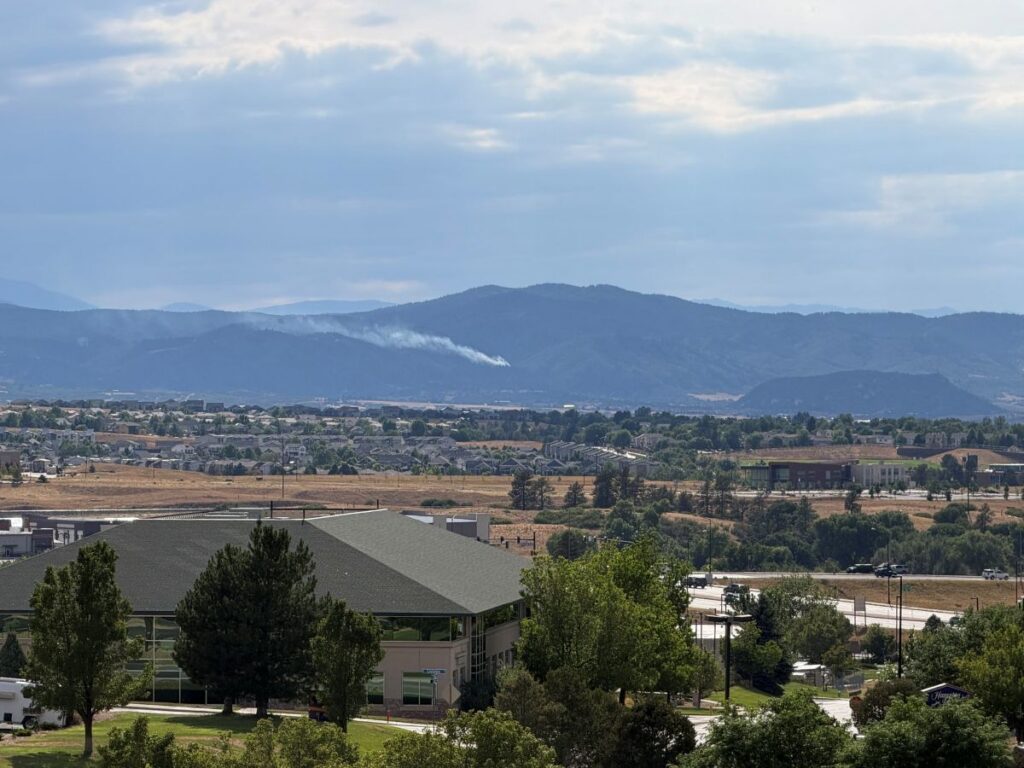
Emergency crews are responding to a forest fire burning west of Sedalia, prompting evacuation orders for nearby residents Sunday afternoon. At about 5 p.m. Sunday, the Douglas County Sheriff’s Office issued an evacuation order for residents within a 2-mile radius...

Airstrikes have paused and talks are pressing forward. But can the US and Iran take the off-ramp?
The Associated Press
the-associated-press@coloradopolitics.com
Updated 19 hours ago
WASHINGTON (AP) — The U.S. military has paused its airstrikes on Iran after nearly two weeks of intensifying bombing, while diplomatic efforts have pushed forward to try to avert a return to all-out war. But it remains to be seen...
Penrose fortune paved the way for Colorado Springs to be a military, space and sports town
Mary Shinn
mary-shinn@coloradopolitics.com
Updated 19 hours ago
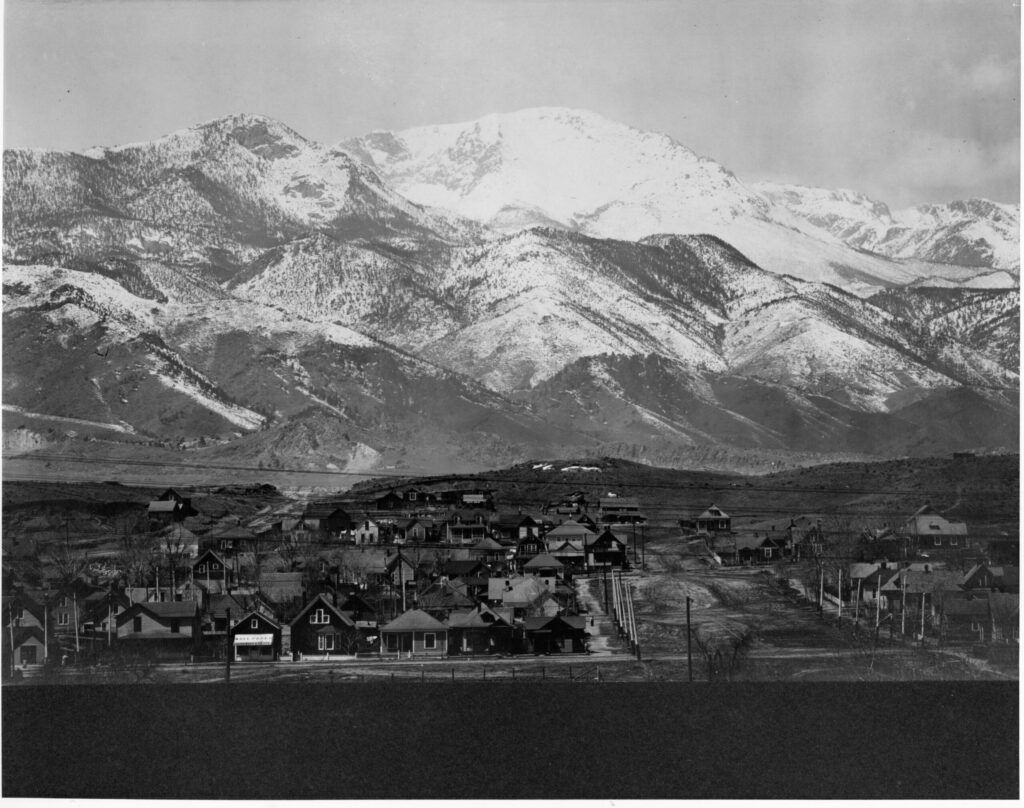
Colorado Springs is always working to catch the next big economic wave. “We’re always trying to figure out what the next thing is going to be,” explained Matt Mayberry, director of the Colorado Springs Pioneers Museum. In the early days,...

Colorado Politics Calendar July 27-Aug. 2
Rachael Wright, Special to Colorado Politics
rachael.wright@coloradopolitics.com
Updated 6 days ago
CoPo’s weekly political calendar will help you find political and public-policy events throughout Colorado. It includes candidate and issue campaign events, public policy meetings, court hearings, state and local party conventions, assemblies, debates, rallies, parades, speaking engagements, traveling dignitary appearances,...
PREV
PREVIOUS

With promise of federal money, more low-income Coloradans could get help with child care
Thousands of additional Colorado families might be able to pay for child care if a federal spending bill due in March fulfills the pledge of a recently approved budget deal. That’s because the deal, passed by Congress and signed by President Trump earlier this month, promised new money for a subsidy program that helps low-income […]

Colorado oil production rises as prices rebound
Oil production continues to increase in Colorado as energy companies respond to a recent rebound in crude prices, according to U.S. government data. The Energy Information Administration says drillers in the Niobrara region that includes much of northern Colorado will produce 580,000 barrels daily in March. That’s a 6 percent increase over February’s expected production. […]