

The Colorado Springs Gazette: There ain’t no such thing as ‘zero emission’ battery cars
As federal, state and local governments race to get electric cars on the road, politicians and journalists repeat a fib about “zero emission vehicles” saving the planet from global warming.
There ain’t no such thing as zero emission battery cars.
Reporting on Colorado’s $68.7 million award from the federal government’s Volkswagen settlement, The Denver Post explained how the money will buy “zero-emissions charging stations over the next five years.”
Gov. John Hickenlooper’s ambitious Colorado Electric Vehicle Plan references “Zero Emission Vehicle” mandates in California. It describes Colorado’s plan to use Volkswagen funds for “zero emission fueling and charging infrastructure,” and “zero emission vehicle infrastructure and education programs.”
Colorado politicians are so enthused about zero emissions, they force taxpayers to give $5,000 subsidies to the 0.2 percent of Coloradans who buy electric cars. That’s on top of a $7,500 federal subsidy. A popular Tesla battery car costs $140,000, and Rimac’s Concept One costs nearly $1 million. The no-frills electric Smart Car costs nearly $30,000.
The Colorado Springs Parking System Enterprise told The Gazette a tall tale about a pilot program of charging stations that magically powers cars without producing emissions.
“In August 2017, cars were charged 88 times at one of the Kiowa stations and one of the CAB (City Administration Building) stations,” a recent Gazette story explained, reporting the parking agency’s claim. “Their charges prevented the emission of 1,569 pounds of greenhouse gases, the equivalent to air cleansing provided by 27 trees.”
Sheer nonsense.
In an email to The Gazette’s editorial board, parking manager Greg Warnke explained the stations are powered by Colorado Springs Utilities. The utility uses fossil fuels as the primary means of producing electrons. We asked Warnke if his agency accounted for the smoldering coal that feeds each station.
“The comparison made does not account for power plant emissions,” Warnke explained by email.
Neither the charging stations, nor the vehicles they charge, work without causing greenhouse gases that spew into the environment through power plant smoke stacks.
The charging stations and cars did not prevent anything approaching 1,569 pounds of emissions.
The U.S. Department of Energy reports coal generates more than 55 percent of Colorado’s electrons. Natural gas generates 23.3 percent, and “other fossil fuels” and oil produce 0.11 percent. Wind, hydro and solar generate 21.26 percent of Colorado’s electrons.
Using those numbers, the federal government claims an all-electric vehicle in Colorado generates 6,472 pounds of greenhouse gases each year. A plug-in hybrid produces 7,382 pounds, and a conventional gasoline vehicle &mdadh; based on federal Corporate Average Fuel Economy standards – produces 11,432 pounds.
If battery cars produce more than half the CO2 of conventional cars, a month of charges at city parking lots does not save half of the purported 1,569 pounds of pollutants. The federal calculation is generous when applied locally, as Utilities has not reached the state average of 21.26 percent renewable electrons and will strive to reach 20 percent by 2020.
Electric vehicles have extraordinary promise, and it seems clear they produce less pollution than conventional cars with low or average mileage ratings. Their environmental benefits will increase as we capture more solar and wind to power the grid. Electric cars may be the wave of the future, which could be a good thing, if consumers choose to embrace them.
Despite the potential, don’t fall for false and exaggerated claims. Electric cars are not “zero emission vehicles,” not even close. We should not pretend they are to justify giant subsidies for a fraction of a percentage of the public, made up mostly of the wealthy.
Hear “zero emission” as a lie, whether applied to charging stations or cars. Under the most wishful renewable targets, each will produce harmful exhaust far into the future.

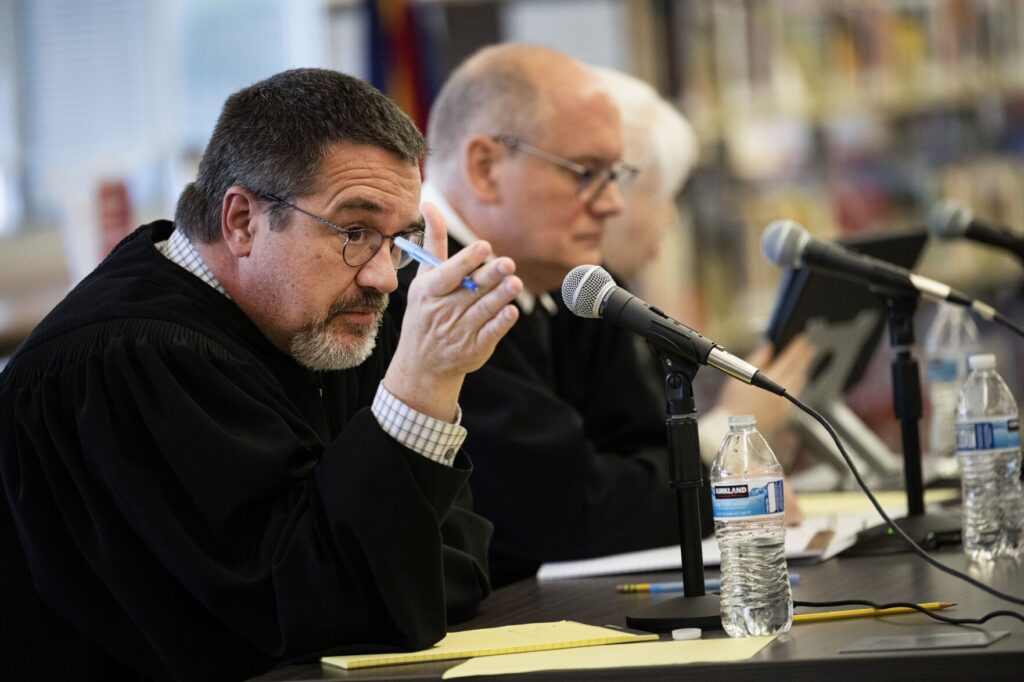
Appeals court reinstates Garfield County arson charge
Michael Karlik
michael.karlik@coloradopolitics.com
Updated 18 hours ago
Colorado’s second-highest court reinstated a Garfield County defendant’s arson charge on Thursday, concluding a trial judge improperly credited a witness’s claim that she alone was responsible for starting the fire. A sheriff’s deputy responded to a brush fire near Parachute...

Democratic US Sen. John Hickenlooper qualifies for Colorado primary by petition, will skip assembly
Ernest Luning
ernest.luning@coloradopolitics.com
Updated 16 hours ago
U.S. Sen. John Hickenlooper has qualified for Colorado’s Democratic primary after the first-term incumbent submitted enough valid petition signatures to make the ballot, state officials said. Hickenlooper is facing primary challenges from state Sen. Julie Gonzales, D-Denver, and university professor...
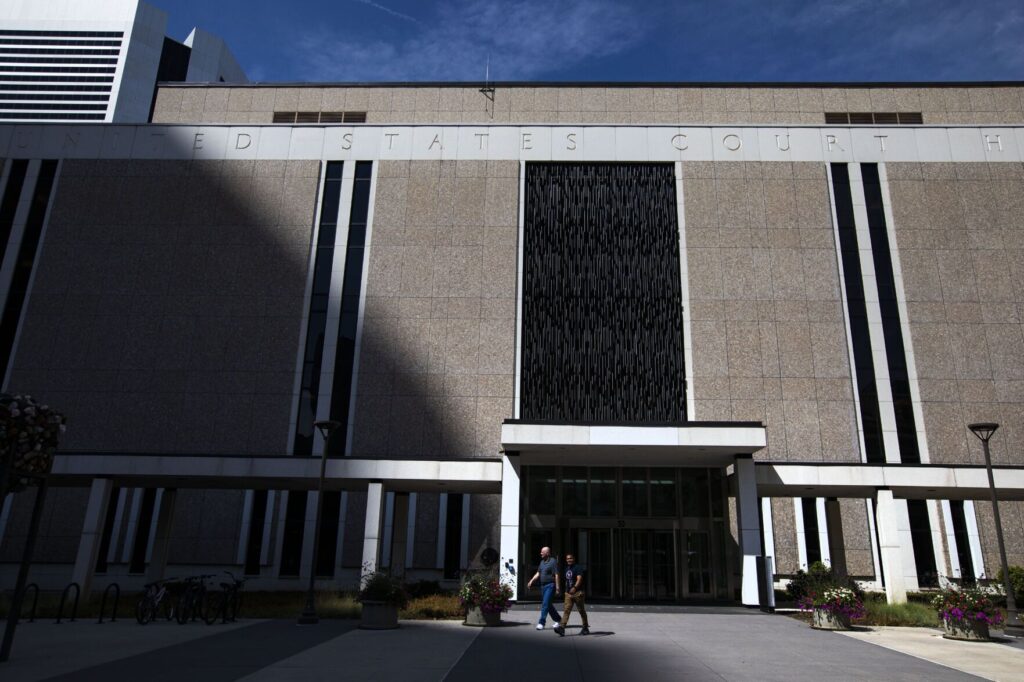
Federal judges rebuke ex-Colorado judicial discipline director for conduct in lawsuit
Michael Karlik
michael.karlik@coloradopolitics.com
Updated 19 hours ago
A pair of federal judges expressed a desire on Thursday to break the logjam on a lawsuit by Colorado’s former judicial discipline director against the state Supreme Court and related entities, while simultaneously showing little tolerance for the plaintiff’s scorched-earth...

Democratic bill would let recipients of ‘conversion therapy’ sue Colorado providers with no statute of limitations
Marissa Ventrelli
marissa.ventrelli@coloradopolitics.com
Updated 17 hours ago
Colorado lawmakers have advanced a proposal that would allow people who underwent conversion therapy to sue licensed providers for damages, moving the measure forward on a party-line vote in the House Judiciary Committee. House Bill 1322, proposed by Democratic Reps....
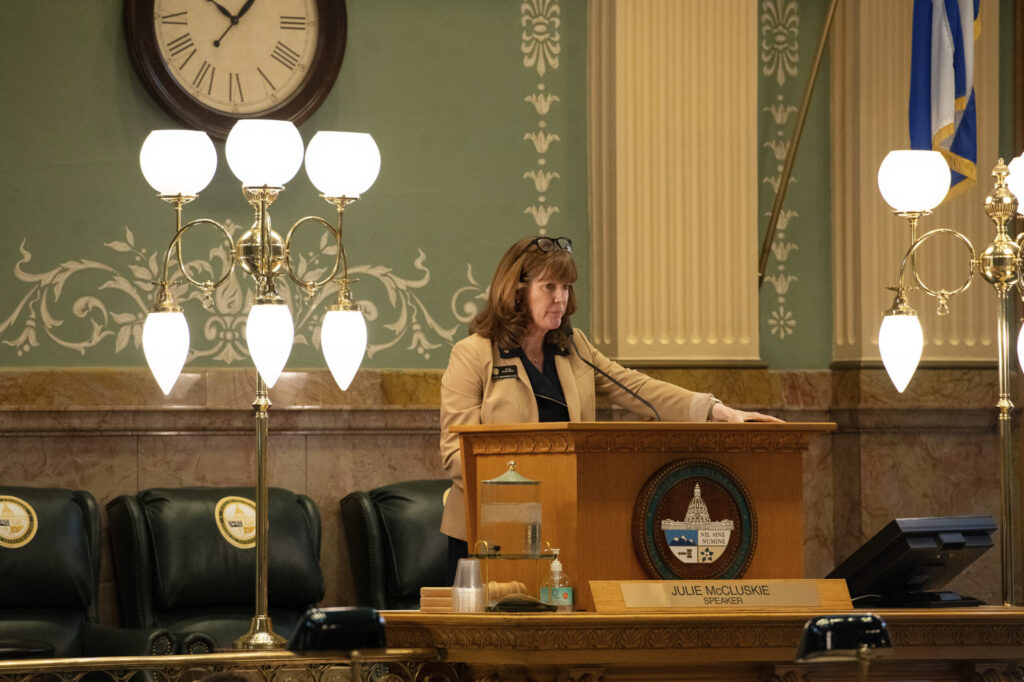
Pinnacol separation bill delayed as Colorado budget remains in flux due to $1.5B deficit
Marianne Goodland
marianne.goodland@coloradopolitics.com
Updated 16 hours ago
A bill that would allow Pinnacol Assurance to formally sever its remaining ties with the state appears unlikely to emerge anytime soon, as House leaders juggle a massive budget shortfall, unresolved negotiations with key stakeholders, and growing doubts about whether...
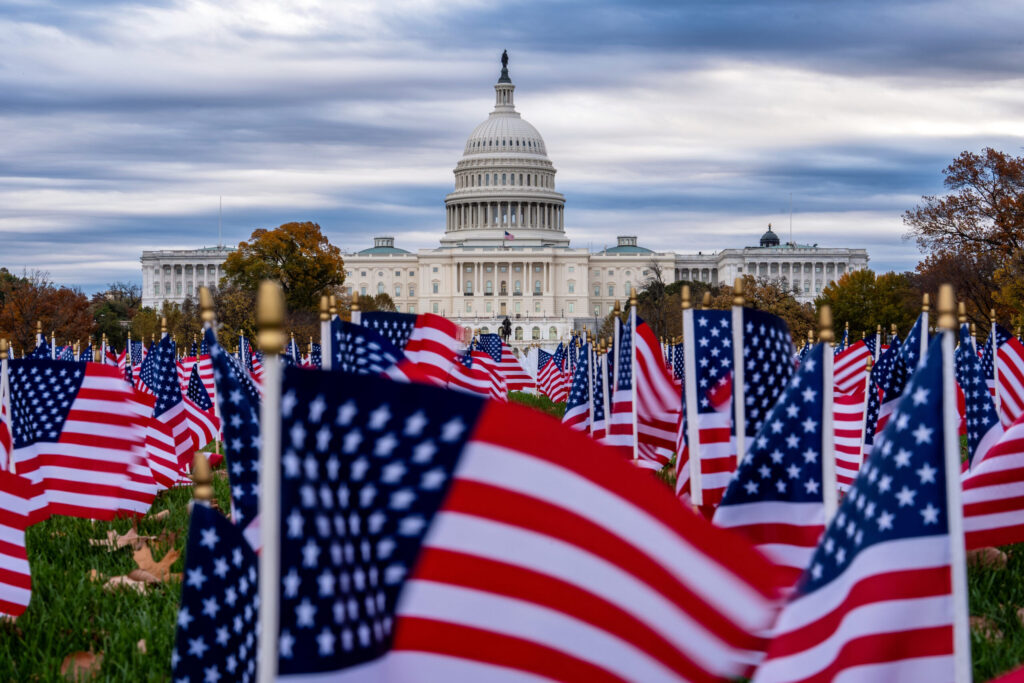
100 days until America250: Five host cities unveiled for July 4 celebrations
Emily Hallas, Washington Examiner
emily.hallas.washington.examiner@gazetteedit.wpenginepowered.com
Updated 22 hours ago
America250, the entity tasked by Congress with marking the United States’ semiquincentennial, on Thursday revealed further details about its sweeping plans to celebrate the milestone. America250 chairwoman Rosie Rios launched the official 100-day countdown to July 4, and said the...
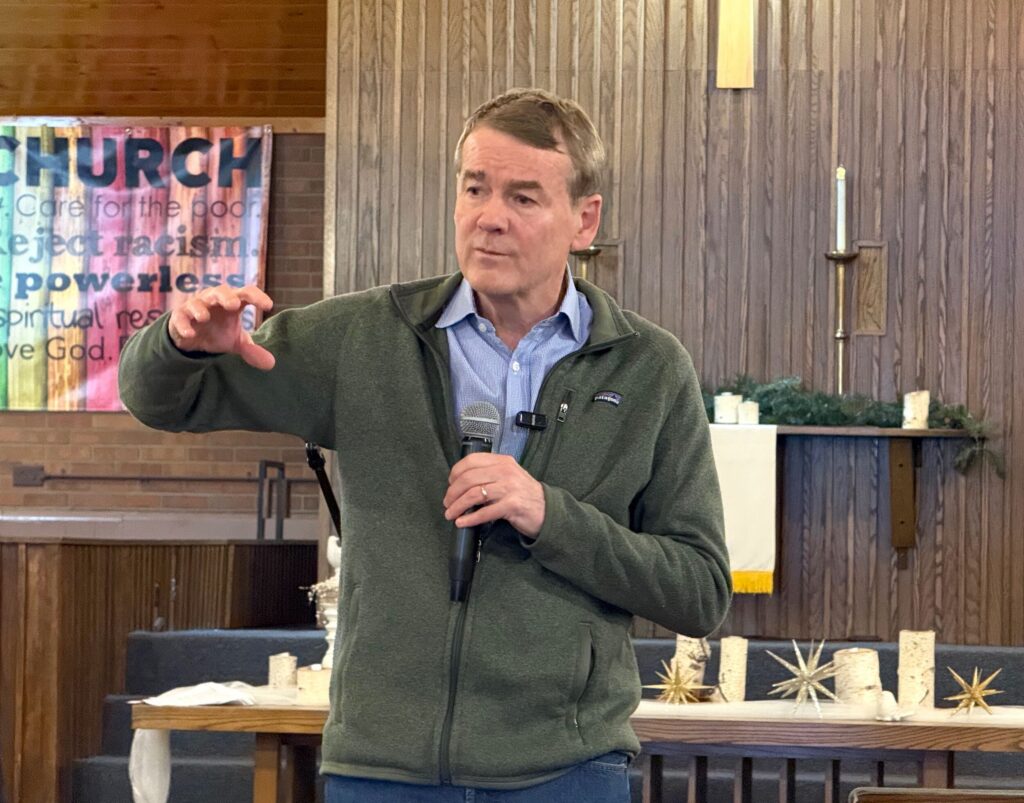
U.S. Sen. Michael Bennet qualifies by petition for Colorado’s Democratic gubernatorial primary
Ernest Luning
ernest.luning@coloradopolitics.com
Updated 17 hours ago
U.S. Sen. Michael Bennet on Tuesday became the first gubernatorial candidate to qualify for Colorado’s June primary ballot after state election officials determined the three-term Democrat’s campaign submitted enough valid petition signatures. Bennet is running against Attorney General Phil Weiser...

Thornton police investigating homicide
Matt Kyle
matt.kyle@denvergazette.com
Updated 18 hours ago
Police in Thornton are investigating a homicide that happened late Wednesday night. Thornton Police Department officers responded just before 11 p.m. near the intersection of East 88th Avenue and Grant Street after a 911 caller reported someone bleeding. Upon arrival,...
Colorado legislators consider $500 million in general fund cuts amid $1.5 billion deficit
Marianne Goodland
marianne.goodland@coloradopolitics.com
Updated 2 days ago
The legislature’s Joint Budget Committee is working through a list Wednesday of about 150 suggestions to cut as much as $1.5 billion in general fund dollars out of next year’s budget. The largest on the list prepared by JBC staff...
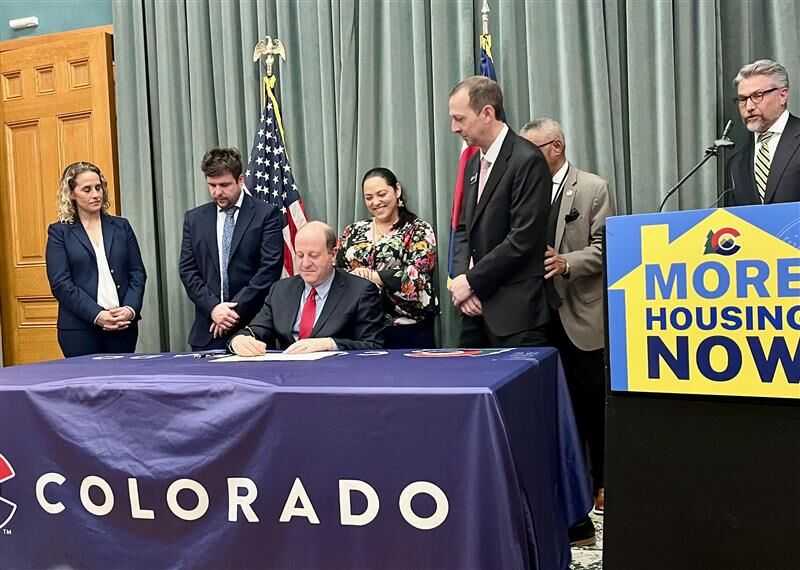
Gov. Jared Polis signs housing bills amid push for ‘affordability’
Marissa Ventrelli
marissa.ventrelli@coloradopolitics.com
Updated 17 hours ago
Gov. Jared Polis held the first public bill signing of the 2026 legislative session on Wednesday on a pair of housing measures that, sponsors said, are aimed at affordability. Part of Democrats’ “affordable” housing package this year, the bills —...