

Colorado legislative fight over oil and gas begins anew, with predictable end
It’s a new year, but it’s the same legislative outcome for Democratic bills to regulate oil and gas or to promote renewable energy in Colorado.
Republicans Thursday made short work of two Senate bills that would pledge the state to get all its energy from renewable sources by 2035, and another to hold oil and gas companies more responsible for leaks, explosions and abandoned operations. Both of the bills by Sen. Matt Jones of Louisville, the Senate Democrats’ point man on environmental issues, died on a party-line vote.
“We should protect people’s health by stopping coal and oil and gas pollution,” Jones told reporters before the hearing. “We have a moral responsibility to our grandkids to address global warming.”
Democrats on the House Health, Insurance and Environment Committee, however, passed Sen. Joe Salazar’s bill to only allow oil and gas development “in a manner consistent with protection of public health, safety, and welfare, including protection of the environment and wildlife resources.”
Forty-eight people testified Thursday evening in the hours-long hearing.
The bill mirrors what’s called the Martinez decision, a court case accepted by the state Supreme Court this week that would force state regulators to give more weight to public health and safety when approving oil and gas permits. The case was filed by five Colorado teenagers in 2014. If Salazar’s bill passed the Senate (it won’t) and Gov. John Hickenlooper signs it into law, the Supreme Court likely would declare the court case moot.
If the bill goes on to make it out of the Democratic-led House, it’s dead on arrival in before the same Republican majority that killed Jones’ bills Thursday. Senate President Kevin Grantham promised as much over breakfast in Canon City with Colorado Politics the weekend before the session, characterizing the legislation as unnecessary and disrespectful to a major industry and employer in this state.
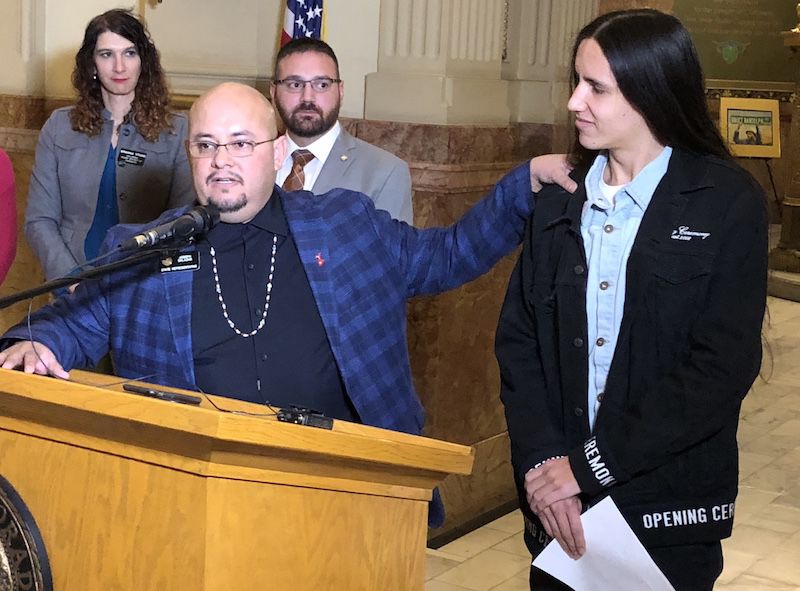
“We’re done with this,” Salazar said of accidents and health risks at a Capitol press conference Thursday. “It’s time we started regulating this industry in a manner with consistent with the health, safety and welfare of the public and our environment.”
He said the regulation was needed to balance the rapid expansion of oil-and-gas operations close to homes, especially northeast of Denver.
Xiuhtezcatl Martinez, the named plaintiff in the Martinez case, has become an informal but effective national spokesman on the climate change cause.
The 17-year-old cited health statistics he related to fracking in the Capitol’s West Foyer at lunchtime Thursday.
“We are at a point where we can no longer let an industry come first over our communities, our children, the safety of our people,” Martinez said. “This is us exerting our democracy.”
Opponents told the House committee Thursday night that bill and the Supreme Court case are so broadly written it could be used to deny any permits, because every human activity has impacts.
Republicans on the committee questioned who would bear the costs, and the industry representatives said it would be them and cost of severance taxes.
Tracee Bentley, executive director of the Colorado Petroleum Council, said the bill is premature, seeking to codify a case that hasn’t been decided by the state Supreme Court. And even if the Martinez litigants win, it only means the state Oil and Gas Conservation Committee has to hear their case, not necessarily adopt it.
“The bill would have undeniable and significant financial impacts that are certainly not reflected in this fiscal note,” she said of the bill’s legislative analysis. “Completely rewriting the COGCC’s mission would turn every permitting decision into a forum for protracted litigation costing the state millions in direct dollars to defend in administrative and judicial appeals and tens of millions more in lost taxes and royalty revenues because of permitting delays.”
The industry, however, focused on its wins in the Senate after Jones’ bills were killed in a hearing that wrapped up by mid-afternoon.
“Today the Senate continued its commitment to Colorado families and the state to emphasize the need for smart energy and economic policy by voting down Senate Bills 63 and 64,” Bentley said in a statement. “The Colorado Oil and Gas Conservation Commission already requires financial assurance and outlines reclamation requirements in current law and industry supports those statutes.”

Atop taxes, here’s how much each Colorado resident pays in fees
Marissa Ventrelli
marissa.ventrelli@coloradopolitics.com
Updated 1 hour ago
Each Colorado resident paid nearly $5,000 in state-sanctioned fees last year, according to a report by a policy think tank. The report, which analyzed how fees have affected Colorado’s economy, found that fee revenue has more than tripled since 2008...

Colorado National Guard, Swiss Armed Forces celebrate partnership
Marissa Ventrelli
marissa.ventrelli@coloradopolitics.com
Updated 3 hours ago
Colorado’s National Guard marked a year of partnership with the Swiss Armed Forces at the Governor’s Mansion on Monday. “This anniversary marks one strong year of friendship and collaboration between the State of Colorado and Switzerland,” said Gov. Jared Polis....
Judge allows Trump to refile $15 billion lawsuit against the New York Times
Emily Hallas
emily-hallas@coloradopolitics.com
Updated 3 hours ago
A federal judge declined to dismiss President Donald Trump’s multibillion-dollar lawsuit against the New York Times on Monday, giving him roughly four weeks to amend his case after the outlet moved to toss it on First Amendment grounds. District Judge...

Gov. Polis celebrates Colorado’s first-place education ranking by U.S. News
Marianne Goodland
marianne.goodland@coloradopolitics.com
Updated 54 minutes ago
Colorado officials said they have something to celebrate this week, in addition to the state’s sesquicentennial birthday on Saturday. U.S. News & World Report on Tuesday gave Colorado its top ranking for education efforts from pre-K to postsecondary, though it...

Denver detox center did not violate man’s rights with 10-hour hold, 10th Circuit says
Michael Karlik
michael.karlik@coloradopolitics.com
Updated 56 minutes ago
The Colorado-based federal appeals court concluded on Tuesday that Denver’s detoxification facility did not violate a man’s rights by holding him against his will for 10 hours until his blood alcohol content was projected to reach zero. Unusually, Brian Garrett’s...

Federal judge clarifies ex-GOP treasurer candidate’s burden to prove defamation claims
Michael Karlik
michael.karlik@coloradopolitics.com
Updated 55 minutes ago
A federal judge clarified last week that businessman and former Republican statewide candidate Brian Watson will need to surmount a higher hurdle in proving his claim that a party guest’s alleged description of him as a “criminal” amounted to defamation....

Denver City Council sends Xcel franchise deal to voters
Deborah Grigsby
deborah.smith@denvergazette.com
Updated 5 hours ago
This November, Denver voters will decide whether to renew the city’s longstanding franchise agreement with Xcel Energy. Members of the Denver City Council approved on Monday sending a proposed 20-year franchise agreement with Xcel that would deliver more than $180...
Independent gubernatorial candidate Greg Lopez, a former GOP congressman, qualifies for Colorado ballot
Ernest Luning
ernest.luning@coloradopolitics.com
Updated 1 hour ago
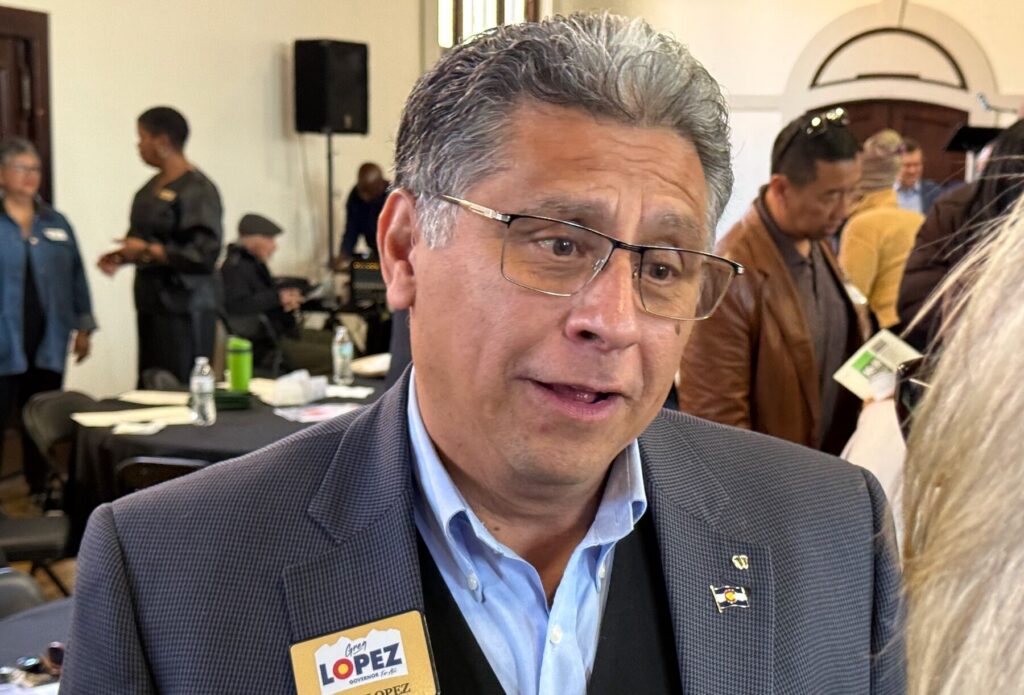
Unaffiliated gubernatorial candidate Greg Lopez, a former Republican congressman from Elizabeth who left the GOP to run as an independent, has qualified for the ballot by submitting enough petition signatures, the Colorado Secretary of State’s Office said Tuesday. He’ll face...
At Colorado’s 150th anniversary, leaders offer birthday wishes
Thelma Grimes
thelma.grimes@coloradopolitics.com
Updated 7 hours ago
As Colorado’s 150th anniversary approaches, leaders from across the state reflect on the spirit that binds the plains, mountains, Western Slope and Front Range — a shared commitment, they underscored, to opportunity, community, stewardship and personal freedom. Their tributes highlight...
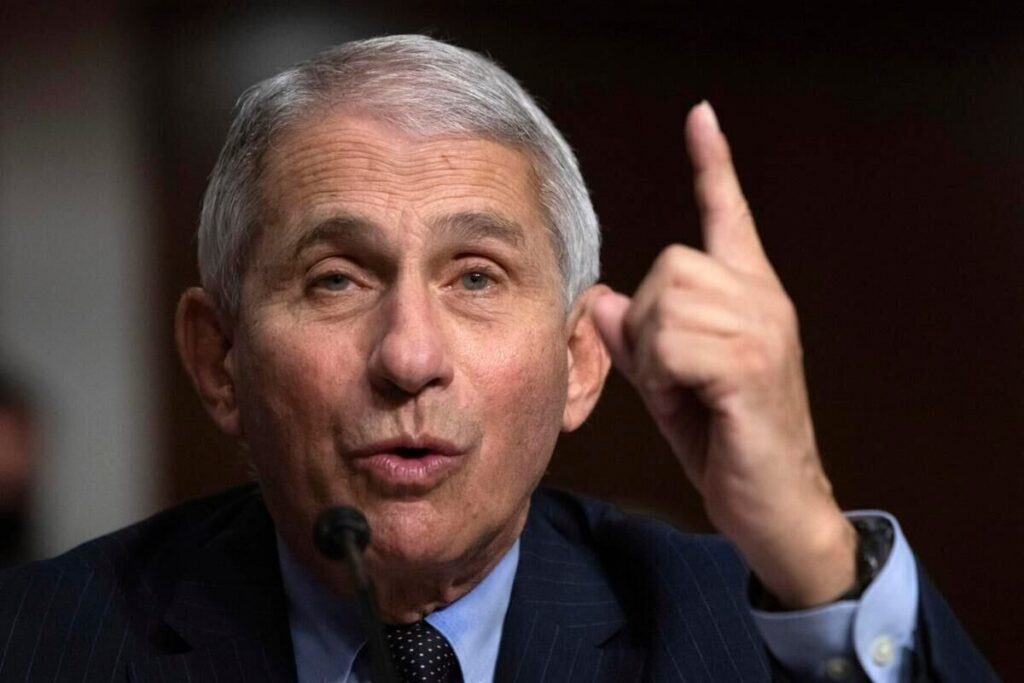
Fauci’s private COVID-19 diaries: Six takeaways on fame, prize money and the lab leak debate
The Washington Examiner
the-washington-examiner@coloradopolitics.com
Updated 10 hours ago
Anthony Fauci’s private writings from 2020 and beyond portray a public health official who was fixated on his growing celebrity while privately grappling with a pandemic response he believed was chaotic, leaderless and consumed by internal rivalries. The writings of...
PREV
PREVIOUS

Sen. Michael Bennet introduces bill to protect national monuments
There’s a land rush starting today in Utah that at least one Colorado senator wants to make certain never happens in his state. Miners are staking claims to parcels of land in large swaths of what formerly was about 2 million acres of Bears Ears and Grand Staircase-Escalante National Monuments in Utah, along Colorado’s southwest […]

Out West Roundup: Montana mandates 'net neutrality' for state contracts
Montana Montana mandates ‘net neutrality’ for state contracts BILLINGS, Montana – Montana last week became the first state to bar telecommunications companies from receiving state contracts if they interfere with internet traffic or favor higher-paying sites or apps, under an order from Gov. Steve Bullock intended to protect so-called net neutrality. The Democratic governor’s order […]