

‘Anti-Weaponization Fund’ revives yearslong fight over Democrat-backed settlements
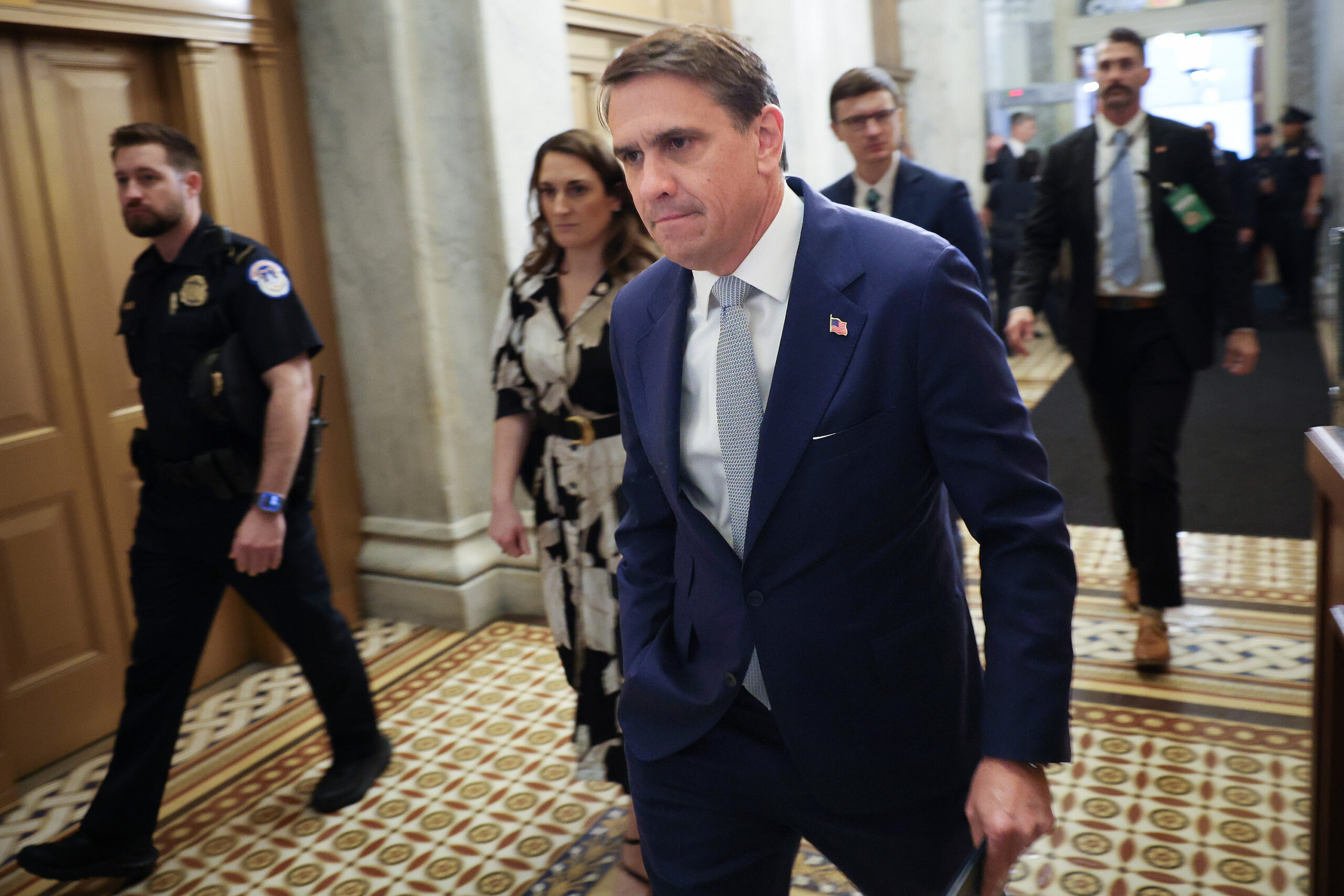
President Donald Trump’s nearly $1.8 billion “Anti-Weaponization Fund” is triggering bipartisan concern on Capitol Hill while simultaneously reigniting a years-old conservative argument against administrations from both parties using the Treasury Department’s Judgment Fund to finance politically sensitive settlements with little congressional oversight.
The fund stems from Trump’s settlement with the Internal Revenue Service over the leak of his tax returns, but the backlash following its announcement last week quickly expanded into a larger fight over executive branch settlement powers, with a dispute among lawmakers significant enough to delay plans to advance a $72 billion immigration enforcement package before Memorial Day.
It also reopened scrutiny of why Congress failed years ago to impose tighter restrictions on the Judgment Fund after Republicans spent much of the Obama administration warning that DOJ settlement agreements were steering money toward politically favored outside groups.
While Democrats have raised nothing but an uproar over the fund, several Senate Republicans have expressed concerns in the minutia, like whether violent Jan. 6 defendants could qualify for compensation, while the Justice Department has said claims will be reviewed individually and that final eligibility rules have not yet been released. House Republicans have largely defended the broader concept behind the program as compensation for citizens who have been harmed by alleged government “weaponization.”
But the root of the debate traces back to Congress’s indecision over the Judgment Fund itself, a permanent Treasury account lawmakers created in 1956 to streamline payments for legal judgments against the government. In 1977, Congress removed the $100,000 cap on payments from the Judgment Fund entirely, creating what conservative critics at the time largely described as a permanent and indefinite appropriation controlled by the executive branch.
Daniel Huff, a former counsel to the House and Senate judiciary committees who worked under former House Judiciary Chairman Bob Goodlatte, said Republicans repeatedly tried to impose restrictions but were unsuccessful.
“We tried for years and years to get the Democrats to do the right thing and either stop abusing the system or at least put curbs on it,” Huff told the Washington Examiner. “They flatly refused.”
During the Obama administration, Republicans zeroed in on mortgage-backed securities settlements that they said allowed DOJ to steer money toward favored liberal nonprofit organizations while bypassing Congress. Settling banks were offered “enhanced credit,” meaning they could receive two dollars off their settlement obligations for every dollar donated to approved third-party groups that were not victims or parties to the litigation. In a 2017 report from the Washington Free Beacon, Obama-era DOJ emails revealed officials discussing how to draft settlement language to prevent money from flowing to groups such as the conservative-adjacent Pacific Legal Foundation.
When Trump’s first term began in 2017, then-Attorney General Jeff Sessions issued a DOJ memo prohibiting most third-party settlement payments. The next year, House Republicans passed the Stop Settlement Slush Funds Act, though the legislation stalled in the Senate after Democrats opposed it.
The Biden administration rescinded the Sessions policy in 2021, and then-President Joe Biden nearly threatened to veto a bill that would have prevented the misuse of future settlement funds, describing the measure as “unnecessary” and that it would “harm the public interest.”
Rep. Lance Gooden (R-TX), the sponsor of the bill opposed by Biden, revived opposition to flagrant settlement spending in 2023 through updated anti-slush-fund legislation, while Democrats argued in dissenting views attached to a House report that existing safeguards were sufficient. Now, Democrats such as Reps. Lois Frankel (FL) and Tom Suozzi (NY) have drafted bills to kill the anti-weaponization fund, albeit with highly narrow language that does not address the root problems flagged by Huff and other legal experts who have been analyzing the issue for years.
Paul Figley, an emeritus professor at American University Washington College of Law who has written extensively on the Judgment Fund, told the Washington Examiner that the Trump administration’s fund merely reflects a structural weakness Congress failed to address after earlier controversies involving both Republican and Democratic administrations.
“The Obama administration saw how to manipulate it, and the Trump administration sees how to manipulate it,” Figley said. “If it’s not changed, the next administration will do it.”
Figley has argued Congress should restore caps on especially large settlements or require lawmakers to approve major payouts directly.
“This goes to the core of our checks and balances system,” he said. “Congress should be making the decisions as to what programs should be created.”
For Huff, the current backlash reflects frustrations conservatives have had for years with what they viewed as selective outrage over executive branch settlement powers.
“They were entirely happy to let it occur when it was their people getting the money,” Huff said, referring to Democrats. “Now they’ve found Jesus.”


House passes stopgap funding bill with help of 176 Democrats to avoid pre-election shutdown
Hailey Bullis
hailey-bullis@coloradopolitics.com
Updated 8 hours ago
House Speaker Mike Johnson (R-LA) got help from the other side of the aisle on Tuesday to pass a stopgap funding bill to head off a government shutdown ahead of the November elections. More than 175 House Democrats supported the...
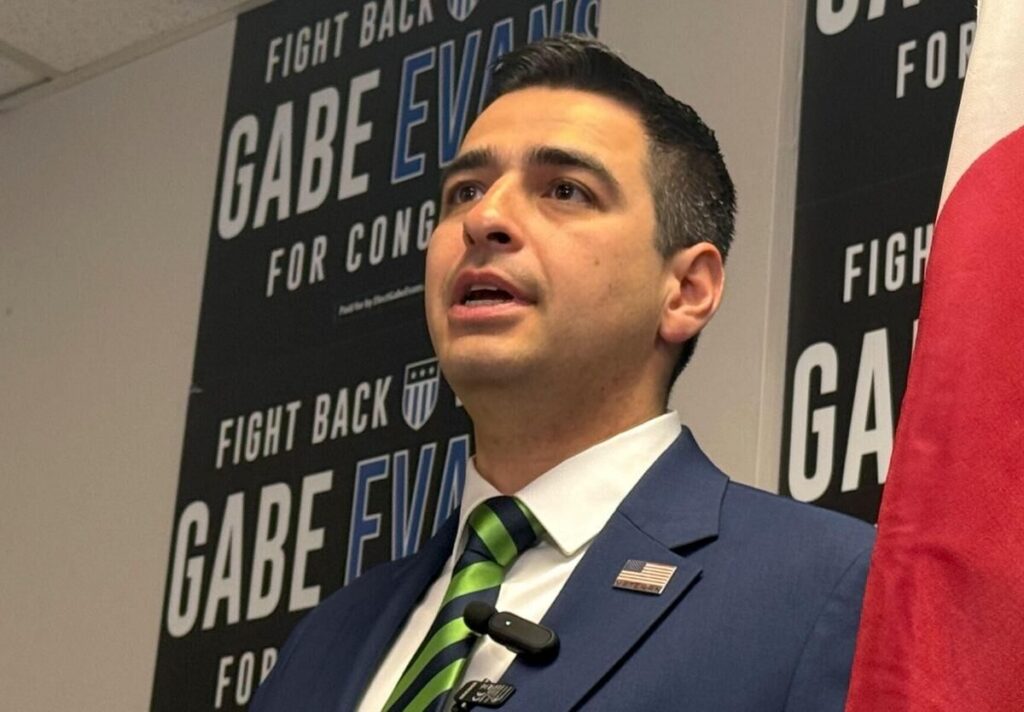
The 21 seats Mike Johnson says will decide the House majority
The Washington Examiner
the-washington-examiner@coloradopolitics.com
Updated 3 hours ago
Speaker Mike Johnson, R-La., is eyeing 21 seats that will determine the House majority in the November midterm elections, including Colorado’s Congressional District 8. Johnson pointed to the nonpartisan Cook Political Report’s 21 toss-up seats, before rattling off a list...

Trump says communities that don’t build data centers will be ‘backwards and poor’
Christian Datoc
christian-datoc@coloradopolitics.com
Updated 1 day ago
President Donald Trump criticized the rising wave of anti-data center sentiment, clashing with his administration’s aggressive efforts to build out the domestic artificial intelligence sector. Trump has placed a concerted focus on making the U.S. the global leader in AI,...

What happens when robotaxis meet motorcades in DC? The mother of all traffic jams, says AI expert
Rob Crilly
rob.crilly@washingtonexaminer.com
Updated 1 day ago
Waymo has Washington, D.C. on its list of targets for self-driving taxis. Just two problems: Can they cope with motorcades? And how would lawmakers feel if every time the vehicles grind to a halt in front of the flashing lights...

Trump promises retaliation for Iran attacks: ‘We’re going to hit them hard’
Rena Rowe
rena.rowe@washingtonexaminer.com
Updated 1 day ago
President Donald Trump on Monday vowed to retaliate against Iran following the latest attack on a U.S. base in Jordan, marking a return to military action after weeks of relative calm. “We’re going to hit them hard. There will be...

DeFlock started from one man’s curiosity — now Flock cameras are a midterm issue
Claire Carter
claire.carter@washingtonexaminer.com
Updated 4 days ago
Will Freeman wasn’t looking to start a national movement when he launched DeFlock after noticing Flock Safety’s automatic license plate readers along the side of the road. The software engineer was driving across the country in 2024 when the cameras...

House will vote to denounce socialism
Lauren Green
lauren-green@coloradopolitics.com
Updated 5 days ago
The House of Representatives is set to vote next week when lawmakers return to condemn and denounce “socialism in all its forms,” specifically pointing to the growing Democratic Socialists of America organization. The House voted to condemn socialism last year,...

Iran and Oman come to agreement to open Strait of Hormuz, but await US buy-in
Claire Carter
claire.carter@washingtonexaminer.com
Updated 5 days ago
Iran and Oman reached an understanding on a temporary shipping corridor through the Strait of Hormuz, clearing a major hurdle to reopening the critical waterway, but Tehran says implementation depends on the United States meeting a series of demands. The...
Trump faces warning signs among women ahead of midterm elections
Rena Rowe
rena.rowe@washingtonexaminer.com
Updated 5 days ago
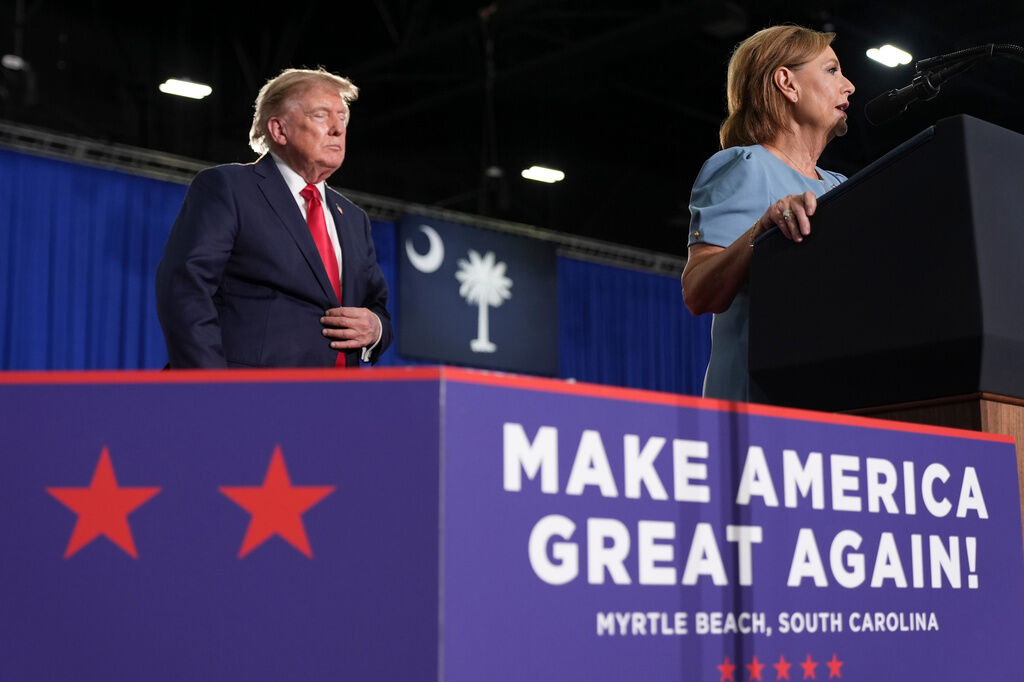
President Donald Trump is facing significant challenges among women voters heading into the 2026 midterm elections, with a new survey showing low approval of his job performance and broad opposition to key policies in his administration’s agenda. A national survey...

Trump says the US doesn’t need Canada. America’s economy says otherwise.
The Associated Press
the-associated-press@coloradopolitics.com
Updated 6 days ago
TORONTO (AP) — U.S. President Donald Trump says his country does not need Canada. But every day, roughly 4 million barrels of Canadian crude oil flow south, helping fuel American cars, trucks and airplanes and supply U.S. industry. And oil...
PREV
PREVIOUS

Trump is seeing doctors for his annual physical. What the public finds out is up to him
WASHINGTON (AP) — President Donald Trump is getting a medical exam on Tuesday, putting his health under renewed public scrutiny after he has worked to dismiss concerns over his age and stamina. The 79-year-old president traveled to Walter Reed National Military Medical Center for what the White House described as annual preventive medical and dental […]
Thune navigates fresh Trump rough patch as Senate frustrations boil over
Senate Majority Leader John Thune (R-SD) just finished a bruising week that left his relationship with President Donald Trump at a recent low point. Whether it gets worse will depend on how well Thune navigates the seemingly growing number of Republicans willing to buck Trump — and whether the president takes it personally if he […]