

State ethics commission challenged over open records position, again
The state’s Independent Ethics Commission has decided to write its own rules about how and whether it is subject to the state’s open records law, and that’s drawing pushback from the Colorado Press Association, the Colorado Broadcasters Association, the Secretary of State’s Office and other open records advocates.
The commission, in court challenges to its views on open records, is 0 for 2.
Earlier this month, the Colorado Freedom of Information Coalition reported the commission had written its own rules about access to open records and wrote those proposed rules in a way that may differ from state law.
In an undated post on the IEC website, the commission announced it would discuss the proposed access rules at its Feb. 12, meeting, with written comments due by Jan. 31. The commission posted a ten-page list of how it would handle public access to IEC documents.
Among the rules that critics say conflict with state law: that the IEC can determine the format in which records are provided, electronic or paper. That conflicts with a 2017 law that says records available in digital format must be provided that way. It’s not a choice that can be made by the agency.
Another rule provides an exception to an open records request if that “inspection could compromise the safety or security of an Ethics Commission employee or commissioner.” Jeff Roberts of the Colorado Freedom of Information Coalition (CFOIC) told Colorado Politics no such exception exists in the Colorado Open Records Act (CORA) and such a rule could be open to all kinds of interpretations.
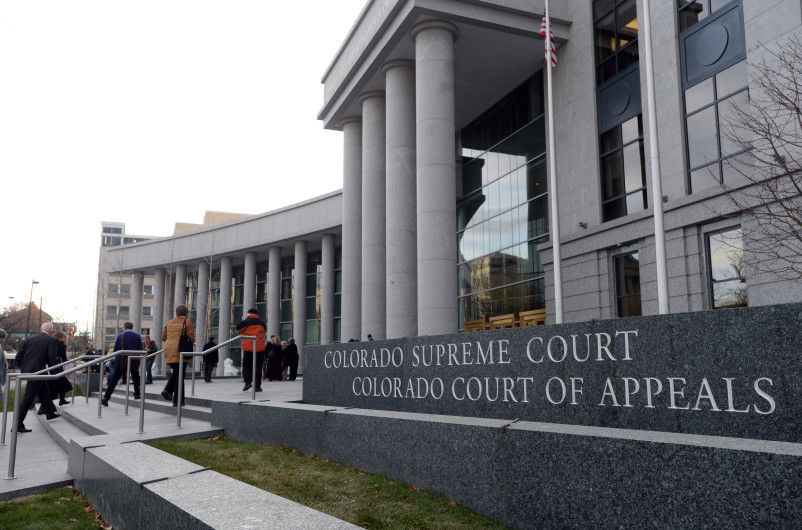
But the heart of the matter, Roberts said, is that the IEC claims that it is not subject to the open records law because it is housed in the Judicial Department, which is also not subject to the open records law. The IEC has been housed in the Judicial Department since 2010. Before that, the commission was under the Colorado Department of Personnel and Administration.
The Colorado Supreme Court takes a different view of the IEC as it relates to whether the commission is part of the judicial branch. In its 2015 rule-making on access to administrative records, the state high court pointed out the the Judicial Branch “does not include the Judicial Discipline Commission, Independent Ethics Commission, or the Independent Office of the Child Protection Ombudsman.”
The Court said in that same rule-making that the IEC is an “independent and autonomous constitutional entity. The Supreme Court does not believe it is appropriate to promulgate a rule governing…access to records of a separate constitutional entity.” That meant the open records rules written by the state high court for the Judicial Department didn’t apply to the IEC, and that left the issue up to the IEC to deal with.
Those comments, and a 2016 ruling by the state Supreme Court in a lawsuit over frivolous complaints, is where the IEC believes it gets its authority to write it owns rules, according to CFOIC. In that lawsuit, the Court ruled the commission’s decision to dismiss complaints as frivolous was not subject to further judicial review. The Court’s ruling didn’t specifically address the open records issue, but its treatment of the IEC as a constitutionally-enacted body rather than a statutory one appears to have opened the door for the IEC to pursue its own rules.
In a Jan. 23 letter to the IEC, the press and broadcasters’ groups wrote that “there is absolutely no reason that the IEC should not be subject to the Colorado Open Records Act (CORA).” The letter further stated that without a clear court decision that the IEC is not covered by CORA (and no court has ever made that ruling), “we believe the IEC is subject to CORA.”
The IEC’s excuse that it is housed in the judicial branch building does not provide a CORA exemption, the letter continued, and the judicial branch’s own rule (from 2015) governing access to that branch’s administrative records “makes that abundantly clear.”
The groups maintain it is inappropriate for the IEC to create its own open records rules. “The fact that the proposed rules allow the IEC to restrict access to information beyond what is authorized to other governmental bodies under CORA would offend public sensibilities regardless of what entity is involved.”
“It seems particularly offensive, and ironic, that an entity established to address ethical issues in stategovernment, and thereby foster greater public trust in governmental institutions, should be subject to less public access than other governmental entities in Colorado.”
The IEC’s proposed rules have also drawn the attention of the Secretary of State’s office, which oversees rule-making by state agencies. Deputy Secretary of State Suzanne Staiert told CFOIC that the IEC is on “shaky legal ground and shaky ground from a policy perspective.
“A lot of agencies have rule-making authority,” she said, “but that doesn’t mean you can promulgate rules outside of the law. Rules are promulgated to add clarity or to make administration more effective, but not to override statutes.”
While IEC’s rulemaking on the issue is new, their views are not. The commission and/or its legal counsel have held that the commission need not follow the open records law, a position dating back to the commission’s beginnings in 2007. During its early years, the commission didn’t record its meetings nor even keep minutes of those meetings.
It took several lawsuits over its lack of transparency from Colorado Ethics Watch and the Colorado Independent, both which the commission lost, for the commission to begin publishing its opinions, complaints and other information. But until those rulings came down in 2009, the commission’s records for its first two years of operation, including advisory opinions, are lost to history. During that two-year period, the commission faced numerous questions from worried state employees on how to interpret the state’s gift ban and gift limits and travel issues.
In 2009, Denver District Court Judge Norman Haglund chastised the commission over its attempts at secrecy in the Ethics Watch lawsuit. Haglund wrote the “IEC is not entrusted to administer CORA, rather, the IEC is subject to CORA, and this is not a case in which specialized knowledge of the IEC is needed to resolve any ambiguity regarding the meaning or reach of CORA.”
Even after losing those cases, it’s still not easy to track what the commission is doing. If you want to know what happens in a commission meeting, you must attend those daylong meetings, which are not live-streamed, unlike many state bodies.
The commission has had the equipment to broadcast its meetings for the past two years, but has no one to run the equipment. Its executive director, Dino Ioannides, a former attorney hired in part for his legal acumen, is the commission’s only employee and doesn’t have the technical know-how to operate the live-streaming equipment, which is still sitting in its original boxes. The commission has turned down offers of additional funding from the Joint Budget Committee for staff who could make those broadcasts possible and handle other administrative duties that don’t require an attorney.
And the fact that the commission has just one employee also plays into its interpretation of the open records law. The proposed rules outline “extenuating circumstances” for failing to comply with an open records request within the standard 72-hour timeline. One proposed rule would allow an extra seven days to comply with a request, because “the resources necessary to respond to the request are dedicated to meeting an impending deadline, or to a period of peak demand that is either unique or not predicted to recur more frequently than once a month.” For example, like when Ioannides has to prepare for an upcoming monthly commission meeting.

Colorado justices to hear appeal in Kendrick Castillo death lawsuit, ‘fugitive’ rule
Michael Karlik
michael.karlik@coloradopolitics.com
Updated 46 minutes ago
The Colorado Supreme Court announced on Tuesday that it will decide whether it was proper to dismiss a lawsuit over the 2019 shooting death of Kendrick Castillo after the defendants paid the maximum amount of damages available to Castillo’s parents,...

Two more wolves killed by Colorado wildlife staff
Marianne Goodland
marianne.goodland@coloradopolitics.com
Updated 2 hours ago
Two yearling wolves from the Copper Creek and Three Creeks packs in Pitkin and Rio Blanco counties, respectively, were killed by Colorado Parks and Wildlife staff on Monday. That brings to 19 the number of wolves that have died under...

U.S. Rep. Lauren Boebert calls Trump’s 90-day wolf-delisting review ‘real progress’
Marianne Goodland
marianne.goodland@coloradopolitics.com
Updated 3 hours ago
President Donald Trump last week directed Interior Secretary Doug Burgum to launch a 90-day review on whether gray wolves and Mexican wolves should be removed from Endangered Species Act protections. The order drew mixed reactions for Colorado’s wolf-reintroduction effort, with...
Arapahoe County judge’s frustration with defense lawyer not grounds for new trial
Michael Karlik
michael.karlik@coloradopolitics.com
Updated 2 hours ago
Colorado’s second-highest court decided last week that an Arapahoe County judge’s repeated rebukes of a defense attorney and orders to “be quiet” did not rise to the level of bias or a violation of the defendant’s due process rights. A...

Divided appeals court upholds vehicle theft conviction despite unclear origin of car’s value
Michael Karlik
michael.karlik@coloradopolitics.com
Updated 2 hours ago
Colorado’s second-highest court upheld a defendant’s conviction for aggravated motor vehicle theft last week, even though it was unclear how the Thorton Police Department estimated the value of the stolen car. Officer Marc Faivre encountered Ashley Shelee Gibbens-Martinez in a...
Disgraced ex-CBI analyst Missy Woods sentenced to prison in DNA scandal
Jenny Deam
jenny.deam@gazette.com
Updated 2 hours ago
A Jefferson County district court judge on Tuesday sentenced a disgraced former Colorado Bureau of Investigation DNA analyst to a decade in prison for altering and deleting data in scores of criminal cases over several years. Jefferson County District Judge...
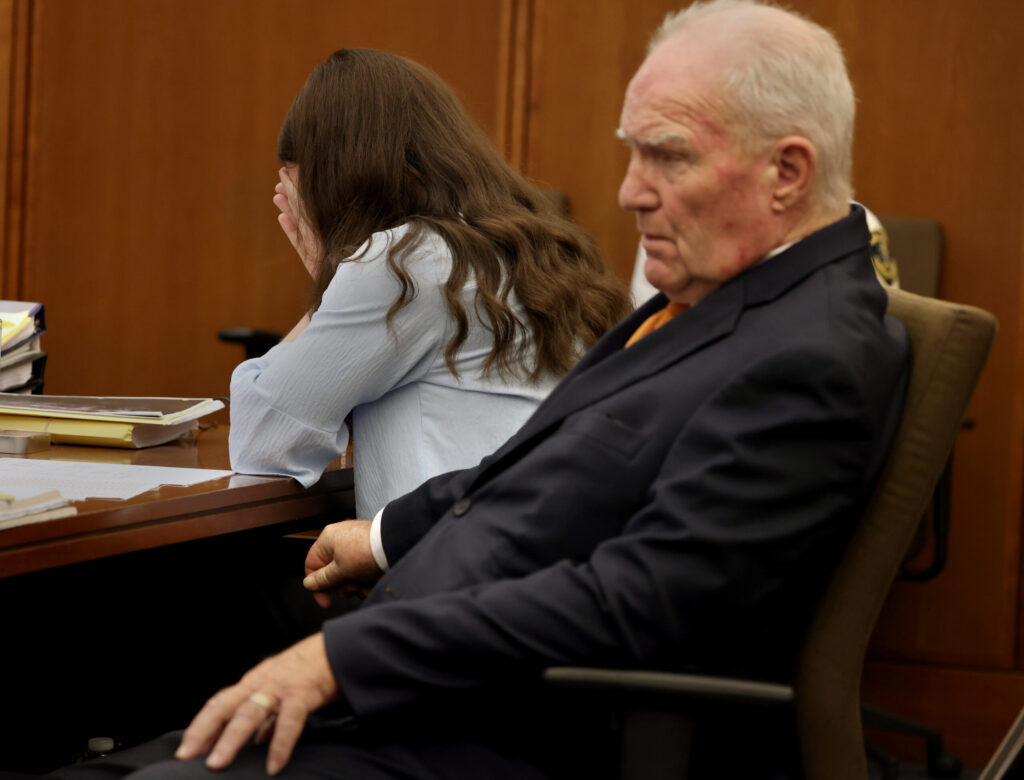
Lindsay Clancy’s attorney makes plea for pardon from Trump
Emily Hallas
emily-hallas@coloradopolitics.com
Updated 8 hours ago
Lindsay Clancy’s attorney urged President Donald Trump on Tuesday to give her a pardon before her murder case could head for another trial. Clancy is a Massachusetts woman who admitted to strangling her three young children in 2023 but argued...

Russia launches massive, deadly, and ‘complex’ attack against Ukraine
Washington Examiner Staff
washington-examiner-staff@coloradopolitics.com
Updated 9 hours ago
Fighting between Ukraine and Russia commenced after a 72-hour pause for diplomatic visits to both countries by U.S. officials. Russia launched a massive attack on Ukraine on Tuesday, firing dozens of cruise missiles and over 140 drones as the war...
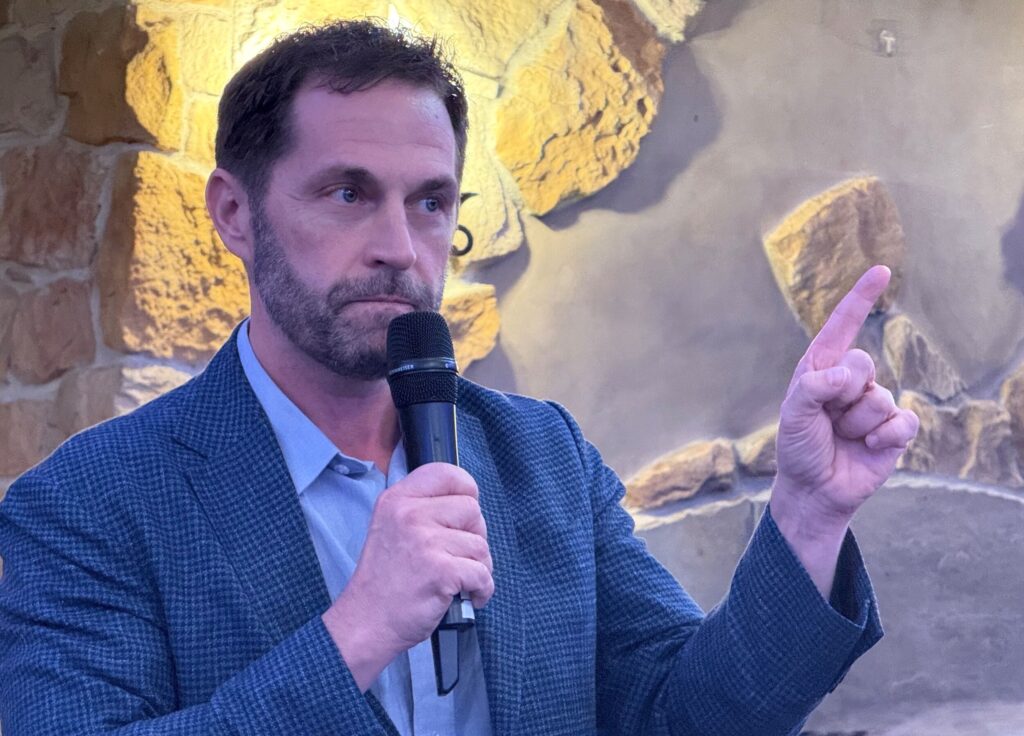
Jason Crow endorses Democrats up and down Colorado’s ballot, chips in $100K for campaign efforts
Ernest Luning
ernest.luning@coloradopolitics.com
Updated 2 hours ago
Democratic U.S. Rep. Jason Crow on Tuesday formally endorsed more than 60 Democrats running up and down Colorado’s ballot and said he’s putting $100,000 into statewide and county campaigns and organizing programs to drive turnout in the fall election. Crow,...
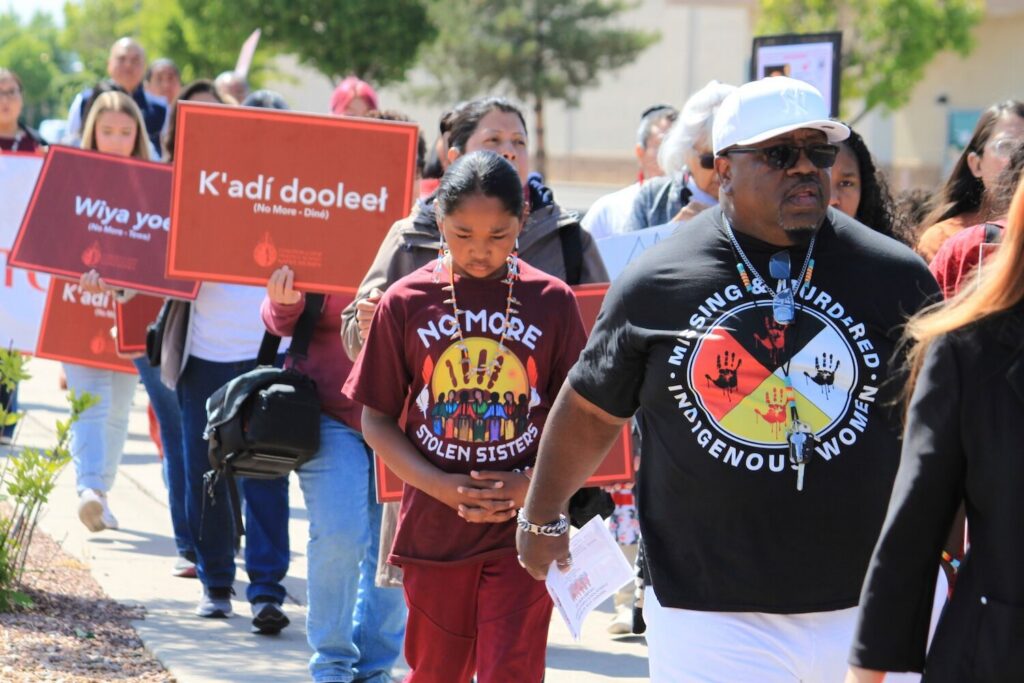
FBI sets $25,000 minimum reward for dozens of unsolved Indian Country cases | OUT WEST ROUNDUP
The Associated Press
the-associated-press@coloradopolitics.com
Updated 11 hours ago
SOUTH DAKOTA Indian Country rewards set SIOUX FALLS — The Federal Bureau of Investigation has established a minimum reward of $25,000 in cases where people went missing or were killed in Indian Country, part of a broader effort to address...
PREV
PREVIOUS

Q&A with Jason Salzman: Where activism meets journalism
Let conservatives go ahead and wave off his brand of journalism as slanted and partisan if they so choose; Jason Salzman readily owns up to his leftward leanings – but he’ll tell you facts are facts. The onetime Rocky Mountain News media critic turned progressive blogger, who gamely takes on Colorado’s right-of-center political pantheon, says […]

U.S. Rep. Jared Polis bringing Colorado 'Dreamer' to Trump's first State of the Union address
When President Donald Trump addresses a joint session of Congress Tuesday in his first State of the Union address, Anarely Marquez, a Colorado State University student and undocumented immigrant who was brought to the United States as a young child, will be in the room watching as a guest of U.S. Rep. Jared Polis. Marquez, 21, […]