

Q&A with Jeff Wasden: Biz community point man talks tax reform — and the ‘advocacy of reason’
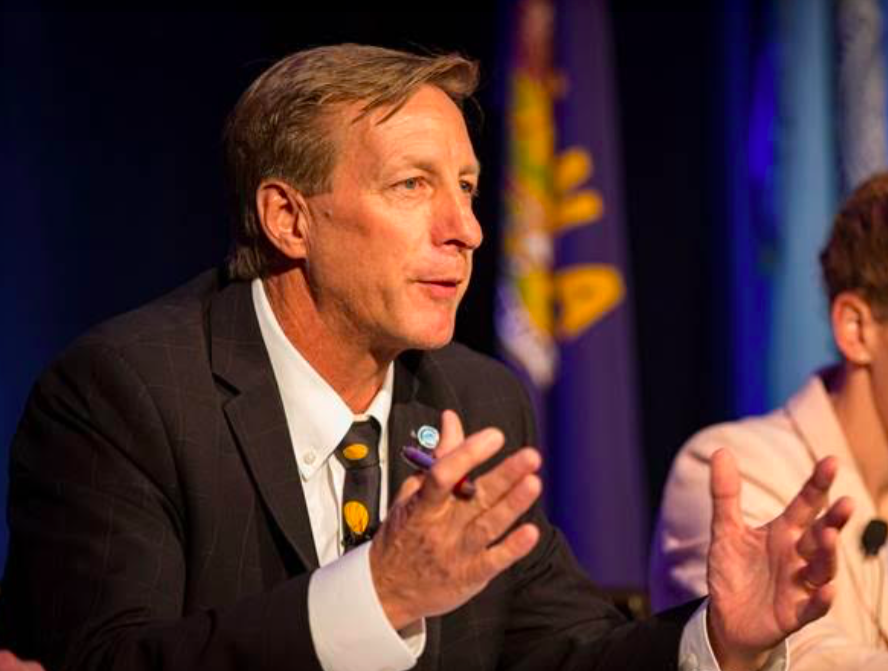
Colorado Business Roundtable President Jeff Wasden isn’t just a prominent advocate for the state’s business community; he’s arguably its all-around go-to guy. And he seems to be everywhere. You’ll find him convening civic summits on pressing policy issues like immigration; you’ll hear him on the radio and via podcast interviewing the state’s policy leaders; you’ll read his views on Colorado Politics’ opinion pages. And of course he’s on Twitter.
Wasden is, above all, down-to-business. You might say his mission is one and the same as that of the business roundtable itself – to help create a climate conducive to business. So, on the heels of historic, pro-business tax reform passed by Congress, we checked in with Wasden for his take on the new federal tax code and its implications for Colorado. (Hint: he gives the reform two thumbs up). He expounds on that and much more in today’s Q&A.
Colorado Politics: What is the mission of the Colorado Business Roundtable, and how is it different from other civic groups that seek to give a voice to the state’s business community?
Jeff Wasden: Colorado Business Roundtable (COBRT) is an advocate for proactive, pro-business legislation that strengthens the economy and allows businesses to grow and thrive in Colorado and the region. Through strategic alliances with industry leaders, chambers of commerce, educational institutions and governmental bodies, our goal is to improve the business climate in the state and expand opportunities for all Coloradans through sound public policy.
COBRT is the state affiliate of the Business Roundtable (BRT), the nation’s leading association of chief executive officers of America’s largest fortune companies. Business Roundtable is the only national organization exclusively representing CEOs of America’s top companies. We take seriously the responsibility of promoting policies that spur job creation, improve competitiveness and strengthen our economy.
We focus on key policy areas that have a direct impact on our economic vitality- tax and fiscal policy, education and workforce, international engagement and trade, infrastructure, technology and innovation, and smart regulation, to name a few.
We love our partnerships and collaboration with chambers and trade associations. With our focus on regional, national and international issues, we have a clearly defined lane supporting some of Colorado’s top companies and industries. Industry needs all the leading business organizations working together for the common good. Indeed, rising (Colorado) tides will lift all boats.
CP: You are a leading voice in the Denver metro area for what could be called main-street business sensibilities – an agenda that at times draws fire from both sides of the traditional political divide. You could even say it’s a thankless task at times amid resurgent populism on the left and right; in the current climate, business is bound to draw flak from some quarter, whether it’s over drilling for natural gas at home or recruiting H-1B visa-holding engineers from abroad. How do you navigate those straits, and do you in effect represent a third wing of U.S. politics?
Wasden: It is a little overwhelming when people see you in a different light and leadership role than maybe how you see yourself. I am just trying to live up to lessons taught by my parents – that life isn’t played from the sidelines, that you have get into the game if you want to make a difference. I strive every day to work hard, find ways to make a difference, look for strategic opportunities, and then go full force into ensuring success.
Our nation is crying out for pragmatic, thoughtful leadership. I am very blessed to be in a position to leverage key relationships, strategic partnerships, and sound policy to improve the business climate. No one person can do it alone, and I am fortunate to work with an incredible team and for an organization that values results, a founder that has provided a lot of resources and tools, and the ability to run on little sleep.
It is easy to forget individuals that aspire to serve have honorable intentions and desire what is best for their communities. We just sometimes view issues, challenges and opportunities from differing ideologies and backgrounds. It doesn’t change the need to find areas of common ground without compromising our core values and principles. Blaming and name calling is commonplace now. Sitting down, respecting the viewpoints of others, and having adult conversations is the only way we will effectively solve our issues.
Running a business is hard work – you have a dream, a vision to produce a product and then get mired down with red tape, regulations, taxes, growing costs, labor challenges, and intense competition. Any “third wing” perception is merely trying to find ways to support that entrepreneur, the startup, or any business just trying to meet a deadline and take care of customers. That is not a partisan issue, simply one that requires a commitment to make a difference.
While we try and thread the needle, it is also fairly easy because we are about policies, not politics, which helps us stay focused on working with whomever is elected, irrespective of party affiliation. Yes, our position on immigration can draw fire from one side, just as our positions on trade, regulation, role of government, energy and growth issues bring out differing views. The third-wing is not exclusive of any side – it is the advocacy of reason.
Jeff Wasden
CP: Especially in the superheated Front Range economy, with unemployment near all-time lows and housing prices at record highs, there seems to be plenty of anti-growth sentiment to span the political spectrum. Left of center, the concerns are about growth’s perceived impact on the environment, affordable housing for the working poor and gentrification, among other considerations. Over on the right, there are the ritual fears about growth drawing in more illegal immigration with abundant, low-paying jobs as well as drawing down tax dollars to build more public infrastructure. One even hears push-back at recruiting the likes of Amazon’s planned second headquarters to Colorado for fear of its effects on highways and housing. Does it sometimes get lonely being the voice for economic growth – or is there a silent majority out there that “gets it”?
Wasden: Two immediate responses: one, many of the frustrations and concerns can be solved with leadership. There are solutions today to solve many of the challenges you listed, the question is do we have the willpower to reallocate resources, to make tough decisions, to say no, and to actually lead. Two, the good news is that I am not alone. We have an army of economic development folks, from the state on down to local communities, who understand how important growing, vibrant communities are to wages, tax base, infrastructure, standard of living, public and private investments, and public services.
CP: You also chair Colorado for Tax Reform and have advocated forcefully for the sweeping revision of the U.S. tax code that was hammered out in Congress and recently signed into law. While the new tax code will lower rates for many individual taxpayers, it is the reform’s cuts to the business income tax that are said to pose the greatest potential for boosting the economy. How specifically do you believe Colorado’s economy will benefit?
Wasden: The Tax Reform and Jobs Act is working. The stock market is setting new records, and companies are making investments, handing out bonuses, and increasing wages for employees. There are so many benefits to putting more money back in the hands of working Americans, having a competitive tax rate so business can compete, and eliminating many of the loopholes folks have used to game the system. Rates were lowered on individuals and families. The child tax credit was raised. The standard deduction was doubled. The corporate tax rate was significantly lowered but there are other benefits people are not talking about. There is an employer tax credit for employer-paid family and medical leave. There are incentives to bring money parked overseas back to America and penalties for companies trying to use corporate inversions to avoid paying U.S. taxes. Research and development tax credit was retained. It includes the ability to write off the full expense of new capital investments for five years, preserves the low-income housing tax credits, retains retirement savings options, provides relieve for significant medical expensing, improves educational savings (529) accounts, protects small business ability to write off cost of interest on loans, removes the corporate AMT tax, and on and on it goes.
Our work on tax reform is just one way we support the business community in the state. We were honored to be asked to lead on the effort and publicly thank those that supported and worked on these initiatives. Colorado businesses and working families are big winners and it will be incumbent on future Congresses to ensure benefits do not expire, to correct any unintended consequences and ensure that America’s number one competitive advantage- our workforce, is supported.
CP: What about the tax bill’s much-debated cutback in the federal income tax’s deductions for state and local taxes, as well as in the mortgage-interest deduction? How will that affect Coloradans? Is its impact being overstated?
Wasden: The changes to state and local taxes (SALT) and the mortgage-interest deduction actually offered a glimmer of hope that Congress can work together and come up with workable solutions. President Trump and congressional leadership insisted tax reform go through regular order which allowed for full debate, compromise and bipartisan solutions. Tax reform will always create winner and losers. We have high tax states and low tax states. We have individuals with significantly large mortgages and those that can’t afford any mortgage payment, no matter how small. The Tax Cuts and Jobs Act tried to strike an appropriate balance and provide flexibility to taxpayers to choose how and where to apply among sales, income, and property taxes that best meets their circumstances.
I would be remiss if I didn’t acknowledge that the reforms are not perfect, that they didn’t simplify the code enough for business owners, and may have potential negative consequences for some Coloradans. I applaud those elected officials that took a tough stance, those that worked to improve the bill, and ultimately, improved the financial picture for the majority of business owners, workers, and Coloradans.
We live in vastly different times – automation, AI, robotics – but that doesn’t change the fact we can still be decent, respectful, caring human beings. People don’t care how much you know until they know how much you care.
CP: Though you hail from GOP ranks and advocate for a traditional Republican constituency – the business community – you have run the risk of rankling some fellow Republicans by urging them to adopt a new mind-set. You have called on them to move past partisanship and polarization, to rethink ideologically charged issues like immigration and global warming, and to embrace a new approach to race relations and to wooing younger voters. What’s at risk for Colorado Republicans if they dig in their heels and refuse to change?
Wasden: Standing on the sidelines and yelling is easy. Becoming a keyboard critic is now commonplace with the social media explosion. Sure, I took a risk with the op-ed challenging Republicans to look at some things differently, but I truly believe we are losing ground with key demographics and on many key issues facing our nation and state. Being called a sell-out, a squish, a RINO, or corporatist is nothing compared to the ability to actually lead, to act, to govern, and to move folks forward. Some may equate the views as giving up your principles, your core or true-north; I say balderdash. Take for example the race relations surrounding the NFL and Colin Kaepernick. Some of the things I saw “Christian” Republicans saying about him were unbelievable and inappropriate but what is unbelievable is when some of those same people then sit in meetings wondering how we message to minorities and young voters and why we are not earning their votes on election day. We live in vastly different times – automation, AI, robotics – but that doesn’t change the fact we can still be decent, respectful, caring human beings. People don’t care how much you know until they know how much you care.
CP: What is your take on the continued growth of Colorado’s unaffiliated voting bloc? Do both major parties run the risk of alienating especially new voters with increasingly pointed partisanship? Are the two parties in danger of at some point rendering themselves obsolete?
Wasden: Coloradans are fiercely independent – it is the spirit and code of the West. Individuals are not affiliating with parties for a multitude of reasons, but that doesn’t mean they do not lean left or right and have their own political views. The growing political divide is frustrating to a number of individuals, irrespective of party affiliation. I do know there are some that thought unaffiliating from one of the parties would stop the calls and mailers, not realizing it would double – which is funny political karma.
This is a great opportunity for the both parties to articulate their value proposition, to put forth bold ideas, and share with voters why their ideas are the right fit for their families and future generations. Leaders should be excited about putting forth a vision that resonates with all Coloradans. There are some incredible leaders in Colorado and our state has a bright, robust future. We will get the Colorado we deserve, either through apathy, partisanship, and vitriol or through collaboration and pragmatic, thoughtful, and visionary leadership. Choose wisely, and join us on our journey.


The through line from Donald Trump to Victor Marx | SONDERMANN
By Eric Sondermann
by-eric-sondermann@coloradopolitics.com
Updated 3 days ago
Over 10 years ago, before Donald Trump could ever defeat Hillary Rodham Clinton, he had to first engineer a hostile takeover of the Republican Party. Prior to his descent of that golden escalator, the previous seven Republican presidential nominees had...

Colorado districts prepare for school year amid mental health cuts. But will less cellphone distractions help?
Marissa Ventrelli
marissa.ventrelli@coloradopolitics.com
Updated 1 day ago
The signs of a new school year are everywhere — buses in the shop, teachers unpacking boxes, families ticking through supply lists — but behind the familiar rituals, Colorado districts are preparing for a year defined less by routine than...
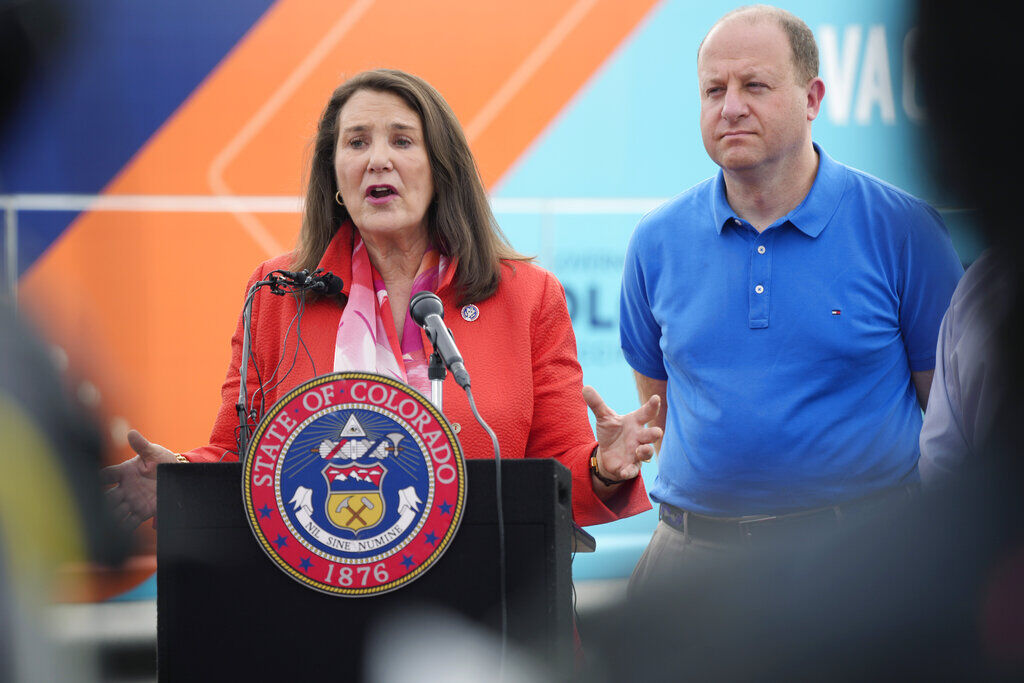
Armstrong staffer considers congressional bid, DeGette angers rural communities with wilderness act | A LOOK BACK
Rachael Wright, Special to Colorado Politics
rachael.wright@coloradopolitics.com
Updated 2 days ago
Forty-five years ago this week: If the lines were drawn just right, Republican Sen. Bill Armstrong stood the chance of losing his office manager, Ruth Fountain. Fountain admitted she was seriously thinking about running for Colorado’s new congressional seat in...
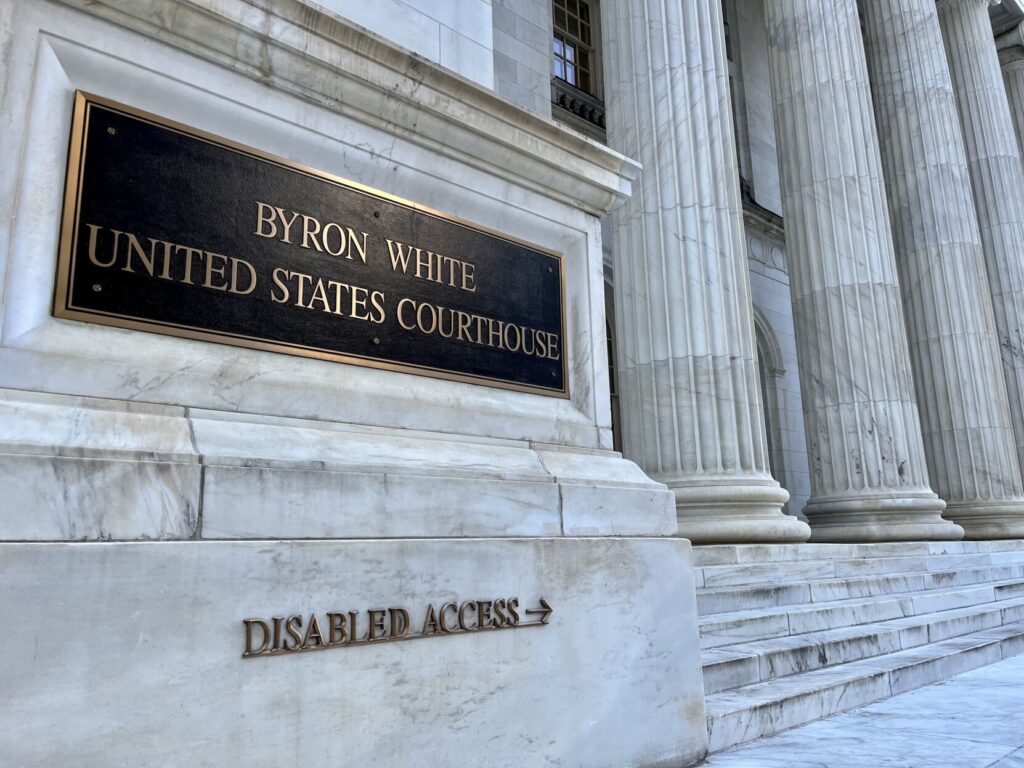
10th Circuit dismisses woman’s lawsuit following 10-year attempt to undo restraining order
Michael Karlik
michael.karlik@coloradopolitics.com
Updated 21 hours ago
The Denver-based federal appeals court rejected a woman’s challenge on Friday to a restraining order imposed on her more than a decade ago, finding that she cannot credibly claim she will be prosecuted for violating the restraining order through her...
10th Circuit dismisses woman’s lawsuit following 10-year attempt to undo restraining order
Michael Karlik
michael.karlik@coloradopolitics.com
Updated 23 hours ago
The Denver-based federal appeals court rejected a woman’s challenge on Friday to a restraining order imposed on her more than a decade ago, finding that she cannot credibly claim she will be prosecuted for violating the restraining order through her...
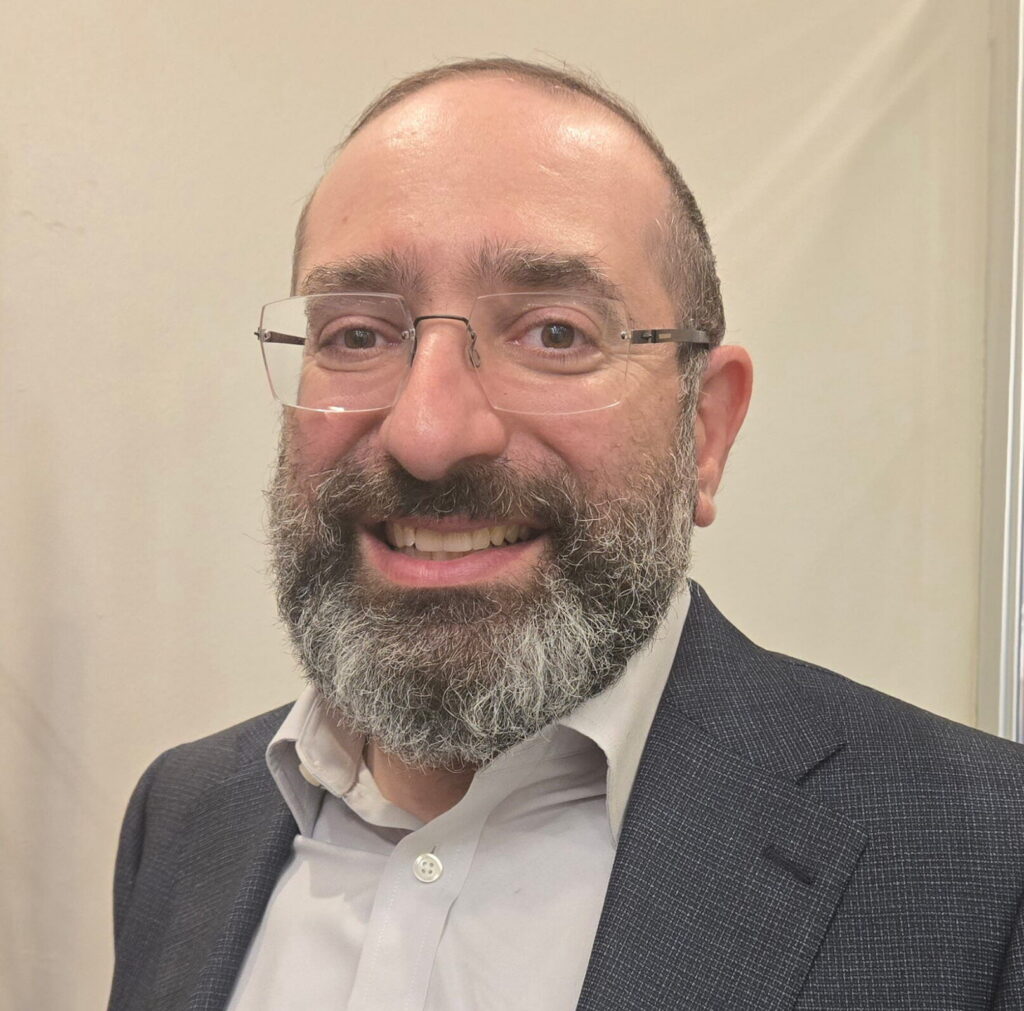
Surprise candidate Shimon Blau cleared to face off against Melat Kiros in November
Ernest Luning
ernest.luning@coloradopolitics.com
Updated 20 hours ago
Unaffiliated congressional candidate Shimon Blau, a Denver doctor, has qualified by petition for the general election in Colorado’s 1st District, where Democrat Melat Kiros defeated 15-term U.S. Rep. Diana DeGette in last month’s primary, the Colorado Secretary of State’s Office...

Colorado produce not tied to nationwide cyclospora outbreak, agriculture officials say
Marissa Ventrelli
marissa.ventrelli@coloradopolitics.com
Updated 6 hours ago
There is no indication that the recent outbreak of cyclospora, a fecal parasite that has contaminated food and water across nearly every state, can be linked to produce grown in Colorado, according to the state’s Department of Agriculture. “Colorado growers...

UNC opens College of Osteopathic Medicine
Marissa Ventrelli
marissa.ventrelli@coloradopolitics.com
Updated 22 hours ago
The University of Northern Colorado held a grand opening for its new College of Osteopathic Medicine on Friday, with Gov. Jared Polis in attendance to celebrate the culmination of a two-year, $127.5 million project. The project was funded through legislation...
Colorado equal pay law does not require plaintiffs to allege gender-based retaliation, appeals court finds
Michael Karlik
michael.karlik@coloradopolitics.com
Updated 1 hour ago
The 2019 Colorado law aimed at rooting out pay discrimination on the basis of sex does not require a plaintiff to allege their employer retaliated against them for sex- or gender-related reasons, the state’s second-highest court decided on Thursday. Lawmakers...

Planning Commission rejects resident appeals to stop proposed data center
alex-edwards
alex.edwards@gazette.com
Updated 1 day ago
Editor’s note: This story has been updated to reflect comment from District 11 clarifying that it has not conducted a financial review of Project Taurus. The Colorado Springs Planning Commission rejected appeals Thursday night against a proposed artificial-intelligence data center...
PREV
PREVIOUS

Democrats Kristopher Larsen, Mark Williams petitioning onto 2nd CD primary ballot
Democrats Kristopher Larsen and Mark Williams are gathering signatures to run in the 2nd Congressional District primary election, meaning former University of Colorado Regent Joe Neguse is more than likely going to have some company on the June primary ballot. A former Democratic nominee for secretary of state and the early frontrunner for the seat […]

The Fray's front man joins governor to promote music in Colorado schools
Students at Clyde Miller P-8 School in Aurora strummed along on ukuleles as Gov. John Hickenlooper, on a banjo, and Isaac Slade, the frontman for the Colorado-born band The Fray, played guitar and led them in “Will the Circle Go Unbroken.” The school is one of five sharing $450,000 raised by musicians and other benefactors […]