

The Colorado Springs Gazette: Allow urban hunters to cull deer in Colorado Springs
More than a half million humans live among wildlife in the forested mountain terrain that defines metropolitan Colorado Springs, America’s 39th largest city. It seems the perfect fusion of urban and rural.
For wildlife, things are getting crowded.
Urbanization creates a comfortable eco-system for some wild animals, including deer.
“Cities have so many advantages for them,” said Bryan Lueth, urban wildlife manager for the Minnesota Department of Natural Resources, as quoted by the St. Paul Pioneer Press.
Deer feel safer in cities, as wolves, coyotes, lions or other predators are less likely to attack them. Gardens, fruit trees and human food disposal provide year-round food supplies.
Deer prefer plowed streets and shoveled sidewalks over the exhausting routine of trudging through deep snow. Steam grates, building foundations, engines and other human objects provide warmth at night.
Because deer like big cities, growth in deer population has accompanied growth in human population.
In the early 20th century, about 500,000 white-tailed deer lived in the United States. Today, their numbers exceed 25 million.
A normal deer density is between 2 and 3 animals per square mile in the wild. In southwest portions of Colorado Springs, density has reached about 20 deer per square mile.
People and deer coexist quite well, and humans typically enjoy watching wild animals in their yards.
All good things have limits, including deer populations. Colorado Parks and Wildlife officials believe deer density in Colorado Springs has become dangerous to humans and animals alike.
Deer/vehicle collisions are rising. Excessive density increases the likelihood of disease.
The question is not whether we need to cull the population. The question is how.
Parks and Wildlife officials want city officials to consider an urban deer hunting program. Qualifying applicants would bow-hunt deer under strict supervision. Parks and Wildlife would donate all meat to charities.
Fencing and repellents don’t control the population and have had mixed results at reducing car collisions.
Other options include chemical sterilization, trapping and relocation, trapping and sterilizing, or trapping and euthanizing.
None of these options seems pleasant, but this is not a perfect world in which we can have a limitless number of deer living among us.
Well-regulated urban hunting programs have worked for years in Minneapolis, and other large cities that have ethical obligations to manage wildlife populations.
Natural predators keep deer populations healthy in the wild. In the city, this unfortunate duty falls to humans.

City of Northglenn, state fail to reach agreement on mental health facility amid safety concerns
Marissa Ventrelli
marissa.ventrelli@coloradopolitics.com
Updated 32 minutes ago
The City of Northglenn says it was unable to reach an agreement with the state on a pair of controversial transitional living facilities for individuals with mental health conditions run by the Colorado Department of Human Services. The facilities, located...
Colorado lawmakers grapple with spending cuts amid $1 billion-plus deficit
Marianne Goodland
marianne.goodland@coloradopolitics.com
Updated 14 hours ago
The battle over Colorado’s budget for next year — which stalled in the House over a procedural maneuver — entered a more difficult phase on Thursday, when legislators grappled with hundreds of millions of dollars in proposed reductions to balance...

New rules for private judges in Colorado include discipline oversight, campaign contributions
David Migoya
david.migoya@gazette.com
Updated 17 hours ago
The Colorado Supreme Court recently determined the state’s private judges — retired jurists appointed to oversee civil cases that rarely get public scrutiny — can now make political contributions freely and without reserve, overruling a prohibition that had been in...

Colorado bill reshaping RTD board advances
Marissa Ventrelli
marissa.ventrelli@coloradopolitics.com
Updated 17 hours ago
A proposal to reshape the Regional Transportation District’s leadership easily cleared a committee vote Wednesday, advancing the bill sponsors say is needed to revive a transit system still struggling to regain riders and public trust. Critics have countered that, while...

Colorado Democrat John Hickenlooper pulls in nearly $1.4M in 1st quarter, heads into primary with $4M
Ernest Luning
ernest.luning@coloradopolitics.com
Updated 14 hours ago
U.S. Sen. John Hickenlooper’s campaign raised nearly $1.4 million in the first quarter of 2026 and plans to report more than $4 million on hand heading into Colorado’s June primary, the first-term Democrat’s campaign said Thursday. That brings Hickenlooper’s total...
Republican Ron Hanks plans ‘grassroots’ primary challenge to US Rep. Jeff Hurd in Colorado’s 3rd CD
Ernest Luning
ernest.luning@coloradopolitics.com
Updated 17 hours ago
Colorado Republican Ron Hanks, a former state lawmaker, plans to challenge first-term U.S. Rep. Jeff Hurd in the 3rd Congressional District primary by seeking a spot on the June ballot at the GOP’s district assembly in Pueblo on Friday, Colorado...
Five ways Mullin is already pushing DHS in a new direction
Anna Giaritelli Washington Examiner
anna-giaritelli-washington-examiner@coloradopolitics.com
Updated 21 hours ago
The Trump administration’s newest Cabinet secretary, Markwayne Mullin, has already begun to implement major changes across the Department of Homeland Security Mullin replaced President Donald Trump’s first DHS secretary, Kristi Noem, and was an unexpected pick to lead the department...
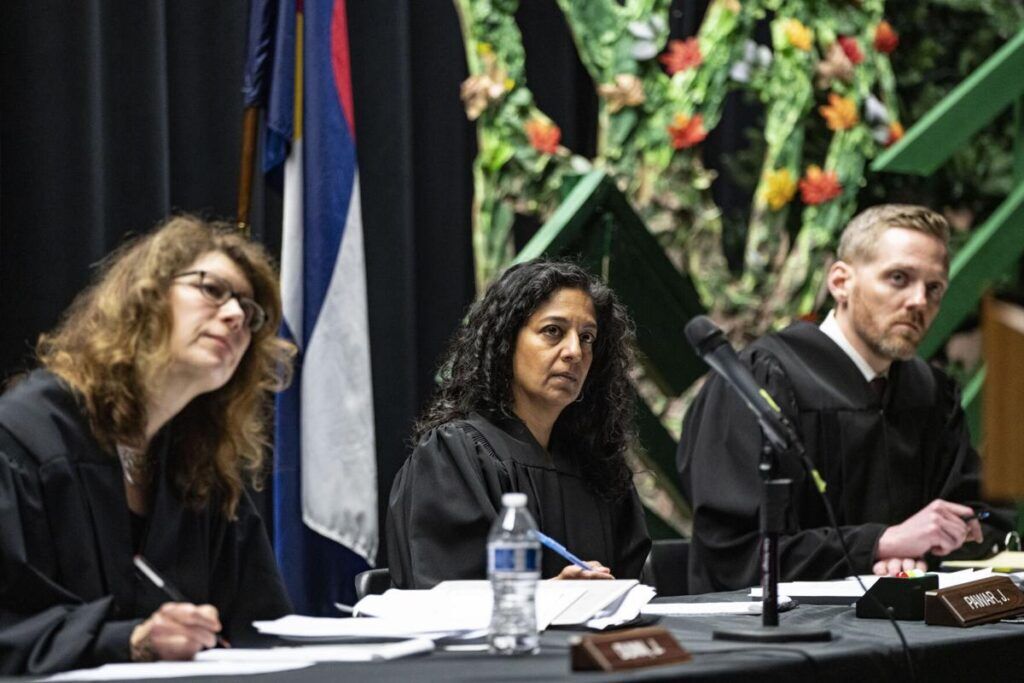
Appeals court finds Prowers County judge incorrectly analyzed firetruck collision lawsuit
Michael Karlik
michael.karlik@coloradopolitics.com
Updated 21 hours ago
Colorado’s second-highest court directed a Prowers County judge last month to take a second look at whether a firetruck operator and the county itself can be held liable for a collision with a motorist. Donald Williamson was driving through a...

Appeals court reverses assault convictions after jury received no definition of ‘harm’
Michael Karlik
michael.karlik@coloradopolitics.com
Updated 23 hours ago
Colorado’s second-highest court reversed an Arapahoe County defendant’s assault convictions last week, concluding the trial judge neglected to define a key, ambiguous term for jurors. Police officers arrested David Cristobal Aragon at a house party for allegedly violating a restraining...
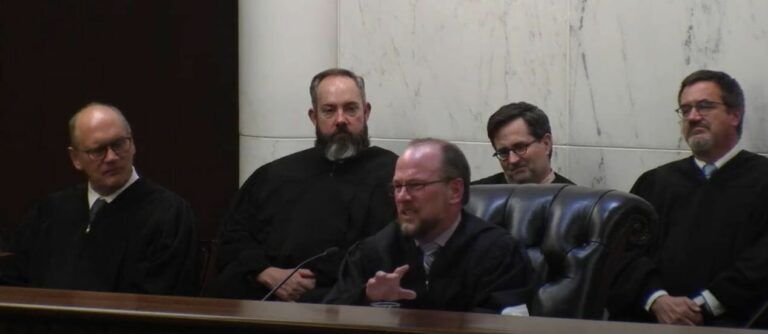
Colorado counties cannot challenge state law restricting immigration contracts, appeals court says
Michael Karlik
michael.karlik@coloradopolitics.com
Updated 18 hours ago
Colorado’s second-highest court ruled on Thursday that counties lack standing to challenge a 2023 state law that restricts their ability to contract with the federal government or private entities for immigration detention. A three-judge Court of Appeals panel agreed with...
PREV
PREVIOUS

Colorado Farm Bureau reflects on 2017 legislative success
The Colorado Farm Bureau‘s year-end message shows how the organization gets things done for farmers, ranchers and rural values. “With an added focus on advocacy, CFB connected intentionally with voters, industry partners, legislators and administrations, extending its network and making connections outside the Capitol to grow its influence within,” the Farm Bureau stated in a […]
The Pueblo Chieftain: Limit home pot grows
A new Colorado law, House Bill 1220, will go into effect with the new year on Monday to impose a limit of 12 marijuana plants that may be grown or cultivated legally in households in residential zones. To exceed the limit now will be a criminal offense. Pueblo County Sheriff Kirk Taylor and County Commissioner […]