

Q&A with Kevin Van Winkle: Young Colorado lawmaker got an early start at the Capitol
Some say nothing really prepares you for elective office, but Kevin Van Winkle might disagree. The youthful, second-term lawmaker, who represents Douglas County’s District 43 in the Colorado House of Representatives, served for years as a legislative staffer before his election in 2014. Van Winkle, a Highlands Ranch Republican, learned a lot from his time working behind the scenes with legislators – and is now putting his experience to use serving an area of DougCo where was born and raised, in a district previously held by former Republican House Speaker Frank McNulty. And Van Winkle certainly seems to know his way around. In addition to his regular committee work at the Capitol, he sits on the Legislative Board of Ethics, the board of the Colorado Channel and the Police Officers’ and Firefighters’ Pension Reform Commission.
Work-life balance? The husband and dad hikes, camps, plays hockey and enjoys time with his wife and his year-old daughter.
Colorado Politics: You are among the state lawmakers who had served as legislative staffers before being elected to the General Assembly. You were quite the policy wonk with the Senate GOP. What kinds of advantages did that experience give you compared with your many peers who entered the legislature cold turkey?
Kevin Van Winkle: Without a doubt, working under the gold dome as a so-called policy wonk helped deepen my understanding of the many issues facing Coloradans. It was also invaluable to know the intricacies of the legislative process prior to taking office, and I’m proud to be able to successfully pass bills which some think to be impossible. For example, earlier this year, one of Douglas County’s largest employers became the target of our state’s overzealous Department of Revenue. As a result, the company made plans to pack up and leave. Against all odds, Senate Majority Leader Chris Holbert and I stepped in with a bill to rein in the department’s abusive tax practices and secured thousands of Colorado jobs.
CP: By the lights of the interest groups that have sized you up since you entered office, you reside solidly on the right. The American Conservative Union has given your voting record a 96 percent approval rating; the National Federation of Independent Business gave you a perfect 100 percent. You were one of 17 lawmakers to receive “A” grades from pro-free market Americans for Prosperity just the other day. NARAL Pro-Choice Colorado, on the other hand, gave you a big fat zero. Environmental group Conservation Colorado gave you a 24 percent lifetime score. What don’t such ratings tell voters?
KVW: Legislators can’t worry too much about scorecards created by special-interest groups months after votes are cast. Each representative must look at every bill separately, weigh the proposal’s effect on his or her district, and vote their conscience. I take pride in being a legislator who actually reads every bill, listens carefully to constituents, and asks the tough questions in committee meetings.
Scorecards often look at just a handful of the 700-plus bills we vote on each year, and they ignore the approximately 350 bills that pass each year in true bipartisan fashion. Doing what is best for Colorado should be the goal – not scoring high or low on a scorecard.
CP: What’s the biggest challenge facing the Republican Party?
KVW: Unity.
CP: Talk about the challenges of juggling home and family life – you are married and have a young daughter – with the grinding, long hours of the legislature when it’s in session.
KVW: While its certainly difficult to miss so many hours with my wife and sweet 1-year old daughter during the legislative session, they truly give me a deeper motivation to fight every day to ensure my community and Colorado remain the very best place in the world to live, work and raise a family for generations to come.
CP: At 34, you are one of the younger members of the General Assembly. Yet, given your background, you brought a hefty knowledge base to the statehouse and knew the ropes better than plenty of your colleagues. Has your relative youth been more help or hindrance to you – on the campaign trail as well as since your election?
KVW: Any worries about my age were forgotten long ago. Colorado deserves energetic, hard-working legislators and the people deserve someone who will go the extra mile every day and late night to fight for them, for jobs and for families. Young or old, the people of Colorado deserve someone who respects them enough to read every bill, who upholds the Constitution, and who understands the proper role of limited government.
CP: You have a “day job” in the off-season – as a marketing professional – owing at least partly to the fact you have to make a living, and the legislature is only part-time. Is Colorado’s “citizen legislature” a good thing, or should lawmakers be paid a full-time salary so they can focus full-time on the legislative responsibilities?
KVW: A peculiar reality of serving in the Colorado state legislature is that our state Constitution limits government by restricting the lawmaking authority of the legislature to the 120-day general session or the very rare special session, yet legislators are called to serve the people of our districts year-round. While it’s a dynamic that can be frustrating to some, I find it to be a welcome and very real limit on the growth of government.
One of my favorite things about serving in the Colorado legislature is that it operates so dramatically differently than the federal government in Washington, and this is a prime example. Many assume that the part-time Colorado legislature faces partisan gridlock similar to Congress in Washington, which meets seemingly without end while showing few tangible results for the American people. However, our legislature works much more efficiently to annually pass a balanced budget, K-12 school funding, and more than 350 other bills in true bipartisan fashion. I always like to point out that Washington, D.C., doesn’t care about the pothole in front of your house, but I do.
Washington would be wise to learn a thing or two from Colorado. We are also blessed to have the “single subject” rule. It limits every bill to one subject. For the public, it’s dramatically easier to participate in the process when bills are easy to understand, short and to the point. That same rule also prevents the kind of vote trading for pork seen far too often elsewhere.
CP: You represent one of the many “safe” legislative districts in which the only competition for a House or Senate seat comes from within the party, in the primary election, if at all. Your conservative Republican predecessor in your seat, former House Speaker Frank McNulty, is supporting a ballot proposal to tweak the reapportionment process in the hope some districts will be redrawn more competitively. Critics of the status quo say the General Assembly needs more competitive seats. What’s your view?
KVW: I’d love to see the bitterness of politics taken out of the very important legislative reapportionment process, and this bipartisan approach by (former) Speaker McNulty and others is refreshing to say the least.


U.S. Senate OKs funding bill to avoid government shutdown
Wire Services
wire-services@coloradopolitics.com
Updated 10 hours ago
Hemp provision became point of contention WASHINGTON • The U.S. Senate in an overnight vote Saturday approved a short-term measure to fund federal agencies into early December and avoid a government shutdown during the middle of campaign season. The late-summer...

The relevance of Watergate more than a half-century later | SONDERMANN
By Eric Sondermann
by-eric-sondermann@coloradopolitics.com
Updated 3 days ago
It was the scandal for which all other scandals are now named. In June 1972, a small group of Cuban burglars with high-level connections broke into the headquarters of the Democratic National Committee. Those headquarters were located in the Watergate...

Wirth downplays Social Security disaster talk | A LOOK BACK
Rachael Wright, Special to Colorado Politics
rachael.wright@coloradopolitics.com
Updated 2 days ago
Forty-five years ago this week: “As time goes on,” said Democratic U.S. Rep. Tim Wirth, of the 2nd Congressional District, “we are finding that the safety net, which was proposed earlier this year, has some very large holes in it,”...

Colorado Politics Calendar Aug. 10-16
Rachael Wright, Special to Colorado Politics
rachael.wright@coloradopolitics.com
Updated 2 days ago
CoPo’s weekly political calendar will help you find political and public-policy events throughout Colorado. It includes candidate and issue campaign events, public policy meetings, court hearings, state and local party conventions, assemblies, debates, rallies, parades, speaking engagements, traveling dignitary appearances,...

Democratic group aims Spanish-language TV ad at Gabe Evans in Colorado’s battleground 8th CD
Ernest Luning
ernest.luning@coloradopolitics.com
Updated 24 hours ago
A national group tied to House Democratic leadership launched a six-figure Spanish-language TV ad in Colorado this week targeting Republican U.S. Rep. Gabe Evans and the GOP’s signature budget legislation. The 30-second spot is part of $15 million in new...

Colorado School of Mines lands major share in Trump’s $100M mining-education plan
Thelma Grimes
thelma.grimes@coloradopolitics.com
Updated 1 day ago
President Donald Trump on Friday named the Colorado School of Mines among roughly a dozen institutions that will share in a $100 million commitment “to train the next generation of American miners.” Paul Johnson, the university’s president, said he is...

Local party leaders, incoming judge among members of judicial performance commission that violated law
Michael Karlik
michael.karlik@coloradopolitics.com
Updated 5 hours ago
A local Democratic leader and 2024 presidential elector. A legislative aide and leader in the Young Republicans. An incoming county court judge freshly appointed by the governor. They are among the eight members of the northeastern Colorado judicial performance commission...

Judge dismisses lawsuit seeking records from Colorado Democratic group
Marianne Goodland
marianne.goodland@coloradopolitics.com
Updated 1 day ago
A lawsuit seeking to obtain records from Democratic lawmakers affiliated with a caucus has been thrown out by a Denver District Court judge. On July 17, Judge Ericka Englert dismissed the April lawsuit filed by progressive activist Derrick Blanton, who...
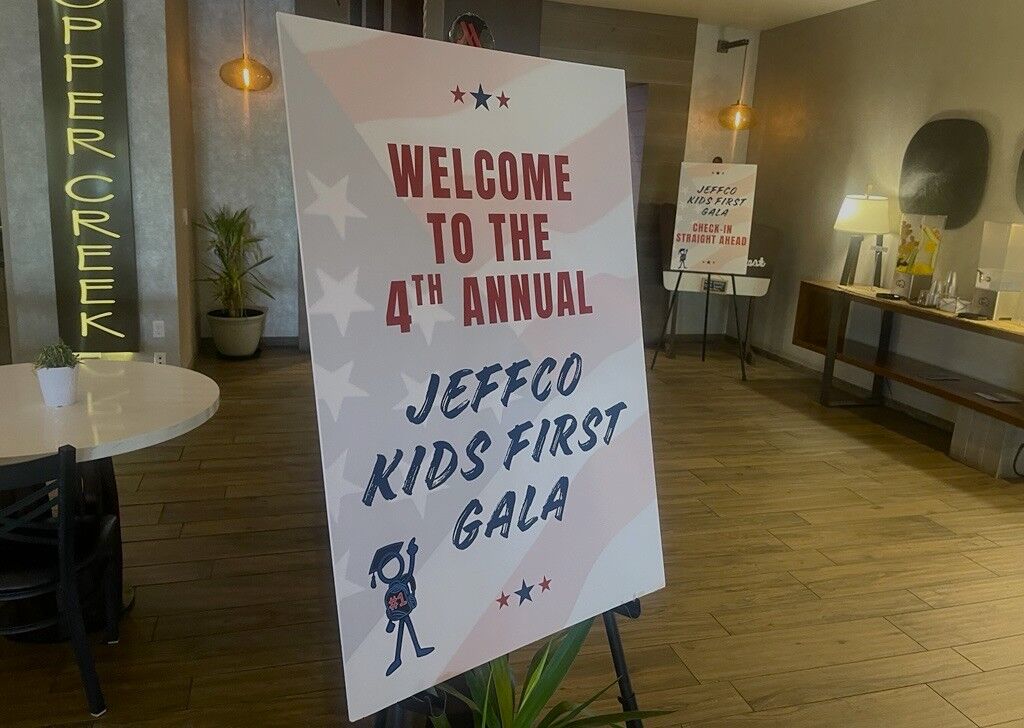
DOJ official decries ‘nonsense’ in Jeffco schools at fundraising gala
Matt Kyle
matt.kyle@denvergazette.com
Updated 11 hours ago
Amid a legal battle between Jeffco Public Schools and the federal government, a Department of Justice official spoke at a fundraising gala and decried “crazy stuff” and “nonsense” in the school district. The gala was for Jeffco Kids First, an...

Colorado Springs mother Deborah Nicholls’ murder conviction overturned
Nick Smith
nick-smith@coloradopolitics.com
Updated 2 days ago
A Colorado Springs mother convicted in 2008 of murdering her three children in a house fire might get a new trial after a judge ruled that prosecutors withheld key evidence that could have impacted the jury’s verdict. Deborah Nicholls, whose...
PREV
PREVIOUS
Roughly half of Denver Broncos roster joins protests prior to game at Buffalo Bills
BUFFALO – Perhaps no NFL team embodies the expanding political divide in America more than the Denver Broncos. Balanced by a highly paid linebacker who was one of the first players to kneel during the national anthem and a front office with strong conservative leanings, some of the Broncos joined protests across the league in Week 3 on Sunday. […]

John McCain owns Obamacare
Don’t call it Obamacare. President Barack Obama served his country and quietly left office. The Affordable Care Act survives as the legacy of Sen. John McCain, R-Ariz. He led the charge against repealing the law in July and pledges to defeat another repeal this month. He won’t let anyone stop the failed health care law, […]