

EDITORIAL: GOP proposes another stupid health care bill
Another day, another stupid health care bill that does nothing to lower prices and ease access to medical care.
When then-candidate Donald Trump met with The Gazette’s editorial board last summer, he exuded the resolve of a father and grandfather seeking more productive market results for the benefit of all.
In a private meeting with Senate Republicans this month, President Trump rightly described the House Republican health care bill as “mean.” He asked for a Senate bill written “generous, kind with heart.”
All Senate Republicans proposed last week was more tweaking with taxes, regulations and Medicaid.
The bill does nothing to give Americans more doctors, nurses, nurse practitioners, physician’s assistants, hospitals, clinics, low-priced drugs and neighborhood wellness centers. It attempts to create nothing and merely continues a redistribution shell game that has government choosing winners and losers based on factors such as income and age.
Health care reform that is generous, kind and heartfelt would produce more health care for all. It would put clinics in strip malls, pharmacies and fire stations, and otherwise create a surplus that would have health care providers competing for patients.
Health care is a basic human need, much like food. When access to affordable food was a problem, during and after the Great Depression, government did not respond with policies that determined who was worthy to eat and which third party would pay for it. Instead, government ensured a sustainable surplus of food for rich and poor alike.
It began with the Agriculture Act of 1935 and continued with the National School Lunch Act of 1946; the Agricultural Act of 1949; and President John F. Kennedy’s executive order directing the Department of Agriculture to “increase the quantity and variety” of foods needed by low-income households.
Since 1935, the federal government has enacted at least 10 major directives to make food more accessible and affordable almost entirely by increasing supply.
Separately, the Federal Trade Commission ensures low prices by ensuring competition among food retailers. When Albertsons and Safeway merged, the FTC forced the companies to sell 168 stores to competitors. It took similar action when Whole Foods bought Wild Oats.
Because the federal government protects and promotes surpluses and competitive pricing, the cost of food has plummeted for the past century. A dozen eggs that cost 37 cents in 1913 should cost $9.15 today if adjusted for inflation. King Soopers recently advertised cartons of 18 eggs for 99 cents with a coupon.
Just as government protects affordable access to food, it has waged wars to create and protect surplus energy.
By contrast, government does nothing to establish surplus health care. Instead, Congress passes laws that only increase demand. Regulations create barriers to entry and dissuade competition.
“Increased insurance coverage increases demand, and Obamacare alone is projected to require about 16,000 to 17,000 more physicians than would have been required without it,” explained Dr. Aaron Carroll, a professor of pediatrics at the University of Indiana School of Medicine, in the Nov. 6 New York Times.
Carroll explained the United States has 2.56 doctors per 1,000 people, while Austria has 4.99, Norway 4.31, Sweden 4.12, Germany and Switzerland 4.04.
In a ranking of 35 countries, the United States ranks 30th in production of medical graduates.
The Association of American Medical Colleges projects a shortfall of up to 90,400 physicians in the United States by 2025, which is seldom reported.
As baby boomers age, we see increasing demand on a diminishing supply of care. Yet nothing in the Affordable Care Act or Republican efforts to replace it has anything to do with providing more care.
Compassionate health care reform would order the Department of Education to increase the production of medical graduates, moving our ranking from 30th place to first. It would direct the Federal Trade Commission to more aggressively eliminate barriers to competition among care providers. Real reform would fund a community development block grant program to establish wellness clinics in fire departments and their neighborhood substations.
Generous, kind, heartfelt health care reform would include a directive for Immigration and Customs Enforcement to emphasize recruitment of health care professionals from other countries.
Congress, or an executive decree, would order the Small Business Administration to lower risks and costs associated with financing medical and pharmaceutical startups.
Generous health care reform would focus on providers and consumers, not regulation adjustments to government and private insurance.
President Trump, ask Republicans to stop the useless shell game. Tell them to get serious about health care or get out of the way.


Registered voters on the eve of the 2026 primaries | Cronin & Loevy
Tom Cronin Bob Loevy
tom-cronin-bob-loevy@coloradopolitics.com
Updated 1 day ago
The Colorado Secretary of State’s Office has published the latest voter registration figures for the state and its counties as of June. Colorado ranks among the highest states for independent, or unaffiliated, voters. Only Alaska and Massachusetts have more. New Hampshire, New Jersey, Maine and Oregon also rank highly. So here...

A decade after Standing Rock protests, Dakota Access oil pipeline segment gets OK | OUT WEST ROUNDUP
The Associated Press
the-associated-press@coloradopolitics.com
Updated 4 days ago
NORTH DAKOTA Pipeline segment OK’d BISMARCK — Federal officials on May 21 gave final approval for the Dakota Access oil pipeline to continue operating its contentious Missouri River crossing, an outcome that comes nearly a decade after boisterous protests against...
Rep. Jeff Crank thinks Democrats are too focused on Trump, not enough on Colorado Springs | Vince Bzdek
Vince Bzdek
vince.bzdek@gazette.com
Updated 22 hours ago
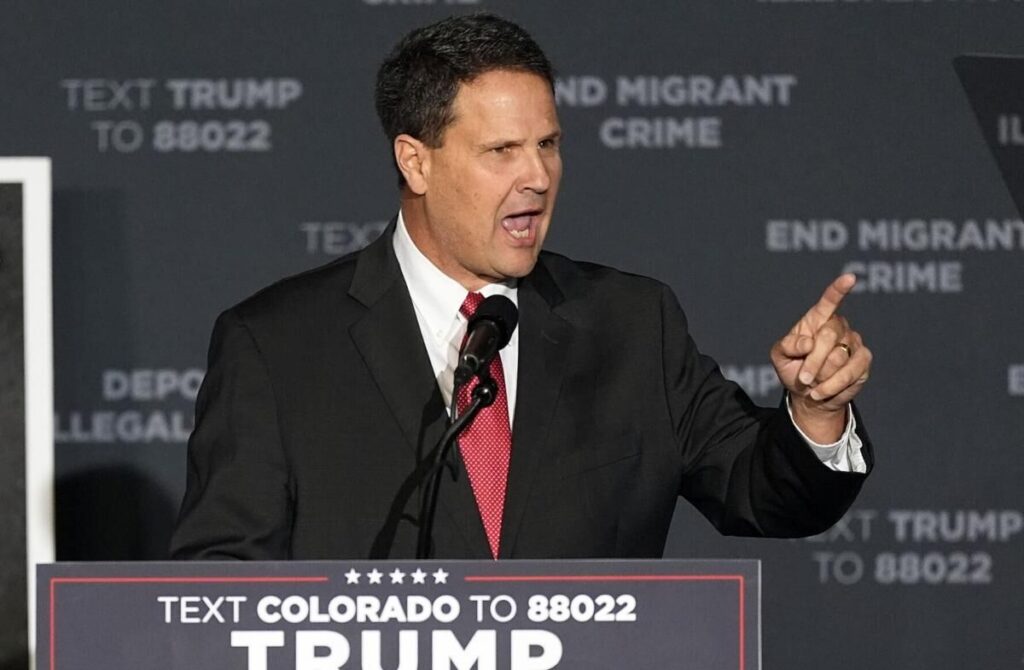
For U.S. Rep. Jeff Crank, who’s unopposed in the Republican primary for the 5th Congressional District but the main target of both candidates in the lively Democratic primary, the big question in the midterms is not who will stand up...

Colorado Politics Calendar June 22-28
Rachael Wright, Special to Colorado Politics
rachael.wright@coloradopolitics.com
Updated 4 days ago
CoPo’s weekly political calendar will help you find political and public-policy events throughout Colorado. It includes candidate and issue campaign events, public policy meetings, court hearings, state and local party conventions, assemblies, debates, rallies, parades, speaking engagements, traveling dignitary appearances,...

Vice president attends Denver event to support energy freedom; more news from the past | A LOOK BACK
Rachael Wright, Special to Colorado Politics
rachael.wright@coloradopolitics.com
Updated 4 days ago
Forty-Five Years Ago This Week: Vice President George H.W. Bush flew to Denver to address the annual meeting of the American Association of Petroleum Landmen, where he assured the audience that the Reagan administration’s strong belief was that the private...
Does character matter anymore? | SONDERMANN
By Eric Sondermann
by-eric-sondermann@coloradopolitics.com
Updated 4 days ago
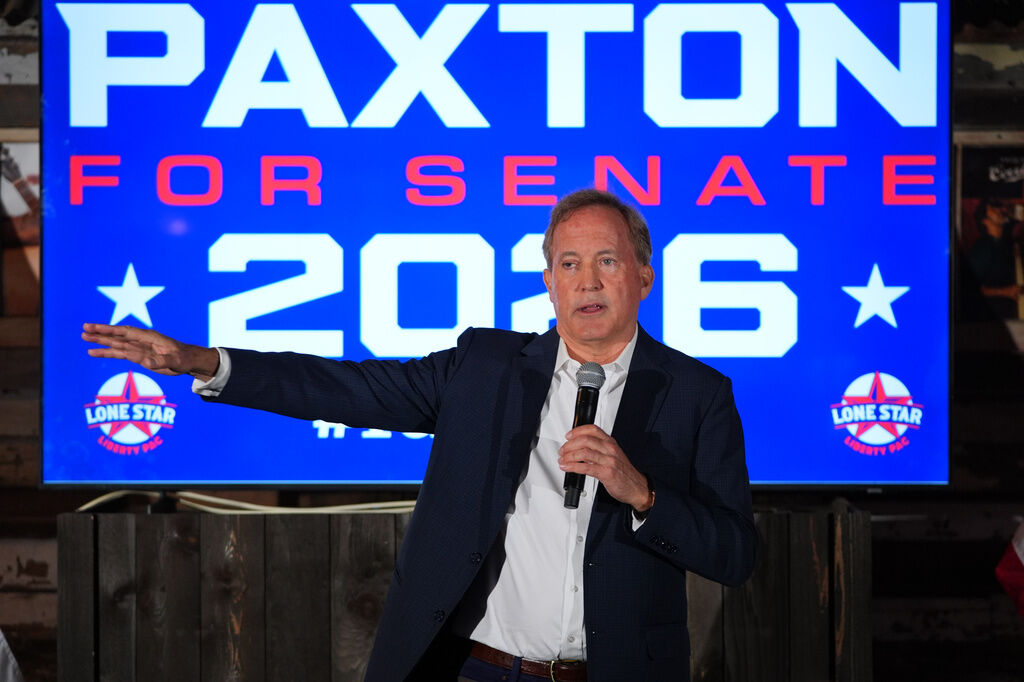
The last few weeks have been illuminating in the manner of a headlamp pointing the way to some deep, dark, murky netherworld. Graham Platner, a hero to the populist set on the Democratic side, became his party’s Senate nominee in...

A special edition of Capitol M: In remembrance of the outrageous Lynn Bartels
Marianne Goodland
marianne.goodland@coloradopolitics.com
Updated 2 days ago
I had Lynn Bartels envy. For almost longer than I can remember. There, I said it. And it’s true. Lynn died Friday, age 69, after a short battle with glioblastoma. I was just heartsick when that news of her diagnosis...
Bernie Sanders endorses DeGette challenger Melat Kiros in Colorado’s 1st CD Democratic primary
Ernest Luning
ernest.luning@coloradopolitics.com
Updated 2 days ago
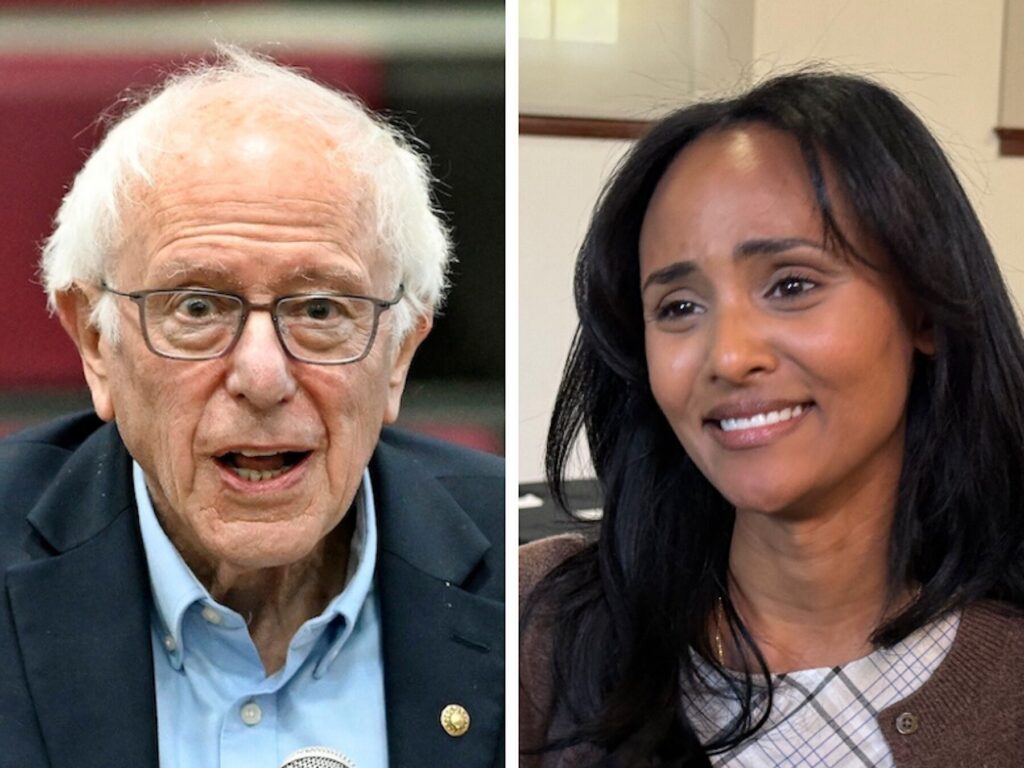
U.S. Sen. Bernie Sanders on Friday endorsed congressional candidate Melat Kiros, one of two Democrats challenging 15-term U.S. Rep. Diana DeGette in Colorado’s June primary. Sanders, a Vermont independent who caucuses with the Democrats, called the 29-year-old Kiros “exactly the...
Trump’s 10th Circuit nominee recuses from cases against federal government without explanation
Michael Karlik
michael.karlik@coloradopolitics.com
Updated 36 minutes ago
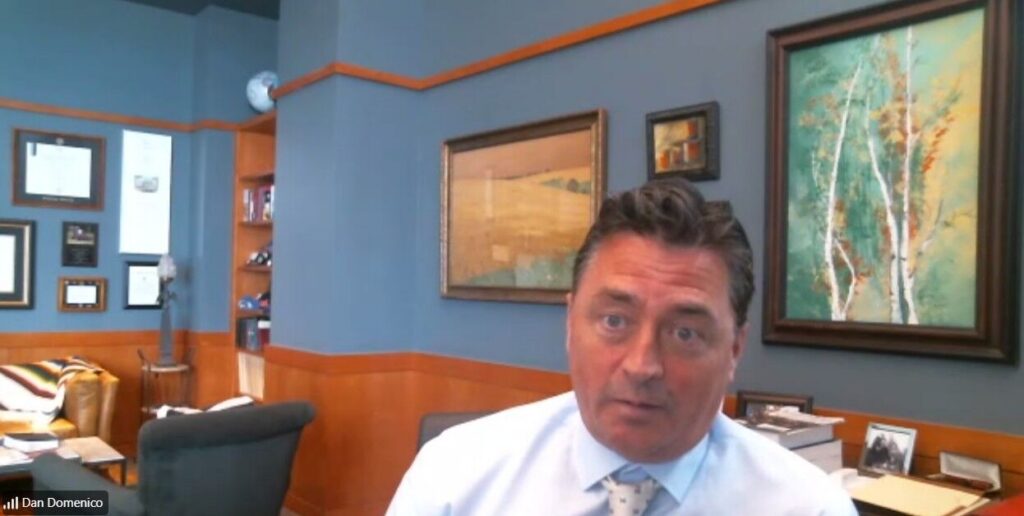
President Donald Trump’s nominee to fill a vacancy on the Denver-based federal appeals court recused himself without a clear explanation from nine cases against the executive branch while he was undergoing vetting by the White House this spring. U.S. District...

Trump’s low approval unchanged as Iran war perceptions continue to plague him
Rena Rowe, Washington Examiner
rena.rowe.washington.examiner@gazetteedit.wpenginepowered.com
Updated 2 days ago
A new poll shows most Americans disapprove of President Donald Trump’s handling of Iran, with views on the issue closely mirroring his overall job approval rating. Just 37% of U.S. adults approve of the way Trump is handling his presidency,...