

Military veterans treatment court would get boost under Coffman legislation
As military veterans return home and reintegrate into civilian life, underlying mental illness issues can spill over into altercations with the law.
“While most veterans readjust and transition back without problems, some do not,” U.S. Rep. Mike Coffman said.
The Republican from Aurora recently introduced legislation along with Arizona Republican U.S. Sen. Jeff Flake that would build on a Department of Veterans Affairs program that gives military veterans who run into the law a second chance in veterans treatment court.
The VA’s Veteran Justice Outreach program works with local jurisdictions to coordinate VA services for offenders with mental health appointments or substance abuse programs in lieu of incarcerating veterans.
“Many jurisdictions have now established veterans’ courts specifically designed to help rehabilitate these veterans so that they can once again become as productive as when they were serving our country in the military,” Coffman said.
The legislation would authorize $5.5 million each year for the next 10 years for the VA secretary to approve the hire of 50 additional veteran justice outreach specialists who would work in the treatment courts. The secretary would be required to look for cost savings to offset the extra cost.
“Veterans who have served our nation should not have to wonder if their country is standing at their side during their time of need,” Coffman said.
Nathan Viton, a veteran justice outreach coordinator with the Denver VA hospital, said the program gets veterans the treatment they need and often specialists in the program are able to intervene before veterans develop a criminal record.
Though VJO is a national program under the VA, regions are able to mold it to fit the needs of their community. And with the reach of the VA, VJO specialists are able to connect veterans with a variety of treatment options.
“Veteran sometimes don’t realize they have PTSD and need help, or realize how it is affecting their family,” Viton said.
Viton said veterans treatment court consists of a 18-to-24 month commitment, which includes required court dates and appropriate treatment sessions.
“It’s really important for the VA to be out there, pulling veterans out of the justice system and into the health care system,” Viton said.
Coffman pointed to a 73 percent success rate within the 18th Judicial Veterans Treatment Court – including Arapahoe, Douglas, Elbert and Lincoln Counties – which Viton said is better than your traditional drug court. Veterans who have both graduated and been terminated have not seen any new criminal charges and no veterans have reoffended since termination, Coffman said.
Viton said the program has been working on educating police on dealing with veterans who are suffering with PTSD or mental illness.
The additional VJO staff proposed under the legislation could allow the Denver VA to expand its justice outreach, which visits jails and educates veterans on their options through treatment court and the VA, Viton said.

Abortion stays legal in Wyoming as top court strikes down laws, including pill ban | OUT WEST ROUNDUP
The Associated Press
the-associated-press@coloradopolitics.com
Updated 4 days ago
WYOMING Court strikes down abortion bans FORT COLLINS — Abortion will remain legal in Wyoming after the state Supreme Court ruled on Jan. 6 that two laws barring the procedure, including the country’s first explicit ban on abortion pills, violate...
Colorado oilmen may play key role in Trump’s Venezuelan oil takeover plan
Vince Bzdek
vince.bzdek@gazette.com
Updated 1 day ago
When President Donald Trump summoned oil executives to the White House recently to push for major investment in Venezuela, an interesting sprinkling of smaller independent companies from Denver was invited along with the big names of American oil. One of...

Colorado Politics Calendar Jan. 19-25
Rachael Wright
rachael.wright@coloradopolitics.com
Updated 5 days ago
CoPo’s weekly political calendar will help you find political and public-policy events throughout Colorado. It includes candidate and issue campaign events, public policy meetings, court hearings, state and local party conventions, assemblies, debates, rallies, parades, speaking engagements, traveling dignitary appearances,...

Elder Groff attends opening day of state legislature to cheer on son | A LOOK BACK
Rachael Wright
rachael.wright@coloradopolitics.com
Updated 5 days ago
Twenty-Five Years Ago This Week: “There is a God,” sighed former state Sen. Regis Groff, D-Denver, as he watched the Democrats assume control of the Colorado Senate for the first time in 40 years. “Now they’re in the cubbyholes,” chuckled...
Colorado appeals Trump’s rejection of federal disaster declarations for flooding, fires
The Denver Gazette
the-denver-gazette@coloradopolitics.com
Updated 2 days ago
Colorado has formally appealed the Trump administration’s decision to deny requests for federal disaster declarations tied to two wildfires and flooding last year. Gov. Jared Polis said the state asked the federal government to reconsider its denials for the Elk...
10th Circuit oral arguments to feature trial judges for first time in 12 years
Michael Karlik
michael.karlik@coloradopolitics.com
Updated 2 days ago
When the Denver-based federal appeals court convenes next week to hear oral arguments, six new faces will be staring down from the bench. No, the U.S. Court of Appeals for the 10th Circuit has not added six new members. It...
Federal judge says ICE cannot impose monitoring conditions beyond immigration judge’s order
Michael Karlik
michael.karlik@coloradopolitics.com
Updated 2 days ago
A federal judge told U.S. Immigration and Customs Enforcement on Thursday that it cannot impose additional restrictions or monitoring conditions beyond those ordered by an immigration judge when releasing a person on bond. In November, U.S. District Court Judge Gordon...
Colorado justices weigh constitutionality of student backpack search based on confidential tip
Michael Karlik
michael.karlik@coloradopolitics.com
Updated 1 day ago
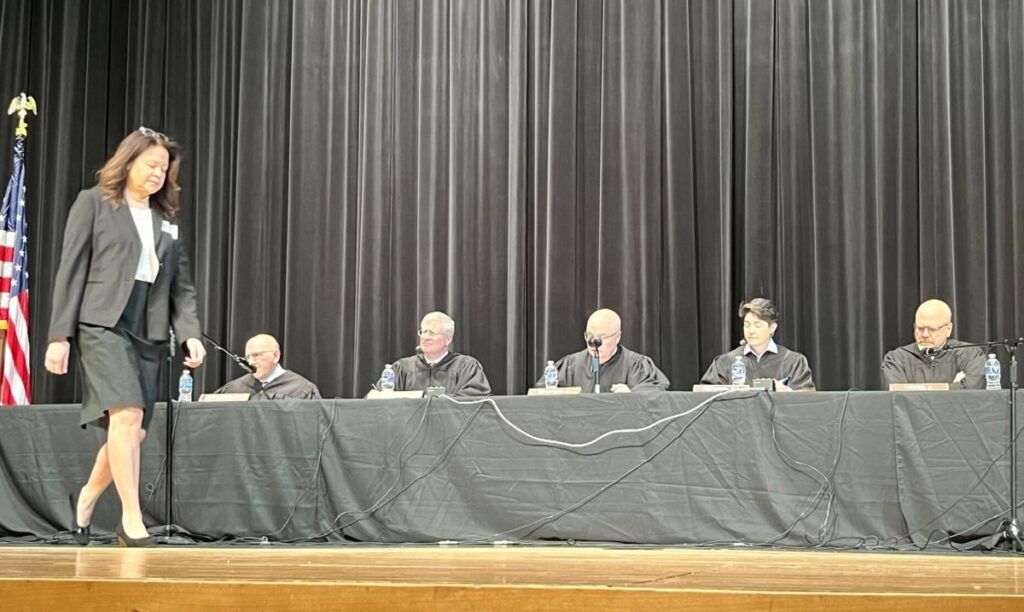
The Colorado Supreme Court considered on Wednesday whether a tip submitted through the state’s confidential school safety system provided a Douglas County administrator with reasonable suspicion to search a student’s backpack for drugs. A trial judge blocked evidence from the...
The odd couple: Vance and Rubio stick together through 2028 speculation
W. James Antle III Washington Examiner
wjamesantleiiiwashingtonexaminer@wpstage.coloradopolitics.com
Updated 2 days ago
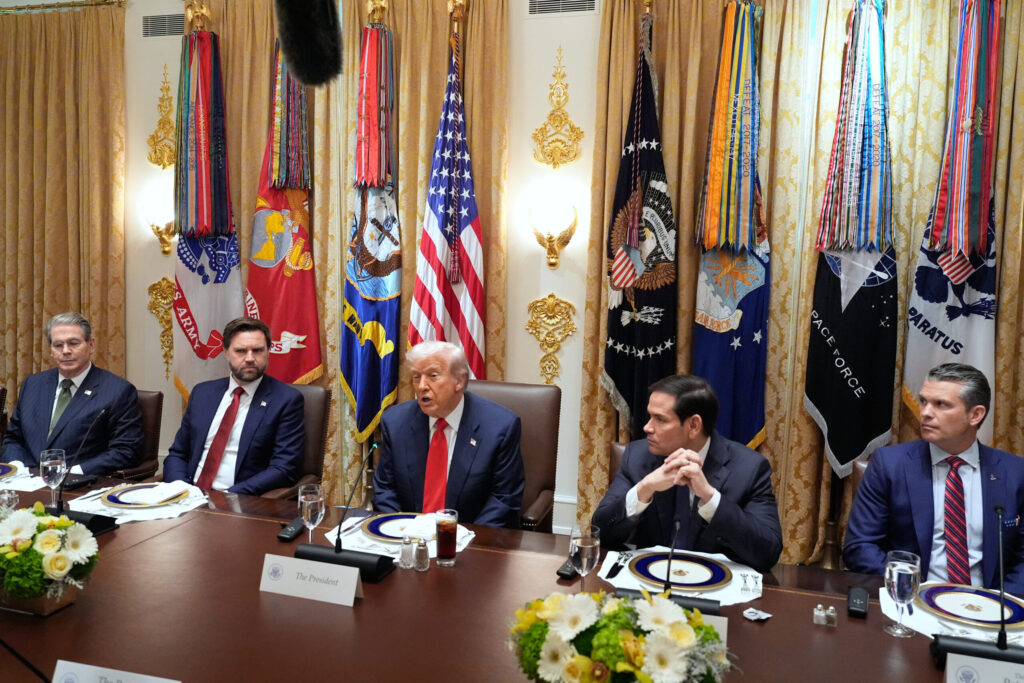
Washington insiders keep straining to see daylight between Vice President JD Vance and Secretary of State Marco Rubio, only for the two of them to maintain a united front. Vance and Rubio met together at the White House with Denmark’s...
Democrats ready war powers blitz to exploit a Trump ‘vulnerability’
Ramsey Touchberry, Washington Examiner
ramsey.touchberry.washington.examiner@gazetteedit.wpenginepowered.com
Updated 2 days ago
Senate Democrats believe they’ve uncovered a backdoor to limiting President Donald Trump’s military operations abroad and conducting oversight despite limited minority power and few Republicans willing to buck the administration. Democrats are prepared to force a flurry of votes on...
PREV
PREVIOUS
Union-busting Wisconsin group has its dollars in Colorado politics, according to two investigations
Colorado labor and education are in the crosshairs of an anti-union Wisconsin foundation, according separate investigations by the Center for Media and Democracy and the Milwaukee Journal Sentinel. The Lynde and Harry Bradley Foundation that supported the anti-union efforts in support of Wisconsin Gov. Scott Walker (who grew up in Colorado Springs, coincidentally) are spreading their efforts nationwide, […]
The Colorado Springs Gazette editorial: Call a special session, for transportation only
After legislators ended their 120-day session Wednesday, Gov. John Hickenlooper said that he would consider a special session to deal with disappointing outcomes involving rural broadband internet, funding of the state energy office, health care policy and transportation funding. Skeptics, including Senate President Kevin Grantham, R-Cañon City, expressed doubt the divided Legislature would accomplish more […]