

YESTERYEAR: Mud slung and accusations hurled in GOP state chair race
Thirty Years Ago This Week in The Colorado Statesman … The John V. Christensen Award, the highest and post prestigious honor to be awarded by the Denver Regional Council of Governments (DRCOG), was awarded to the executive director of the Denver Technological Center, George MacKenzie Wallace.
According to the DRCOG, “In October 1972, the John V. Christensen Memorial Award was created to be presented to the person, or persons, most exemplifying the tradition of Arapahoe County Commissioner and co-founder of DRCOG John V. Christensen, in promoting and working for good, strong, representative local government and regionalism in solving mutual problems.”
Wallace’s work in the DTC started as an effort to solve Denver’s traffic and pollution problem. Wallace’s founding principle for the project was that the DTC would be a good neighbor, doing its part in supporting those living and working in the surrounding area of the new development.
His “neighborly” work included the planning and development of a park area that provided a buffer between commercial and residential areas to the east that, in 1987, was expanded further south of Belleview. Wallace also planted approximately 15,000 trees in DTC and made sure the new technology center refused to allow Denver to move south of Belleview Avenue in order to preserve the school system. Another bufferwas planted between commercial and residential areas along old Yosemite Street as well.
According to Ed Phillipsen, retired management consultant and longtime resident of Greenwood Village, all these actions were “neighborly acts-the actions of friends.”
“As a fellow kid from Brooklyn,” Phillipsen wrote in an article for The Statesman, “I get a vicarious enjoyment in seeing another Brooklynite receiving the highest award to be bestowed in this area of Colorado. My earliest concepts of neighborliness and regional pride were engendered in Brooklyn as were George’s, and it delights me to see those concepts demonstrated so graphically in our adopted neighborhoods.”
… Twenty Years Ago … The race for Republican state chairman, between Sam Zakhem and Steve Curtis dissolved into a bitter battle that transcended everyday, intraparty politics.
Curtis, former chairman of the Denver GOP, accused Zakhem, a longtime Republican activist, of blackmail. He stated the Zakhem called him around March 7, 1997, and demanded that he drop out of the chairman’s race or else Zakhem would go to the press with damaging information about his background.
Zakhem contended that Curtis knowingly lied to party activists about his prior registration in the Republican Party, and insisted that Curtis had neither the character or integrity to lead the state party.
At a Republican meeting in Greeley, the two candidates were the featured speakers. Curtis delivered his usual campaign speech where he cited his qualifications as former head of the Denver GOP, as well as his plans to lead the party should he be elected the following month.
Zakhem spoke next and was having no part in an average stump speech delivery. He was armed with copies of documents from the Denver Election Commission and proceeded to tell the crowd that Curtis had only registered as a Republican on Aug. 9, 1994, just two months after he alleged Curtis had participated in a county and state assembly illegally. He then charged Curtis with lying about it in February when the subject was broached at a Larimer County Republican meeting.
Zakhem said that on Feb. 8, 1997, Curtis told members of the Larimer County GOP that he wouldn’t respond to lies which he said were perpetuated by Zakhem about his party registration.
“I could have just cried,” said Zakhem about the encounter with Curtis the previous week. “He was lying. I felt so sick, so abused, I didn’t know what to do.”
The controversy centered around the fact that when Curtis moved to Denver from Arapahoe County over three years prior, he hadn’t declared his party affiliation because he assumed it would follow him from his previous county. Since Curtis didn’t vote in GOP primaries in the 1980s, he didn’t realize he wasn’t still a registered Republican. He was registered instead as unafilliated.
In April 1994, Curtis was elected as a delegate to the Denver County Republican Assembly. He signed an affidavit on the spot stating he was a Republican when his name didn’t show up on a roster of registered Republicans in the precinct.
He signed yet another affidavit at the Republican primary in August 1994, when he was not on the official list of registered Republicans when he arrived at his polling place.
Unfortunately, the affidavit Davis signed at his caucus, which professed his Republican registration, was nowhere to be found. Curtis said he was always under the impression that he was a registered Republican.
“Even if I was wrong, why would I have registered as a Republican in 1980 or 1984?” he implored the audience.
“This hurts.” Zakhem said about Curtis’s alleged disregard for reality. “It’s very sad. He committed perjury in the affidavit which is now lost.” Zakhem went on to say, “He’s twisting the truth. I love people to be truthful, even when it hurts.”
Curtis was quick to point out his long service with the Republican Party and contended again he always believed he was a registered Republican – and that was all that mattered. “I’m still a registered Republican, longer than Ben Nighthorse Campbell. And who’s going to tell him he’s not qualified to be our U.S. Senator?” Curtis asked.
… Ten Years Ago … The Colorado General Assembly passed House Bill 07-1281, which ramped up requirements for energy companies to get a minimum of 10 percent of their power from renewable sources by 2011, 15 percent by 2015, and 20 percent by 2020. Requirements for energy cooperatives also increased, but only by half the amount.
“This is part of what we refer to as moving Colorado forward in a new energy community,” Gov. Bill Ritter said to the members of the Senate State, Military, and Veterans Affairs Committee during a rare committee appearance. “Over the long run, this is just one part of many things that we as a country need to do to achieve energy independence.”
Ritter said that when he attended a national governor’s conference earlier in March, he heard from President George W. Bush himself that renewable energy is a top national priority.
“In this state, we’re doing our part. We’re also investing in the research end of this. We don’t think it should be just about a wing and a prayer,” Ritter told the committee.
Tom Plant, the director of the Office of Energy Management and Conservation, argued that renewable energy was the wave of the future, and that the sooner Colorado got on the bandwagon, the better.
“One of the things you’re seeing is almost a horse race between the states that have suitable portfolio to increase those standards,” Plant said. He noted that a number of surrounding states recently enacted similar measures to HB 1281 and said, “To remain competitive in attracting those industries, it’s in our interest to keep pushing the ball down the field.”


Group submits signatures for proposed Colorado graduated income tax
Marianne Goodland
marianne.goodland@coloradopolitics.com
Updated 13 hours ago
The measure, which eliminates Colorado’s flat tax, is expected to raise $2 billion in new revenue The proposal to amend the Colorado constitution to change the state’s flat rate into a graduated income tax came in under the wire Monday,...
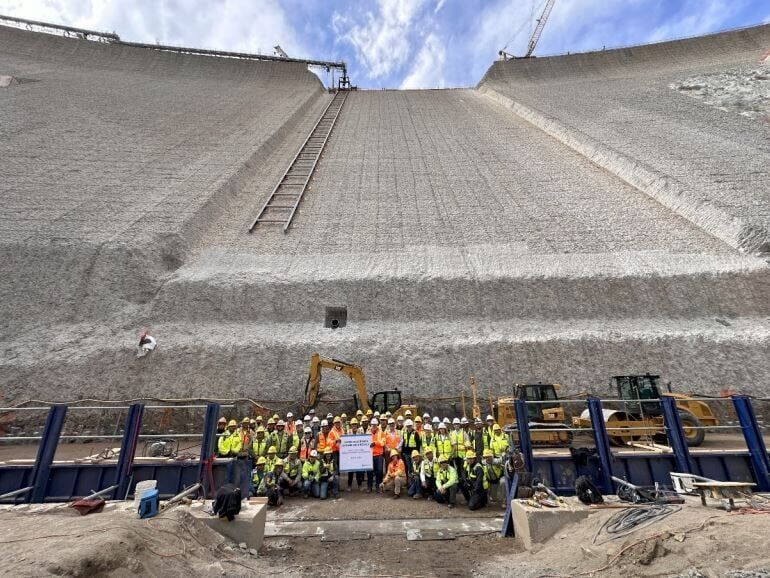
10th Circuit weighs Gross Reservoir expansion, judge’s ‘punishment’ of Denver Water
Michael Karlik
michael.karlik@coloradopolitics.com
Updated 11 hours ago
Members of the Denver-based federal appeals court considered on Friday whether they could intervene in an ongoing infrastructure project to enlarge a Boulder County dam after a trial judge deemed the underlying permit unlawful nearly two years ago. Denver Water...

Democratic group maps out path to Colorado House and Senate supermajorities
Marissa Ventrelli
marissa.ventrelli@coloradopolitics.com
Updated 15 hours ago
A national organization that works to elect Democrats to state legislatures has its sights on Colorado, unveiling a road map to establish a supermajority in both the House and Senate. Democrats have held a majority in the House since 2013...
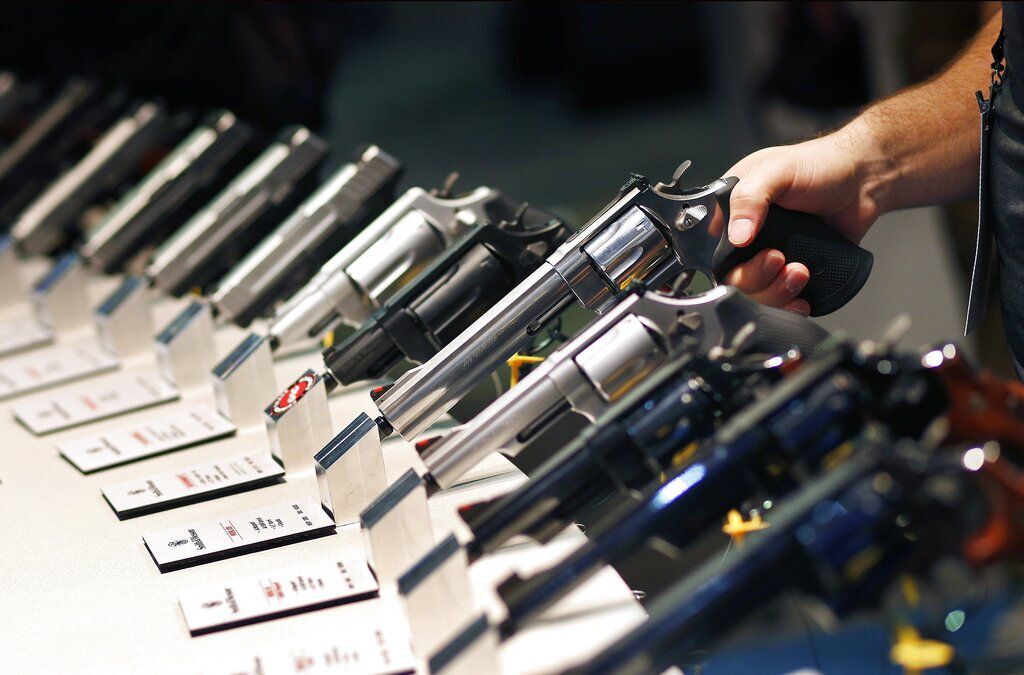
10th Circuit upholds federal prohibition on juvenile handgun possession
Michael Karlik
michael.karlik@coloradopolitics.com
Updated 16 hours ago
The Denver-based federal appeals court concluded on Monday that Congress acted within its constitutional powers to make it a crime for juveniles to possess handguns in most instances. The decision from the U.S. Court of Appeals for the 10th Circuit...

Board of Peace demands Netanyahu cease Gaza airstrikes
The Washington Examiner
the-washington-examiner@coloradopolitics.com
Updated 18 hours ago
The Board of Peace is struggling to get Israel on board with its peace plan for Gaza as Israeli militia airstrikes continue to bombard the war-torn strip despite expectations for a ceasefire and de-escalation. Gaza City was hit repeatedly by...

Trump wants to give Iran ‘last chance’ to strike a deal before ‘decapitation’
Christian Datoc
christian-datoc@coloradopolitics.com
Updated 18 hours ago
President Donald Trump said this week’s talks with Iran will be the “last chance” for the Middle Eastern country to avoid a severe escalation in the war. Trump called off plans to strike Iran’s energy infrastructure over the weekend after...
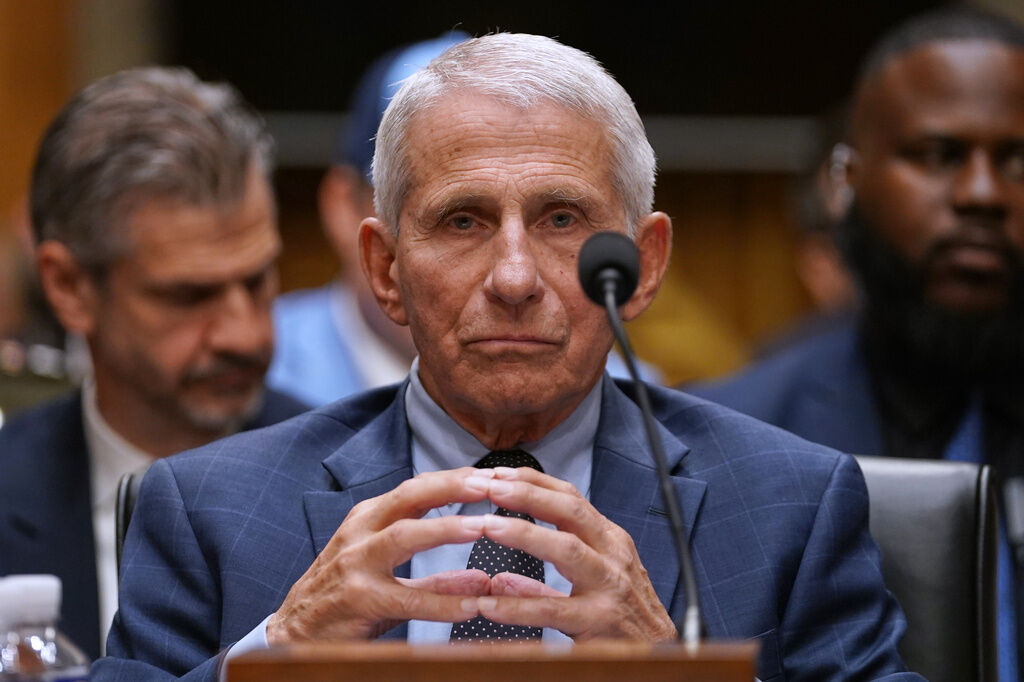
Fauci told Congress higher COVID-19 fatality rate than he calculated in diary: ‘More like 0.2-0.3%’
Mia Cathell
mia-cathell@coloradopolitics.com
Updated 18 hours ago
Dr. Anthony Fauci privately calculated that COVID-19 had a significantly lower fatality rate than what he told Congress a month later at the outset of the pandemic. On March 11, 2020, the day that the World Health Organization declared COVID-19...

Senate advances judicial nominee, Montezuma County judge agrees to discipline | COURT CRAWL
Michael Karlik
michael.karlik@coloradopolitics.com
Updated 20 hours ago
Welcome to Court Crawl, Colorado Politics’ roundup of news from the third branch of government. A U.S. Senate committee advanced a judicial nominee from Colorado, plus a Montezuma County judge agreed to receive discipline for his misconduct that stops short...
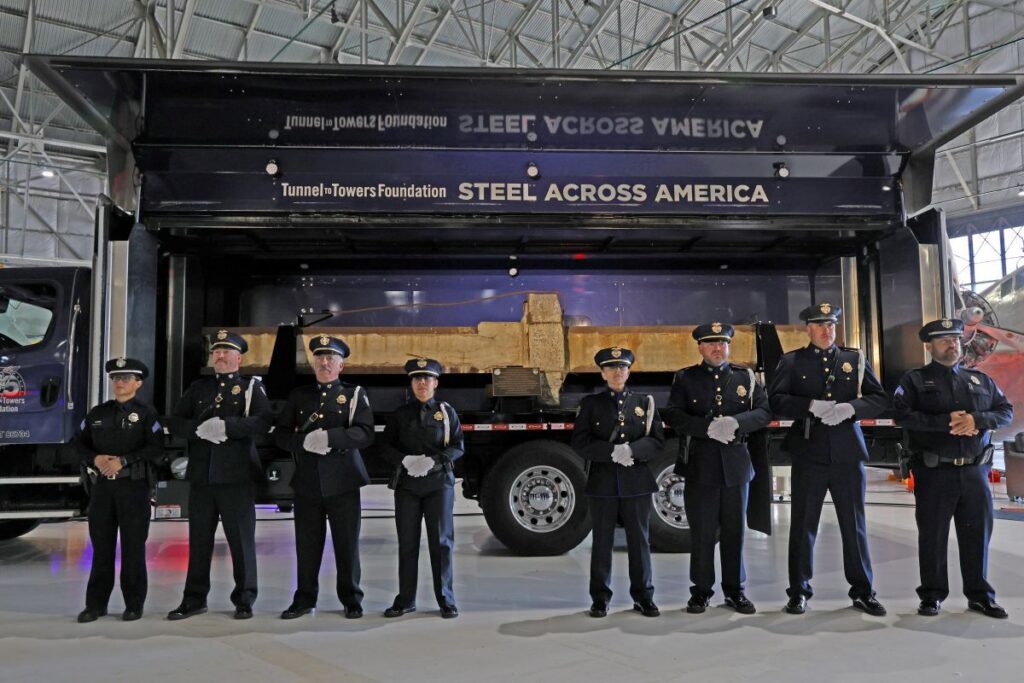
Tunnel to Towers brings 9/11 steel to Denver
Nicholas Fogleman
nicholas.fogleman@denvergazette.com
Updated 23 hours ago
A nationwide tour commemorating the 25th anniversary of 9/11 brought a piece of the World Trade Center to Denver on Saturday as the Tunnel to Towers Foundation hosted a ceremony at the Wings Over the Rockies Air & Space Museum....
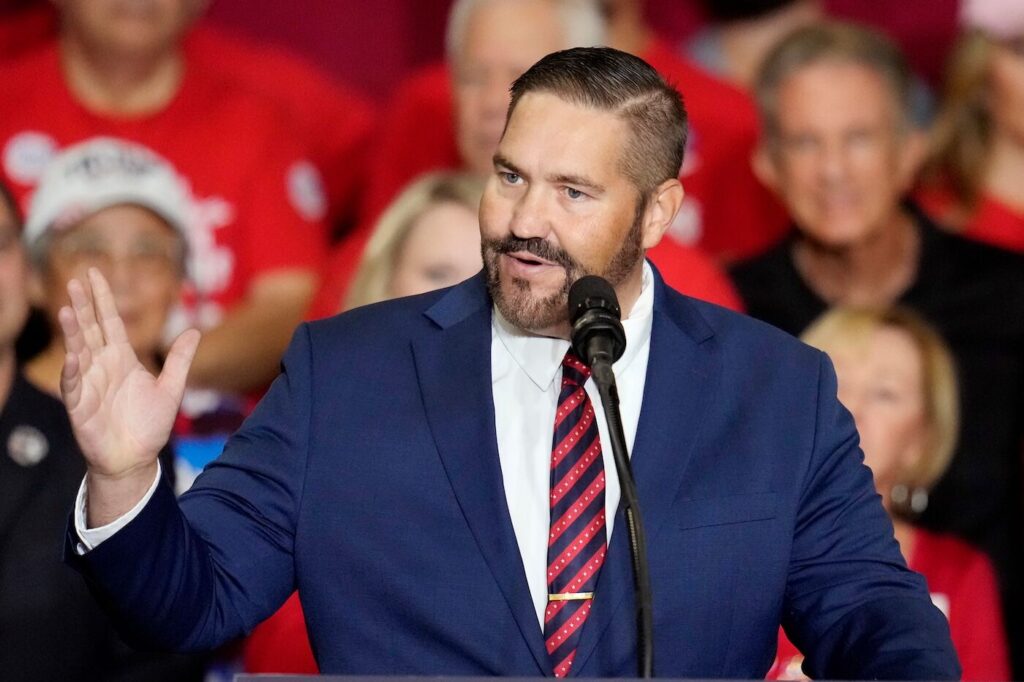
Top officials in Arizona’s Maricopa County agree on how to oversee elections | OUT WEST ROUNDUP
The Associated Press
the-associated-press@coloradopolitics.com
Updated 6 days ago
ARIZONA Officials agree on election oversight PHOENIX — Election officials in Arizona’s most populous county reached an agreement a week before the state’s July 21 primary on how to jointly oversee the vote, ending a prolonged legal battle. Republican Maricopa...