

Broadband office to seek faster rural internet service
Establishing a broadband office to help bring reliable, accessible and affordable internet access to rural Colorado won’t cost state government very much in terms of ongoing costs, and the economic benefits could greatly help local communities and the state, according to officials in the governor’s Office of Information Technology.
The broadband office was announced by Gov. John Hickenlooper in his Jan. 12 State of the State address, with a goal of helping the state get from 70 to 85 percent broadband internet coverage in the next two years and 100 percent coverage by 2020.
The Office of Information Technology serves executive branch agencies and employs more than 900 people at 71 locations across the state to provide IT infrastructure, network services, telecommunication tools, cloud computing, application development and support for more than 28,000 state employees who work in 1,300 locations. The office also serves Colorado first responders via the public safety communications network, and the office’s security team protects the state’s information systems and data for all three branches of state government.
Sumana (Suma) Nallapati, secretary of technology and state chief information officer, said the broadband office would work with local governments, other state departments such as transportation, local affairs, regulatory agencies and private sector companies to help bring broadband service to all of Colorado.
“We know that one technology will not meet the needs and demands of every community in the state,” Nallapati stated. “We want to have all options, current and emerging technology, available.”
New office costs minimal
The new office will hire a broadband director to lead the effort, but no other staff will be added, said Tauna Lockhart, chief communications officer and public information officer in the Office of Information Technology. The plan is to have that person hired before the end of the first quarter of the year.
The office will cost an estimated $2.4 million to set up, with $1.7 million of that a grant from the Department of Local Affairs. After the office is established, an annual operating budget of under $1 million is expected, Nallapati said.
Brian Shepherd, broadband program manager in the Office of Information Technology, said the governor’s office had been developing an operating plan for the broadband office for some time, including regional economic development groups across the state.
“More and more, broadband services are one of the top things businesses look for,” Nallapati said. “Whether it’s health care or other large industries, if you have a computer and access to the internet, you can work from anywhere. We really see this as helping keep the state economy vibrant and create more jobs. Then there’s all the online educational opportunities, so we think we have a very compelling case.”
Shepherd said many states have similar broadband efforts to help their businesses and economies.
“All of them do things a little differently,” he added. “California set theirs up as a nonprofit, a lot of others do something like we are, operating out of their office of information technology.”
The Colorado effort will include a series of outreach opportunities across the state, Shepherd said, “so we can learn what the different needs and abilities might be in different areas.”
“We don’t want to be modeling every project the same way,” Nallapati added. “What makes sense for each community is what we want to see.”
Rio Blanco hopes to attract new businesses, add jobs
In his address, Hickenlooper mentioned a Rio Blanco County broadband project that “recently helped Meeker and Rangely become some of the very first rural giga-bit communities in the entire country.”
Katelin Cook, Rio Blanco County economic development coordinator, said the broadband project was undertaken because businesses and residents in Rangely and Meeker had little to no reliable internet access.
A new Colorado Department of Local Affairs policy in 2014 allowed governmental entities to apply for grants and “own” the infrastructure of a broadband network and contract with service providers for the equipment and service. Cook said the project began after 80 percent of county voters approved of the move, a requirement under what’s known as Senate Bill 152. A bill to remove the voting requirement from state statutes is to be heard by the state Senate Business, Labor and Technology Committee Monday, Feb. 13.
The total Rio Blanco County project cost is about $13.4 million, Cook said. The county received $3.6 million from the Department of Local Affairs in grant funds, and the county has funded the rest.
“We’ve had a lot more cell towers installed so our cell coverage out in the county is a lot better,” Cook added. “This project will add fiber optic cable to the front doors in Meeker and Rangely and wireless coverage in the rest of the county.”
The county is one of the first governmental entities in Colorado to carry out a broadband IT infrastructure and services plan. The project started in August 2014, and according to the Rio Blanco Herald Times, will make Meeker and Rangely two of the most technologically progressive communities in the state and maybe in the country.
The original completion goal was Sept. 30, 2016, but several county anchor sites and around 30 homes and businesses came online before then and are already using the new system, with more coming online as cable is laid to each residence and commercial building and wireless towers become operational.
Cook said the county’s strategy is to market the broadband service to attract businesses and diversify the county’s job base. Rio Blanco County was among the Colorado counties hardest hit by the Great Recession, especially the sharp downturn in natural gas development, and still struggles.
When finished, the county will own and operate a fiber optic and rural wireless network of eight towers that surpasses federal regulations for broadband access, opens opportunities for local businesses to expand their internet options, and offer an important attraction for internet-dependent businesses to locate in the county, such as online gamers, web developers, financial consultants and others, noted the Herald Times story.
Cook added schools, government buildings and hospitals will also benefit greatly from the project.
“Our hospitals can treat patients better and faster and they can get their test results online instead of having to wait for days,” she said. “Schools can take part in testing done at the state level, then there’s continuing education courses people will be able to take and even earn online degrees.”
In his address, Hickenlooper noted that in 1936, a Republican U.S. senator from Nebraska championed the Rural Electrification Act to run electric power lines “that made countless family farms across the country more competitive. Fiber optic cables are today’s power lines for farmers, ranchers and rural small businesses.”
“These entrepreneurs helped pull us out of the Great Recession,” Hickenlooper continued. “Now, we need to pull together for them. We need to make sure they’re fairly connected to other counties and countries. If they can’t play on a level field, our economy suffers and we all lose.”


Many U.S. Jewish adults have experienced assault or harassment over the past year, poll finds
The Associated Press
the-associated-press@coloradopolitics.com
Updated 47 minutes ago
WASHINGTON • Many Jewish adults feel unsafe in the United States, a new AP-NORC poll finds, with a majority saying they feel less safe than they did before Hamas’ Oct. 7, 2023 attack on Israel. The survey from The Associated...
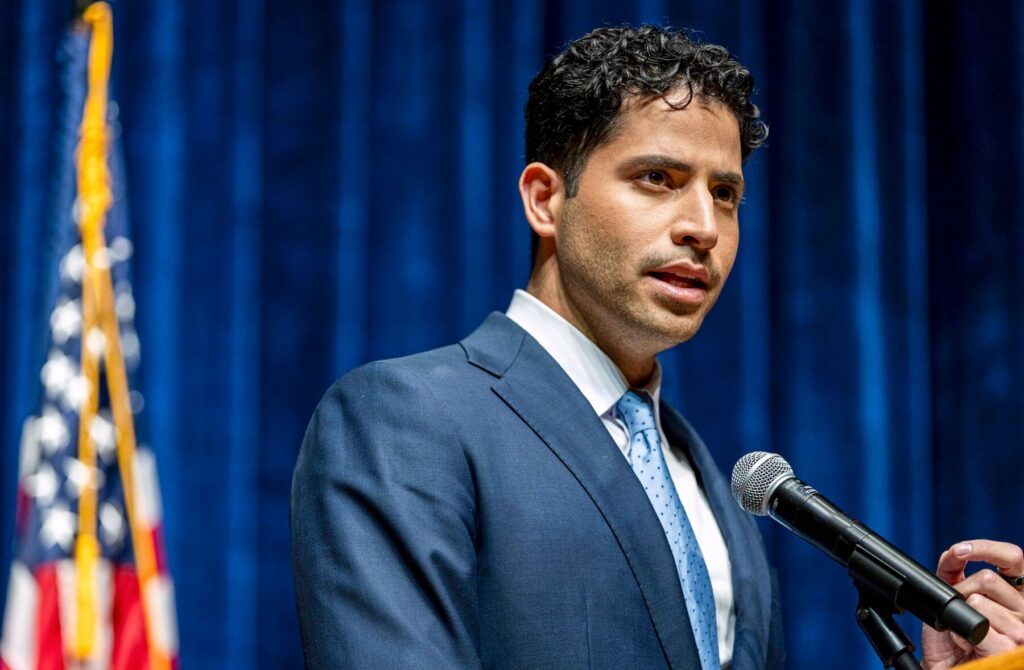
Gabe Evans challenger Manny Rutinel makes House Democrats’ ‘Red to Blue’ program in Colorado’s 8th CD
Ernest Luning
ernest.luning@coloradopolitics.com
Updated 13 hours ago
The House Democrats’ main campaign arm on Thursday added state Rep. Manny Rutinel to its “Red to Blue” program, saying the party’s freshly minted nominee in Colorado’s battleground 8th Congressional District is primed to flip the seat held by Republican...
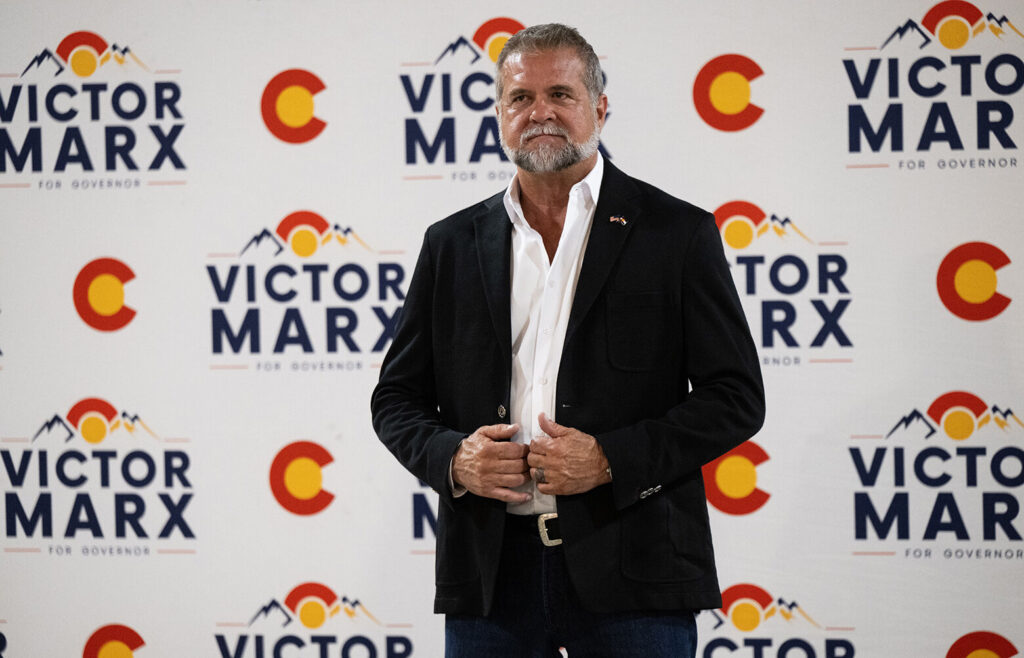
Victor Marx defeats Barb Kirkmeyer as Colorado’s Republican gubernatorial primary crosses finish line
Ernest Luning
ernest.luning@coloradopolitics.com
Updated 12 hours ago
Republican Victor Marx won Colorado’s Republican gubernatorial nomination on Thursday after maintaining a razor-thin lead over state Sen. Barb Kirkmeyer for more than a week as county clerks finished reporting final, unofficial vote totals. Marx, a missionary leader and first-time...

Rate reductions force Jefferson Center to close key recovery program as Colorado reimbursement rates change
Marianne Goodland
marianne.goodland@coloradopolitics.com
Updated 9 hours ago
A second Front Range community mental health center is eliminating services due to new reimbursement rates set by the Colorado Department of Health Care Policy and Financing (HCPF) that will go into effect on Oct. 1. The Jefferson Center for...
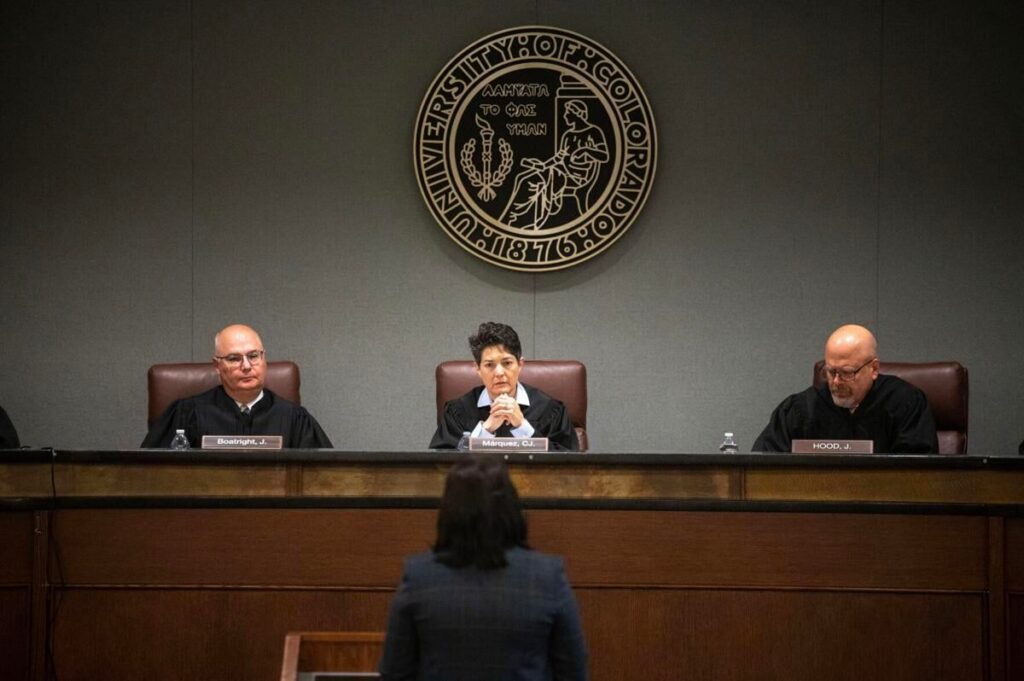
Colorado Supreme Court intervenes in 3 ongoing cases
Michael Karlik
michael.karlik@coloradopolitics.com
Updated 11 hours ago
The Colorado Supreme Court recently intervened in the prosecution of a juvenile defendant and will decide whether he is entitled to have prosecutors demonstrate probable cause at a hearing after a grand jury already determined probable cause existed. The justices...

Republican congressman says he’s unsure if Mitch McConnell is alive: ‘Very discouraging’
Claire Carter
claire.carter@washingtonexaminer.com
Updated 17 hours ago
Rep. Marlin Stutzman (R-IN) on Thursday said he’s unsure if Sen. Mitch McConnell (R-KY) is alive following weeks of speculation since the lawmaker’s hospitalization following a medical emergency last month. McConnell was hospitalized in June for a medical event that...

Denver launches $100 million effort to support 10,000 new jobs
Deborah Grigsby
deborah.smith@denvergazette.com
Updated 15 hours ago
The City of Denver is aiming to support 10,000 quality jobs citywide over the next three years, Mayor Mike Johnston announced on Thursday. The Denver Jobs Agenda is a new city-backed strategy that will invest $100 million to support in-demand job training...
Appeals court clarifies meaning of ‘at-risk’ victim based on breathing disability
Michael Karlik
michael.karlik@coloradopolitics.com
Updated 19 hours ago
Colorado’s second-highest court clarified last month that victims qualify as “at-risk” under state law if they required mechanical assistance to breathe on the date of the offense against them. El Paso County prosecutors charged Jon Claude Crow with third-degree assault,...

Q&A: From grassroots underdog to national spotlight — Colorado democratic socialist Melat Kiros on her path to Congress
Thelma Grimes
thelma.grimes@coloradopolitics.com
Updated 14 hours ago
Melat Kiros, the 29-year-old Democratic Socialist who unseated a 15-term incumbent in Colorado’s 1st Congressional District primary on June 30, frames her victory as a mandate for structural political reform rather than a rejection of her predecessor, Diana DeGette. In...

Trump demands rehearing after Supreme Court’s ‘insane’ birthright citizenship ruling
Emily Hallas
emily-hallas@coloradopolitics.com
Updated 22 hours ago
President Donald Trump on Wednesday announced his legal team will “immediately” seek a rehearing before the Supreme Court on his efforts to overhaul birthright citizenship after a majority of justices ruled the White House’s executive order on the matter was...