

Colorado senators optimistic for 2017 legislative session, but prepared for Washington-induced spiral
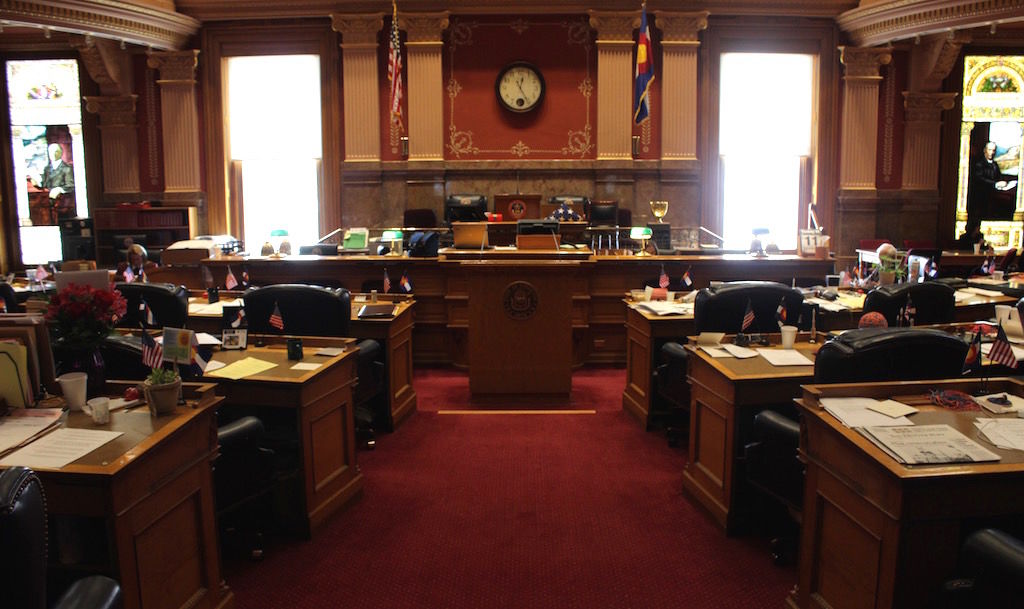
In Colorado’s upper legislative chamber everything is different and everything has stayed the same.
For years, Democrats have held the reins of power at the Capitol, and Republicans have exerted what influence they could by acting as the loyal opposition – mainly by blocking bills and offering alternative policy narratives. Most observers expect that arrangement to continue, including many members of the Senate, which this year, same as last year, remains the lone center of legislative power controlled by Republicans.
But November’s surprise national election results, which gave Republicans full control in Washington, have shaken expectations in Colorado. Sources on the right and the left at the Capitol, still reeling from the wild 2016 election season, avoided making anything but the most general predictions about the coming legislative session – except to say that the jolt delivered by voters might just work to shake up battle lines, start conversations, focus lawmakers on solutions and result in productive lawmaking.
“I know lawmakers say this every year at the start of the session, you know, ‘We’ll work together’ and “We’re optimistic’ and so on, but maybe both parties will be more reflective about what this election meant for the country,” said Kevin Priola, a former state representative from Henderson who won a close race in Senate District 26 for the Republicans. He said he’s already spoken briefly with a few of his soon-to-be Democratic colleagues. “I mean, Trump was not an orthodox candidate, and I think we’ll probably see legislation from both sides of the aisle that will speak to the veins he tapped with his campaign.”
New Senate Majority Leader Chris Holbert, R-Parker, who many expect will serve as partisan task master when it counts in a chamber where the majority and minority is separated by only one seat, said he agreed that Coloradans should expect to see “more things get done” this year.
“What I find really exciting is that people are working together,” he said. “This is my fourth start at the Legislature after an election, and I have to say I’m seeing more bipartisan talk this year than ever before.”
Holbert suggested deals might be made in areas that have been stalemated for years along ideological lines – areas such as ramping up long-inadequate transportation funding and expanding affordable housing.
“Talks are going on already between the House and the Senate and with people on the first floor too,” he said, referring to the governor’s office. “There’s a bipartisan group right now working through ideas, challenging each other on [home] construction litigation reform.”
Steve Fenberg, the senator-elect from liberal Boulder who is set to begin his first term at the Legislature, said his feeling already is that senators are looking to work together as much as possible, even though he suspects energy policy debates to be intense, including those centered on likely nominees to the state’s Public Utility Commission.
Republican Senate leadership announced at the end of November that they were forming a new Select Committee on Energy and the Environment in anticipation of the expected policy turn in those areas expected to come with the Trump presidency.
Senate Minority Leader Lucia Guzman, D-Denver, announced soon after news of the select committee broke that she had appointed Sen. Matt Jones, D-Louisville, to a newly created position titled Deputy Minority Leader for Conservation, Clean Energy and Climate Change.
“Yes, Trump has arrived and the new priorities are becoming very clear,” Fenberg said, “but Democrats in the state Senate will still be pursuing opportunities to bolster clean energy use while at the same time pushing for rural economic development. Of course, to get any of our bills through the divided Legislature, we’ll all have to be looking to win bipartisan support. I know I will be. I won’t be introducing any [caucus] message bills, no purely ideological shots. I’ll be looking to find common ground to make progress on issues that matter to me and my constituents.”
Sen. Rachel Zenzinger, D-Arvada, unseated Republican Laura Woods in Senate District 19. It was a nasty race in perhaps the tightest legislative district in the state, but Zenzinger said she’s putting the election behind her and getting busy serving her closely divided constituency.
“I have been joking about the campaign with my colleague and just looking to find paths forward,” she said. One of her top priorities is to introduce legislation to help middle-income Coloradans afford homes.
Trickle-down Washington
Good feelings and the best laid plans in the Colorado Legislature may sour and wither once clashing begins in earnest in Washington.
Indeed, the acrimonious battle to “repeal and replace” the Affordable Care Act is already heating up, and Republican plans being floated are likely to affect thousands of Coloradans – proposals like one that would end tax subsidies for health care insurance coverage and another that would seek to rein in Medicaid spending through effectively capped block grants to the states.
Lawmakers wouldn’t speculate on what might happen to health care policy in Colorado.
Luke Clarke, spokesperson for Connect for Health Colorado, the state’s Obamacare health insurance exchange market, was similarly hesitant to guess.
“We definitely are not trying to handicap what the Legislature will do this year,” he said. “There’s a swirl of question marks hanging in the air, but there is a feeling that Colorado has been way ahead on health care coverage and that policy and priorities were put in place for further development by officials on both sides of the aisle.
“The mission members of the General Assembly gave us in 2011 when Republicans and Democrats created the exchange was to increase access to coverage,” Clarke said. “So we’re looking at what we’ve accomplished that’s of value in today’s changing landscape. We’ve created greater consumer choice – a shopping site where consumers can compare plans side by side. So even if tax credits go away, we’re still a mechanism to keep premiums low. Seven different companies are still competing for business on the site.”
Lawmakers eyeing to make changes to Connect for Health surely know that the popularity of the exchange with residents looking for individual insurance plans keeps rising. Clarke said the number of sign-ups this November increased by 23 percent over the number notched in the same period last year.
Out with the old, in with the new
There will be 11 new members of the Senate this year, four Republicans and seven Democrats. Both caucuses face a loss of institutional knowledge, but the learning curve likely will be less steep than might be expected and overcome relatively quickly. Only two of the newly elected senators will arrive without experience at the Legislature. In fact, newcomers such as Denver Democrat Lois Court and Colorado Springs Republican Bob Gardner come with vast legislative knowledge.
The Republican side will be led by a whole new slate of leaders, with Kevin Grantham, R-Canon City, serving as president, Jerry Sonnenberg, R-Sterling, as president pro tempore, Holbert as majority leader, Ray Scott, R-Grand Junction, as assistant majority leader, Vicki Marble, R-Fort Collins, as majority caucus chair, and John Cooke, R-Greeley, as majority whip.
On the Democratic side, Sen, Lucia Guzman, D-Denver, will serve again this year as minority leader, but her leadership team will be all new, with Leroy Garcia, D-Pueblo, serving as assistant minority leader, Lois Court, D-Denver, as minority caucus chair, and Mike Merrifield, D-Colorado Springs, as minority whip.
Durango Republican Ellen Roberts, president pro tempore, this year announced her resignation, which will be effective on Dec. 31. The Republican central committee for her Senate District 6 seat will have 15 days to choose a replacement.
The state Senate’s 10 new members
Bob Gardner, R-Colorado Springs
Kevin Priola, R-Henderson
Jim Smallwood, R-Sedalia
Lois Court, D-Denver
Steve Fenberg, D-Boulder
Rhonda Fields, D-Aurora
Daniel Kagan, D-Littleton
Dominick Moreno, D-Commerce City
Angela Williams, D-Denver
Rachel Zenzinger, D-Arvada

Top officials in Arizona’s Maricopa County agree on how to oversee elections | OUT WEST ROUNDUP
The Associated Press
the-associated-press@coloradopolitics.com
Updated 5 days ago
ARIZONA Officials agree on election oversight PHOENIX — Election officials in Arizona’s most populous county reached an agreement a week before the state’s July 21 primary on how to jointly oversee the vote, ending a prolonged legal battle. Republican Maricopa...

Colorado Politics Calendar Aug. 3-9
Rachael Wright, Special to Colorado Politics
rachael.wright@coloradopolitics.com
Updated 5 days ago
CoPo’s weekly political calendar will help you find political and public-policy events throughout Colorado. It includes candidate and issue campaign events, public policy meetings, court hearings, state and local party conventions, assemblies, debates, rallies, parades, speaking engagements, traveling dignitary appearances,...
The primary political reform and precondition for all others | SONDERMANN
Eric Sondermann
eric-sondermann@coloradopolitics.com
Updated 5 days ago
In its current state, the American political system has no end of ailments. Far too many factors accelerate polarization and work against moderation and narrowing the differences. Media, and the way so many citizens limit themselves to agreeable, reinforcing sources,...
Susemihl wins surprise victory to replace Steve Durham as Colorado Springs state senator | A LOOK BACK
Rachael Wright, Special to Colorado Politics
rachael.wright@coloradopolitics.com
Updated 5 days ago
Forty-five years ago this week: In a closed session, the vacancy committee for Colorado’s Senate District 12 selected attorney Peter Susemihl to complete Sen. Steve Durham’s, R-Colorado Springs, term. Durham resigned his seat to become Region 8 Director of the...

10th Circuit partially revives lawsuit over 2020 Denver protest injuries
Michael Karlik
michael.karlik@coloradopolitics.com
Updated 13 hours ago
The Colorado-based federal appeals court revived a man’s claims against Denver on Friday after concluding a trial judge resolved the case in the city’s favor without analyzing two of the three instances of alleged excessive force and other constitutional violations....

At conservative summit, Colorado Republican leaders concede Democrats’ election edge
Marissa Ventrelli
marissa.ventrelli@coloradopolitics.com
Updated 2 days ago
Four Republican state lawmakers told attendees at a gathering of conservative leaders on Friday they doubt their party can win statewide races, noting that Colorado’s electorate has been shifting toward Democrats but adding they see an opening in several pockets....
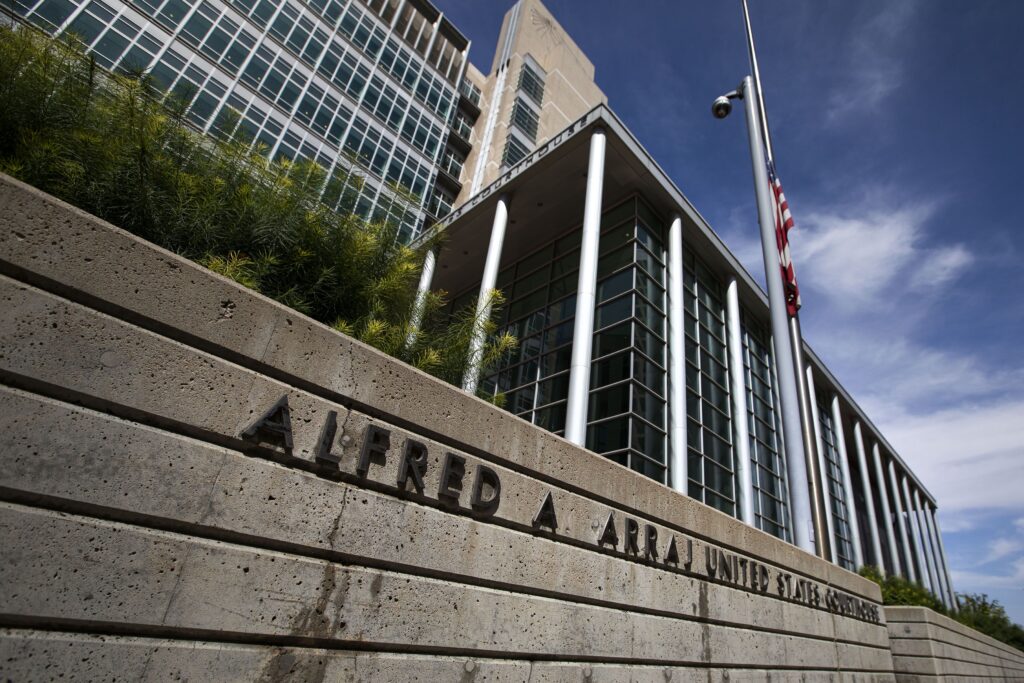
Federal judges find Colorado immigration judge violated several orders
Michael Karlik
michael.karlik@coloradopolitics.com
Updated 1 day ago
Multiple federal judges in Colorado have freed people from immigration custody after determining that one immigration judge violated their directives for properly conducting bond hearings. For nearly a year, Colorado’s U.S. District Court has faced a flood of habeas corpus petitions...
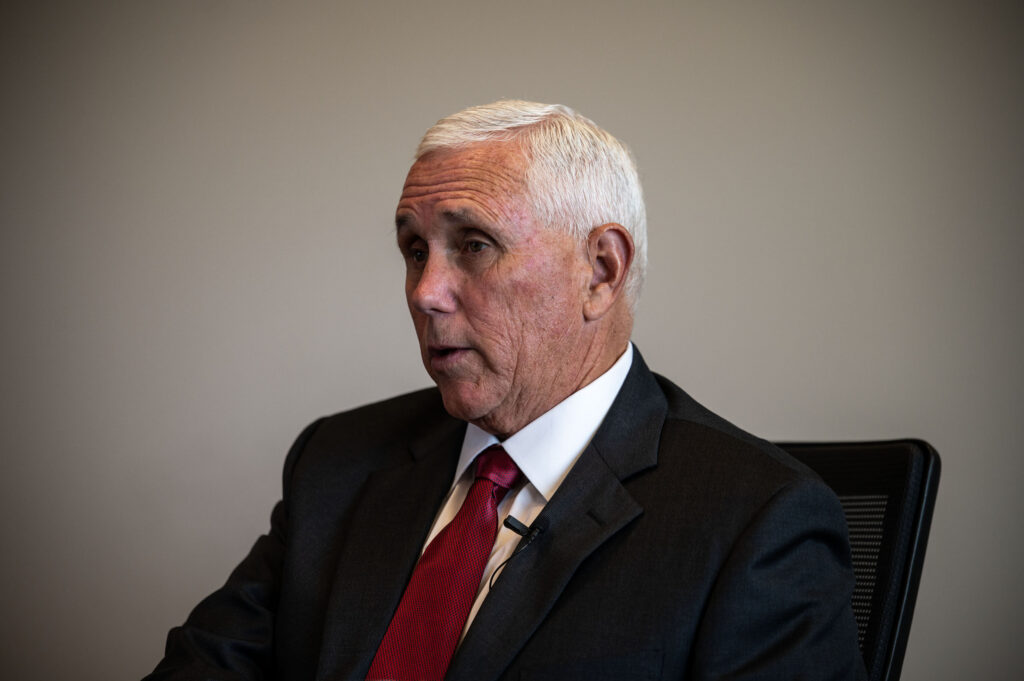
Q&A with Mike Pence | Former vice president says GOP’s populist turn from conservatism isn’t permanent
Ernest Luning
ernest.luning@coloradopolitics.com
Updated 2 days ago
Former Vice President Mike Pence says he’s concerned that the Republican Party has taken a populist turn away from bedrock conservative principles during President Donald Trump’s second term, but he believes the party will return to its roots when Trump...

New federal plan sets short-term rules for Colorado River management
Marianne Goodland
marianne.goodland@coloradopolitics.com
Updated 2 days ago
Interior Department’s plan spares Colorado from mandatory cuts for now After years of stalled negotiations among the seven states that rely on the Colorado River, the federal government on Friday released its own plan for managing the drought-strained system. Calling...
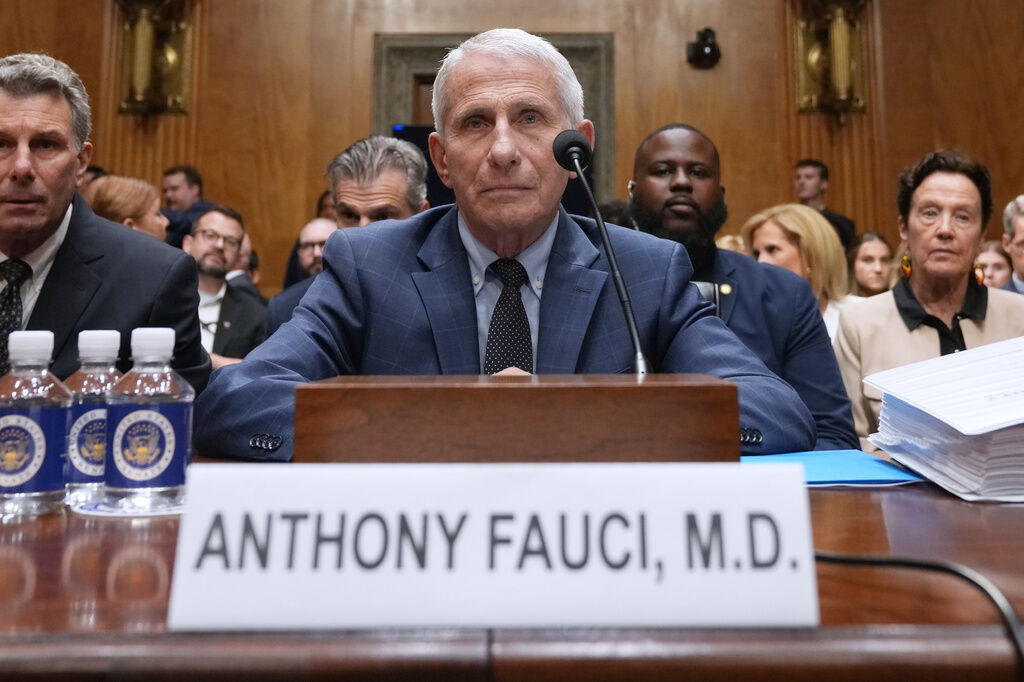
Fauci’s diary details blooming outrage toward ‘far right,’ softness toward Biden and China
Hudson Crozier
hudson.crozier@washingtonexaminer.com
Updated 3 days ago
Dr. Anthony Fauci increasingly railed against “far right” critics of his approach to COVID-19 issues while describing strong support from the Biden White House in his pandemic-era diary, which was recently released by Congress. The former National Institute of Allergy...