

YESTERYEAR: Andrews rips Dems, ‘shadow senator’ for playing coyote to roadrunner Owens
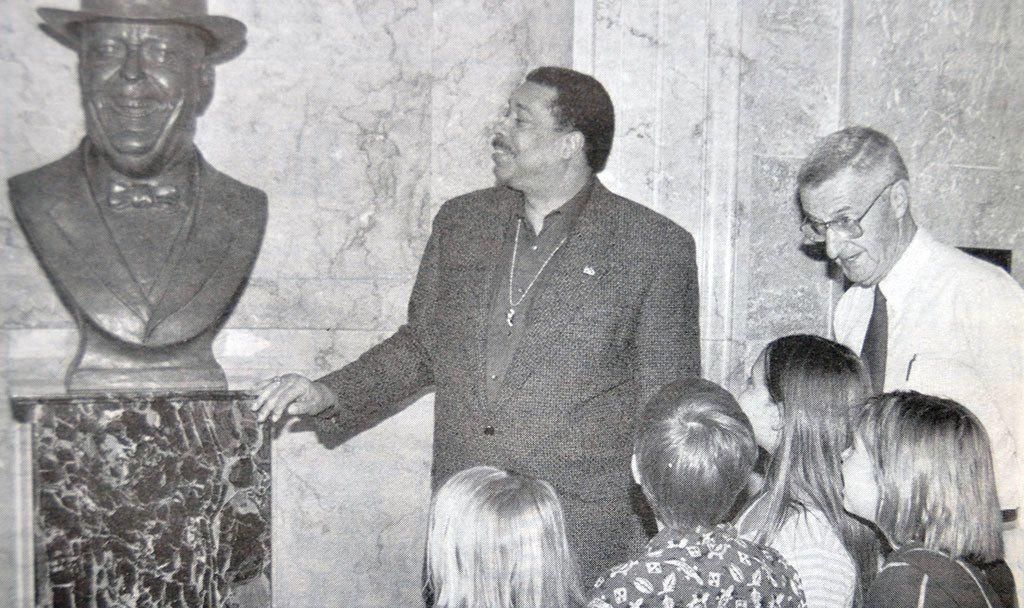
Fifteen Years Ago this week in The Colorado Statesman … Senate Minority Leader John Andrews, R-Centennial, excoriated Senate President Stan Matsunaka, D-Loveland, for “doom[ing] compromise on the year’s toughest issue” in the just-concluded special session on growth with his “belligerent, partisan and profane” words. In a stinging guest commentary, Andrews criticized the Democrats at the conclusion of the first session when they’d held a Senate majority in more than three decades. But he reserved some of his harshest barbs for “shadow senator” Dominic DelPapa, a consultant – “a Washington political hitman,” Andrews called him – hired by Democrats to help win the majority in the 2000 election and tasked with weighing in on the fate of bills in the 2001 session, a role Andrews called “an ethically dubious hybrid of lobbyist and staffer.” One way Matsunaka and DelPapa “worked their will,” Andrews charged, was by collapsing numerous Senate committees into a massive Public Policy and Planning Committee where leadership pulled the strings. “Democrats seemed obsessed with getting credit for their party and denying any for the GOP,” Andrews wrote, citing as an example a rural health care bill written by Republicans that was quashed only to return in nearly identical form under the sponsorship of state Sen. Joan Fitz-Gerald, D-Golden. In the end, Andrews concluded, DelPapa wound up out-witted by Gov. Bill Owens at many turns, on topics including school accountability, highways and prisons. “[I]t was Owens as the roadrunner and Matsunaka as the coyote time after time.” …
… Former state Sen. Dottie Wham, R-Denver, took Colorado Republican Party Chairman Bob Beauprez to task in a letter to the editor for the attacks Beauprez had lobbed at state Sen. Ken Gordon, D-Denver, Wham’s successor in her central Denver seat. “My concern was triggered by the statement [by Beauprez] in the article that implied that Sen. Gordon was in favor of rape, murder and mayhem because he defended persons who were accused of those crimes while doing his job as a public defender,” Wham wrote. “I believe Beauprez is not an attorney, but even a modest understanding of our judicial system and the constitutional provisions under which it operates makes it clear that persons accused of crimes are entitled to defense.” Noting that she’d chaired the Senate Judiciary Committee for 10 years, Wham said she’d come to believe that Colorado had an excellent defense bar and an “extraordinary bunch” of district attorneys, and was proud that the state funded a public defender system that also did an excellent job. “[Gordon] is of a different political persuasion than I, and I supported his opponent,” Wham wrote. “He needs no defense from me, but I think that personal attacks of the sort leveled by Beauprez are damaging to us all.” …
… Freshman state Rep. Andrew Romanoff, D-Denver, gave his first session good marks, though he concluded that the special session on growth had failed because Gov. Bill Owens had called it too quickly. “We shouldn’t need a special session to address the biggest issue in the state,” Romanoff said. “It might have been more prudent to let tempers cool before tackling it, and it’s hard to justify $14,000 a day the taxpayers were spending on it.” He doubted whether voters would solve growth problems at the ballot box with initiated measures. “Those are usually crude tools. People pay us to figure this stuff out, and I’m embarrassed that we haven’t been able to. I’m sorry it’s taken a special session to get us there.” Although he saw five of his bills pass, Romanoff lamented that a Republican-controlled House committee had killed a bill to track children’s immunizations. “It was supported by every health organization in the state,” he said, adding that “it failed because of paranoia on the part of some opponents – that the bill formed part of some grand governmental conspiracy against their parents’ will, which is ludicrous (because) Colorado allows any parent, for any reason, to exempt from immunizations.” He explained that the legislation “was killed by the ‘black helicopter’ crowd – a group of Coloradans convinced that the government is spying on citizens from helicopters – but you can’t see them because they are painted black.” …
… The 2001 special session on growth might have ended without producing legislation, but that wasn’t stopping Gov. Bill Owens and legislative leaders from negotiating the ground rules for another special session, this one concerned with congressional redistricting. Owens announced he intended to call lawmakers back but stressed that members of the divided chambers – Republicans controlled the House, while Democrats ruled the Senate for the first time in decades – had to work things out ahead of time. House Speaker Doug Dean, R-Colorado Springs, told the governor the House GOP would cooperate and suggested that a bipartisan foursome of legislators from both chambers start meeting to come up with a framework. Senate President Stan Matsunaka, D-Loveland, said he was game for a special session but wanted all 35 senators to have input, not just leadership or their designees. “I believe we can work together to trade proposals once each party and their constituents have had an opportunity to weigh in on this very important issue,” Matsunkaa wrote in a letter to Owens. “The speaker and I believe that we can communicate and work toward a bipartisan solution.” Dean wrote in a letter published in The Statesman that he was optimistic that legislators and the governor could work something out, even though the state Democratic Party had filed a lawsuit a week earlier to take redistricting out of the hands of the Legislature and assign it to the courts. “The state constitution clearly states that the General Assembly, not the courts, is to draw congressional boundaries,” Dean wrote. “Drawing political boundaries is always a tough assignment, but I know Republicans in the Legislature are prepared to approach redistricting on a fair and bipartisan basis. … Indeed, it is our duty to come up with a fair, workable plan; that is a major part of what we are here to do.”
– ernest@coloradostatesman.com


Colorado Politics Calendar Apr. 6-12
Rachael Wright, Special to Colorado Politics
rachael.wright@coloradopolitics.com
Updated 4 days ago
CoPo’s weekly political calendar will help you find political and public-policy events throughout Colorado. It includes candidate and issue campaign events, public policy meetings, court hearings, state and local party conventions, assemblies, debates, rallies, parades, speaking engagements, traveling dignitary appearances,...
Democrats rebounding without learning necessary lessons | SONDERMANN
Eric Sondermann
eric-sondermann@coloradopolitics.com
Updated 18 hours ago
“When we fight, we win!” That, reportedly, was the chant heard over and over again at the Colorado Democratic Assembly a week ago. It suggests that pugilism has been the piece missing from the Democratic toolkit. Perhaps it was just...
An April Fool’s Day to remember | Capitol M | Week of April 4, 2026
Marianne Goodland
marianne.goodland@coloradopolitics.com
Updated 3 days ago
The lighter side of the Capitol, and if light were weight, the Capitol would have lifted off better than the Artemis II rocket on April Fool’s Day. There was a plethora of Fools at the Capitol for April Fool’s Day...
Federal judge sides with Mesa County school district in ex-student’s First Amendment claims
Michael Karlik
michael.karlik@coloradopolitics.com
Updated 1 day ago
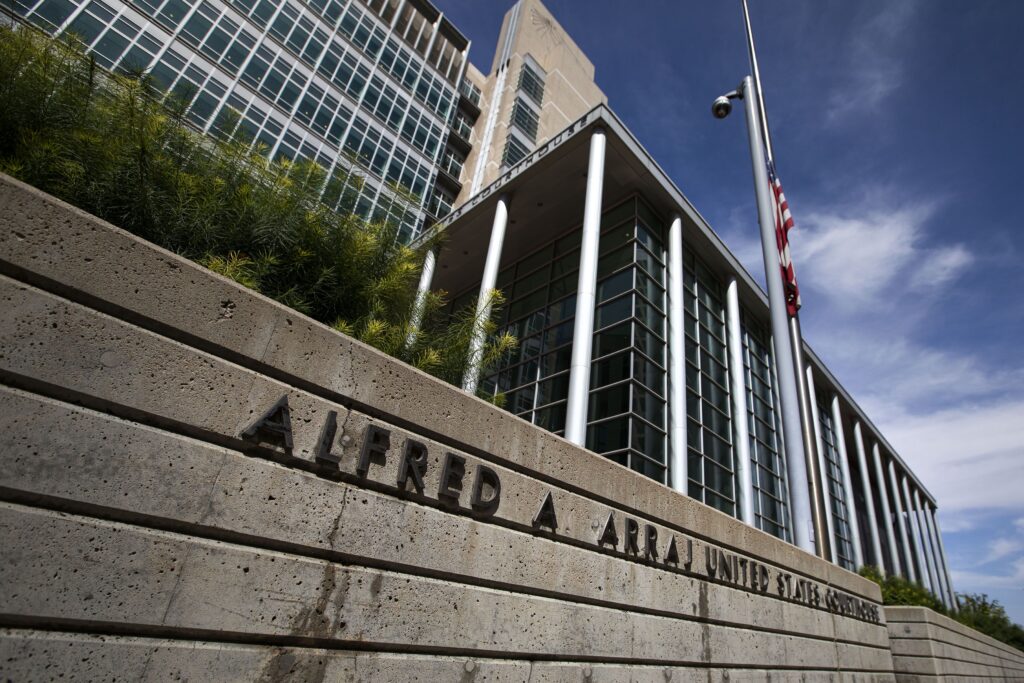
A federal judge concluded last week that Mesa County Valley School District 51 and three of its administrators did not violate the First Amendment rights of a former student when they imposed minor discipline in response to disruptive behavior. In...
Colorado Supreme Court intervenes in 4 ongoing cases
Michael Karlik
michael.karlik@coloradopolitics.com
Updated 1 day ago
The Colorado Supreme Court recently moved to intervene in four ongoing cases, including two criminal prosecutions, a civil lawsuit, and a child welfare proceeding. At least four of the court’s seven members must agree to hear a case outside of...
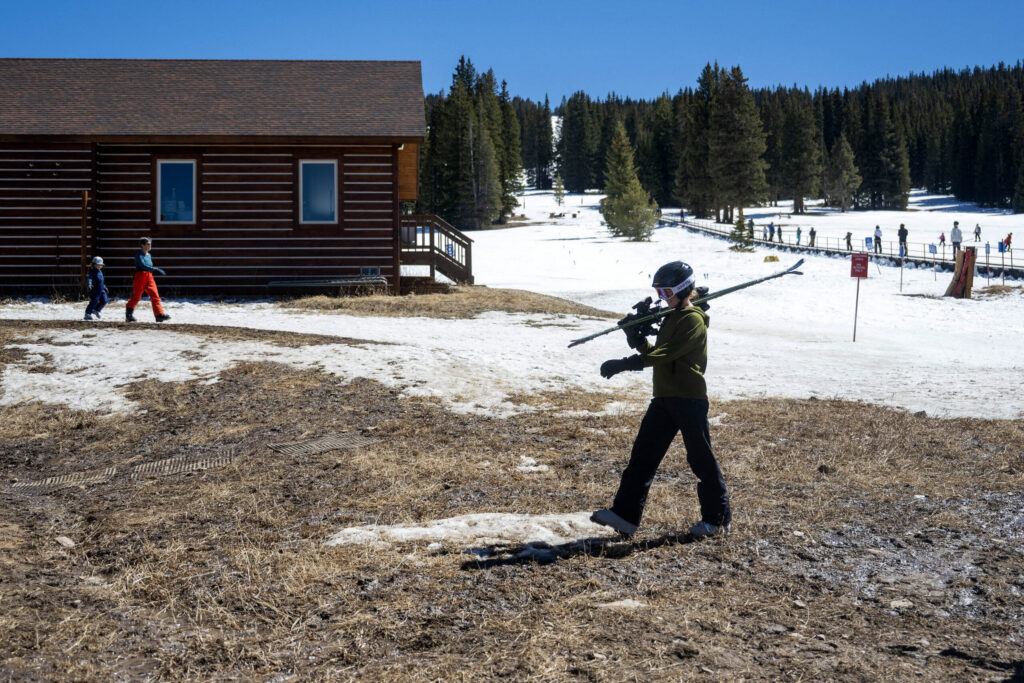
Colorado ski resorts announce early closures amid historic snowpack lows, high temperatures
Kyla Pearce
kyla.pearce@gazette.com
Updated 16 hours ago
Vail Resorts is the latest area to announce season closure Wednesday As Colorado’s historically low snowpack year comes to a close and spring conditions take over the mountains, the state’s major ski resorts are announcing closing dates — some of...

Kentucky Gov. Andy Beshear set to headline Colorado Democrats’ annual fundraising dinner
Ernest Luning
ernest.luning@coloradopolitics.com
Updated 1 day ago
Kentucky Gov. Andy Beshear, one of the Democrats’ top 2028 presidential prospects, is scheduled to deliver the keynote address at the Colorado Democratic Party’s annual fundraising dinner in June in Denver, the party said Friday. Serving his second term as...
Gov. Polis names new leaders for Colorado health agencies in wake of Medicaid turmoil
Marianne Goodland
marianne.goodland@coloradopolitics.com
Updated 2 days ago
Gov. Jared Polis, on Thursday, announced he was appointing Gretchen Hammer to serve as acting executive director of the Colorado Department of Health Care Policy and Financing, and deputy executive director Stephanie Beasley to become the next commissioner of the...
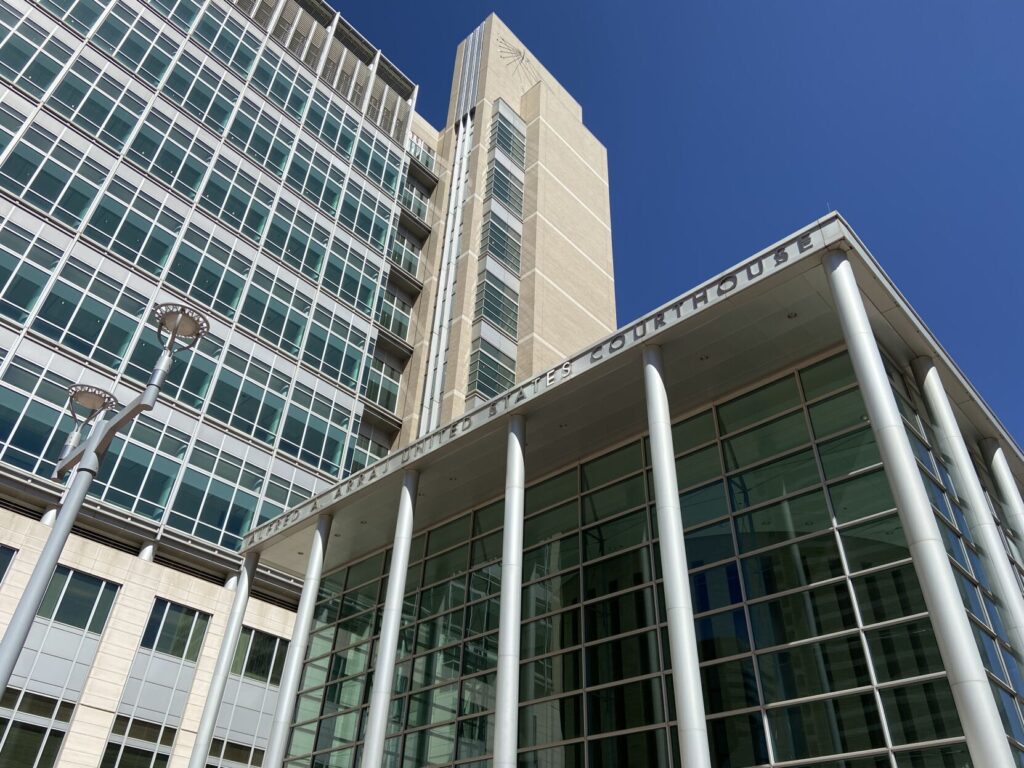
Federal judge releases man immediately as consequence for immigration judge disobeying orders
Michael Karlik
michael.karlik@coloradopolitics.com
Updated 1 day ago
A federal judge ordered a man’s immediate release from immigration detention on Thursday after finding an immigration judge disregarded his prior orders requiring a bond hearing. For the past year, Colorado’s federal district court has faced a flood of “habeas corpus”...
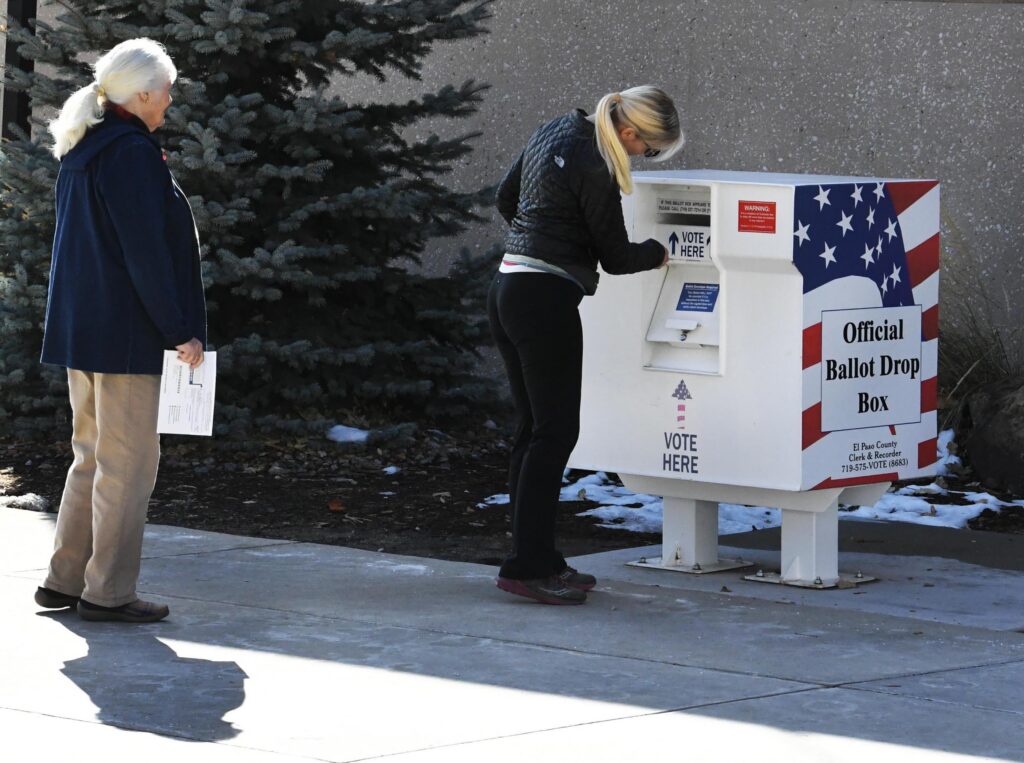
Colorado sues Trump administration, calling new election order ‘unconstitutional’
Marissa Ventrelli
marissa.ventrelli@coloradopolitics.com
Updated 16 hours ago
Colorado Attorney General Phil Weiser has joined a multistate coalition suing President Donald Trump over a new executive order on elections, arguing the directive unlawfully intrudes on states’ authority to run their own voting systems and threatens access to mail...
PREV
PREVIOUS

PHOTOS: Obama touches down in Colorado for last Air Force commencement address
President Barack Obama touched down in Colorado to give his final commencement speech to U.S. Air Force Academy graduates as commander in chief. The graduates are coming of age at a time of fresh global threats that seem to be pulling the United States back into conflicts with uncertain ends. When he came into office […]

Michael Hancock's rhythm continues to beat as 'heart and soul' of Denver
At a banquet dinner in his honor May 25, Denver Mayor Michael Hancock was given the moniker – “the heart and soul of Denver.” And, it’s no wonder. As the mile high city’s principal executive, Hancock has navigated Denver through a period of rapid growth during his nearly five years at the helm. The city […]