

Hickenlooper: ‘Colorado’s stuck with me for another couple of years’
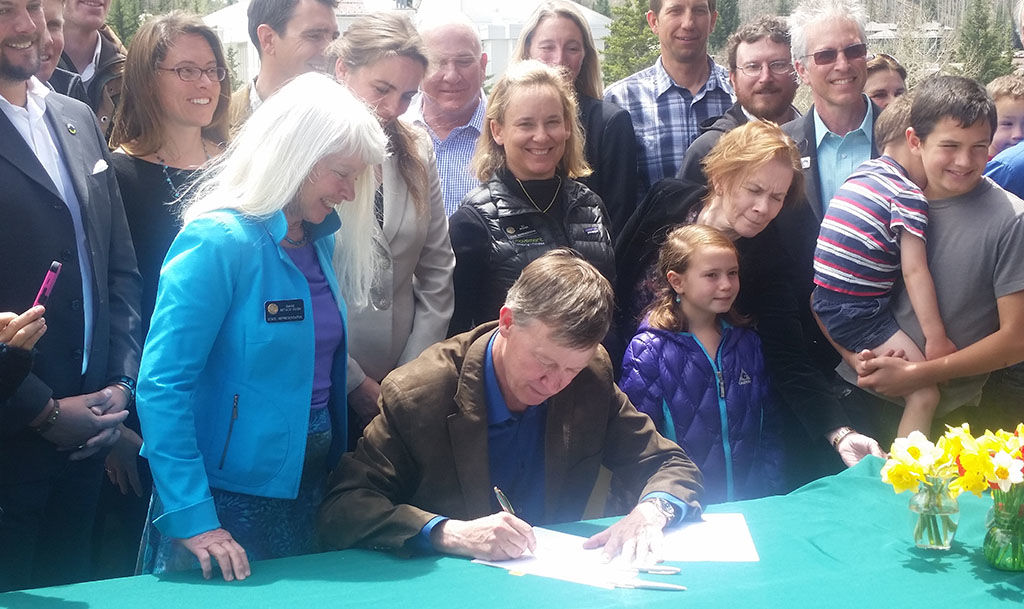
The challenge of balancing energy extraction with other uses on Colorado’s federal lands is one factor that will likely keep Gov. John Hickenlooper in Colorado instead of taking a cabinet job if Hillary Clinton wins the White House, the Democrat told The Colorado Statesman on Tuesday.
In an interview at a bill-signing ceremony for the creation of Colorado Pubic Lands Day at the base of Vail ski resort, Hickenlooper also addressed speculation he’s on the short list of potential Clinton vice presidential picks.
“Vice president – I’m pretty far down that list. I know what that list is,” Hickenlooper said. “And the cabinet, those are obviously noble jobs, but I don’t think there’s a single cabinet job that can match what I get to do my last two and a half years in Colorado.”
One thing on his agenda is trying to ease the economic woes of Western Slope energy towns that rely on mining and drilling on nearby federal lands, especially coal towns like Craig and Delta.
“Finding the balance of public lands, really working on workforce training,” Hickenlooper said. “How do we retrain people for new industries? We’re in a place where I think we’re going to have the opportunity to be a national model. That’s fun.”
Sponsored in the Senate by Vail Democrat Kerry Donovan and in the House by state Reps. Diane Mitsch Bush, D-Steamboat Springs, and KC Becker, D-Boulder, the Colorado Public Lands Day bill, SB16-21, which creates a state holiday the third Saturday of May, met with resistance from some Republicans who tried to insert language seeking greater state control over federal lands.
Colorado’s coal industry has been hard-hit in recent years, with mines near Craig and Delta struggling – sometimes unsuccessfully – to stay open and keep high-paying Western Slope jobs. Resort towns like Vail, more reliant on recreation and real estate, have fared considerably better.
Despite a three-year Obama administration timeout on new coal leases on federal lands in order to review royalty rates, Hickenlooper said Colorado’s coal industry is struggling because of market forces, not Washington.
“Really a lot of the conflict going on out there is over coal mines. That’s not any policy out of Washington. That’s the price of natural gas,” said Hickenlooper, a former oil and gas industry geologist turned brewer. “For the same price you can have a very clean-burning fuel [natural gas] or a fuel that’s not quite as clean [coal]. They’re choosing clean fuel.”
Natural gas is hovering at late 1990s prices and is said to burn 50 percent cleaner than coal when producing electricity, although methane leaks can mitigate some of those benefits. Colorado has been a leader on curbing oil and gas methane leaks, something the EPA is now duplicating.
Residents of Western Slope mining towns shouldn’t aim their anger at a celebration of the economic importance of Colorado’s public lands, the governor said.
“Let’s spend more effort and make a larger investment in retraining in those communities where, for whatever reason, a whole industry or a major employer gets shut down,” Hickenlooper said.
Another factor that could keep him in Colorado, he said, is the chance to work closely on economic challenges with his new lieutenant governor, Donna Lynne, who will also serve as the state’s chief operating officer. Lynne, who owns a vacation home in East Vail and was in attendance at the bill-signing Tuesday, is a former Kaiser Permanente executive.
“She’s the executive vice president of an $8.5 billion company,” Hickenlooper said. “She knows how to manage, she can keep multiple balls the air and not drop one. Working with people like that is tremendously exciting, so I think Colorado’s stuck with me for another couple of years.”
Becker told the gathering of Vail politicians and business leaders that she was a former Florida beach girl when her father sent her to camp in Wyoming, and the experience hiking on federal lands was so transformative she became a public lands attorney at the Department of the Interior.
“I will defend how our public lands are being managed day and night, because it’s a lot of balancing, there are a lot of demands,” said Becker, who admits it’s nicer working on public lands issues in Colorado than in Washington, D.C. “There’s resource extraction to outdoor recreation to watershed management. It’s not easily done.”
Doug Lovell, chief operating officer at nearby Beaver Creek ski area, told the gathering the federal government makes an excellent business partner. Vail Resorts supported the Colorado Public Lands Day bill, a first of its kind in the nation and only the fourth Colorado holiday.
“For us, one of the most important and really enduring partnerships that we have is the ski industry’s partnership with the U.S. Forest Service, which is … an example in the country of a great public-private partnership and is responsible for providing about $5 billion in economic activity to the state of Colorado,” he said.
Modern mining, much of it on leased federal lands – the same arrangement as the ski industry – is an $8.8 billion industry in Colorado, according to the Colorado Mining Association. While it’s a crucial part of the state’s history, critics will point out, mining can also have long-lasting environmental impacts.

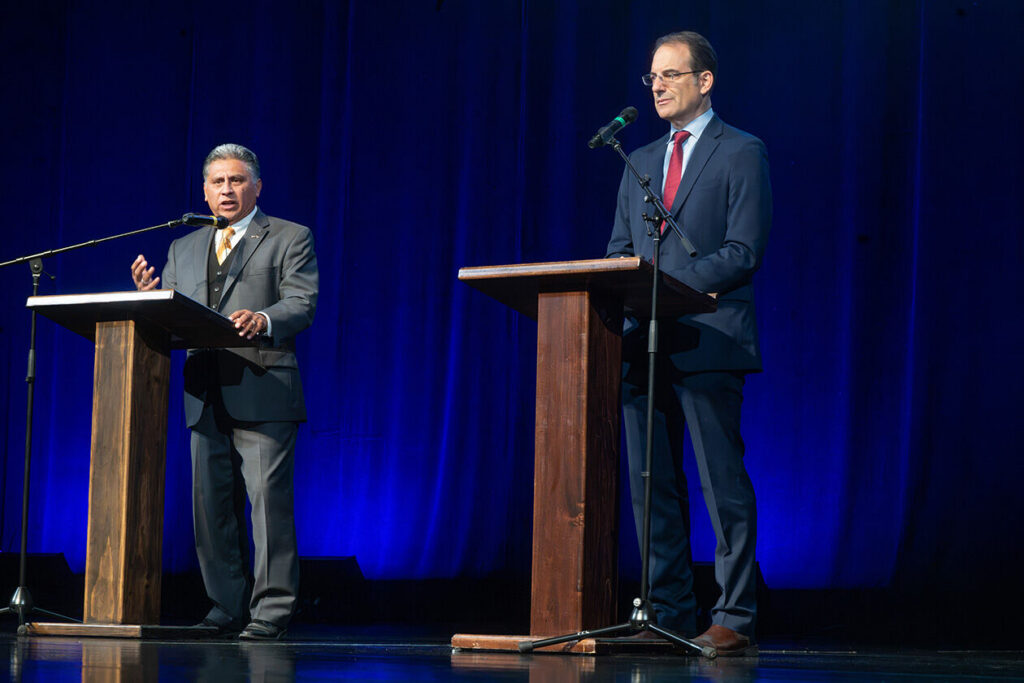
Gubernatorial candidates Phil Weiser, Greg Lopez spar, as Marx skips debate
Deborah Grigsby
deborah.smith@denvergazette.com
Updated 3 hours ago
Two of the candidates for Colorado governor squared off in a televised debate on Thursday night, when Attorney General Phil Weiser, the Democratic nominee, and former U.S. Rep. Greg Lopez, an unaffiliated candidate, delved into issues of affordability, data center...
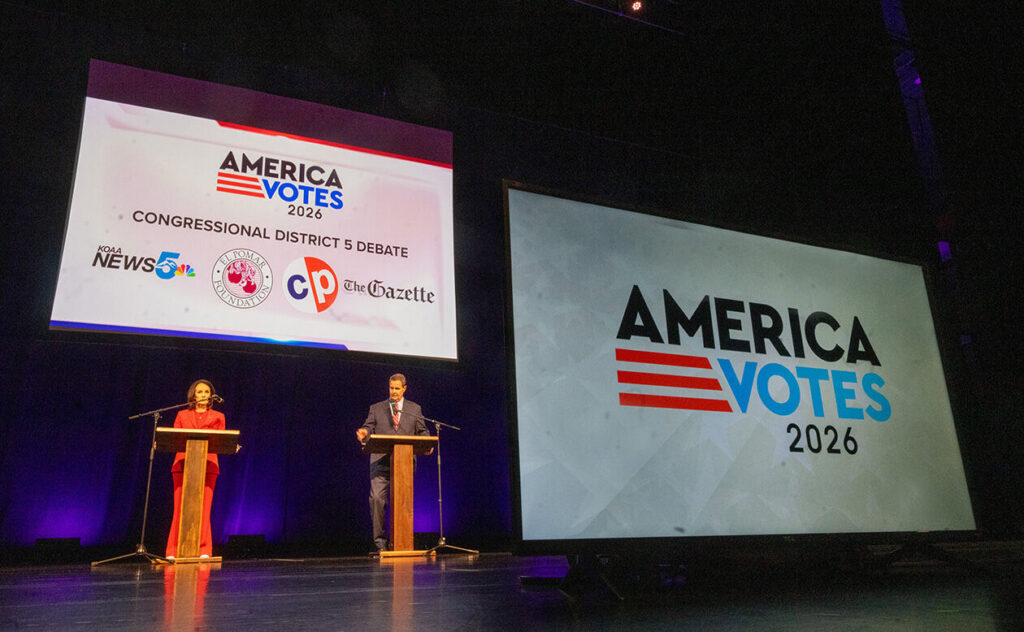
Troops, taxes, war dominate Colorado’s 5th CD debate between Jeff Crank, Jessica Killin
Deborah Grigsby
deborah.smith@denvergazette.com
Updated 4 hours ago
Republican U.S. Rep. Jeff Crank and Democratic challenger Jessica Killin on Thursday night clashed over the war in Iran, the federal budget and healthcare when they took the stage in Colorado Springs for a sold-out debate in the race to...
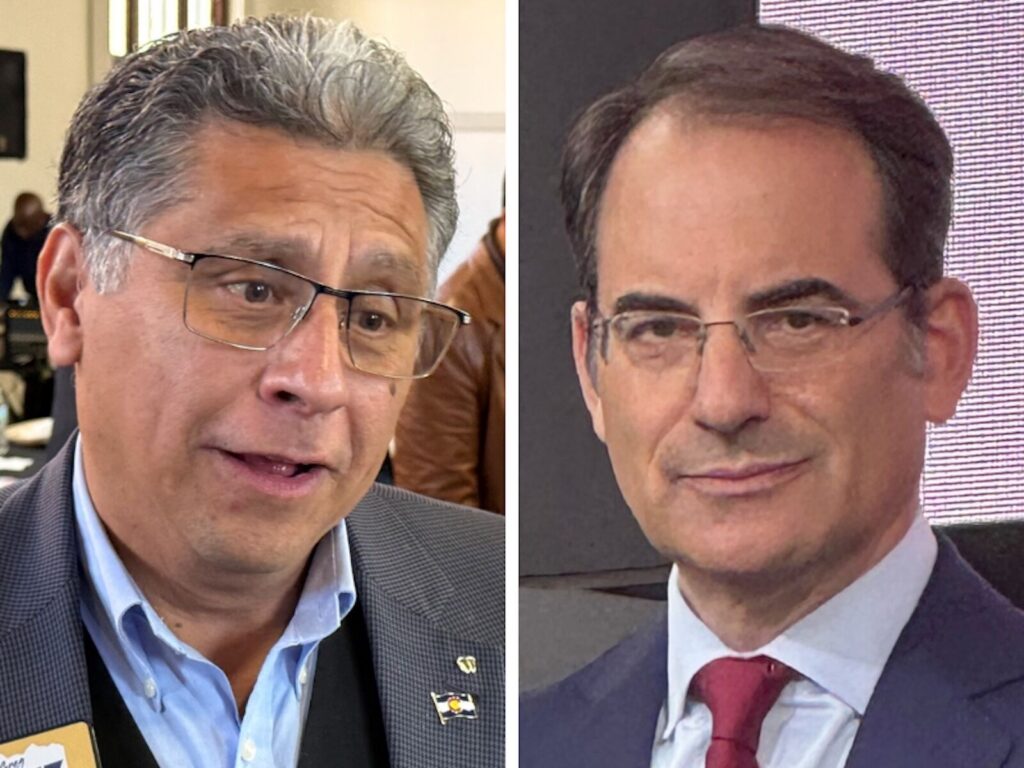
WATCH: Colorado gubernatorial candidates Phil Weiser, Greg Lopez face off Thursday in televised debate
Ernest Luning
ernest.luning@coloradopolitics.com
Updated 5 hours ago
Two of the candidates for governor of Colorado are set to square off in a televised debate for the first time Thursday night, when Attorney General Phil Weiser, the Democratic nominee, and former U.S. Rep. Greg Lopez, an unaffiliated candidate,...
WATCH: Republican US Rep. Jeff Crank, Democratic challenger Jessica Killin debate in Colorado’s 5th CD
Ernest Luning
ernest.luning@coloradopolitics.com
Updated 7 hours ago
Republican U.S. Rep. Jeff Crank and Jessica Killin, his Democratic challenger, are scheduled to meet for a televised debate in the race to represent Colorado’s 5th Congressional District on Thursday night. The candidates are set to take the stage at...
Colorado officials warn of e-bike safety amid increase in serious youth injuries
Matt Kyle
matt.kyle@denvergazette.com
Updated 2 hours ago
Serious injuries involving e-bikes, e-scooters and children have risen significantly in Colorado over the past year and a half. Traumatic injuries involving e-bikes have risen 184%, according to Alicia Melven, Colorado injury prevention and outreach specialist for Children’s Hospital Colorado’s...
Colorado State Fair youth golf tournament celebrates 11 years
Marianne Goodland
marianne.goodland@coloradopolitics.com
Updated 9 hours ago
Twenty-eight teams tee off Friday at Walking Stick Golf Course in Pueblo for a tournament supporting 4-H, Future Farmers of America and capital improvements at the Colorado State Fair. Now in its 11th year, the Partners of Youth in Ag...

Controversial two-bag furbearer limit heads to CPW meeting under legal threat
Marianne Goodland
marianne.goodland@coloradopolitics.com
Updated 9 hours ago
Next week’s Colorado Parks and Wildlife Commission meeting in La Junta is likely to open under the cloud of threatened legal action. Safari Club International and the Sportsmen’s Alliance Foundation warned the commission this month that its July vote imposing...
Democratic-aligned poll shows big majority of swing-seat voters support routine childhood vaccines
Ernest Luning
ernest.luning@coloradopolitics.com
Updated 11 hours ago
A new poll conducted by Democratic-aligned groups found that voters in competitive U.S. House districts — including a battleground seat in Colorado — support routine childhood vaccinations by a wide margin and oppose a recent order by President Donald Trump...
Some Colorado hunters oppose measure establishing constitutional right to hunt, fish proposal, group says
Marissa Ventrelli
marissa.ventrelli@coloradopolitics.com
Updated 6 hours ago
A group that says it represents hunters and anglers from across Colorado announced its opposition to a ballot measure that would establish the right to hunt and fish in Colorado’s constitution, saying it could result in the overturning of bans...
Coalition drops Colorado transportation ballot measure after securing deal
Marissa Ventrelli
marissa.ventrelli@coloradopolitics.com
Updated 7 hours ago
The proposed constitutional amendment seeking to dedicate all transportation-related revenue to Colorado’s roads and bridges will no longer appear in this November’s ballot after its proponents reached an agreement with lawmakers following months of negotiations. Initiative No. 175, backed by...
PREV
PREVIOUS

Frustrated state lawmakers look to voters to break Capitol gridlock
Colorado lawmakers this week expressed disappointment in what they saw as a stunted legislative session where divided chambers blocked major proposals and they looked outside the building toward the ballot box as the best way to move their agendas forward in the future. Speaker of the House Dickey Lee Hullinghorst, D-Gunbarrel, who is term-limited and […]

BARTELS: The stinky shoe is gone, but the state’s co-ed softball league continues
Legend has it that in 1974 then-Gov. John Vanderhoof lost a shoe rounding second base during a league softball game and “the stinky old shoe” was bronzed and used as a first-place trophy until it was retired. Now a Stanley Cup-style trophy is presented to the winners but co-ed slow-pitch league featuring state agencies continues. The Colorado Secretary of State’s team […]