

Cole Finegan on Colorado politics and the art of the big bet
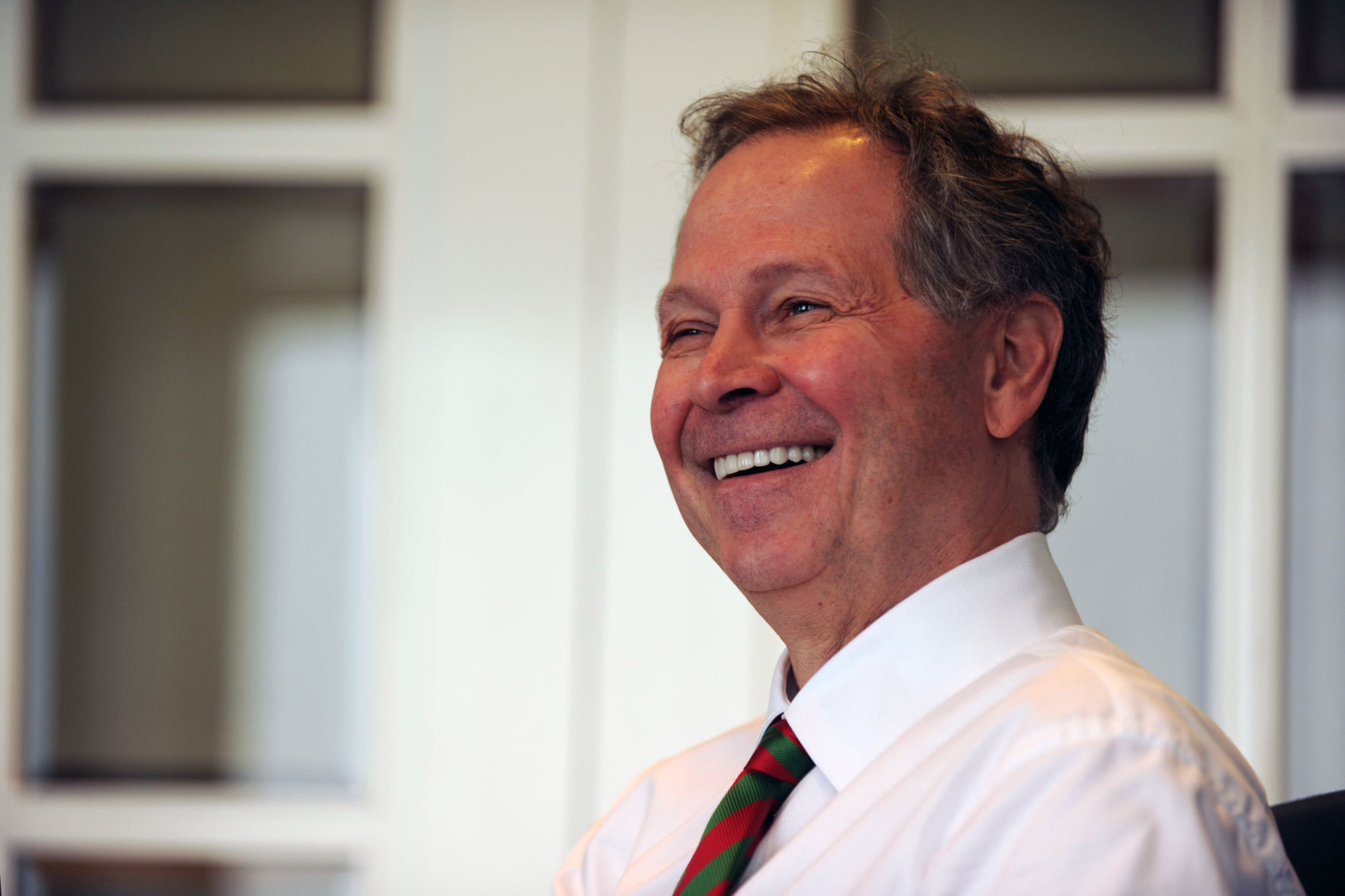
A long section of the Front Range mountains dusted in snow stretches in the distance behind a wall of windows in a 13th-floor conference room in the Denver Hogan Lovells law offices, but Regional Managing Partner Cole Finegan isn’t looking at the mountains.
He is talking about a 19-acre section of the city visible in the lower-half of the view, a part of the city crammed with cranes, cars, trains and buses and exhaling streams of white exhaust in straight lines high into a December sky. There’s not a bird in sight. Pedestrians below slide on streets slick with ice.
From the middle of the spot where Finegan is pointing, the words “Union Station” glow in orange neon and play faintly in reflection against the window glass at the tip of his fingers.
“My favorite project ever,” he says. “That was warehouses, rail yards, burned-out buildings. When we got the redevelopment job during the (Wellington) Webb administration, the city insisted we put in a provision for 2,000 residential units — and we laughed at them, we thought that was ridiculous.
“Shows how you just don’t know.”
That was 1995. Finegan, an all-star public policy lawyer and top adviser to some of the state’s leading Democratic officials, worked for 20 years at the heart of the enormously successful Union Station build-out. The project resurrected the famous 19th-century depot, reordered transportation in the city and remade a key section of historic Lower Downtown, which is now dotted with new and half-completed buildings, some of the hottest residential property in the city.
Gridlock as extravagance
Finegan now travels the world as a kind of ambassador for Hogan Lovells, an expert at pulling off complex public-private partnership deals and a veteran of national, state and local politics and government. He has worked for U.S. representatives and senators, for mayors and governors and on a long string of electoral campaigns. From 2003-2006, he was Denver city attorney and then-Mayor John Hickenlooper’s chief of staff. He is now finance chair for U.S. Sen. Michael Bennet’s 2016 re-election campaign.
From deep inside the political machine, Finegan has watched the country’s campaign-finance system blow up and rock electoral politics and he has seen hyperpartisanship gum up national governance and creep into state legislatures. But he is the opposite of cynical.
“There’s a lot of skepticism about government because we have at the federal level a very divided country, and it’s troubling,” he said. “But I think there’s also a lot of enthusiasm and optimism for the kind of partnership projects where you link the government together with the private sector to work in harmony.
“Local government is by far the most fun,” he said. “It’s the level that people can most relate to and get their hands around. You’re not talking to them about legislation and how we’ll try to get it through a subcommittee and then a committee and maybe then the president will sign it. You just give the people a plan that they’ll understand. You’re talking about their streets, their parks, and they know how all of that works.
“Look, they get what’s going on now at Union Station. They can feel it.”
Finegan sees today’s partisanship and gridlock in Washington as an extravagance. Even though it is taken as a given in most quarters that the country is facing enormously difficult challenges in a globalized era where industries are shifting, energy systems are transitioning and war can come to any of the world’s capitals at any time, the persistent lack of action in Washington suggests that elected officials working there aren’t properly motivated to rise and meet those challenges.
“When I came to Colorado in 1987, the oil and gas economy had just collapsed, real estate was in a terrible place, and we were losing jobs. At that moment, everybody banded together because we had to.
“What made Denver in the beginning was the railroad. The city was the center of a regional transportation hub. So we thought at the time that we could do it again, this time with the airport.”
The airport at the time was located in Stapleton. Finegan described the airport there as struggling and failing.
“We had lost a noise lawsuit out there and it was just — Well, suffice it to say, to their everlasting credit, [Denver Mayor Frederico] Peña and [Gov. Roy] Romer and the business community and the leadership in Adams County — they all came together and figured out a plan to annex the property out there where Denver International Airport is today. It was a complicated plan. It wasn’t easy and a couple of those Adams County commissioners who backed it lost their jobs as a result.”
Fingean recalls the way Romer sold the airport project on a barnstorming circuit of “oatmeal breakfasts.”
“He went everywhere and anywhere with the oatmeal tour,” Finegan said, shaking his head. “Then Hickenlooper came in and he put together a coalition where 31 of the 32 mayors involved came together and said ‘We’re gonna do this. We’re going to go to the voters. We’re going to have a tax increase. And we’re going to put a light rail system together and have one of the biggest light rail systems in the country.”
Finegan looks back on the late-1980s as a turning point for Denver and for Colorado. He says the string of successes notched by government working with the private sector established an approach on the part of officials and an expectation on the part of the public.
“We had our backs to the wall, but instead of arguing, we came up with a plan and made that plan happen. It became a template for a very successful way to do business over and over in the last three decades.”
Big bets and follow-through
It’s a tough point to argue looking out over the city. Just blocks north of Union Station sits Coors Field, completed in 1995 and home to the Colorado Rockies Major League Baseball team. A few more blocks southwest stands the renovated Mile High Stadium, home to the National Football League’s Denver Broncos, a regional powerhouse headed to the playoffs again this year. In April, travelers will be able to ride a new commuter rail for $9 over the 23 miles from Union Station to Denver International Airport in 37 minutes. They can choose to stay at either end of the line, at the classically swank Crawford hotel at Union Station or at the modernist, newly completed Westin at the tip of the airport terminal.
“We’re a skeptical group in Colorado. We like low taxes but, I think if you can show us what you’re going to do with our dollars, we’ll give them to you,” Finegan said.
“In Denver, we’ve made some big bets on ourselves. I give a lot of credit to the community, because a lot of places talk about things, but they’re not willing to make the big bet, take the big risk and decide to take the money out of their pockets pay for the big projects, to ask if people are willing to take it out of their taxes.”
The fiscal thicket
At the same time, Finegan points out that it has become more difficult to take the same kind of big bets on the state level in Colorado. He laments the financial tangle state officials have been left to wrestle with every year at the Capitol as a result of constitutional amendments — and mainly the Taxpayer Bill of Rights, passed by voters in 1991.
“TABOR has really restricted the ability of the Legislature to move nimbly. You just can’t move quickly anymore. The gamut, the whole menu of options has narrowed for the state budget makers,” he said, adding that he thinks the so-called “fiscal thicket” has also changed the culture at the Capitol.
“It’s gotten so that now members of the Legislature see these budget constraints as an excuse not to take on the tough issues. The notion is that we’ll just let the voters figure this or that out, but the voters don’t always have all the information, so we get ourselves in these strange situations where we’re voting on opposing measures at the ballot. Government is much less efficient as a result. It’s troubling to watch.”
When TABOR first took effect, Finegan was Gov. Romer’s chief legal counsel and director of the policy and initiatives committee. He said he had the “misfortune” with Romer to meet with Doug Bruce, the anti-tax author of TABOR, to talk about the new budget regime the measure would put in place for the state. He said Bruce was “in his full glory” and that it was one of “the most discouraging” meetings of his life.
“I’ll just say that people have watched how TABOR has worked here and you’ll note that not one other state has adopted it,” Finegan said. “I respect that people can disagree on TABOR. I know TABOR is the law, but no other state thinks it’s such an excellent idea that they should make it part of their system. I think that’s telling.”
Term limits
The 2016 state legislative session is barely underway and already lines are being drawn in the sand on a plan being pushed by Hickenlooper and Democrats to remove the state’s hospital provider fee from the spending caps imposed by TABOR in order to free up hundreds of millions of dollars to fund state services. Republicans, led by Senate President Bill Cadman, Springs, are deeply opposed to the idea, seeing it as gamesmanship that flies in the face of the spirit of TABOR, which commits lawmakers to engage with the public over any new spending.
None of this will come as any surprise to Finegan. Weeks before the session started, he said he had noted the way Washington-style dynamics was bleeding “somewhat” into state politics, where outside interest groups have more electoral power than the traditional political parties and use it to ratchet up pressure on lawmakers and control messages.
For instance, it’s no secret that the well-funded conservative advocacy group Americans for Prosperity is campaigning against the proposed hospital provider fee reclassification. The group has built an impressive and an intense grassroots campaign network in the state and it has recently asked lawmakers to sign a pledge to protect TABOR against any encroachments.
Finegan added that lawmakers don’t have the time they used to have to build familiarity with one another and forge productive relationships.
“I know people disagree with me on this, but term limits have made it more difficult at the Capitol. People used to be in the building together for years and so developed friendships and the ability to get along and really work together. By comparison, I think it’s very transactional now. They come in. They’ve got their positions and they dig in and then, after four or eight years, they go on and it’s not their problem anymore.”
He thinks that will change, though.
“You know, hopefully, we just appeal to the better angels of people’s nature. We say ‘This is your state. This is our state. Do we want this to be a great state?’ That’s what I’d ask people in 2016.”

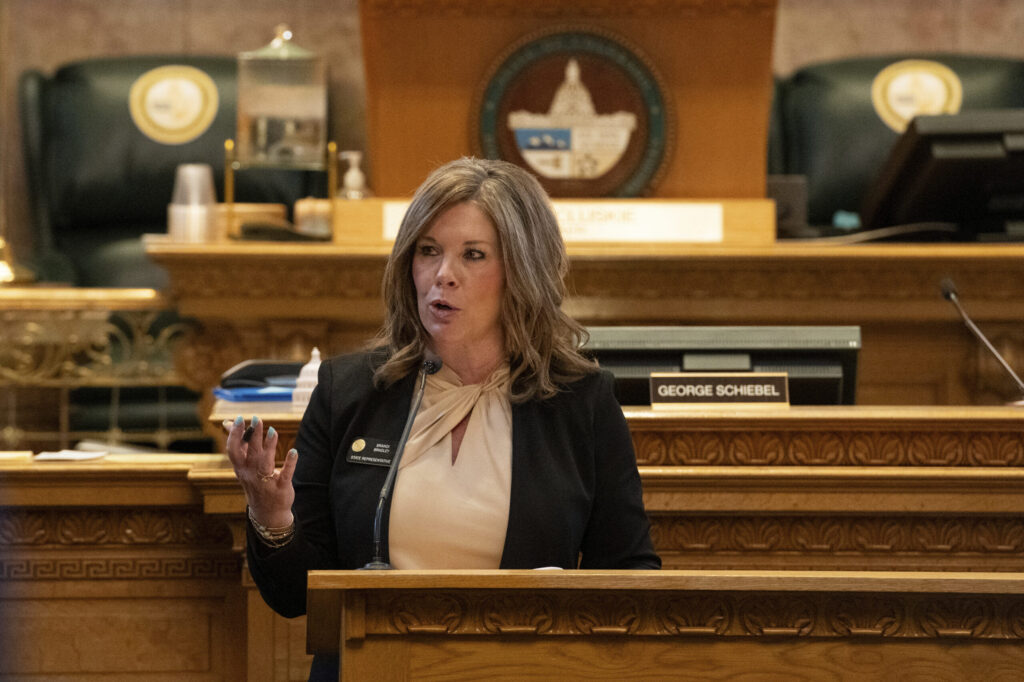
Colorado House minority leader reprimands Rep. Brandi Bradley for ‘reprehensible’ behavior
Marianne Goodland
marianne.goodland@coloradopolitics.com
Updated 2 hours ago
House Minority Leader Jarvis Caldwell has reprimanded Rep. Brandi Bradley after a confrontation in which she allegedly cursed at and intimidated the House chief clerk. In the official reprimand, Caldwell said Bradley’s reputation during the 2026 session has been one...

Arvada woman charged with murder after her teen daughter dies from alcohol abuse
Matt Kyle
matt.kyle@denvergazette.com
Updated 4 hours ago
An Arvada woman has been charged with murder after authorities said she supplied her 16-year-old daughter with alcohol for a prolonged period, leading up to her death. Arvada Police Department officers were called at about 8:15 a.m. on March 9...
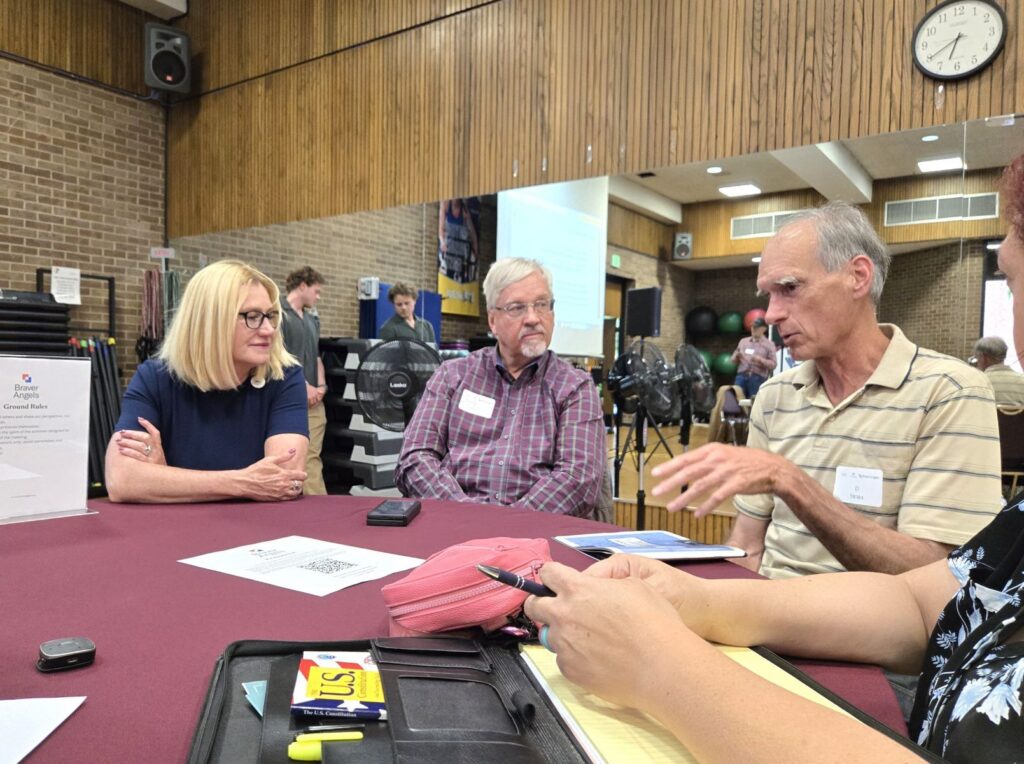
Colorado Springs residents share their thoughts on homelessness, polarization at town hall
Brennen Kauffman
brennen-kauffman@coloradopolitics.com
Updated 4 hours ago
Around 40 Colorado Springs residents filled tables at the downtown YMCA Tuesday evening to talk about polarization and homelessness with members of the City Council. The town hall, hosted by Council President Lynette Crow-Iverson, President Pro Tem Brian Risley and...

Denver International Airport CEO Phil Washington to retire
Bernadette Berdychowski
bernadette.berdychowski@denvergazette.com
Updated 4 hours ago
Denver International Airport CEO Phil Washington, who oversaw the airport’s rapid growth during the last five years, will retire on Aug. 1, the airport announced on Wednesday. “I am honored to have served the public for so many years,” Washington...
Election office rejects lobbying allegations in Colorado House district race
Marianne Goodland
marianne.goodland@coloradopolitics.com
Updated 4 hours ago
The Colorado Secretary of State’s Office has dismissed a complaint alleging that attorney Iris Halpern engaged in illegal lobbying at the state Capitol. Halpern is challenging Rep. Sean Camacho, D-Denver, in the June 30 primary for the House District 6...
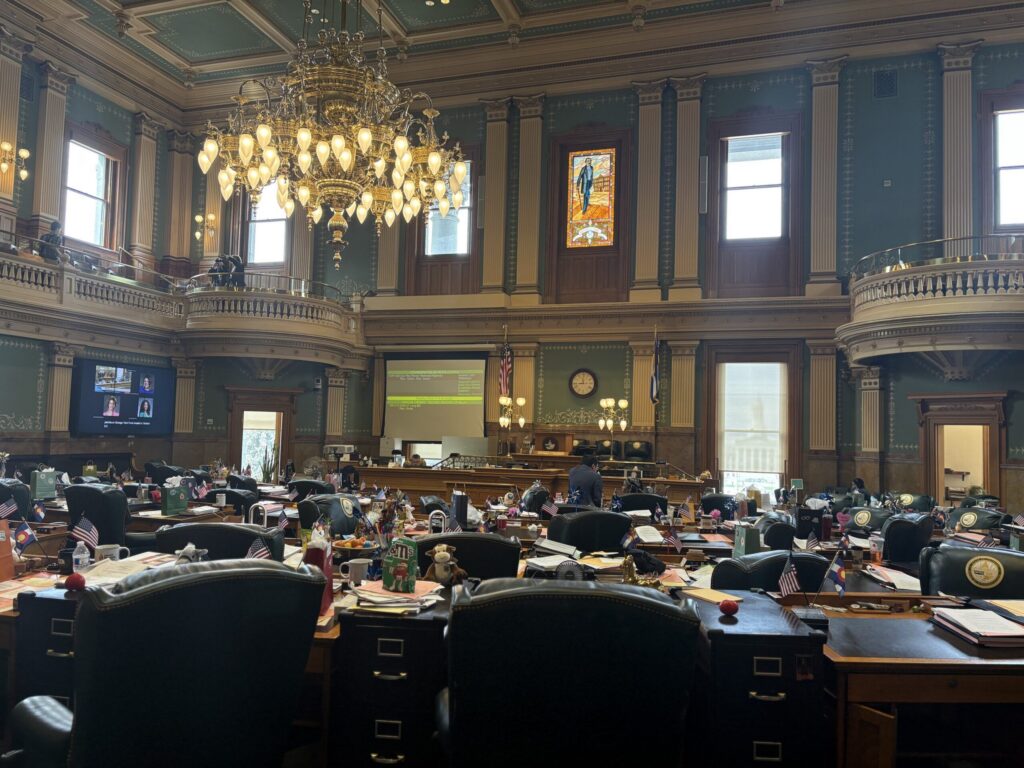
Colorado legislature braces for high turnover: 21 Senate seats, 15 House positions
Marianne Goodland
marianne.goodland@coloradopolitics.com
Updated 4 hours ago
This year’s general election will feature an unusually high number of state Senate races — 21 seats, the most in at least three decades. The surge stems from the number of new senators appointed to fill vacancies during the 2025...
Colorado governor rejects bill to ban individualized pricing, wages based on personal data
Marissa Ventrelli
marissa.ventrelli@coloradopolitics.com
Updated 4 hours ago
Gov. Jared Polis vetoed a Democratic‑backed bill that would have prohibited companies from using personal data to set individualized prices or wages, saying the proposal was overly broad and could unintentionally restrict legitimate consumer discounts. House Bill 1210 sought to...

Aid group warns Ebola could have spread for three months before first cases were detected
Sophia Mandt, Washington Examiner
sophia.mandt.washington.examiner@gazetteedit.wpenginepowered.com
Updated 10 hours ago
The International Rescue Committee, a nonprofit global aid group, posted a warning Monday that the current Ebola outbreak in the Democratic Republic of Congo could have been spreading for three months before any cases were detected. In the press release...
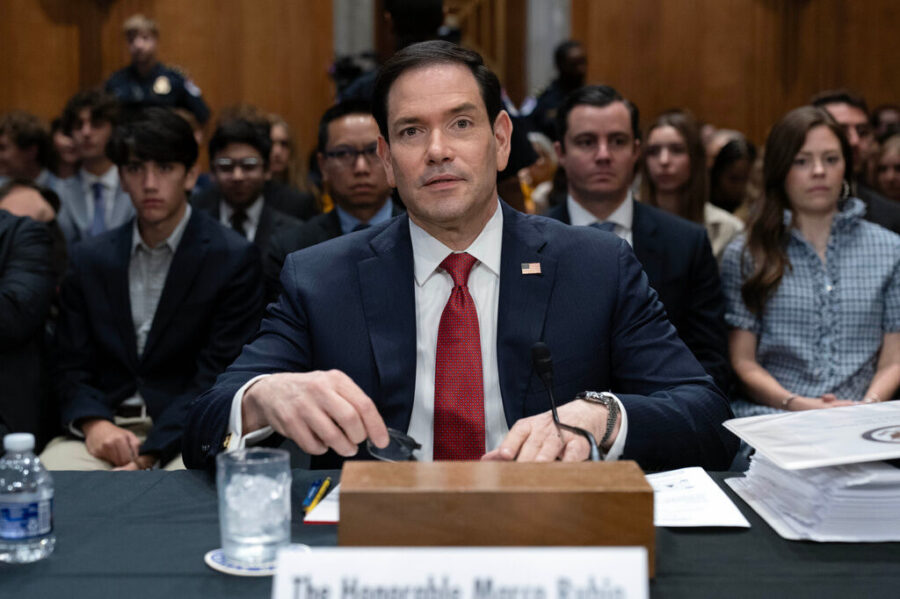
Rubio grilled over Trump’s national security picks and foreign policy priorities: ‘It’s not funny, secretary’
Timothy Nerozzi, Washington Examiner
timothy.nerozzi.washington.examiner@gazetteedit.wpenginepowered.com
Updated 9 hours ago
Rep. Bill Keating (D-MA) was livid during Secretary of State Marco Rubio’s appearance before the House Committee on Foreign Affairs, eventually descending into a back-and-forth with the secretary and feuding with the chairman over time. The Massachusetts representative began with...

Iran hits Kuwait and Bahrain in one of most damaging attacks since ceasefire
Brady Knox, Washington Examiner
brady.knox.washington.examiner@gazetteedit.wpenginepowered.com
Updated 9 hours ago
Iran launched one of its most damaging drone and missile attacks since the April ceasefire, hitting Kuwait and Bahrain and dealing extensive damage to a Kuwaiti airport, triggering a round of retaliatory U.S. strikes. U.S. Central Command said Iran fired...
PREV
PREVIOUS
Wist sworn into House seat, vows to champion working-class constituents
The House Minority caucus regained full strength Tuesday morning when state Rep. Cole Wist, R-Centennial, was sworn in at a brief, festive ceremony on the chamber floor that drew Wist’s family and friends and Republican and Democratic lawmakers. “I’ve been drinking from the fire hose for the past three days to get ready and up […]
State House leaders prepare caucuses for coming clash
Let the gridlock begin! Colorado legislative leaders threw down gauntlets left and right on opening day of the second session of the 70th General Assembly Wednesday. Democrats and Republicans established positions along familiar battle lines on issues such as reclassifying the state’s hospital provider fee and reforming small business regulations. House Speaker Dickey Lee Hullinghorst, […]