

Hudson: Columbine as ‘cultural script’ for next generation of shooters
While there is satisfaction in Colorado’s hipness — the first state to retail legal marijuana, younger and healthier on average than our 49 compatriots and the No. 1 destination for migrating millennials — we tend to repress our history as the site of both the Columbine High School killings and the Aurora movie theater slaughter. The Columbine victims have a tasteful memorial, as may the Aurora dead one of these days. Discussion of these events is regarded as rather tasteless at chamber of commerce luncheons. The rest of the world has not forgotten, however. In the past month three very different publications, Mother Jones, The New Yorker and the London Review of Books, have published articles examining the germinal role that Columbine has played in subsequent assaults around the globe, aided and abetted by a social media fascination with Dylan Klebold and Eric Harris.
In “Inside the Race to Stop the Next Mass Shooter,” Mother Jones writer Mark Follman identifies 72 plots and attacks in 30 states “whose suspects and perpetrators claimed to have been inspired by the Columbine massacre.” Police averted 51 of these, while the 21 attacks that took place resulted in 89 deaths and 126 casualties, as well as nine perpetrators dead by their own hands. If we expand our focus to include non-school shootings, like James Holmes and the Aurora theater murders, the numbers climb to 486 dead and 557 wounded during the 15 years since Columbine in 1999. This carnage has prompted police departments, colleges and high schools to deploy “threat assessment” teams. Virginia, Illinois and Connecticut have passed laws mandating such teams for their universities and colleges. As Follman points out, “Virtually every one of these attacks, forensic investigation show, is a predatory crime, methodically planned and executed. The weeks, months, or even years when a would be killer is escalating towards violence are a window of opportunity in which he can be detected and thwarted.”
The story of Eric Ayala, who was identified as a threat at a California high school and smothered in “wrap around” counseling services for five years, is a sobering reminder that while a threat might be contained, it is not necessarily eliminated. Following high school, when his classmates were protected, Ayala moved away and eventually gunned down a group of teenagers at a dance club before killing himself. The shooters’ cultural meme has been embroidered some since Columbine. They often kill roommates or family members before launching out into the public square in order to push up their kill quotient.
Both Andrew O’Hagan in the London Review of Books and the bestselling author Malcolm Gladwell in The New Yorker point out these shooters are virtually always male and, undoubtedly to the consternation of many parents, have usually been identified with Asperger’s syndrome or have exhibited behavior falling somewhere on the autism scale.
O’Hagan examines the growing pattern of shooters leaving behind manifestos outlining their grievances against the world. In the case of Christopher Harper-Mercer at Umpqua Community College in Roseburg, Oregon, earlier this year, he chose a single student, saying, “You’re the lucky one,” to hand-deliver his diatribe to police before proceeding to kill everyone else in the class.
It was Dylan Klebold who wrote, “Life is a punishment.” But whether it was Norwegian Anders Behring Breivik, who killed nearly 100, mostly children, or Vester Flanagan, the Virginia newscaster, who filmed his murders and then posted them on the Internet, social media postings had evidenced their propensity for violence months before they acted.
Perhaps the most disturbing of these recent commentaries is Gladwell’s recent “Thresholds of Violence: How school shootings catch on.” Gladwell examines the findings of Stanford sociologist Mark Granovetter, who has spent his career attempting to explain how a person does things seemingly at odds with who they are or what they think is right. Granovetter’s research extends to the behavior of mobs and the decision to riot. What prompts people who aren’t inclined to destructive violence to join in looting, throwing rocks or worse? As Gladwell reports, Granovetter concluded, “A riot was a social process in which people did things in reaction to and in combination with those around them. Social processes are driven by thresholds — which he defined as the number of people doing some activity before we agree to join them.” Gladwell proceeds to hypothesize that the growing frequency of mass shootings in the United States might be a question of thresholds — that what we are actually witnessing is a slow-motion riot that could be acquiring greater momentum. Chew on that concept.
Earlier this month, an “open-carry” monster killed three bystanders in downtown Colorado Springs. Within a week, Colorado Springs police, who dismissed 911 calls regarding the initial assailant, shot down a mimic. Copycat or coincidence? If Gladwell is correct, we could soon find ourselves living in a garrison society, much like Israel. The terrorist attacks in Paris provide yet another reason for worry. The Colorado Legislature should consider mandating threat assessments for all public facilities. Several years ago, I was traveling on horseback through rural Ireland, when one of the riders asked our guide, “Why did they build so many castles?” The reply: “Because it was dangerous to remain outside the walls after dark!”
Gladwell’s closing admonition is chilling. “In the day of Eric Harris, we could try to console ourselves with the thought that there was nothing we could do, that no law or intervention or restriction on guns could make a difference in the face of someone so evil. But the riot has now engulfed the boys who were once content to play with chemistry sets in the basement. The problem is not that there is an endless supply of deeply disturbed young men who are willing to contemplate horrific acts. It’s worse. It’s that young men no longer need to be deeply disturbed to contemplate horrific acts.”
Miller Hudson is a public affairs consultant and a former state legislator. Reach him at mnhwriter@msn.com


Colorado Democrats, your time is coming | Jon Caldara
Jon Caldara
jon-caldara@coloradopolitics.com
Updated 22 hours ago
Hey, Colorado Democrats! All the fun you’ve had watching Republican dysfunction in Colorado for the last 20 years was just a preview of what is about to happen to you. The Colorado Republican Party no longer exists as a competitive...
The relevance of Watergate more than a half-century later | SONDERMANN
By Eric Sondermann
by-eric-sondermann@coloradopolitics.com
Updated 4 days ago
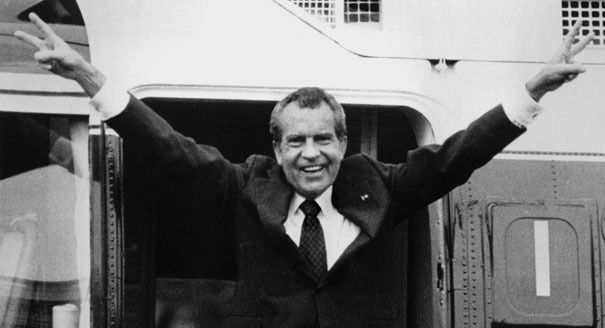
It was the scandal for which all other scandals are now named. In June 1972, a small group of Cuban burglars with high-level connections broke into the headquarters of the Democratic National Committee. Those headquarters were located in the Watergate...
Colorado must continue finding common ground on wildfire policy | GUEST COLUMN
Colorado Politics
colorado-politics@coloradopolitics.com
Updated 3 days ago
By John Herrick Colorado has never lacked for opinions about wildfire policy. We debate forest management, climate change, prescribed burns, land use, air quality and budgets. Those debates are familiar territory, but a new discussion is beginning to happen around...

Proposition NN is the best investment for Colorado’s students and schools | GUEST COLUMN
Colorado Politics
colorado-politics@coloradopolitics.com
Updated 3 days ago
By Justin Ogden Colorado families know what it means to make difficult budget decisions. Inflation has driven up the cost of groceries, housing, utilities and just about everything else. Families like mine work hard to stretch every dollar while still...
Were the primaries a preview for consequential general election? | Paula Noonan
Paula Noonan
paula-noonan@coloradopolitics.com
Updated 4 days ago
Colorado’s political future will go the way of this election. Historically, the state has not had both chambers controlled by a supermajority. This election may change that. The primaries suggest how the general election may play out. Democrats had solid...
Disagreement doesn’t have to mean disrespect | GUEST COLUMN
Colorado Politics
colorado-politics@coloradopolitics.com
Updated 4 days ago
By Vincent Atchity These days, it doesn’t take long to feel overwhelmed by politics. Turn on the news, scroll through social media or read the comments on almost any political post and you’ll find anger, outrage and personal attacks. For...

Keeping Colorado’s kids’ trust online | PODIUM
Colorado Politics
colorado-politics@coloradopolitics.com
Updated 5 days ago
By Stuart Jenkins Almost every day, the kids and teens we serve across Colorado are introduced to new generative artificial intelligence and other emerging technology, including conversational AI systems designed to simulate human conversation. These tools are no longer a...

Marx’s ‘through line’ predates Trump, connects to Maes | FEEDBACK
Colorado Politics
colorado-politics@coloradopolitics.com
Updated 5 days ago
Eric Sondermann is of course correct Victor Marx is an unserious, unelectable, embarrassing Republican nominee for governor of Colorado. But I respectfully submit that the “through line,” as Mr. Sondermann describes it, is not from Trump to Marx, despite their...

Cedric Pride’s blueprint for opportunity through the trades | The OpEdge Podcast
Tony Olivero
tony.olivero@gazette.com
Updated 5 days ago
Cedric Pride, CEO of the nonprofit Pride Initiative in Denver, joins The OpEdge with a blueprint for workforce development, skilled trades, and economic opportunity. Pride tells host and investigative columnist Jimmy Sengenberger why he believes the trades offer a path...
Colorado’s No. 1 education ranking should raise our ambition | GUEST COLUMN
Colorado Politics
colorado-politics@coloradopolitics.com
Updated 5 days ago
By Scott Laband Colorado has earned the right to celebrate its new No. 1 ranking in education from U.S. News & World Report. Gov. Jared Polis called it “one of the proudest moments” of his time in office and shared the...
PREV
PREVIOUS

Vervier: Raise a glass to the clean water rule
How important is it to protect clean water in Colorado? The federal EPA and the Army Corps of Engineers are trying to do that with a new rule released in August. But now opponents are attacking the rule in the courts, and even the U.S. Senate is trying to block it. This is bad news […]

Webb: Economic growth and environmentalism have a symbiotic relationship with good policy
Environmental groups across the country are celebrating a recent victory — President Obama’s decision to reject the Keystone XL pipeline. This political decision was at best an ideological choice, with very real, and perhaps unintended economic consequences. At worse, it may have driven a stake in the growing wedge between labor groups and environmental organizations. […]