

Hickenlooper thwacks hornet’s nest with position on Syrian refugees
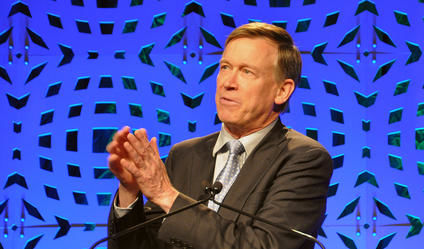
Gov. John Hickenlooper drew a storm of criticism in the wake of his announcement Monday that Colorado would welcome Syrians who are fleeing their war-torn country and who had been admitted to the United States through the federal government’s refugee program.
“Our first priority remains the safety of our residents,” Hickenlooper said. “We will work with the federal government and Homeland Security to ensure the national verification processes for refugees are as stringent as possible.” He added, “We can protect our security and provide a place where the world’s most vulnerable can rebuild their lives.”


The announcement appeared as Republican governors — and at least one Democrat —said their states would refuse to accept Syrian refugees. Their stance was fueled by the deadly attacks in Paris carried out on Friday by Islamic State terrorists.
U.S. Rep. Scott Tipton, a Cortez Republican, wasted no time blasting Hickenlooper.
“Governor Hickenlooper’s decision to ignore national security risks and accept Syrian refugees to Colorado is naive and irresponsible,” Tipton wrote on Facebook on Monday. “All it takes is one ISIS terrorist posing as an asylum seeker to enter the United States and inflict harm.”
At the state Capitol in Denver, sources said Republicans thought the governor’s announcement was premature. Details of the federal Syrian refugee policy remained to be fully worked out when Hickenlooper, prompted by the questions from the media, issued his statement and made a blanket decree for the state.
Senate President Bill Cadman, R-Colorado Springs, said the issue needed better communication.
Public safety is “first and foremost in the minds of those of us who want to ensure that all due measures are exercised when considering relocation of any Syrian refugees within our state,” Cadman said in a statement. “This is why (President) Obama and Gov. Hickenlooper need to slow down, think carefully about our security and provide the public with a thorough and detailed explanation of what’s involved in any relocation plan.
“Transparency and accountability must be provided on everything from the vetting process to housing arrangements.”
House Minority Leader Brian DelGrosso, R-Loveland, was more pointed.
“Given that military members with ties to Colorado Springs have been named on an ISIS kill list, Coloradans are rightfully alarmed that terrorists may attempt to enter Colorado posing as Syrian refugees,” DelGrosso said.


State Sen. Tim Neville, R-Littleton, who is running to unseat Democratic U.S. Sen. Michael Bennet, dispatched with formalities. Instead of a release, he posted a blood-red image of armed security forces in front of Sports Authority Field to his Facebook page. “Dear Obama, Bennet & Hickenlooper, Don’t Make Denver the Next Paris,” the graphic said. “Neville U.S. Senate,” was the tag.
Hickenlooper on Wednesday sought to reassure the public, tamp down lawmaker backlash and head off speculation in the media at a hastily called press conference.
The governor said he hadn’t brought notes to a widely circulated and clumsy NewsRadio KOA interview he gave Tuesday and joked that he should “remember to do that” next time.
The federal refugee screening process was stringent, he said, adding, “it is always going to be a system that we continue to improve.” He maintained that turning away refugees would undercut the War on Terror. “Part of the battle against these terrorists is that we have to show a better way and a better world.”
Controversy over vetting
Hickenlooper stepped into the same hornet’s nest as Obama when, like the president, he stood behind the refugee program without setting out in detail how it would work, particularly the elaborate screening process to vet would-be refugees.
Opponents of the program point to evidence that one of the terrorists who launched the Friday attacks in Paris used a fake Syrian passport to slip into the European Union among the refugees. By press time, investigators had yet to confirm whether that’s what actually happened. They had confirmed, however, that six of the eight men directly linked to the attacks have been identified as French or Belgian natives.
“The personal security of the people of Colorado was always going to be our first concern,” Hickenlooper said in the KOA interview.
He told CBS Denver news that any refugee resettlement in Colorado would come months, if not years, in the future. “It’s a two- or three-year process, so there’s lots of time to analyze it,” he said.
But he didn’t say anything about how the Syrians applying for refugee status would be screened.
“It’s the vetting process that matters. Before you can seriously talk about the issue, you have to talk about the process,” said Jonathan Lockwood, executive director of conservative advocacy group Advancing Colorado, which sent out releases Monday slamming Hickenlooper as “clueless.”
“The governor doesn’t seem to know what the [vetting] process is,” Lockwood told The Colorado Statesman. “Shouldn’t he have a clear idea of what [the process] actually is before he throws open the doors of the state? People are scared right now, and understandably so, and our leaders have to take that into account.”
As multiple outlets are now reporting, the screening process established for refugees fleeing the Syrian civil war is the most stringent of the screening processes set up for any group seeking shelter in the United States.
Applicants are subject to layers of interviews over an 18- to 24-month period. They undergo medical exams and biometric tests and individual meetings with staffers from the Department of Homeland Security and with personnel trained to vet Syrian and Iraqi applicants — part of a new program called “Syrian Enhanced” reviews. The Syrian screening program includes input from additional federal agencies, including the State Department, the Defense Department, the National Counterterrorism Center and the Federal Bureau of Investigation.
The Atlantic on Wednesday cited a Center for Migration Studies report that said, among the 784,000 refugees resettled in the United States since the terrorist attacks of September 11, 2001, three had been arrested for ties to terrorism — and two of those were arrested leaving the United States to join terrorist groups abroad.
Burning out or flaring up?
Political observers say it’s difficult to predict how long the firestorm over the Syrian refugee program might burn and to what effect.
“On one level, Hickenlooper’s stand is being described as an act of political bravery, but, on another level, you can say he’s just taking the position being taken by Democrats across the country — and, in that context, it won’t cost him any points, really,” said Seth Masket, a professor of political science at the University of Denver.
And it’s the same for Republicans, he said.
“This is a politics-of-fear moment,” Masket said. “From the Republican perspective, it’s easy to gain points by responding to constituent fears of terrorism. Those constituents will be the ones most likely to vote in the primary elections. Refugees certainly won’t be voting, and there’s probably not very many single-issue refugee policy voters, either.”
Masket said he thought the controversy would fade fairly quickly, at least fast enough not to be tied to the larger debate over immigration that will remain a major issue through the election.
“The Latino population next year will be looking at immigration policies and at policies that affect their daily lives. Republicans have an uphill climb to make inroads with those voters… but I think the Syrian refugee issue will be well in the past.”
Kyle Saunders, a political science professor at Colorado State University, was less sure.
In 2014, just two months or so before Election Day, Republican candidates made enormous strides with the electorate by giving stump speeches and firing up debate audiences on the threat posed by the terrorists of the Islamic State and by the Ebola outbreak in West Africa, he recalled. Politicians demanded a ban on all air travel from West Africa in order to “keep Americans or Coloradans safe.”
While disease-control experts said a travel ban would be ineffective and would hamper efforts to fight the disease — and others noted that there were no direct flights between the countries experiencing Ebola outbreaks and the United States — opinion polls showed the public loved the idea. But Ebola mostly fell out of political news after the election.
Saunders said he wouldn’t be surprised if the Syrian refugee controversy stayed in the news for months or longer.
“It really depends on whether, for example, the federal budget is tied to the issue by the Republican Congress in a government shutdown standoff with the president, or whether the presidential candidates continue to make it an issue, or — and it’s terrible to think about this way — but whether there’s another terrorist attack.”


Trump lowers flags to half-staff for Dolly Parton: ‘The World loves you’
Naomi Lim
naomi-lim@coloradopolitics.com
Updated 7 hours ago
President Donald Trump is honoring the life of country music legend and philanthropist Dolly Parton by ordering federal buildings across the country to lower flags to half-staff for a week. “Very sad to report that Dolly Parton, one of the...
Ted Cruz suggests GOP realignment coming after Trump leaves office
Emily Hallas
emily-hallas@coloradopolitics.com
Updated 7 hours ago
Sen. Ted Cruz (R-TX) on Monday suggested the Republican Party could embrace a directional shift after President Donald Trump leaves office, a transition that promises to leave a gaping hole in the GOP. Cruz is known as a critical ally...
2 Colorado State troopers shot near Woodland Park; suspect killed
DEBBIE KELLEY
debbie-kelley@coloradopolitics.com
Updated 7 hours ago
Two Colorado State Patrol troopers were hospitalized, and a suspect is dead after a shooting during a traffic stop Tuesday. The initial incident happened at about 7:15 a.m., when a resident reported suspicious activity in the area near milepost 286...
Aurora moves forward with data center regulations
Kyla Pearce
kyla.pearce@gazette.com
Updated 7 hours ago
The Aurora City Council approved moving forward with two new regulations on data centers and directed staff to come back at the next study session with others. At a council meeting in early August, council members directed city management to...

Aurora City Council considers stricter food truck regulations
Kyla Pearce
kyla.pearce@gazette.com
Updated 7 hours ago
The Aurora City Council is considering passing laws to limit the number of food trucks on properties in the city and how and when they operate. Councilmember Angela Lawson, who sponsored the ordinance, said she understands the importance of food...
Denver murder conviction reversed for incomplete self-defense instruction
Michael Karlik
michael.karlik@coloradopolitics.com
Updated 5 hours ago
Colorado’s second-highest court reversed a defendant’s murder conviction last week because a Denver judge gave an incomplete instruction to the jury about the man’s right to self-defense. Donald R. Gonzales and Gary McLaughlin met up in a Capitol Hill parking...
Colorado lawmaker, House leaders named in workplace-retaliation lawsuit
Marianne Goodland
marianne.goodland@coloradopolitics.com
Updated 8 hours ago
A former legislative aide has filed a lawsuit alleging she was mistreated, illegally directed to perform campaign work and harmed by a House leadership structure she charged was fragmented, politicized and ineffective at protecting employees. The lawsuit, filed by Jennifer...

Secret Service confirms awareness of Iranian state media video threatening Barron Trump’s life
The Associated Press
the-associated-press@coloradopolitics.com
Updated 12 hours ago
WASHINGTON (AP) — The U.S. Secret Service has confirmed it is aware that Iranian state media has aired a video that appears to threaten the life of Barron Trump, President Donald Trump’s youngest son. “The U.S. Secret Service is aware...
Federal judge hears arguments about Colorado’s 3-day gun purchase waiting period
Michael Karlik
michael.karlik@coloradopolitics.com
Updated 12 hours ago
A federal judge heard arguments on Monday about the constitutionality of a 2023 Colorado law that generally imposes a three-day waiting period on firearm purchases after the initiation of a background check. The test that the U.S. Supreme Court created...

Denver auditor finds oversight failures in $175.6M 16th Street project
Nico Brambila
nico.brambila@denvergazette.com
Updated 7 hours ago
Surprise historic sewer discovery delayed completion a year, cost $18M The Denver Auditor recently found significant oversight and contracting problems with the $175.6 million 16th Street Improvement Project, including an $18 million contract increase and a nearly one-year extension that...
PREV
PREVIOUS
JBC's Hamner will lean on committee to find solutions
It was a tough day to be the new chair of the Legislature’s Joint Budget Committee. Gov. John Hickenlooper and his budget chief Henry Sobanet on Thursday rolled out for the six-member committee a well-worked-over $27 billion plan for the next year that landed with a clang. It proposed cutting $370 million from state services […]

Ballot push heats up as drilling rules plod along
A group drafting ballot measures aimed at giving Colorado residents more control over oil and gas drilling in neighborhoods told The Colorado Statesman on Wednesday that the lack of action by state regulators has given “greater impetus” to their cause. The Colorado Oil and Gas Conservation Commission this week was unable to reach consensus on […]