

Buchanan gives ’em hell, wins Senate primary; Romer blasts Allott vote on anti-billboard bill
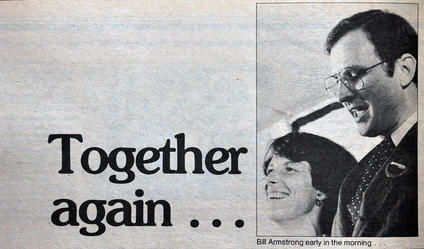
Thirty-five Years Ago this week in The Colorado Statesman … Secretary of State Mary Estill Buchanan kept a Bo Callaway button tucked into her dress on primary election night, prepared to clip it on as a gesture of party unity if Callaway had won the Republican nod to challenge U.S. Sen. Gary Hart. But after a long night when the two were mostly neck-and-neck, she was able to keep it hidden away. By 1:15 a.m., with 97 percent of the ballots cast, U.S. Sen. Bill Armstrong and his press secretary strode out of Buchanan’s headquarters with dozens of Buchanan buttons to hand over to the Callaway crew. “Whether it was poetic justice, power to the people or Mary Estill Buchanan’s gutsy street fight against the system,” Statesman news editor Jody Strogoff wrote, “it worked.”

After failing to win a spot on the primary ballot at the state assembly, Buchanan clawed her way on by petition, battling feisty Republicans all the way, fending off administrative and court challenges to secure a spot. Buchanan led the primary vote with 31 percent, followed by Callaway’s 30 percent, former state Sen. Sam Zakhem’s 20 percent and attorney John Cogswell’s 19 percent. Kansas Sen. Nancy Kassebaum, the only woman in the U.S. Senate, called Buchanan to wish her luck early on primary election day and Time magazine interviewed her that afternoon for more than two hours. Over at Callaway campaign headquarters, after polls had closed, campaign manager Walt Klein waved off a call from Time until “after Bo comes,” even though early returns showed Callaway squarely in the lead. “The Bomobile finally zipped in and Callaway swiftly exited his car with a grin,” The Statesman reported, as the candidate’s driver, Dick Wadhams, hugged another campaign worker in celebration amid the cheers. But the race tightened and the tide turned as the night wore on. At Buchanan headquarters, the jukebox blared Elton John’s “The Bitch is Back,” a song with “a secret meaning to the tight-knit staff,” as her 100-vote lead started to widen. Well after midnight, although he had endorsed Callaway, Armstrong arrived to congratulate Buchanan, said he’d work for her and expected her to unseat Hart in November. He compared the Callaway and Buchanan campaigns to world-class sprinters: “One finishes in nine seconds, and the other comes in at 8.99 seconds. They both did well.” In the end, the Buchanan campaign declared, the underdog had won. The “Give ’Em Hell, Mary” headlines probably didn’t hurt. Or, as a campaign aide observed, “She’s one goddamn gutsy broad.” …

… The losing GOP Senate hopefuls, meanwhile, were licking their wounds and balancing their books. Zakhem, who proclaimed that God had told him he would be the next U.S. senator from Colorado, had also promised his children they would get a trampoline or a swimming pool after he won, but both the Almighty and his offspring were going to have to wait. Callaway, a former congressman from Georgia and past secretary of the Army, was “perhaps the least wounded” of the also-rans, having “fixed himself as an impressive Colorado political figure.” Cogswell, who had lost a Senate primary two years earlier to Armstrong, counted his blessings that he wouldn’t have to move to D.C. Among the finances reported by the campaigns, Cogswell had dropped $50 on a 4-H lamb at the State Fair, reimbursed Butler Rents $90 for a lost bullhorn and paid a Beverly Hills firm $440 for walkie-talkies. Buchanan had poured nearly $250,000 into her own campaign, expecting to pay herself back with contributions once she was the nominee. Her expenses included $1,000 to a button-making company, $387 for balloons and $1,626 to a “California political whiz, who was supposed to become her new campaign coordinator, but instead went on a Caribbean cruise and never came back.”

Fifty Years Ago this week in The Colorado Statesman … State Sen. Roy Romer, a Democrat, called Republican U.S. Sen. Gordon Allott’s vote against the federal highway beautification bill “unbelievable” and said it was “clearly not in the interests of the people of Colorado.” The bill, which passed the Senate by a wide margin, represented a serious compromise — Romer termed it “half a loaf” and “a step forward but not the ultimate solution” — in an effort to establish “sensible billboard control” on the nation’s highways. “The bill will still permit billboards in commercial and industrial zones,” Romer observed, “but will encourage a ban and ultimate removal of billboards elsewhere on much of the interstate and primary highway systems. The bill will also require removal or screening of junkyards on these routes and will provide grants to states for landscaping and scenic enhancement along federal-aid highways.” It wasn’t the first time Allard, who was up for election the next year, had come under fire from Romer, who was considering a run for Allard’s Senate seat. …
… First Lady Lady Bird Johnson — referred to only as “Mrs. Lyndon B. Johnson,” in the style of the time — visited Denver for about 90 minutes to officially open the Memorial Gardens at the University of Denver. Accompanied by her eldest daughter, Lynda Bird, the first lady was making a quick stop in Colorado after a three-day tour of Wyoming, where she had delivered a speech to the American Forestry Association and the National Council of State Garden Clubs in Jackson Hole and then vacationed a spell at the Laurence Rockefeller JY Ranch in Grand Teton National Park. Once landed in Denver, Johnson would be whisked by motorcade from Stapleton International Airport to DU for a few brief remarks, a tour of the gardens and a tree-planting ceremony. The Mary Reece Harper Humanities Gardens were the gift of former CU Chancellor Heber Harper in memory of his mother.

Appeals court reinstates Garfield County arson charge
Michael Karlik
michael.karlik@coloradopolitics.com
Updated 16 hours ago
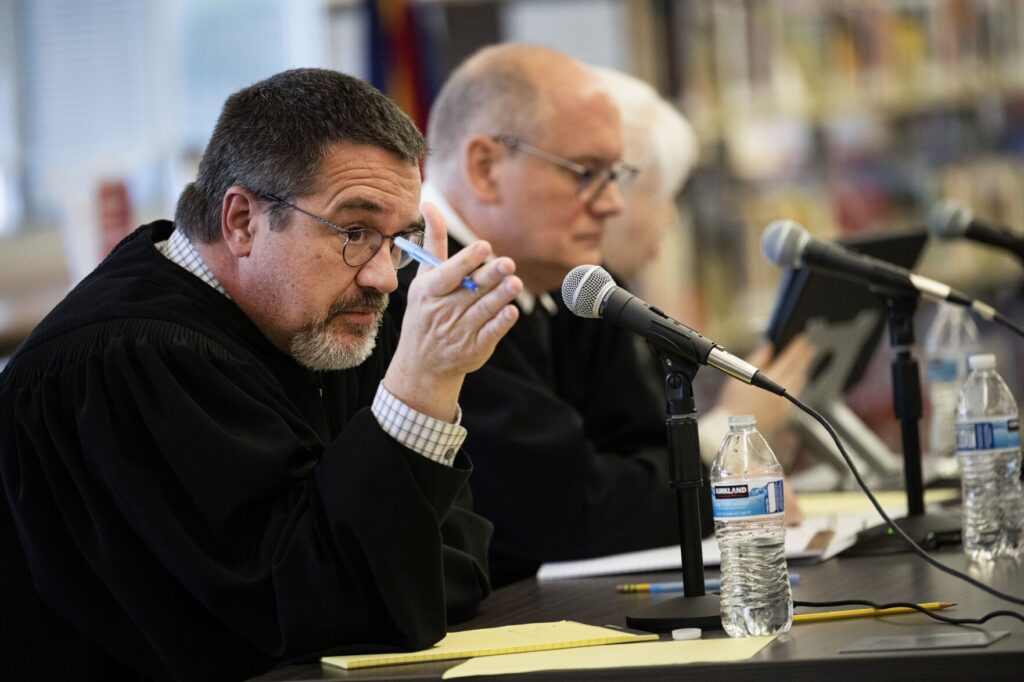
Colorado’s second-highest court reinstated a Garfield County defendant’s arson charge on Thursday, concluding a trial judge improperly credited a witness’s claim that she alone was responsible for starting the fire. A sheriff’s deputy responded to a brush fire near Parachute...

Democratic US Sen. John Hickenlooper qualifies for Colorado primary by petition, will skip assembly
Ernest Luning
ernest.luning@coloradopolitics.com
Updated 15 hours ago
U.S. Sen. John Hickenlooper has qualified for Colorado’s Democratic primary after the first-term incumbent submitted enough valid petition signatures to make the ballot, state officials said. Hickenlooper is facing primary challenges from state Sen. Julie Gonzales, D-Denver, and university professor...
Federal judges rebuke ex-Colorado judicial discipline director for conduct in lawsuit
Michael Karlik
michael.karlik@coloradopolitics.com
Updated 17 hours ago
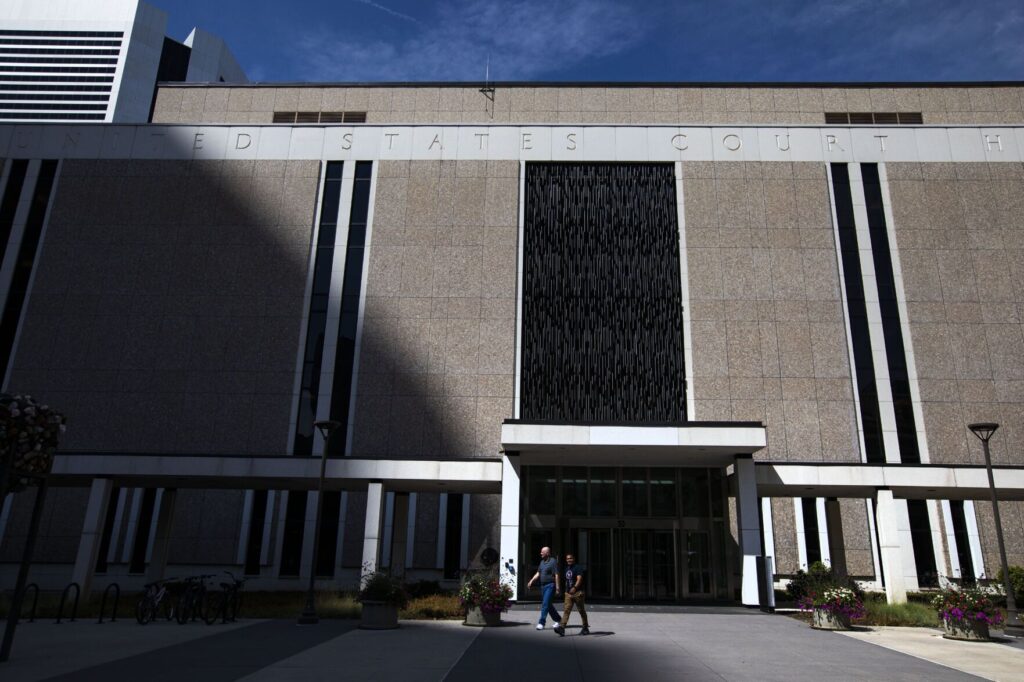
A pair of federal judges expressed a desire on Thursday to break the logjam on a lawsuit by Colorado’s former judicial discipline director against the state Supreme Court and related entities, while simultaneously showing little tolerance for the plaintiff’s scorched-earth...

Democratic bill would let recipients of ‘conversion therapy’ sue Colorado providers with no statute of limitations
Marissa Ventrelli
marissa.ventrelli@coloradopolitics.com
Updated 15 hours ago
Colorado lawmakers have advanced a proposal that would allow people who underwent conversion therapy to sue licensed providers for damages, moving the measure forward on a party-line vote in the House Judiciary Committee. House Bill 1322, proposed by Democratic Reps....
Pinnacol separation bill delayed as Colorado budget remains in flux due to $1.5B deficit
Marianne Goodland
marianne.goodland@coloradopolitics.com
Updated 14 hours ago
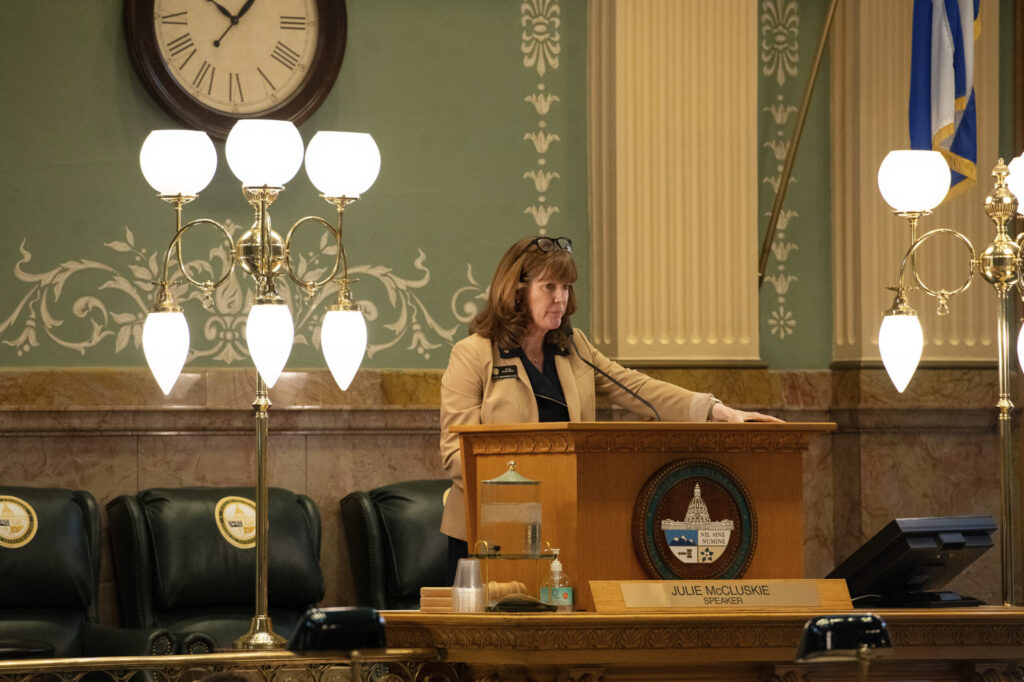
A bill that would allow Pinnacol Assurance to formally sever its remaining ties with the state appears unlikely to emerge anytime soon, as House leaders juggle a massive budget shortfall, unresolved negotiations with key stakeholders, and growing doubts about whether...
100 days until America250: Five host cities unveiled for July 4 celebrations
Emily Hallas, Washington Examiner
emily.hallas.washington.examiner@gazetteedit.wpenginepowered.com
Updated 21 hours ago
America250, the entity tasked by Congress with marking the United States’ semiquincentennial, on Thursday revealed further details about its sweeping plans to celebrate the milestone. America250 chairwoman Rosie Rios launched the official 100-day countdown to July 4, and said the...
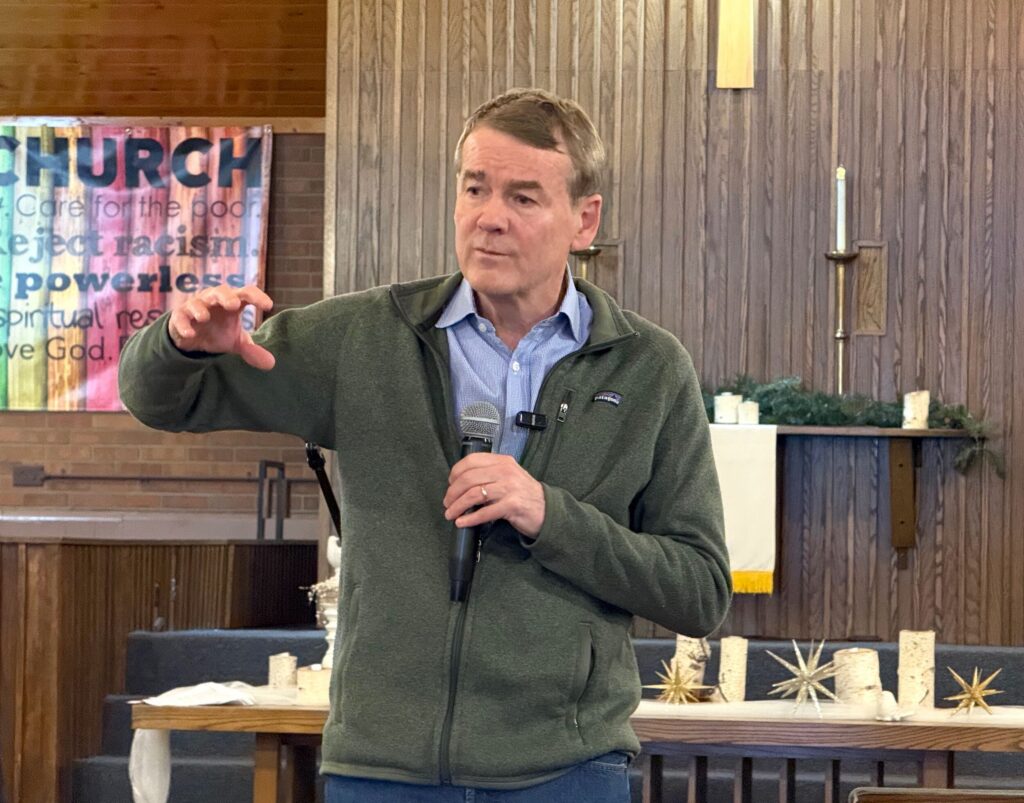
U.S. Sen. Michael Bennet qualifies by petition for Colorado’s Democratic gubernatorial primary
Ernest Luning
ernest.luning@coloradopolitics.com
Updated 15 hours ago
U.S. Sen. Michael Bennet on Tuesday became the first gubernatorial candidate to qualify for Colorado’s June primary ballot after state election officials determined the three-term Democrat’s campaign submitted enough valid petition signatures. Bennet is running against Attorney General Phil Weiser...

Thornton police investigating homicide
Matt Kyle
matt.kyle@denvergazette.com
Updated 16 hours ago
Police in Thornton are investigating a homicide that happened late Wednesday night. Thornton Police Department officers responded just before 11 p.m. near the intersection of East 88th Avenue and Grant Street after a 911 caller reported someone bleeding. Upon arrival,...
Colorado legislators consider $500 million in general fund cuts amid $1.5 billion deficit
Marianne Goodland
marianne.goodland@coloradopolitics.com
Updated 2 days ago
The legislature’s Joint Budget Committee is working through a list Wednesday of about 150 suggestions to cut as much as $1.5 billion in general fund dollars out of next year’s budget. The largest on the list prepared by JBC staff...
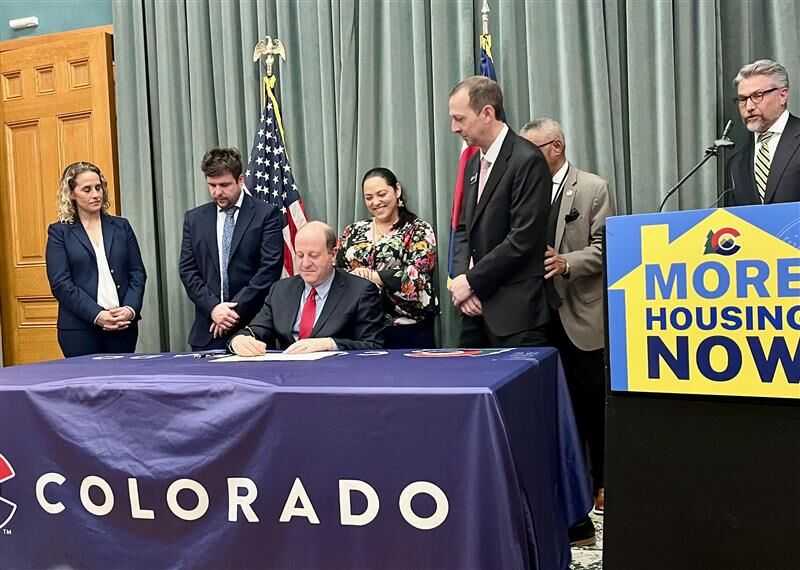
Gov. Jared Polis signs housing bills amid push for ‘affordability’
Marissa Ventrelli
marissa.ventrelli@coloradopolitics.com
Updated 16 hours ago
Gov. Jared Polis held the first public bill signing of the 2026 legislative session on Wednesday on a pair of housing measures that, sponsors said, are aimed at affordability. Part of Democrats’ “affordable” housing package this year, the bills —...
PREV
PREVIOUS
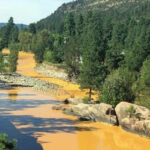
Amid acrimony over abandoned mines, lawmakers float bipartisan solutions
U.S. Sens. Michael Bennet and Cory Gardner are poised to take yet another run at “Good Samaritan” legislation that would allow third parties to clean up abandoned mines without being liable under the Clean Water Act. “Sen. Gardner and I are working to reintroduce a bill this Congress,” Bennet said in testimony Wednesday at a […]

Jeffco GOP debate-watchers weather CNN marathon
LAKEWOOD — If you were looking to gauge Wisconsin Gov. Scott Walker’s chances of winning the Republican presidential nomination next year, you probably couldn’t have found a better barometer than the crowd at Misfits in swing-district Jefferson County on Wednesday night. Misfits is a biker bar located next to an oil-change shop in Lakewood, in […]