

Governor would consider EPA Superfund request for mines if local officials get behind designation
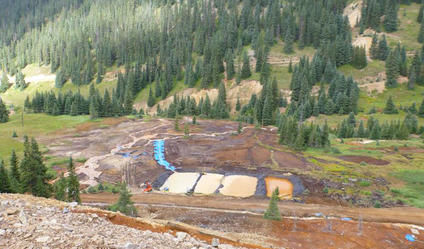
Gov. John Hickenlooper would consider requesting that abandoned mines near Silverton be designated an EPA Superfund site and placed on the National Priority List if there’s enough local support, a spokeswoman told The Colorado Statesman this week.
“The governor would certainly consider making the request [to the EPA] if there is broad local community support,” Hickenlooper spokeswoman Kathy Green said, adding that the governor has had several talks with local officials and the EPA Superfund topic has come up.
Following last month’s accidental blowout caused by EPA contractors at the Gold King Mine that released 3 million gallons of acid mine drainage into Cement Creek and then the Animas River, there’s growing local discussion of Superfund listing. For many years the mere suggestion of a Superfund cleanup raised local hackles and met resistance because of its perceived stigma.
The same amount of contaminated water that was discharged suddenly on Aug. 5, when workers breached a dammed mining tunnel, is flowing out of the Gold King approximately every four days and has been for years, according to the EPA, which puts the current discharge rate at between 500 and 600 gallons per minute.
State and federal officials say three more mines near Gold King — Sunnyside, Mogul and the Red and Bonita — are cumulatively discharging more acidic mine drainage, laden with heavy metals such as lead, zinc, cadmium and copper, than the Gold King. That contamination, dating back to the late 19th Century, has rendered the upper drainage devoid of aquatic life.
“Everything’s on the table: EPA Superfund or other remedies,” Silverton Town Administrator Bill Gardner told The Statesman on Wednesday. “We’ve got to find something that works, and the most important thing is that we do it right, and we do it right the first time so this doesn’t become some prolonged study and analysis and not taking action.”
EPA officials say NPL listing, which on average takes about six months from initial proposal if a site qualifies, can bring millions of dollars of federal funding into play for remediation, but it has to have local support.
“The Gold King Mine site has never been proposed to be listed on the National Priority List (NPL),” the EPA states on its website. “At this time we haven’t received any requests from the governor to propose listing this site on the NPL, which we look for as part of the agency’s policy and practice.”
One thing local officials don’t support is suing the EPA, which the Navajo Nation — downstream from the Animas along the San Juan River in northern New Mexico — is preparing to do. Colorado Attorney General Cynthia Coffman also is considering legal action against the EPA.
“Absolutely not,” Gardner said. “I think that’s the worst thing that we as a community could be involved in. What we’re interested in is partnering with the EPA and whatever other federal and state organizations are necessary to find a solution. Legal action is only going to delay any kind of real results.”
U.S. Sen. Cory Gardner, a Republican, late last week issued a press release applauding a Senate Environment and Public Works Committee hearing on the EPA’s handling of the Aug. 5 blowout, which will include testimony from EPA administrator Gina McCarthy.
“The EPA caused this spill, and their completely inadequate response has left Coloradans with more questions than answers,” said Gardner, who is no relation to the Silverton official. “I’m continuing to closely monitor the situation in the Animas River and surrounding communities, and I look forward to hearing answers from the EPA.”
Silverton’s Gardner said the EPA is “doing quality work up at the site itself to get us through this winter,” building holding ponds that are slowing the discharge of acid mining drainage so contaminants can settle and pH levels can be lowered. He said town and San Juan County staff will meet with the EPA on Friday to discuss more permanent solutions, such as a water treatment facility or other high-tech fixes for a problem that has plagued the drainage for decades.
State health officials, who on Wednesday announced that testing revealed trout from the Animas River are again safe to eat, are in favor of EPA Superfund listing.
“The Hazardous Materials and Waste Management Division has very limited authority and funding outside of the Superfund process,” CDPHE spokesman Mark Salley told The Statesman. “The most likely way sufficient funds will be available to address the issue is by listing the site on the NPL.”
Silverton and San Juan County officials are seeking federal disaster funds after Hickenlooper already made an official state disaster declaration, sending $500,000 in assistance.
Professor Mark Squillace, who specializes in environmental, natural resources and water law at the University of Colorado Law School, said the heated political rhetoric needs to be removed from the discussion.
“It’s fair to say that the Republicans have blocked efforts to set up a reclamation fund for these abandoned mines,” Squillace said, referring to the lack of congressional action on the 1872 Mining Act. Proposals to reform the law would establish a system of royalties for mining on public lands and use that revenue to set up a clean-up fund. “If the state were to sue over this, it would tend to politicize an issue that needs to be addressed in a more bipartisan and constructive way than litigation is likely to achieve.”
Squillace adds that Superfund listing could get private mine owners to contribute to the cleanup, easing the burden on taxpayers.
“It’s not just a federal fund that would have pay for the cost of the cleanup, but it’s also private parties that have some responsibility for creating the mess in the first place,” Squillace said.


U.S. Rep. Lauren Boebert’s son arrested, faces charges of sexual exploitation of minor
Matt Kyle
matt.kyle@denvergazette.com
Updated 12 hours ago
U.S. Rep. Lauren Boebert’s son Tyler Jay Boebert has been arrested and accused of recording and sharing a video depicting himself having intercourse with a minor, according to court records. The case originated in Garfield County in Western Colorado and...

Colorado audit finds $175K wasted on unused state-issued cellphones
Marissa Ventrelli
marissa.ventrelli@coloradopolitics.com
Updated 15 hours ago
Colorado spent nearly $175,000 on government issued cellphones for employees of various departments that went unused last year, according to a recent state audit. About 400 of the 6,688 cellphones issued to state employees received no calls or texts and...

Adams County water district may proceed with cost-recovery lawsuit against Denver for contamination
Michael Karlik
michael.karlik@coloradopolitics.com
Updated 14 hours ago
A federal judge rejected Denver’s arguments last week for pausing or dismissing a lawsuit brought by an Adams County special district seeking to recover its costs for addressing water contamination as a result of Denver firefighting activities. In January, the...
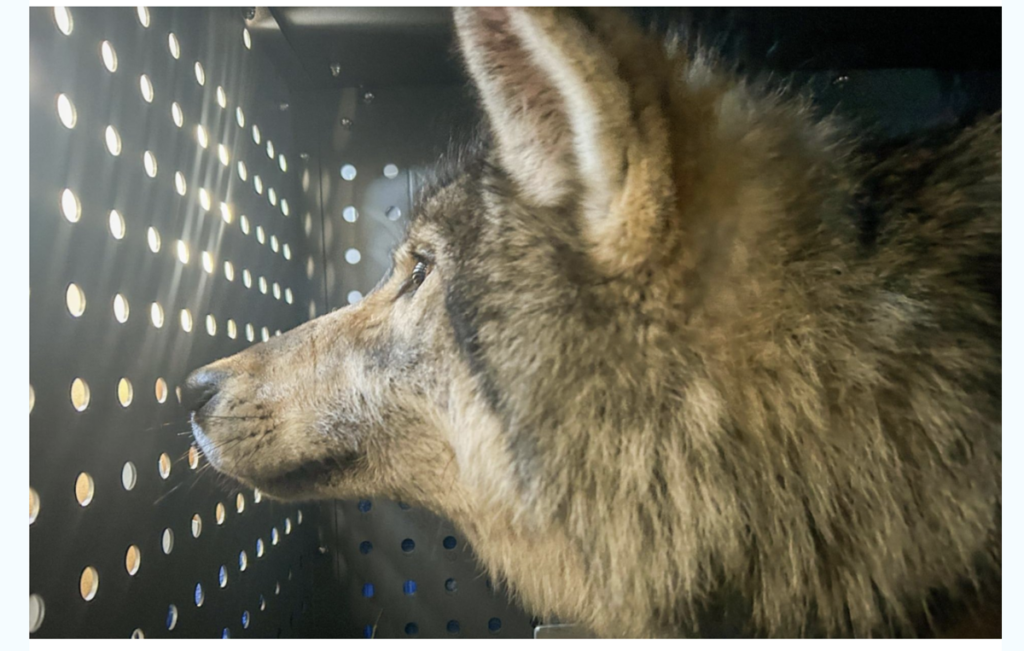
Hunter shot Colorado wolf after mistaking it for a coyote, wildlife office says
Marianne Goodland
marianne.goodland@coloradopolitics.com
Updated 15 hours ago
Colorado Parks and Wildlife said Monday that a female wolf from British Columbia that died in January was shot by a hunter who mistook her for a coyote. The wolf, identified as 2504‑BC, was one of 17 wolves relocated since...
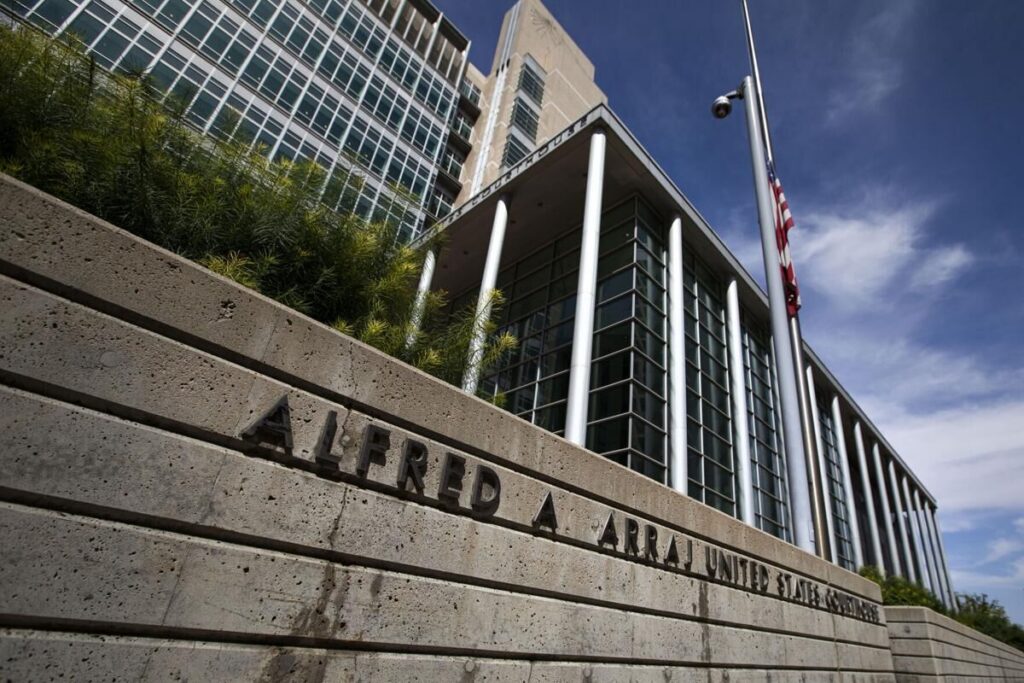
Federal judge declines to dismiss First Amendment retaliation claim against prison official
Michael Karlik
michael.karlik@coloradopolitics.com
Updated 11 hours ago
A federal judge agreed last month that an incarcerated Native American woman may pursue her claim of First Amendment retaliation against a prison official who allegedly interfered with her religious exercise. Yvonne Peterson resided at Buena Vista Correctional Facility for...
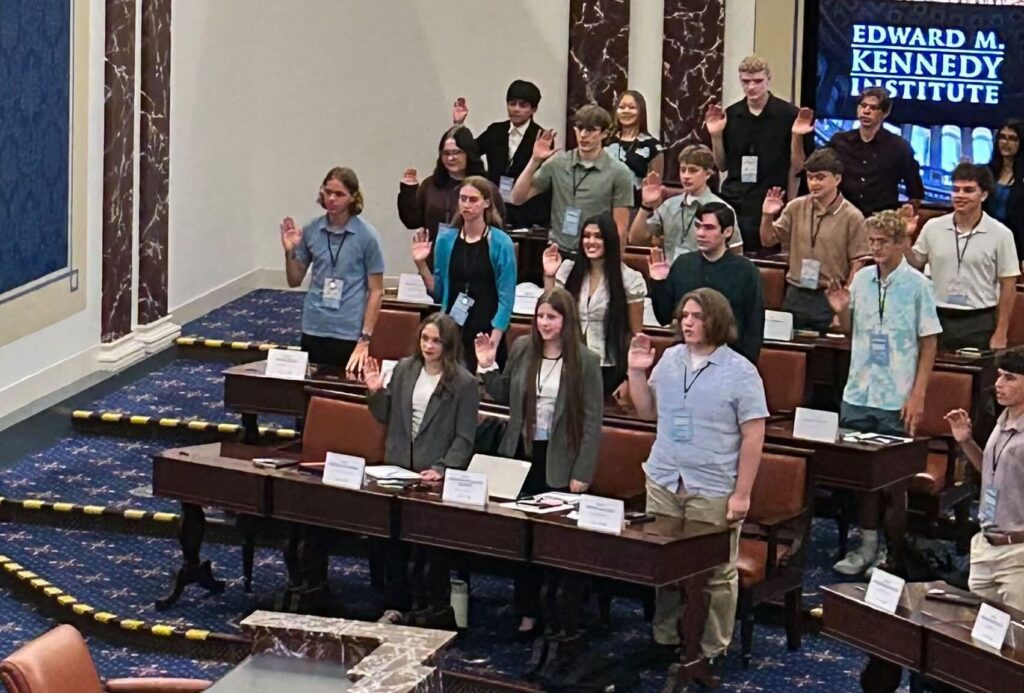
By the students, for the students: Sierra High School represents Colorado in developing national AI framework
Eric Young
eric.young@gazette.com
Updated 12 hours ago
To many, the recent, rapid development of generative artificial intelligence and its lack of frameworks and oversight may evoke comparisons to the unrestrained Wild West in the 1800s or the economic potential of the dot-com boom in the early 2000s....

Colorado’s troubled guardianship office pursues ‘cultural reset’
Marianne Goodland
marianne.goodland@coloradopolitics.com
Updated 12 hours ago
Colorado’s guardianship program, long criticized for mismanagement and high staff attrition, is undergoing a “cultural reset,” as its new director works to repair partnerships and prepare for a major expansion under recent legislation. Created by lawmakers in 2017, the Office...
Fifty years later, women reflect on first coed class at the Air Force Academy, struggle for equality
Mary Shinn
mary-shinn@coloradopolitics.com
Updated 3 days ago
When the first female Air Force Academy cadets arrived 50 years ago this summer, they stood in front of an enormous sign on campus that read “Bring me men.” In the shadow of that sign, Kathleen Utley Kornahrens, one of...

As Lake Powell shrinks, marinas are having to adapt to dwindling water levels | OUT WEST ROUNDUP
The Associated Press
the-associated-press@coloradopolitics.com
Updated 6 days ago
ARIZONA Reservoirs near record lows PAGE — The Colorado River’s Lake Powell, the second largest reservoir in the U.S., is shrinking. A record-dry winter and extreme heat — as well as decades of overuse, chronic drought and climate change —...
U.S. Senate OKs funding bill to avoid government shutdown
Wire Services
wire-services@coloradopolitics.com
Updated 3 days ago
Hemp provision became point of contention WASHINGTON • The U.S. Senate in an overnight vote Saturday approved a short-term measure to fund federal agencies into early December and avoid a government shutdown during the middle of campaign season. The late-summer...
PREV
PREVIOUS

Denver moves step closer to approving Chick-fil-A restaurant at airport
After an initial ruffling of feathers over a national chicken chain’s planned presence at the Denver International Airport, a Denver City Council committee on Tuesday gave the preliminary OK for its lease. The Business Development Committee’s unanimous approval for a Chick-fil-A franchise lease came two weeks after an initial approval attempt stalled following a discussion […]

Brauchler elaborates on his deliberations over possible run for U.S. Senate seat
George Brauchler is considering a run for the Republican nomination for the U.S. Senate. But the district attorney hasn’t made any progress on that decision over the last seven months, he told The Colorado Statesman Friday evening. Brauchler, serving his first term as prosecutor for the18th Judicial District, was commenting on a Denver Post article, […]