

Water committee hears from Colorado River community
Grand County is “ground zero” for trans-mountain diversions, and the idea that another may be in the offing raises concerns for those who live and work near the Colorado River.
Trans-mountain diversions (TMD) are tunnels and ditches that run through the Continental Divide and carry water from Western Slope rivers to the eastern part of the state. The state has relied on these diversions for a century to supply water to agricultural communities and increasingly, to growing Front Range municipalities. More than 30 TMDs operate in Colorado, supplying a half-million acre-feet of water to the Front Range annually.
The TMD on the Colorado, the largest in the state, begins in Grand Lake, travels through Rocky Mountain National Park and exits through the Alva B. Adams tunnel in Estes Park. The water flows from there to the Northern Colorado Water Conservancy District and on to Loveland, Fort Collins, other northern Colorado communities and area agriculture.
Wednesday evening, members of the legislative Interim Water Resources Review Committee concluded three days of hearings on the second draft of the state water plan. They heard from residents who rely on the Colorado River for their livelihood, and who believe the plan should rethink the TMD idea.
“Another trans-mountain diversion is not in Colorado’s best interest,” according to Jim Pokrandt, the chair of the Colorado River basin roundtable. The roundtable is one of nine across the state, representing eight major river basins (regions) and a ninth group that represents Denver. The roundtables include representatives of local governments, water conservancy districts and water providers; plus people who hold water rights or have interests in agriculture, recreation, the environment and industry.
About two dozen attended Wednesday night’s meeting in Granby. The committee this week also visited Alamosa and Salida, with similar attendance.
“The fate of the Colorado River hangs in the balance” if the next five million people look like the five million already here, Pokrandt told the committee. That refers to estimates that the state’s population is expected to nearly double between now and 2050. Another diversion would jeopardize recreation and agriculture on the Colorado if the river is overdeveloped.
It also could put other rivers at risk, such as the Big Thompson, he claimed.
Fifth-generation Coloradan Paul Bruchez is a farmer and rancher in Grand County. He irrigates his land in the morning and takes people on fly-fishing trips on the Colorado in the afternoon. Bruchez told the committee, and The Statesman after the hearing, that people do not connect their water usage to how it affects the state’s rivers, and that a cultural change is in order. “We all live in Colorado for a reason – its beauty,” he said. “They don’t understand the same water that they use inappropriately [to water their yard] or to take long showers is the same resource” used to support agriculture or recreation or the environment.
Pokrandt also raised concerns about the overreliance of the South Metro area (Douglas County, for example) on groundwater, which is found in aquifers along the Front Range. Development in the past 20 years has put some aquifers at risk, particularly in the South Metro area.
Pokrandt urged support for a project underway that would take pressure off the Colorado River. The WISE (Water, Infrastructure and Supply Efficiency) project is a collaboration between Denver Water and Aurora. It would take unused water supplies from Denver and Aurora, and in years when that water is not needed, sell it to ten Douglas County entities, to reduce their reliance on the Denver basin aquifer.
The water plan did get kudos from Tori Jarvis of the Northwest Colorado Council of Governments. Jarvis said her group believes the CWCB has been respectful of their comments, and they’ve noticed some incorporated into the plan. She said the group supports a new goal in the plan that suggests municipalities reduce their water consumption by 400,000 acre-feet between now and 2050, an idea that has raised eyebrows among legislators and others.
But she also supported those who want the plan to rethink the TMD idea. “It isn’t appropriate for the state to support a new TMD without strong support from local governments,” she added.

Colorado Republicans elect software engineer Craig Steiner to fill vacant state chairman position
Ernest Luning
ernest.luning@coloradopolitics.com
Updated 12 hours ago
The Colorado Republican Party on Saturday elected Craig Steiner to fill the party’s vacant state chair position at a state central committee meeting in Buena Vista, just over a week before primary ballots go out to voters and five months...
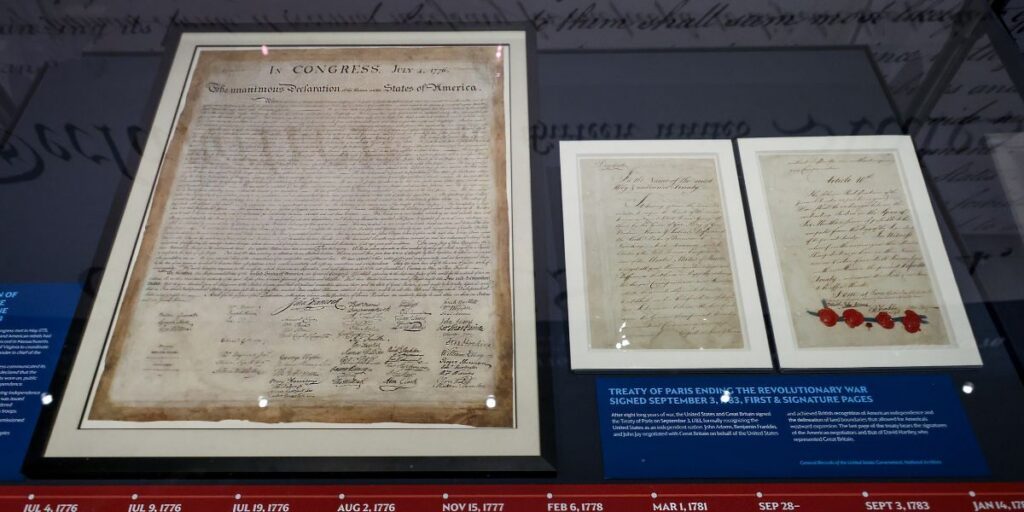
Founding documents reconnect us to our shared American roots – and rebelliousness | Vince Bzdek
Vince Bzdek
vince.bzdek@gazette.com
Updated 18 hours ago
When you first lay eyes on the actual founding documents of our country that, for the first time in history, have traveled together from their gilded cages in Washington to visit us out here in the hinterlands, you’re struck not...
Attorney General Phil Weiser’s underdog campaign for Colorado governor| Cronin and Loevy
Tom Cronin Bob Loevy
tom-cronin-bob-loevy@coloradopolitics.com
Updated 10 hours ago
Phil Weiser, 58, Colorado’s attorney general, is in a heated race against U.S. Sen. Michael Bennet, 61, for the Democratic nomination for governor. They are friends and share mostly similar progressive, Democratic policy views. Primary election day is June 30....
Would you hire Jena Griswold to handle your case? | SONDERMANN
By Eric Sondermann
by-eric-sondermann@coloradopolitics.com
Updated 5 days ago
If you were in a child custody dispute with a former spouse, would you hire an attorney with experience in family law or would you trust your case to an operative with virtually zero mastery? If you were getting ready...

Colorado Politics Calendar June 1-7
Rachael Wright, Special to Colorado Politics
rachael.wright@coloradopolitics.com
Updated 4 days ago
CoPo’s weekly political calendar will help you find political and public-policy events throughout Colorado. It includes candidate and issue campaign events, public policy meetings, court hearings, state and local party conventions, assemblies, debates, rallies, parades, speaking engagements, traveling dignitary appearances,...
Colorado General Assembly Dems kill early effort to protect children from online content | A LOOK BACK
Rachael Wright, Special to Colorado Politics
rachael.wright@coloradopolitics.com
Updated 4 days ago
Twenty-Five Years Ago This Week: Legislation sponsored by state Rep. Tim Fritz, R-Loveland, sought to use software to prevent children from violent, pornographic, or hateful materials. But after the Senate Judiciary Committee attached an “unfriendly” amendment, House Bill 01-1376 died...
Gov. Jared Polis vetoes bill requiring disclosure from administration lobbyists
Marianne Goodland
marianne.goodland@coloradopolitics.com
Updated 19 hours ago
Gov. Jared Polis on Friday vetoed a bill that would have required executive branch lobbyists to follow much of the same disclosure rules that already govern other Capitol lobbyists. Lobbyists for organizations are required to state their clients’ position on...

Gov. Jared Polis blocks Colorado Lottery’s move to allow credit card sales
Marianne Goodland
marianne.goodland@coloradopolitics.com
Updated 19 hours ago
Gov. Jared Polis on Friday signed legislation to block the Colorado Lottery’s move to allow the purchase of tickets with credit cards, effectively reversing his earlier position. Last November, Polis had said that he supported the decision of the Colorado...
Colorado governor vetoes union dues bill — again
Colorado Politics
colorado-politics@coloradopolitics.com
Updated 2 days ago
Gov. Jared Polis on Friday vetoed yet again legislation that would have made it easier for labor organizations to impose dues on non-union members, a decision long expected after the legislature approved the measure without securing the buy-in of businesses....

Colorado Democratic attorney general candidates clash over experience and Trump lawsuits
Marianne Goodland
marianne.goodland@coloradopolitics.com
Updated 2 days ago
Colorado’s four Democratic candidates for attorney general clashed sharply Thursday night in a debate that repeatedly returned to one theme — whether the state’s top lawyer should be a courtroom veteran or a political fighter. The contenders additionally sparred over...
PREV
PREVIOUS

Affordable, accessible housing solutions overdue for people with disabilities
At age 8, I climbed out of my wheelchair and crawled up the steps of the U.S. Capitol to convince Congress to pass the Americans with Disabilities Act. Twenty-five years later, Americans with disabilities are facing a crisis in affordable, accessible housing. Many properties that accept tax credits to provide low-income and accessible housing still […]
Another Rankin enters public office
Well-known wife and state Capitol aide to Joint Budget Committee member Rep. Bob Rankin, R-Carbondale, was sworn into a public office of her own on Wednesday. Joyce Rankin was all smiles as she recited her oath of office to Colorado Court of Appeals Judge Nancy J. Lichtenstein in the lobby of the Colorado Department of […]