

Letter: Another reason to oppose TPP
Thank you for reporting on the Trans Pacific Partnership (TPP) trade agreement in your recent article, Trans-Pacific trade agreement supporters, opponents spar.
I would like to make an important clarification to that article, which references the ability for foreign countries — through state-owned enterprises — and foreign companies “to sue the U.S. government”. That lawsuit provision, referred to as the Investor-State Dispute Settlement (ISDS), already exists in previous trade deals, such as NAFTA.
What’s new in the TPP is the provision for those foreign entities to directly sue U.S. states and municipalities (counties, towns, ports, etc.) in global courts, entirely bypassing U.S. court systems, and trashing the concept of U.S. sovereignty.
We already know, from witnessing ISDS lawsuits under NAFTA, that many of these lawsuits are frivolous, many of their outcomes are clearly unjust, and the mere cost of combatting such a lawsuit in global court could cost a town millions of dollar — dollars that they can ill-afford to spend.
Our states and municipalities do not have the manpower, let alone the expertise, to argue cases in global courts. And the court system itself is somewhat of a farce. These secret global tribunals are made up of three attorneys who take turns acting as judge and prosecutor. When acting as judge on a current trial, they can make a ruling that becomes a new part of the TPP, thereby favorably affecting the outcome of the next case which they’ll be prosecuting, a few months hence.
Yes, these rulings change and add to the Trans Pacific Partnership. And the defendants have no opportunity to appeal the rulings.
There are currently $6 billion of NAFTA ISDS lawsuits against Canada, 63 percent of which target existing environmental protections and resource management programs. Germany is also suffering under similar litigation, and, along with France, is now trying to renegotiate a recent trade deal between the European Union and Canada, in order to change its harmful ISDS provisions.
ISDS has the potential to turn Colorado cities and towns into Detroit-like wastelands after just one loss in global court. What happens when a $300 million judgment is levied against Denver County? If the money is not in the county’s bank account, what does the global court take? Our museums? Our parks? Our land?
There are many solid reasons to oppose the Trans Pacific Partnership trade agreement. But you don’t really need ten reasons. You only need one: the Investor-State Dispute Settlement has proven to be destructive, expensive, and cedes U.S. authority to global courts. It is completely unacceptable, and needs to be removed from all future trade agreements.
Sincerely,
Crista HuffPatriot
Crista Huff is a Republican and Tea Party activist in Douglas County, Colorado. She owns and operates a stock market website, Goodfellow LLC, and regularly travels to Washington D.C. with End Global Governance, to oppose Fast Track and the Trans Pacific Partnership.

10th Circuit appoints ex-Colorado solicitor general to argue issue after federal government declines
Michael Karlik
michael.karlik@coloradopolitics.com
Updated 10 hours ago
The Denver-based federal appeals court took the unusual step earlier this month of appointing an attorney to independently argue a key issue in a criminal sentencing appeal after the government indicated it would not contest the defendant’s view of the...

Greeley voters halt landmark development project
Hap Fry, Special to The Gazette
hap-fry@gazette.com
Updated 10 hours ago
GREELEY – The landscape-altering Cascadia development project has been put on ice, according to unofficial results of a city referendum on the project Tuesday. The proposed development would have included an 8,600-seat multiuse arena and ice center that would be home to the Colorado Eagles,...

State audit: Rape kit backlog reduced but more work needed to hit goal
Jenny Deam
jenny-deam@coloradopolitics.com
Updated 13 hours ago
In the past year, the Colorado Bureau of Investigation has slashed the time it takes to process DNA collected in sexual assault cases, but the agency still is far short of its turnaround goal, the state auditor reported on Wednesday....

Daniel Domenico to take over as Colorado’s chief federal judge
Michael Karlik
michael.karlik@coloradopolitics.com
Updated 17 hours ago
Daniel D. Domenico will become the new chief judge of Colorado’s federal trial court next week, a role that encompasses the administration of the court as well as a judicial caseload. Under federal law, the chief judge of a U.S....
10th Circuit upholds violations, sanctions against Colorado Springs mental health hospital
Michael Karlik
michael.karlik@coloradopolitics.com
Updated 17 hours ago
The Denver-based federal appeals court agreed earlier this month that the government properly cited and penalized a Colorado Springs psychiatric hospital for failing to protect its staff from known risks posed by patients. The Occupational Safety and Health Administration inspected...

Vance working with DOJ and Treasury after Trump announces ‘war on fraud’
David Zimmermann Washington Examiner
davidzimmermannwashingtonexaminer@wpstage.coloradopolitics.com
Updated 18 hours ago
Vice President JD Vance confirmed on Wednesday that he is working with the Justice and Treasury Departments to root out fraud nationwide. During the State of the Union address Tuesday night, President Donald Trump announced Vance would lead the administration’s “war on...
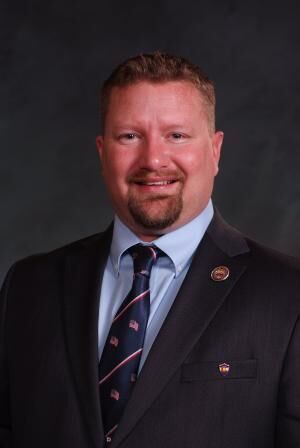
House Ethics Committee dismisses some claims, advances others against Rep. Ron Weinberg
Marianne Goodland
marianne.goodland@coloradopolitics.com
Updated 16 hours ago
The House Ethics Committee voted on Wednesday to accept three allegations filed against Rep. Ron Weinberg, R-Loveland, but combined two into one subject area. The two issues involve inappropriate comments made to female lawmakers in two separate incidents and the...

Bipartisan opposition sinks eviction bill in Colorado
Marissa Ventrelli
marissa.ventrelli@coloradopolitics.com
Updated 14 hours ago
Two Democrats sided with Republicans on a legislative panel to reject a proposal that would have made several changes to eviction filings and proceedings, including requiring judges to suppress court records. Sponsored by Rep. Junie Joseph, D-Boulder, House Bill 1047...

Appeals judges tell Boulder students about workload, ‘attack mode’ during school visit
Michael Karlik
michael.karlik@coloradopolitics.com
Updated 18 hours ago
Three judges on Colorado’s second-highest court traveled to Boulder on Tuesday to hear oral arguments in real cases and field questions from students about their professional paths, their workload on the Court of Appeals, and their approach to interacting with...

State of the Union: Here’s what Trump didn’t say
W. James Antle III Washington Examiner
wjamesantleiiiwashingtonexaminer@wpstage.coloradopolitics.com
Updated 19 hours ago
President Donald Trump made the case that happy days are here again in the first State of the Union of his second term, but there was little talk of transition or pain. “The state of our union is strong,” he...
PREV
PREVIOUS

Hudson: Holocaust remembrance attracts Colorado pols
Temple Emanuel in Denver’s Hilltop neighborhood was filled nearly to bursting despite a wet, snowy evening last Thursday for the 34th Anti-Defamation League’s Mountain States Regional observance of the Shoah. Several dozen survivors of the camps were recognized together with a bi-partisan smattering of Colorado’s elected officials in attendance, including a strong showing from Denver […]

Felony DUI bill gets nod in Senate Judiciary committee, moves on to Finance
The Senate Judiciary committee Tuesday morning unanimously passed a bipartisan bill that would make repeated drunk driving a felony offense in the state of Colorado. House Bill 15-1043, with Senate sponsors John Cooke, R-Greeley, a member of the Judiciary committee, and Mike Johnston, D-Denver, got a 5-0 nod after several victims of accidents involving drunk […]