

Will Colorado Republicans continue to heed the Call? Or usher in a new House?
A political riddle for all those who followed the 2014 elections here in the state: Would you call Colorado Republicans “winners” for taking the U.S. Senate seat away from a well- entrenched Democratic incumbent; sweeping the statewide offices; taking control of the state senate; and picking up seats in the state house?
Or, were Colorado Republicans ultimate “losers” for failing to regain the coveted governorship; and only slightly increasing their ranks in the state house, thereby leaving them short of recapturing control of the chamber?
Answer: Depends on who you ask, naturally.
State Republican Chairman Ryan Call answers the question in the positive. His chief challenger for the party chairmanship to date, former Adams County chairman Steve House, leans toward the more pessimistic view.


Call, who told The Colorado Statesman that he plans on officially announcing for a third term after the start-up of the legislature and hoopla of the swearing-ins subside in about a week, views the last year as momentus. Taking the U.S. Senate seat from Mark Udall was a major coup, he said, and coupled with gains in both chambers of the state legislature, these accomplishments will serve as a record upon which additional victories can be built in the next batch of elections.
And the race for governor where John Hickenlooper defeated their standard bearer Bob Beauprez? “Of course we’re disappointed,” he said.
But Call points to other dramatic achievements such as a large increase in fundraising by the party, successful candidate recruitment across the state, the addition of numerous field operations in Colorado,, and data input improvements as examples of a reenergized Republican party ready to head into the upcoming busy 2016 election year cycle which will not only feature an important presidential election, but also the reelection — or ouster — of Colorado’s other U.S. Senator, Democrat Michael Bennet.
When members of the state central committee meet on March 7 at Douglas County High School for their biennial reorganization meeting, Call and current Vice Chair Mark Baisley will present themselves as a united ticket, hoping that the state’s most active party members will vote them in for reelection.
Baisley, who is considered a member of the so-called liberty wing of the party, had earlier contemplated running for party chair himself this year, having lost to Call almost two years ago. But the former Douglas county chairman and Call came to a recent agreement to instead run as a team for chair and vice chair, hoping to show a unified ticket in March.
Call, who has come under fire from some of the grassroots and liberty Republicans in the past, hailed his partnership with Baisley as an indication that “the tea party and liberty [people] are not only welcome but had prominent leadership of the party.”
He added that Baisley “has given important voice and perspective from the liberty and grassroots” factions, and he plans on providing him “expanded opportunities” for a more prominent role with the party.
House, a former candidate for governor last year and a former county GOP chair, plans to make his candidacy for party chairman official on Friday, Jan. 9 during an interview on KLZ’s Grassroots Radio Colorado, a conservative talk station.
House acknowledges “some” success for Republicans in the 2014 election year under the leadership of Call, but “not enough.” Losing the race for governor is one example, he says.
House views the current Republican Party in the state “a little fractured” with the grassroots particularly unhappy with the way the party is run.
“I have a good relationship with the establishment and the grassroots,” House told The Statesman this week. He also said that he’s had a conversation with Party Chair Call about the discontent, and plans to meet with him this week for a more direct discussion.
House said his number one initiative will focus on county parties and their need to be strong. He feels that the current regime favors a top heavy organizational structure with the county parties at the bottom of the heap. House, who has served as chairman of Adams County in the past, points out that many of the elections occur in the counties, yet they have little power in determining how elections are run in the state.
It’s a feeling that other county chairs have recently expressed to The Statesman, as well. Becky Mizel, chair of the Pueblo County GOP, said she doesn’t believe in the topdown approach by the party. “When field directors come in, county officers should be a part of the field operations,” she stressed. The state party should “work with the county parties instead of berating them,” she added. She favors giving the county parties more fiscal responsibility and growing the party “grassroots up.”
Field directors, who typically are hired by the state party during election years and who are compensated, should be more mindful of the specific messaging unique to each county, Mizel said. “Pueblo is different than Boulder and Greeley, but there’s never any input from us.”
Plus, Mizel said, while she understands that the field directors were focused on Cory Gardner’s U.S. Senate campaign, she feels that some of the funds and infrastructure should have been provided for local candidates.
Pueblo state senator George Rivera, a Republican who won a recall election in 2013 against incumbent Democrat Angela Giron, ultimately lost his election in November. Likewise, Colorado Springs Sen. Bernie Herpin, who took the seat in a recall election that year when Democratic Senate President John Morse succumbed to the crossfire of gun politics, ended up losing the November election, as well.
“All hands should have been on deck,” Mizel said about those legislative races, with extra attention from the state party ensuring that the Republican incumbents could run viable campaigns. Mizel, and a couple other county chairs who were reluctant to go on the record, said that Chairman Call seemed to be punishing Rivera and Herpin — and the counties they represented — for being elected through a recall election, which Call has acknowledged in the past that he doesn’t favor to achieve elective office.
Call responded to the criticism by pointing out that there were close to 65 candidates running for legislative seats last year — 19 alone for the senate. Plus there were hundreds of local candidates. He said his principle responsibility was to be a good steward for the party’s resources which entailed closely following the elections, especially those of legislative candidates.
“If a candidate is losing by 7-8 points it’s not likely that money will make that much difference,” Call explained. “We could have written a check for $10,000 to $20,000, but the best use was for opening another field office to help the entire Republican ticket.”
“We only won the state senate by one vote,” chided Mizel, and only picked up a few seats in the house, keeping it still in minority status.
Viewed with the loss of the governor’s race against “a liberal, progressive” governor, Mizel said it is especially sickening given the tremendous successes of other GOP gubernatorial candidates across the country. “It is not a winning record,” she asserted.
Call disagrees.
He points to thr party’s aggressive efforts to raise funds to support Republican candidates, a record $2.1 million raised in state — that’s fourfold over the amount raised in th last midterm cycle, Call says. Plus, the state party mobilized $8.5 million from national Republican groups which benefitted Colorado.
Call said he was an advocate for conservative messages in the state, as well as a force for independent expenditure committees which also help Republicans get their message out.
The party provided Bob Beauprez’s gubernatorial campaign with $300,000 in hard money, Call added.
House said that while Call and the state party have had some success, he envisions a state party organized more in the style of former party chairs Beauprez or Bruce Benson, where the chairman served in a volunteer position and an executive director was the main fulltime paid employee.
Under the current regime, Call, as party chair, earns approximately $8,900 per month, according to county chairs who have reviewed party records. The state party pays Call’s taxes and health insurance and reimburses the chairman for traveling expenses.
House promised that if he is elected, his intention is to not take a salary. His only compensation desire, House told The Statesman, is for a bonus structured after the 2016 elections that would be “modest.”
House said he anticipates that he could serve as party chair and continue in his position as a healthcare consultant.
Another change he would like to make concerns the membership of the state party’s excutive committee, which House says should be more reflective of the entire party, not just the chairman. He feels it is “improper” for the party chair to appoint a majority of the committee members.
House said he is being supported by numerous county chairs and elected officials. Beauprez, whom he endorsed after the primary and campaigned for in the subsequent months, reportedly told him that he didn’t plan to endorse in the race, but “was very encouraging.”
House also said that Attorney General-elect Cynthia Coffman “reached out to me initially. She likes my leadership style. She encouraged me to do this and told me she supports me.”
Call, who party insiders speculate will be renominated for party chair by U.S. Sen. Cory Gardner, among other Republican victors, would not confirm his campaign plans. He said simply that he is proud of his accomplishments over the last two years, but is also cognizant that 2016 will be challenging.
“Change in course is not advised,” he stated.
Colorado Politics Must-Reads:

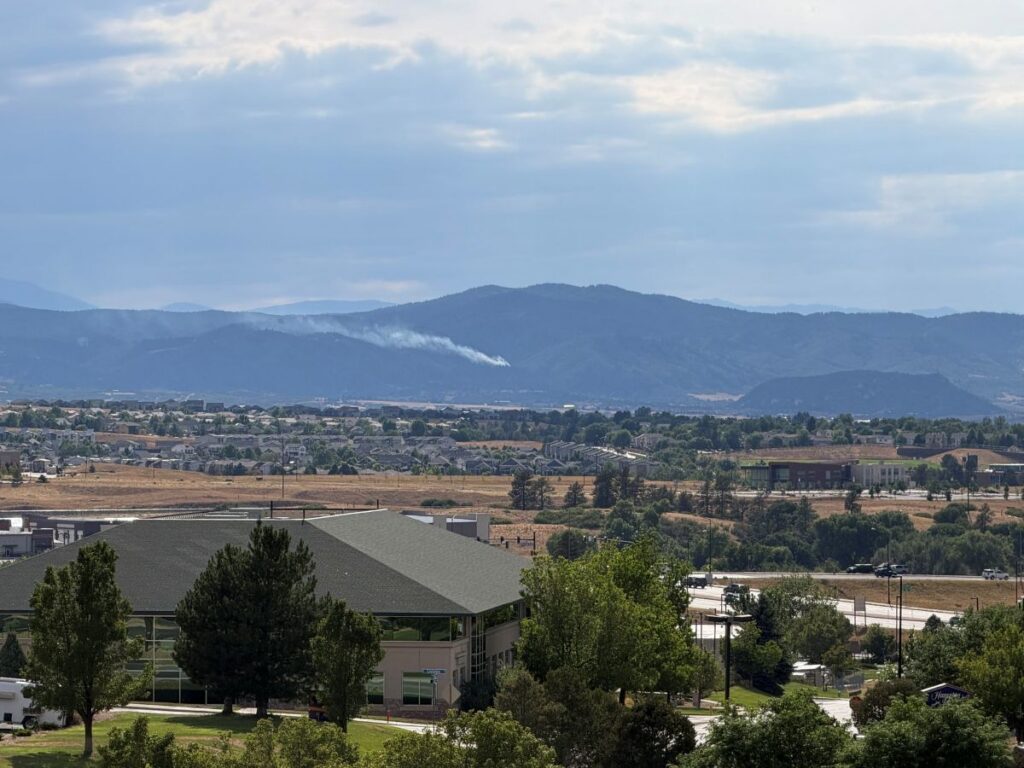
Forest fire west of Sedalia prompts evacuations in Douglas County
Nicholas Fogleman
nicholas.fogleman@denvergazette.com
Updated 32 minutes ago
Emergency crews are responding to a forest fire burning west of Sedalia, prompting evacuation orders for nearby residents Sunday afternoon. At about 5 p.m. Sunday, the Douglas County Sheriff’s Office issued an evacuation order for residents within a 2-mile radius...

Airstrikes have paused and talks are pressing forward. But can the US and Iran take the off-ramp?
The Associated Press
the-associated-press@coloradopolitics.com
Updated 23 minutes ago
WASHINGTON (AP) — The U.S. military has paused its airstrikes on Iran after nearly two weeks of intensifying bombing, while diplomatic efforts have pushed forward to try to avert a return to all-out war. But it remains to be seen...
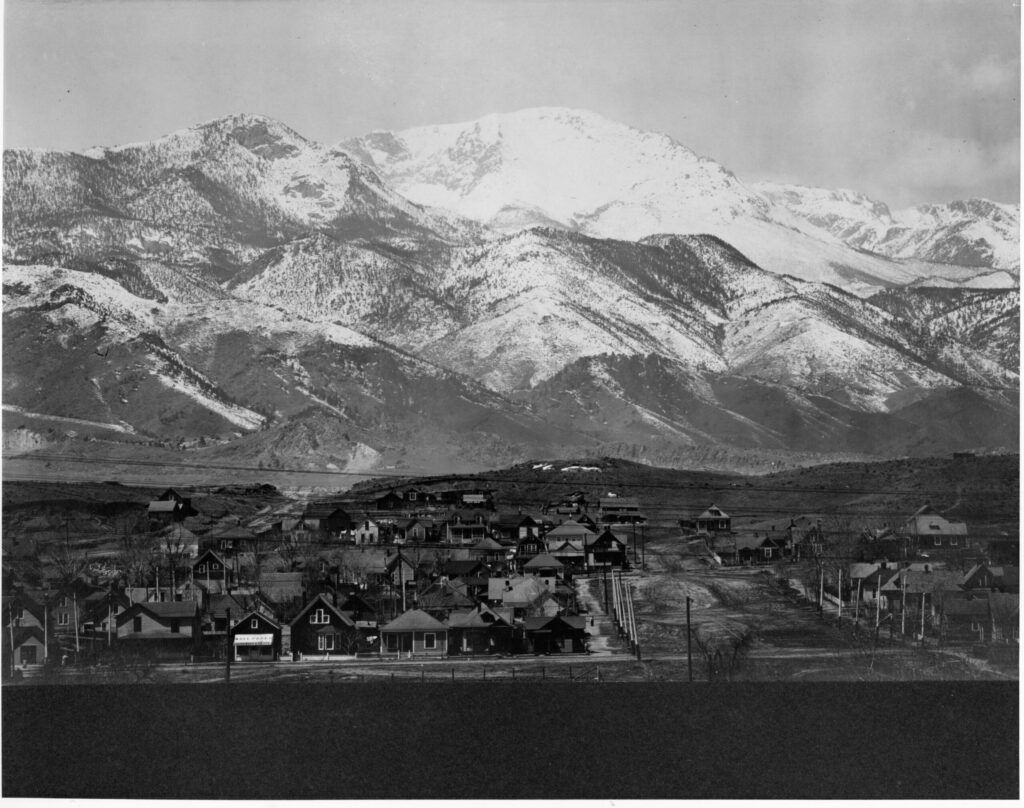
Penrose fortune paved the way for Colorado Springs to be a military, space and sports town
Mary Shinn
mary-shinn@coloradopolitics.com
Updated 29 minutes ago
Colorado Springs is always working to catch the next big economic wave. “We’re always trying to figure out what the next thing is going to be,” explained Matt Mayberry, director of the Colorado Springs Pioneers Museum. In the early days,...

Colorado Politics Calendar July 27-Aug. 2
Rachael Wright, Special to Colorado Politics
rachael.wright@coloradopolitics.com
Updated 5 days ago
CoPo’s weekly political calendar will help you find political and public-policy events throughout Colorado. It includes candidate and issue campaign events, public policy meetings, court hearings, state and local party conventions, assemblies, debates, rallies, parades, speaking engagements, traveling dignitary appearances,...

Space Force needs to measure workforce needs, as it prepares to double in size, GAO report says
Mary Shinn
mary-shinn@coloradopolitics.com
Updated 28 minutes ago
The Space Force needs more people. It’s just not precisely sure how many more. A Government Accountability Office report released earlier this month found that the youngest and smallest military branch does not have a process to consistently or accurately...

The through line from Donald Trump to Victor Marx | SONDERMANN
By Eric Sondermann
by-eric-sondermann@coloradopolitics.com
Updated 5 days ago
Over 10 years ago, before Donald Trump could ever defeat Hillary Rodham Clinton, he had to first engineer a hostile takeover of the Republican Party. Prior to his descent of that golden escalator, the previous seven Republican presidential nominees had...

Colorado districts prepare for school year amid mental health cuts. But will less cellphone distractions help?
Marissa Ventrelli
marissa.ventrelli@coloradopolitics.com
Updated 3 days ago
The signs of a new school year are everywhere — buses in the shop, teachers unpacking boxes, families ticking through supply lists — but behind the familiar rituals, Colorado districts are preparing for a year defined less by routine than...

Armstrong staffer considers congressional bid, DeGette angers rural communities with wilderness act | A LOOK BACK
Rachael Wright, Special to Colorado Politics
rachael.wright@coloradopolitics.com
Updated 4 days ago
Forty-five years ago this week: If the lines were drawn just right, Republican Sen. Bill Armstrong stood the chance of losing his office manager, Ruth Fountain. Fountain admitted she was seriously thinking about running for Colorado’s new congressional seat in...
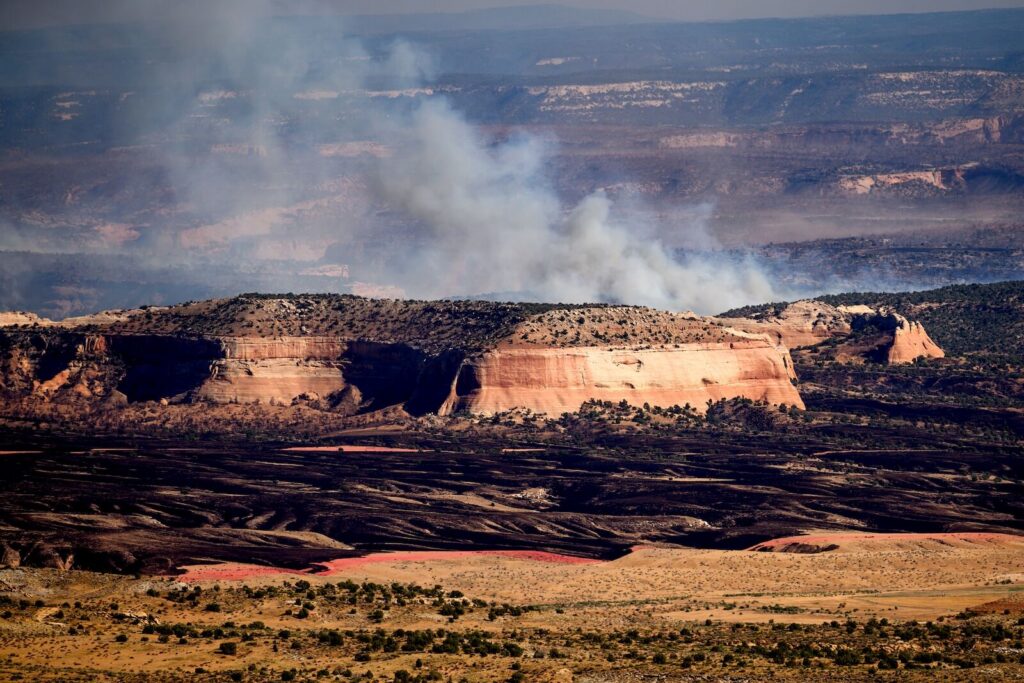
Busy wildfire season tests US fire bosses as they juggle resources to stay ahead | OUT WEST ROUNDUP
The Associated Press
the-associated-press@coloradopolitics.com
Updated 2 minutes ago
NEW MEXICO Wildfires challenge resources ALBUQUERQUE — It’s already been a deadly year for firefighters, and authorities have been putting resources where they can more quickly pounce on wildfires before they get out of hand and increase the possibility of...

Aurora City Council to discuss accountability for homeless navigation campus
Kyla Pearce
kyla.pearce@gazette.com
Updated 33 minutes ago
The Aurora City Council will discuss performance metrics and accountability for the homeless navigation campus, vote on election timing and hear updates on chamber accessibility in Monday night’s meetings. In Monday night’s study session, Councilmember Gianina Horton will propose a...
PREV
PREVIOUS

Forum on race, justice is just the beginning
At 3 p.m. on the Friday afternoon before the final weekend leading up to Christmas you couldn’t help but wonder how many Denver residents would be willing to show up for a discussion of race, justice and police brutality. The answer turned out to be that a lot of people found the time to fight […]
Effort to sell beer, wine in grocery stores may bypass legislature and instead seek ballot approval in 2016
Supporters of the effort to allow grocery and convenience stores to sell full-strength beer are turning away from the General Assembly and on to voters. For four years, beginning in 2009, the Legislature tried but failed to pass laws allowing grocery and/or convenience stores to sell full-strength beer or wine. The push from grocery store […]