

Remembering former Mayor Marion Barry
In the fall of 1970 when I returned to Chesapeake & Potomac Telephone in Washington, D.C., I found a much different company than the one I’d left three years earlier as I departed for the U.S. Navy and a once in a lifetime opportunity to help keep Southeast Asia safe for democracy. AT&T, the nation’s largest employer, had executed a nationwide consent decree with the Nixon administration’s EEOC during my absence.

The skilled craft and management jobs that were almost exclusively filled by whites in the predominantly black city, characterized by John Kennedy as combining Northern charm with Southern efficiency, were rapidly integrating. The installation and repair crew that I was assigned to supervise near Dupont Circle was comprised of seven black and five white men. These outside jobs would not be opened to women for several more years.
The nation’s capitol was also changing and a young man named Marion Barry was winning favorable attention for operating a summer employment program directed at inner city youth called Pride, Inc. C&P Telephone was a participating employer together with many other members of the Washington Chamber of Commerce, which had been badly frightened in 1968 by the destructive riots following the assassination of Martin Luther King. Early in the summer of 1971, Pride scheduled a weekend long fundraising radio-a-thon in cooperation with the city’s most popular soul music station at a church located in the 1300 block of U St., NW. Located just a block from the drop zone for drug dealers each afternoon at 4 p.m., the company never scheduled orders there past noon each day. I was jolted during my job orientation by a C&P policy that limited its responsibility for reimbursement subsequent to a mugging to $200 in losses. If the money in your wallet and the value of your jewelry exceeded this amount, the loss was at your own expense. In other words, this was a rough, dangerous and largely unpoliced neighborhood.
About 11 a.m. on the Friday morning of the much advertised radio-a-thon my pager buzzed and I called into the Dupont dispatch center. I was told to round up half my crew, instructing them to drop the remainder of their orders for the day, and report to the church on U Street. The test desk could tell me where each installer was working, and by noon I had seven of them on their way. Whether through an oversight by Pride, or, as claimed by Marion Barry, a deliberate failure to issue the needed paperwork by C&P, phones had never been ordered to support his event. Sixteen lines and a T-carrier circuit for the radio broadcast were required before 5 p.m. In an age before cellular service, this meant we required 20 spare pairs of copper wires —16 for the call-in operators, and four more to configure a T-carrier. The test desk informed us there were only three spare, unused pairs at our location. Inspecting the alley behind the church, I noted a 25-pair cable that served a four-story building half way down the block. We determined that it was a senior residence with 24 units and a front desk phone.
If we were to activate Pride’s lines it was going to be necessary to commandeer these pairs for the weekend. It had been made abundantly clear to Roy Meyer, my garage mate and fellow foreman, that we were to have their service operating by 5 p.m. whatever the obstacles. We decided to cut the cable and then dispatched Bill Howard, my slickest speaking black installer, to visit each apartment in the retirement building and inform them that there had been an accidental cable cut that we expected to have repaired by Monday morning. We further promised to restore the front desk phone immediately so residents would continue to have access to an emergency phone. An hour later Bill returned grumbling, “Don’t ever ask me to do that again!” While my crew rerouted the cable to the back of the church, Roy had been surveying the interior installation. As I approached the front steps I found Marion Barry standing in the doorway and a group of our installers milling around. Roy informed me, “We’ve got a problem.”
Thinking we faced another technical problem, I asked, “What’s the matter now?” Roy replied, “Mr. Barry insists he wants an all black crew assigned to install his phones. You’re the college boy. See whether you can change his mind.” I could hardly believe what Roy was telling me. It was evident the company was moving heaven and earth to support Barry’s radio-a-thon, with a dozen installers pulled away from their regular work to provide him his dial tone. I also recognized he must have spent most of the morning jumping up and down on desks downtown to produce this result. When I approached Barry, an imposing man by any standard, to make the argument, “We are an equal opportunity employer. We don’t assign installers on the basis of race — customers are expected to accept the installer that is dispatched on their order,” Barry remained unmoved. He pointed out that I was standing in front of him only because he had raised hell at the highest levels in the company, and that he was prepared to go back and do it again. “Pride is a project for our kids. It’s a black initiative in a black community and we expect the phone company to honor that by providing us black installers,” he ranted.
At that point I decided to alter my tactics and quit defending the company. I told Barry I agreed with him, “Mr. Barry, I’m sure you’re right. I’m sure you can get back on the phone, not here of course, and you can yell loud enough and long enough that you will reach someone who will cave in to your demand. Then you will get the all black crew here that you say you want. But, I want you to think about one thing. If you don’t permit this group of men to install your phones, we’ll send them back to work installing phones for the black families in this neighborhood who thought they were going to see us today, but who won’t because we are here. Who knows, I’ll probably misplace my pager. And by the time you secure agreement for an all black installation crew I can promise you one thing — it will be well past 5 p.m. this afternoon.” Marion Barry slowly grinned, stepped sideways and waved his arms towards the church doors, “Mr. Hudson, please go ahead and install my phones.” Later that day, as we completed our work, we discovered 10 cases of Budweiser slipped into the rear of one of our vans.
I moved to Denver the following year to work at Mountain Bell. Marion Barry moved on to serve first with the D.C. school board, followed by a stint on city council and eventually was elected Mayor. Nearly 20 years later during a lunch at Phillips Crab House along the Potomac Waterfront a group of burly security men flooded into the restaurant taking up watchful positions. I expected a glimpse of some national leader. Instead, Mayor Barry swept in past my table. He glanced at me searching his memory for why I appeared familiar. Whether he actually placed me I can’t say, but he nodded and winked before rushing through to his luncheon in a private room. Shortly after that encounter drugs and misbehavior would stain Barry’s career, but for a period he was a spokesman for his community who deservedly earned the admiration of all. As Barry was wont to remind us, “When you don’t ask, you don’t get!”
Miller Hudson is a public affairs consultant and can be reached at mnhwriter@msn.com.
Colorado Politics Must-Reads:

The primary political reform and precondition for all others | SONDERMANN
Eric Sondermann
eric-sondermann@coloradopolitics.com
Updated 3 days ago
In its current state, the American political system has no end of ailments. Far too many factors accelerate polarization and work against moderation and narrowing the differences. Media, and the way so many citizens limit themselves to agreeable, reinforcing sources,...
Pueblo mayor, council concoct Trumpian Texas Two-Step | Dennis Maes
Dennis Maes
dennis-maes@coloradopolitics.com
Updated 2 days ago
Several weeks ago, an article was published positing Pueblo Mayor Heather Graham is a disciple of the calamitous Donald Trump school of governance — specifically as it related to questionable ethical practices and the misuse of public funds. Recently, Graham...
Colorado can’t afford to turn its back on proven public safety technology | GUEST COLUMN
Colorado Politics
colorado-politics@coloradopolitics.com
Updated 2 days ago
By Samuel G. Michael I recently saw a report that said Colorado is leading the way in artificial intelligence adoption for businesses. Across our state, more business owners and employees than ever before use AI for their everyday functions —...
As education conflicts abound across Colorado, who puts the kids first? | Paula Noonan
Paula Noonan
paula-noonan@coloradopolitics.com
Updated 3 days ago
Elected school boards and the Colorado Department of Education (CDE) have hit the headlines with fired superintendents, superintendent resignations, failures of oversight, and misdirected dollars. Cherry Creek School District’s superintendent was fired. Jefferson County Schools’ superintendent found a less stressful...

Clock is ticking on Colorado’s new AI rules | PODIUM
Colorado Politics
colorado-politics@coloradopolitics.com
Updated 3 days ago
By Aashis Luitel On Jan. 1, organizations using covered automated systems must begin complying with Senate Bill 26-189, Colorado’s new Automated Decision-Making Technology Act. They can identify those systems and start building the processes the statute clearly requires. What they...
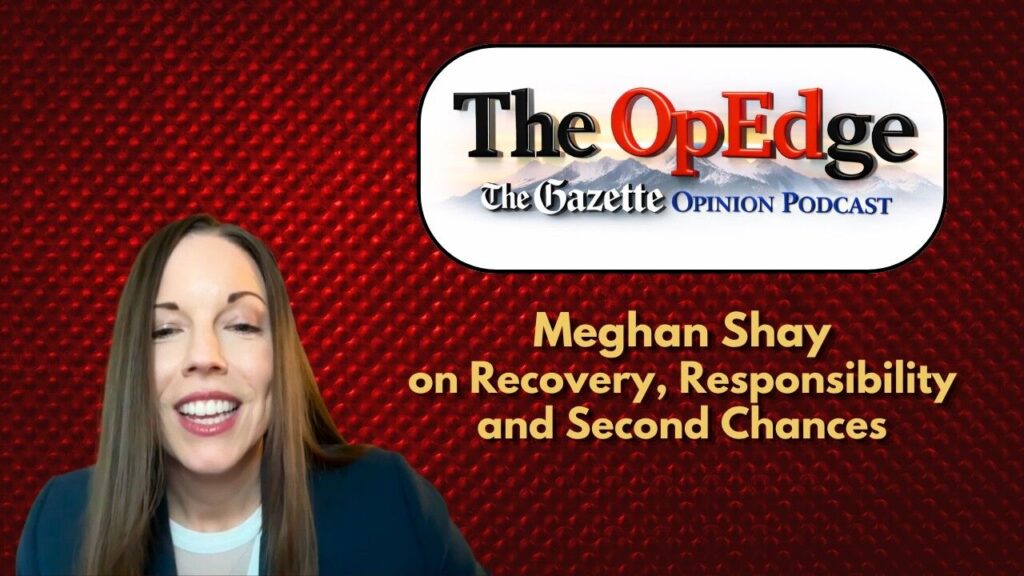
Meghan Shay on recovery, responsibility and second chances | The OpEdge Podcast
Tony Olivero
tony.olivero@gazette.com
Updated 4 days ago
Step Denver and Step Springs CEO Meghan Shay joins The OpEdge to explore addiction recovery, homelessness, and the role of accountability in lasting change. Shay tells host and investigative columnist Jimmy Sengenberger why she believes recovery is built on personal...
The outrages mount | Hal Bidlack
Hal Bidlack
hal-bidlack@coloradopolitics.com
Updated 4 days ago
My kindly and forgiving editors understand that, from time to time, I can’t help myself from leaping atop my rickety soapbox to vent. And, like many other political commentators have already done, I could easily fill this entire missive with...
Rural Colorado deserves a tax holiday | GUEST COLUMN
Eric Mulder
jstooksberry@gmail.com
Updated 4 days ago
Spend enough time in Colorado’s Eastern Plains, the San Luis Valley, or the Western Slope, and you’ll see boarded-up storefronts, schools consolidating classrooms, and small rural communities stretching every dollar to keep basic services afloat. Once the backbone of Colorado’s...
Weiser’s leadership crucial for rural win-win | Rachel Gabel
Rachel Gabel
rachel-gabel@coloradopolitics.com
Updated 1 week ago
Attorney General Phil Weiser is going to win the gubernatorial election. That said, Colorado agriculture and rural communities have a 30-year track record of finding the win-win be it for species or industries or habitat. Former Governor Roy Romer possessed...
A Colorado history lesson for Victor Marx | Dick Wadhams
Dick Wadhams
dick-wadhams@coloradopolitics.com
Updated 1 week ago
Victor Marx, who narrowly won the Republican nomination for governor by one half 1% after boasting of a massive 44-point lead, is just as misguided on Colorado political history. During the primary, Marx made a clumsy attempt to denigrate his...
PREV
PREVIOUS

Question of TABOR’s constitutionality could cause major reverberations
Who is in charge of the American republic? A case out of the federal district court of Colorado could answer that question, if the Supreme Court takes the matter up next spring. In 1992, Coloradans voted to amend their state constitution in order to impose restraints on their government’s power to tax and spend. The […]

Shared problems: taxes, corruption, the economy, lack of confidence in our leaders
“After I vote, I look up into the sky and say a prayer that it will turn out alright,” says a Spaniard named Francisco Noviola. Despite the agony of our November 4 elections, it’s November 9 and here we are in Barcelona, Spain to observe another election — the referendum on independence from Spain that […]