

Rep. Williams says she’s being harassed over foreclosure vote from last session
EDITOR’S NOTE: Darren O’Connor clarified after the story published that Cmdr. Mike Calo testified on Nov. 13 that he did not ask O’Connor to back away from Rep. Angela Williams during a town hall meeting on Sept. 23.
Progressive activists next year will once again attempt to pass some semblance of foreclosure reform after a heated battle last legislative session resulted in one lawmaker fearing so much for her safety that she obtained a concealed-carry permit and recently sought a restraining order.
Rep. Angela Williams, D-Denver, filed a request for a protection order in Denver County Court on Oct. 16 against one of the more aggressive activists, Darren O’Connor.
But on Nov. 25, Magistrate Catherine Cary rejected the request after testimony suggested that O’Connor had never actually outright threatened the chairwoman of the House Business, Labor, Economic and Workforce Development Committee. She said O’Connor was simply exercising political speech.

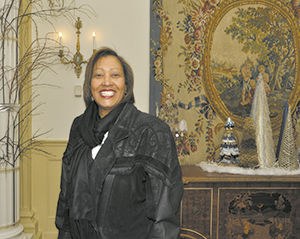
State Rep. Angela Williams, D-Denver, is all smiles at a Young Dems holiday party at the Governor’s Mansion Dec. 5. But she said she fears for her safety because a progressive activist is stalking her. The court denied her request for an order of protection.Photo by John Schoenwalter/The Colorado Statesman

Williams made her request following a legislative session that was filled with violent threats related to gun control proposals, which many lawmakers feared would spill over into other policy topics.
In her request, Williams cited “stalking” and “physical assault, threat” as her reasons for the order. Williams pointed out that O’Connor lives in Boulder County, despite Williams representing District 7 in Denver, thereby not making him a direct constituent.
She described O’Connor as a member of the Colorado Foreclosure Resistance Coalition and a participant in the “occupy” movement. O’Connor says he also has ties to Denver Move On and the Colorado Progressive Coalition.
“Since April 2013, Mr. O’Connor has relentlessly contacted me by phone, by email, through social media, and in person, indicating that the ‘pressure’ will not stop until I meet with him to discuss the bill,” Williams wrote in her protection order request, obtained by The Colorado Statesman.
She points out that O’Connor showed up at her house and left his business card on her doorstep. He also had a regular presence at her town hall meetings.
“Confronting me, posting about me in social media, targeting me to the exclusion of other committee members, and using words suggesting that he will not stop harassing me until I meet with him, cause me to have heightened concern for my personal safety,” wrote Williams.
The lawmaker asked local police to place extra patrol units near her home and to offer advice on her safety. As a result, law enforcement officials installed a security camera to monitor activity at her home.
“There is no legitimate reason for Mr. O’Connor to continue to contact me by all available methods except to intimidate me, cause me to fear for my personal safety, and cause me to suffer serious emotional distress,” Williams continued in her request for a permanent protection order.
She said the most recent incident took place on Sept. 23 when O’Connor showed up at a town hall meeting Williams was hosting to discuss Denver Public Schools Board of Education candidates.
The sworn statement says that O’Connor sat in the front row with a map of Montbello — part of Williams’ northeast Denver district — that included red houses reflecting the rate of foreclosure in the district.
“This is the first time Mr. O’Connor sat in the front row of one of my meetings, and his look and demeanor were intimidating to me,” Williams explained in her request. “He had with him a small bag that he set on the floor and, during the forum discussion, continued to abruptly reach into it, which scared me.”
Williams added that O’Connor confronted her after she did not ask one of his written questions that were submitted during a question-and-answer portion of the forum. The question pertained to foreclosure reform, and the meeting was about school board candidates, explained Williams.
“He got close to me — in my personal space, just several inches away from me,” Williams recalled in her request. “He stared me down.”
Several officers were in attendance, including Denver Police Department Cmdr. Mike Calo, who asked O’Connor to back away. According to the commander’s testimony during the protection order proceedings, O’Connor complied. Officers made no arrests in the incident.
“In response, Mr. O’Connor told me that he will keep coming back and keep pressuring me until I meet with him,” Williams wrote in her request. “I told him I would not meet with him.”
Williams said the most serious incident was when O’Connor left a business card on her door: “Mr. O’Connor’s message was clear — he knows where I live; I am not safe there,” wrote Williams.
“He was singling me out. I live alone, and I immediately became concerned for my safety and began taking measures to protect myself,” Williams continued. “I asked the police to send extra patrol to my neighborhood and took the necessary steps to obtain a conceal carry weapons permit.”
The heart of Williams’ request rested on O’Connor’s relentless verbal and digital harassment, though it does not allude to any actual physical threats. “At each meeting, he passed out negative literature and criticized me to meeting attendees…” Williams described. “Mr. O’Connor posted negative messages on my legislative Facebook page and encouraged others to do the same…”
At one meeting, O’Connor approached Williams and got in her personal space, she explained. He was asked to leave by a police office. Again, no arrests were made.
But Magistrate Cary indicated in her ruling that O’Connor was simply exercising his First Amendment right, pointing out that Williams is a public official.
“This case presents a substantially different setting from the usual protection order case, because it involves a political figure, if you will, a public figure, and a person’s right to free speech,” Cary said in her ruling, according to a transcript of proceedings obtained by The Statesman.
“The Court believes it is central to, and, in fact, the most significant issue in this matter,” Cary continued. “In general, political speech is protected speech, under the First Amendment to the constitution, even if it vehemently or unpleasantly attacks a public official.
“None of O’Connor’s actions, conduct, or speech contained a serious expression of an intent to commit an act of unlawful violence to a particular individual,” the magistrate added.
Cary pointed out that even Cmdr. Calo — who was called as a witness by Williams — described O’Connor as “calm, using no profanity, not disruptive, and a gentleman.”
The magistrate disagreed with Williams that O’Connor was threatening her when he left a business card on her door.
“O’Connor’s explanation that it was simply another method, or attempt, at getting her to meet with him, with no nefarious purpose intended, rings true,” explained Cary.
She goes on to explain O’Connor as, “An effective and articulate spokesperson for his political beliefs, which do not always align with those of Rep. Williams. But he has a right to express those beliefs in a peaceful, if persistent, way.”
Williams reiterated to The Statesman that she only filed the motion for the protection order because she truly feared for her safety.
“I filed a restraining order against Mr. O’Connor because I felt my personal safety was at risk,” she said. “Those concerns that I had were argued in court…
“What I don’t want is this issue of my personal safety to distract us from what we’re really trying to achieve, which is to protect the people of Colorado, or to help them, with mortgage foreclosure reforms,” Williams added.
For his part, O’Connor was flabbergasted by the citation. He was served the temporary protection order at an HD 7 meeting in mid-October, at which Williams was attending. Several police officers told O’Connor he had to leave.
A video taken at the meeting shows a peaceful exchange between O’Connor and officers, in which he was served the temporary order, collected his belongings and left. Officers thanked him for his cooperation and instructed him that he would have his day in court.
O’Connor was pleased that Magistrate Cary denied the request for a permanent protection order, suggesting that the ruling was an indication that he was only exercising his right to political speech.
“She told Rep. Williams that this is the wrong way to handle it,” surmised O’Connor. “You’re in a position of power and you’re an elected official.”
O’Connor acknowledges that he singled Williams out. But he points out that he has a full-time job as an electrical engineer at the University of Colorado Boulder. He said he doesn’t have time to lobby each member of the House Business, Labor, Economic and Workforce Development Committee.
“I’m one guy,” explained O’Connor. “I have a full-time job. I do this stuff voluntarily, and I have to pick my efforts carefully, and I thought [Williams], being a leader of the committee, would have the most impact, and Magistrate Cary reiterated that.”
Swamped in controversy
O’Connor says he has never experienced foreclosure. He describes himself simply as a concerned citizen and a volunteer.
His effort this year was on House Bill 1249, which died in the House Business, Labor, Economic and Workforce Development Committee by a wide margin, despite Williams being the only law-maker singled out. The bill died 10-1.
The measure, sponsored by Rep. Beth McCann, D-Denver, would have prohibited lenders from foreclosing on a party if they were in the process of a loan modification. It also would have required servicers to review evidence to substantiate the borrowers’ default; provided a single point of contact for home loan modifications; and allowed borrowers to bring legal action for certain violations.
The bill was pushed by the Colorado Progressive Coalition, which also singled out Williams, conducting a sit-in in front of her office during the legislative session. The group was frustrated that Williams appeared to be more focused on the banking industry and not on foreclosure concerns.
They pointed out that Montbello and Green Valley Ranch are in Williams’ district, which were among the hardest hit by the foreclosure crisis in Denver.
O’Connor says that has been his point all along — he simply wanted to meet with Williams to discuss another perspective. He was offered one opportunity to meet with Williams, but he was busy at the time.
“Angela Williams shut the door on any collaboration and called us ‘bullies…’” he said. “I’m going to continue showing up and challenging her on this in any way I can.”
Corrine Fowler, economic justice director for the Colorado Progressive Coalition, said her group distanced themselves from O’Connor’s approach, though they were also frustrated by how difficult it was to meet with Williams, having met with her only once last session.
“We reached out to every single member of that committee multiple times and we did get an audience with all of them besides Rep. Williams,” said Fowler. “We met with Rep. Williams one time last [session]. She has a relationship with CPC, we are very active in her district, and on this one issue there was a closed door — I’ll never deny that.
“Darren’s tactics and the resistance coalition’s tactics are a little bit more radical, but I think there’s a place for that kind of activism,” continued Fowler. “We would like to better understand what Rep. Williams’ misgivings were and work together. I’m hopeful for next year.”
The banking industry vehemently opposed the bill, suggesting that it would create a chilling effect on the housing market. They said it would have been impossible to track down certain records, and that the measure would have jammed the courts.
This year, Williams received the “Spirit of Independence” award from the Independent Bankers of Colorado. The group said winners of the award “stand firmly in the face of opposition from their own political party and special interest groups to represent the interests of their constituents and ensure sound public policy is achieved at the Capitol.”
Jennifer Waller, vice president of the Colorado Bankers Association, believes Williams was unfairly singled out.
“People need to remember that the bill died 10-1,” said Waller. “Clearly it wasn’t like she was the only ‘no’ vote on the committee. I think that she is being extremely unfairly targeted.”
Waller said her group made efforts to meet with as many stakeholders as possible, including the Progressive Coalition.
Looking ahead
Bankers say they are open to another proposal being floated by McCann for the upcoming legislative session that begins in January. The measure would be watered-down compared to the last session, focusing more on loan modifications.
Fowler said her group has once again been working with McCann on a draft. The measure would mostly conform the state to federal law by prohibiting dual-tracking, or foreclosing on a borrower while simultaneously negotiating a loan modification.
The measure may also include language requiring a single point of contact, in which there is an assigned person to work with borrowers on their mortgage difficulties.
Fowler said the measure is necessary because there is currently no oversight at the state level.
“The only avenue a homeowner has is to file a federal complaint against the bank and hope that that bureaucracy wades down to them in time to save their home,” she said.
Fowler said McCann has been working with the banking industry and the attorney general’s office to try and find an appropriate enforcement mechanism.
Meanwhile, foreclosures continue to drop. They went down 50 percent in Colorado just last month, said Fowler.
“Our fear is… that we’re kind of in this holding pattern and this artificial recovery, and as the adjustable rate mortgage loans that were sold at the end of the bubble come to maturity, we’ll see this new wave,” she added.
McCann did not return requests for comment left by The Statesman.
Waller said that she hopes her group will be able to either support, or stay neutral on the proposal, if it is to be introduced.
“They’re already being done at the federal level, so if certain people feel that they need to be done at the state level, we don’t have a problem with that,” explained Waller. “Of course, it always matters the actual language, how it’s written.”
But on the more comprehensive issues, such as requiring certain original documentation in order to foreclose, Waller does not believe her organization will be able to get on board.
“Can we all agree and get together on it? I’m hoping there’s a few points we can get together and agree on,” she said. “But philosophically, on many issues we’re not on the same page.”
Williams agrees that the foreclosure issue is critical, and acknowledges that the crisis especially impacted her district. She is also hopeful that this year her committee will be able to advance some form of reform.
“There are some reforms that we can continue to address for the people of Colorado,” said Williams.
“We are on the downside, mortgage foreclosures in the state of Colorado are way down. But we may be able to assist those who still may be in some type of situation where they need help,” she added, pointing out that Colorado already has a foreclosure assistance hotline, as well as support from the attorney general’s office.
Williams is supportive of reforms that address both the dual-tracking and single point of contact issues.
“It’s already hard enough for a distressed homeowner to call and ask for assistance with their mortgage company, or the servicer, and to get a different person each time doesn’t provide continuity and it delays the process in which we can help the consumer,” opined Williams.
Denver urban camping ban
Also tied into the foreclosure debate are issues surrounding homelessness. In some instances, a foreclosure can lead to being homeless.
One way Denver is addressing its issues around homelessness is by prohibiting urban camping, which was enacted in 2012. The ordinance prohibits unauthorized camping on public and private property in Denver.
Some of the homeless had been camping along the 16th Street Mall and in other public and private spaces, including alcoves.

Activists who wished to remain anonymous protest in Civic Center Thursday against Denver’s urban camping ban. Foreclosures can result in homelessness.Photo by Peter Marcus/The Colorado Statesman

City leaders and advocates of the ban argue that it is a way to intervene, pointing out that many of those people suffer from mental illness, as well as drug and alcohol addictions. They say that without intervention, many of those people wouldn’t seek available shelters and other services.
The city has not made any arrests or issued any citations connected to the ban, but instead says it has worked on outreach efforts. Denver Mayor Michael Hancock made homelessness a focus of his State of the City address this year, pointing to a need for more affordable housing and additional services for the homeless.
The city uses recreation centers and other city buildings to provide shelter on cold winter nights, and it has been connecting individuals and families with service providers and resources as part of its Road Home program, which set a 10-year plan to end homelessness.
The city also does not enforce the ban when there is no space at available shelters, which is tracked by both the police department and social service workers.
Opponents of the ban, however, say that it is an unfair burden on the homeless because they have no place to go, and that the city isn’t really working on outreach, but instead has taken a “move along” approach when coming across homeless people camping within the city.
Critics of the ban say it has also given police a reason to arrest homeless people for other infractions, such as drug possession, by offering them an excuse to search people found sleeping in the streets.
Janet Matzen, who has been leading protests against the ban, said much of the problem could be connected to the foreclosure crisis.
“They get foreclosed on and they can’t afford rent even,” she said. “Rent is so damn high. That’s the biggest problem with [the homeless people I know], they can’t afford the rent.”
Matzen has been protesting with a small group outside Tami Door’s Denver home. Door is the president and chief executive of the Downtown Denver Partnership, a group that advocates for businesses and development in downtown Denver. The organization was very supportive of the ban.
Protesters, with ties to the occupy movement, have been protesting outside the home every Sunday. Matzen finds herself outside Door’s home even during the week.
“She was the one that pushed it,” said Matzen. “Yet they’ve done nothing to help them. It’s been a year-and-a-half and I’m still feeding [the homeless] every Friday night.”
Matzen points out that some business leaders that supported the ban are now flipping because they feel the city hasn’t done enough to provide resources.
Snooze an AM Eatery, a breakfast and lunch restaurant with several locations, including one in the Ballpark Neighborhood where there is a large population of homeless people, was one of the businesses to reverse its stance.
The restaurant faced repeated protests outside its doors by Matzen and others who criticized ownership for having supported the ordinance.
But in a Facebook post in April, Snooze said, “When the Urban Camping Ban proposal was presented to us, we believed the ban would provide and allow for more services and support in the form of shelters, mental health and general assistance for our area homeless. We believe the Urban Camping Ban has not provided these opportunities and should be repealed or amended to more effectively meet the needs of our homeless community.”
Door said the business community is dedicated to finding solutions for the homeless, but defended the need for the urban camping ban.
“The business community has been committed to identifying and implementing solutions to homelessness,” said Door. “We were significantly involved in the creation of Denver’s Road Home. We have been at the table ever since. We work closely with all the social service providers in the city to collaborate and partner in ways to meet the needs of the individuals that are on our streets.”
Colorado Politics Must-Reads:


Colorado Politics Calendar July 27-Aug. 2
Rachael Wright, Special to Colorado Politics
rachael.wright@coloradopolitics.com
Updated 4 days ago
CoPo’s weekly political calendar will help you find political and public-policy events throughout Colorado. It includes candidate and issue campaign events, public policy meetings, court hearings, state and local party conventions, assemblies, debates, rallies, parades, speaking engagements, traveling dignitary appearances,...
The through line from Donald Trump to Victor Marx | SONDERMANN
By Eric Sondermann
by-eric-sondermann@coloradopolitics.com
Updated 4 days ago
Over 10 years ago, before Donald Trump could ever defeat Hillary Rodham Clinton, he had to first engineer a hostile takeover of the Republican Party. Prior to his descent of that golden escalator, the previous seven Republican presidential nominees had...

Colorado districts prepare for school year amid mental health cuts. But will less cellphone distractions help?
Marissa Ventrelli
marissa.ventrelli@coloradopolitics.com
Updated 2 days ago
The signs of a new school year are everywhere — buses in the shop, teachers unpacking boxes, families ticking through supply lists — but behind the familiar rituals, Colorado districts are preparing for a year defined less by routine than...
Armstrong staffer considers congressional bid, DeGette angers rural communities with wilderness act | A LOOK BACK
Rachael Wright, Special to Colorado Politics
rachael.wright@coloradopolitics.com
Updated 3 days ago
Forty-five years ago this week: If the lines were drawn just right, Republican Sen. Bill Armstrong stood the chance of losing his office manager, Ruth Fountain. Fountain admitted she was seriously thinking about running for Colorado’s new congressional seat in...
10th Circuit dismisses woman’s lawsuit following 10-year attempt to undo restraining order
Michael Karlik
michael.karlik@coloradopolitics.com
Updated 2 days ago
The Denver-based federal appeals court rejected a woman’s challenge on Friday to a restraining order imposed on her more than a decade ago, finding that she cannot credibly claim she will be prosecuted for violating the restraining order through her...
10th Circuit dismisses woman’s lawsuit following 10-year attempt to undo restraining order
Michael Karlik
michael.karlik@coloradopolitics.com
Updated 2 days ago
The Denver-based federal appeals court rejected a woman’s challenge on Friday to a restraining order imposed on her more than a decade ago, finding that she cannot credibly claim she will be prosecuted for violating the restraining order through her...
Surprise candidate Shimon Blau cleared to face off against Melat Kiros in November
Ernest Luning
ernest.luning@coloradopolitics.com
Updated 2 days ago
Unaffiliated congressional candidate Shimon Blau, a Denver doctor, has qualified by petition for the general election in Colorado’s 1st District, where Democrat Melat Kiros defeated 15-term U.S. Rep. Diana DeGette in last month’s primary, the Colorado Secretary of State’s Office...

Colorado produce not tied to nationwide cyclospora outbreak, agriculture officials say
Marissa Ventrelli
marissa.ventrelli@coloradopolitics.com
Updated 1 day ago
There is no indication that the recent outbreak of cyclospora, a fecal parasite that has contaminated food and water across nearly every state, can be linked to produce grown in Colorado, according to the state’s Department of Agriculture. “Colorado growers...

UNC opens College of Osteopathic Medicine
Marissa Ventrelli
marissa.ventrelli@coloradopolitics.com
Updated 2 days ago
The University of Northern Colorado held a grand opening for its new College of Osteopathic Medicine on Friday, with Gov. Jared Polis in attendance to celebrate the culmination of a two-year, $127.5 million project. The project was funded through legislation...
Colorado equal pay law does not require plaintiffs to allege gender-based retaliation, appeals court finds
Michael Karlik
michael.karlik@coloradopolitics.com
Updated 1 day ago
The 2019 Colorado law aimed at rooting out pay discrimination on the basis of sex does not require a plaintiff to allege their employer retaliated against them for sex- or gender-related reasons, the state’s second-highest court decided on Thursday. Lawmakers...
PREV
PREVIOUS
A glum forecast for state government
A bleak report issued this week by Colorado State University on the long-term fiscal health of state government indicates a “perverse irony” in which the recession actually improved the state’s long-term outlook. But the state is still grappling with a structural deficiency that will only worsen over time. Perhaps most suggestive of the structural insufficiency […]

Young Dems get sage advice from political elders at annual holiday party
Denver Young Democrats were told on Thursday night that they are the future of the party, and that they must mobilize in order to fight off Republican challenges in what is expected to be a divisive 2014 election year. About 150 young and elder Democrats showed up Dec. 5 at the Denver Young Democrats’ annual […]