

In Aurora, a bigger conversation about police in schools

As school districts around the country grapple with the role of officers in schools, Aurora Public Schools is renegotiating an agreement with a police department that has been the subject of intense public scrutiny.
District officials say they aren’t expecting much to change in the agreement, but some students and parents say it’s time to reconsider whether police belong in schools at all.
“You have the gun and all of that, the taser,” said Ashley Agyepong, a 16-year-old Aurora student, at a recent youth forum. “You see what’s happening on the TV and you never think of it, but then it hits you. Reality sets in. It can happen here.”
As protests roiled the country after the killing of George Floyd by Minneapolis police, demonstrators in Colorado renewed calls for justice for Elijah McClain, a young man who died after Aurora police restrained him and paramedics injected him with ketamine, a sedative.
Throughout the summer, police clashed with protesters, in one case breaking up a vigil by violinists for McClain, and new incidents of police overreach raised questions about the department’s culture.
In one incident in August, police approached a Black family in their vehicle in a parking lot after the plates were incorrectly flagged as stolen and ordered the mother and children to lie on the ground at gunpoint. Some were handcuffed. The youngest child was 6.
Neighboring Denver adopted a plan early in June to remove school resource officers, who are armed and sworn police officers, from its high schools, but the push hasn’t gained much traction in suburban communities.
Board members in Aurora made clear they would not “be followers,” and expressed less concern about their situation, which they said is different than Denver’s.
In an open letter to the community in June, Aurora Superintendent Rico Munn argued that the phrase “defund the police” should not be seen as radical or scary. He claimed that Aurora had already done this, because it increased resources for student mental health and training for teachers and does not pay the officers stationed at its high schools. The police department pays school officers’ salaries.
Munn said police in schools should be “the subject of robust debate” but did not take a position.
Now, the debate is resurfacing. While most Aurora students are learning remotely for now, eventually they’ll be back in schools and issues of racial justice and equity remain on their minds.
Aurora students held a virtual town hall last month where they expressed an interest in removing school resource officers.
Parents have asked questions, including Evette Mitchell, the parent of a student who last year was tackled in a school hallway by campus security officers, prompting calls in the district to rethink school security.
“Parents out here in Aurora are scared of the police,” said Mitchell, a mother of two Aurora students. “Schools are not listening to us.”
Some board members who have voiced support for the police officers in schools now have questions.
“I’d like to hear more specific examples from students,” said board President Kayla Armstrong-Romero. “There are changes that need to be made, but I think there’s a unique opportunity in Aurora.”
The Aurora school district serves almost 40,000 students, a majority of whom are students of color. It is considered one of the most diverse districts in the state. Aurora has two school resource officers at each of five comprehensive high schools, in addition to 13 district-employed campus safety officers.
Munn has touted Aurora’s relationship with its police department as a success and model for other districts. He said he’s seen a dramatic decline since 2014 in major disciplinary incidents; a significant increase in students, parents and staff reporting feelings of safety and support; and an overall increase in academic performance.
“Aurora Public Schools has been committed to this work for several years and it has led to safer schools and improved educational outcomes for students,” Munn wrote.
But a Chalkbeat analysis of data shows that while Aurora schools have made strides in reducing the total number of students referred to law enforcement and ticketed or arrested, Aurora Black students are far more likely to face any kind of discipline, including tickets and arrests.
District numbers show that in 2011-12 it recorded 575 referrals to law enforcement. The number declined to 186 referrals in 2018-19, but last school year increased to 220, even though students switched to virtual learning in mid-March.
Chalkbeat is a nonprofit covering education in the U.S.


Elizabeth School District dismisses challenge to book-ban injunction on eve of appellate arguments
Michael Karlik
michael.karlik@coloradopolitics.com
Updated 12 hours ago
An Elbert County school district has dismissed its challenge to a judge’s injunction ordering it to return banned books to library shelves, days before the Denver-based federal appeals court was set to hear oral arguments this week. Although a three-judge...

Colorado farmers warn U.S. Sen. John Hickenlooper tariffs and research cuts endanger agriculture
Marianne Goodland
marianne.goodland@coloradopolitics.com
Updated 14 hours ago
Northern Colorado farmers told U.S. Sen. John Hickenlooper this week that tariffs and President Donald Trump’s decision to import $40 billion worth of beef from Argentina have hurt Colorado’s agricultural industry. But the administration’s cuts to scientific research are almost...
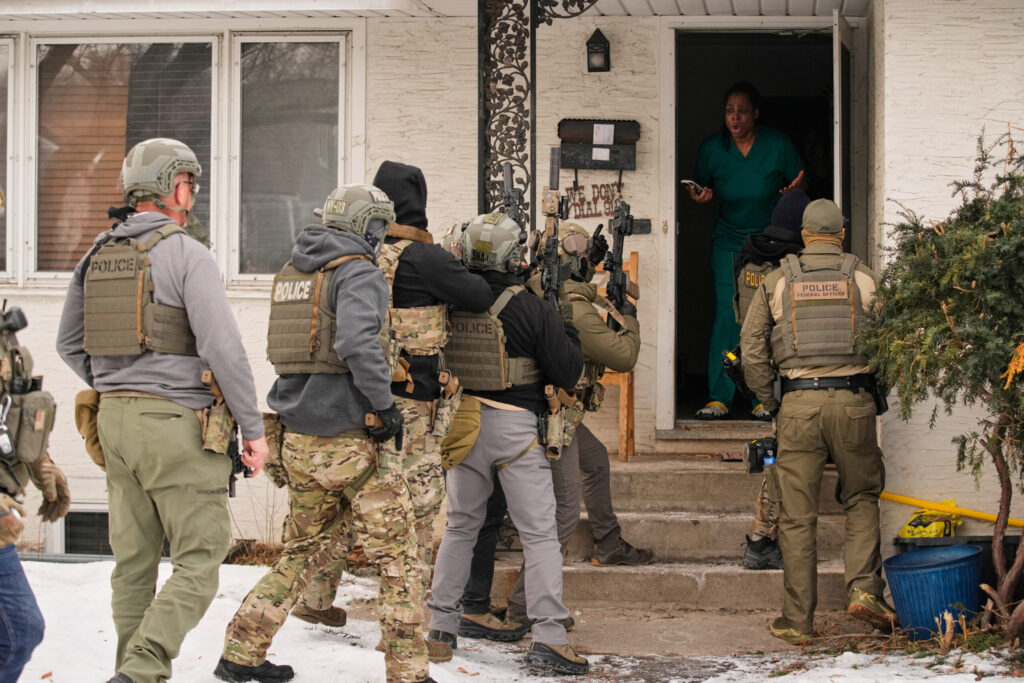
‘Doesn’t do enough’: House Democrats reject GOP deal on cutting ICE funding
Rachel Schilke, Washington Examiner
rachel.schilke.washington.examiner@gazetteedit.wpenginepowered.com
Updated 13 hours ago
House Democratic leaders are planning to oppose a bipartisan homeland security funding bill set for a vote this week, even after Republicans agreed to cut funding for Immigration and Customs Enforcement. A source familiar with House Minority Leader Hakeem Jeffries’s...

Vance heading to Minneapolis amid Trump’s ICE crackdown
Christian Datoc, Washington Examiner
christian.datoc.washington.examiner@gazetteedit.wpenginepowered.com
Updated 17 hours ago
Vice President JD Vance will deliver remarks and visit with ICE agents in Minneapolis Thursday, as President Donald Trump continues his immigration crackdown in the state. The vice president has been a critical messenger for the administration combating public opposition...
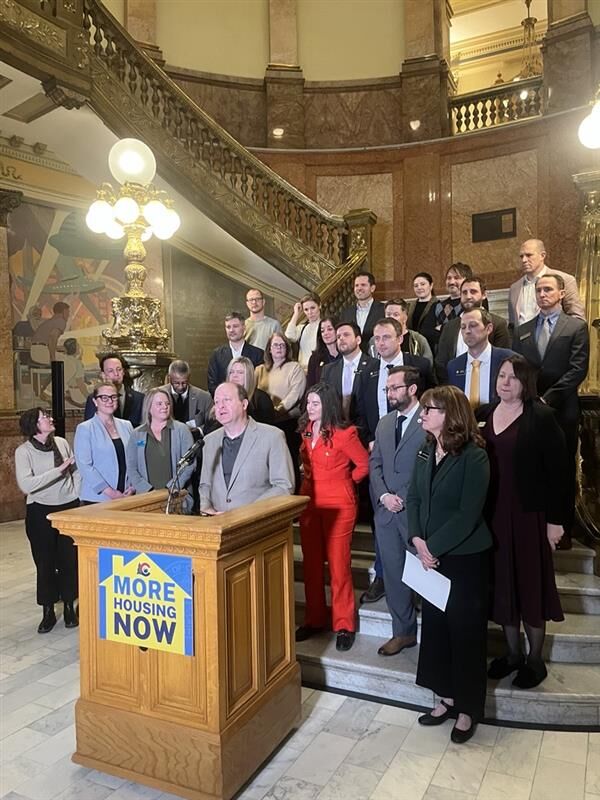
Gov. Polis, Democratic lawmakers introduce trio of housing affordability bills
Marissa Ventrelli
marissa.ventrelli@coloradopolitics.com
Updated 4 minutes ago
Democratic lawmakers were joined by housing advocates and Gov. Jared Polis at the Capitol on Wednesday to announce a trio of bills they say will increase affordable housing in Colorado. “This session, Colorado Democrats are focused on lowering costs, and...
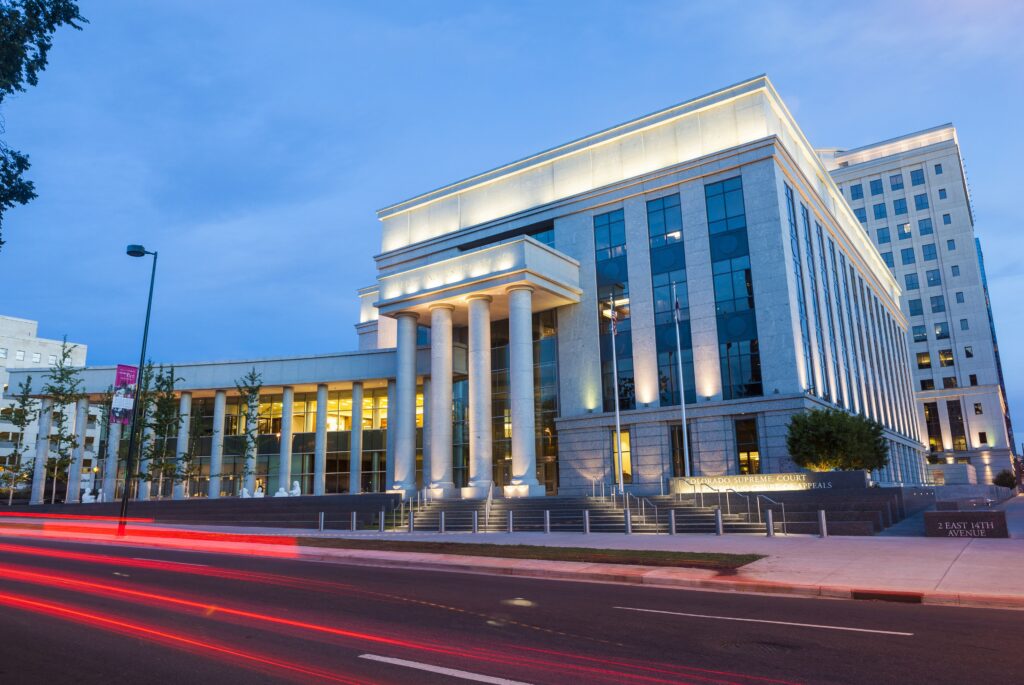
Colorado Supreme Court to hear cases on insurance coverage for COVID, witness credibility
Michael Karlik
michael.karlik@coloradopolitics.com
Updated 14 hours ago
The Colorado Supreme Court announced on Tuesday that it will decide the degree to which a virus or other hazard must affect a commercial property before it can trigger loss-or-damage coverage under an insurance policy. At least three of the...

Colorado halts wolf releases for 2026 as federal pressure mounts
Marianne Goodland
marianne.goodland@coloradopolitics.com
Updated 16 hours ago
Colorado Parks and Wildlife, facing mounting criticism from the Trump administration over its management of the wolf reintroduction program, announced Wednesday they will not bring in any new wolves to the state for the 2026 winter season. CPW was turned...

Colorado wildlife officials report first wolf death of 2026 as mortality count reaches 13
Marianne Goodland
marianne.goodland@coloradopolitics.com
Updated 16 hours ago
Colorado Parks and Wildlife announced late Monday that another British Columbia female gray wolf, known as 2504-BC, was found dead in northwest Colorado on Friday. No cause of death nor an exact location of where the wolf was found was...

Trump’s threats challenge Europe’s security and prosperity, EU chief says ahead of summit
Lorne Cook
lorne.cook@associatedpress.com
Updated 23 hours ago
BRUSSELS (AP) — U.S. President Donald Trump’s threats to annex Greenland and impose tariffs on its backers pose a challenge to Europe’s security, principles and prosperity, European Council President António Costa said on Wednesday. “All these three dimensions are being...
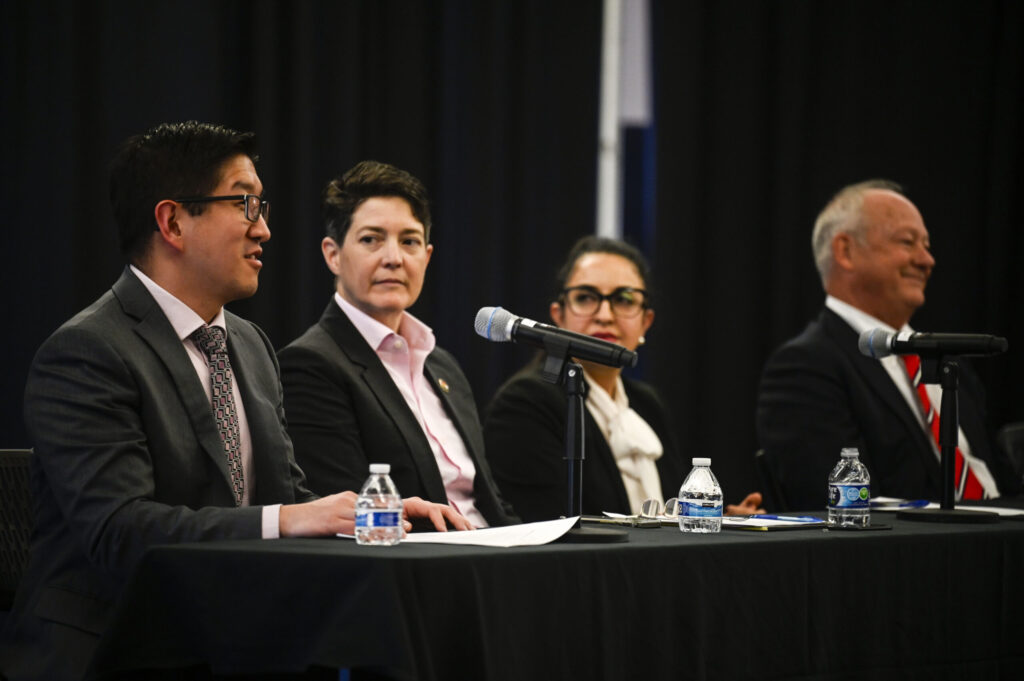
Federal judge says prisoner cannot sue for dog-bite injury
Michael Karlik
michael.karlik@coloradopolitics.com
Updated 24 hours ago
A federal judge concluded last week that a man cannot sue the government for injuries he sustained when a dog allegedly attacked him while he participated in a prison program. Kenneth M. Chandler, representing himself, was participating in the “FIDOS”...
PREV
PREVIOUS

Aurora caps food delivery fees, pushes voting on marijuana changes
The Aurora City Council voted on limitations to third-party food delivery fees and considered marijuana market changes during a meeting Monday night. Aurora lawmakers voted unanimously to finalize a temporary cap on fees paid by restaurants to third-party companies like Uber East and Grubhub for food delivery services. The cap will last until the end […]
Transit-oriented development plan for east Denver gets green light from city’s legislative arm
The Denver City Council approved a long-term vision on Monday night meant to guide growth and development over the next two decades in Denver’s Hale, Montclair, East Colfax and South Park Hill neighborhoods. After a one-hour public hearing and two-hour debate, the East Area Plan was adopted just before 11 p.m. in a 12-1 vote. Councilwoman Candi […]