

Let’s find out who’s up to the gubernatorial task post Polis | Paula Noonan
Gov. Jared Polis is bold and his policies are bolder than bold. That’s the paraphrase of his State of the State speech to open the 2026 General Assembly and start off his last year in office.
His sweeping review of his many accomplishments took some swipes at media who doubted his home-run-hitting prowess. He noted the Colorado Sun put up his campaign promises from his first run for governor to track his progress and then stopped posting in following years.
“Now I appreciate their help holding us accountable for our bold goals. Although, I did notice they stopped keeping track because it’s not as exciting when we keep delivering on our promises. But for me, it’s always been about delivering real results, not headlines.” Politicians are not generally known for their modesty, but maybe the governor expressed some in those words.
As usual in his State of the State speeches, the governor was not shy about listing his many accomplishments which include, according to his appraisal, outstanding kindergarten expansion, massive improvements in housing, reducing high taxes, keeping the Broncos in Denver, and the Sundance Film Festival. He enthused he got rid of the public school budget stabilization factor and found $470 million per year for transportation.
From the low-level person’s point of view, probably his greatest accomplishment occurred early in his term with his work on managing the COVID crisis. It’s easy to forget now how devastating the pandemic was, with effects continuing on public education and a more expensive Colorado landscape. He marshalled resources and countered conflicting messages and actions from Washington to carry the state through.
A review of his other initiatives shows work left on the playing field, as the governor would say. Young children are benefitting from his kindergarten expansion. He left undone serious reform to school finance and needed money for the public school system.
COVID left children in school the year of the crisis at a disadvantage. The chaos of moving from in-school to virtual schooling had a negative impact on base learning. Though many middle-class children have recovered, low-income minorities continue to experience the impact.
Logical consequences mean these children need more resources. Our current school financing formulas and state funding do not rise to the necessary levels. This underfunding is a decades-long issue, starting at the Great Recession in 2008-09. More than a generation of children have experienced insufficient public funding no amount of innovation and school choice can remediate. The governor has not stepped up to sponsor tax reform to bring more money to schools.
The legislature and governor can say they have resolved the budget stabilization challenge, but that’s been too little, too late. Public school dollars are under threat again with the severe cuts expected in the 2026-2027 General Fund. Looking back, some advances in the state have come at the expense of our public schools and students who received not enough money so other parts of the budget could get more.
Our core health care problems remain unresolved. Legislators and the governor put up the Colorado Plan which provides insurance for residents. But with cuts from the federal government and the state budget, insurance expense will rise beyond affordability for too many.
Some parts of the health care system have thrived financially, including large metro hospital systems. Rural hospitals and rural health care lives on thin margins and large distances traveled for care.
Too often, long waits for general medical care create patients who descend into medical crises. Emergency rooms are hard-pressed as these delays push patients to hospitals and higher health care delivery expense.
It took three years of effort, but a cohort of volunteers committed to some form of privately delivered but publicly funded health care finally got legislation passed to study how and whether to deliver such a program to Coloradans. They’ve raised more than $700,000 in private funds for the Colorado School of Public Health to evaluate the concept.
It will take some time for the work to be accomplished, but this comprehensive analysis of health care delivery may offer some solutions to our current convoluted and expensive health care delivery platform.
Housing and related homelessness continue as deep problems for the state. The governor cited his ADU legislation as an improvement, along with apartments with fewer fire exit stairs and more residences near transit hubs. A deep problem affects younger adults and families who cannot afford homes. The American dream of a house with two kids and a yard has dissolved into young adults with no children and an apartment shared with two or three others to cover the rent. Fortunately, a bigamy bill in this General Assembly will take that crime off the table for individuals co-habiting.
Home prices at $500,000 to start make a heavy lift. That impact ripples into public schools with fewer children attending causing school closings and resource consolidation. That impact affects neighborhoods and housing prices. Every dot connects to another dot. The public should pose these challenges to governor candidates. They are big problems requiring innovation and courage. Let’s find out who’s up for them.
Paula Noonan owns Colorado Capitol Watch, the state’s premier legislature tracking platform.


Hunting is a privilege, not a constitutional right | GUEST COLUMN
Colorado Politics
colorado-politics@coloradopolitics.com
Updated 5 hours ago
By Roland Halpern Colorado voters may soon be asked to place hunting and fishing in the state constitution. Proposition 302 would establish the right to hunt, fish and take wildlife using “traditional methods,” while declaring hunting and fishing are the...

DEA’s Miguel Chino describes Colorado’s place on the ‘fentanyl pill superhighway’ | The OpEdge Podcast
Tony Olivero
tony.olivero@gazette.com
Updated 13 hours ago
Miguel Chino, Acting Special Agent in Charge of the Drug Enforcement Administration’s Rocky Mountain Field Division, joins The OpEdge to paint the picture of Colorado’s place on America’s “fentanyl pill superhighways.” Chino updates Gazette and Colorado Politics Deputy Opinion Editor...

Colorado students push AI task force as schools navigate new tech era
Marissa Ventrelli
marissa.ventrelli@coloradopolitics.com
Updated 8 hours ago
A group of students is urging lawmakers to establish a task force on artificial intelligence in education to advise districts on how to ensure that pupils and educators use the technology effectively without becoming overly reliant on it. The students...
A right to buy a product? | Hal Bidlack
Hal Bidlack
hal-bidlack@coloradopolitics.com
Updated 1 day ago
A recent story in Colorado Politics caught my eye, as I learned of a “citizen initiative” that has qualified for the November ballot. It seems supporters of Initiative 177 have collected enough signatures, 146,165 legitimate ones out of a total...

Fourteen years after Aurora — we can’t afford to go backward | GUEST COLUMN
Colorado Politics
colorado-politics@coloradopolitics.com
Updated 1 day ago
By John Hickenlooper and Gabby Giffords Two Saturdays ago, a gunman shot and killed three people and wounded several others in Twin Falls, Idaho. This latest deadly shooting comes only days after we remembered the lives we lost 14 years...
U.S. Rep. Lauren Boebert’s son arrested, faces charges of sexual exploitation of minor
Matt Kyle
matt.kyle@denvergazette.com
Updated 1 day ago
U.S. Rep. Lauren Boebert’s son Tyler Jay Boebert has been arrested and accused of recording and sharing a video depicting himself having intercourse with a minor, according to court records. The case originated in Garfield County in Western Colorado and...
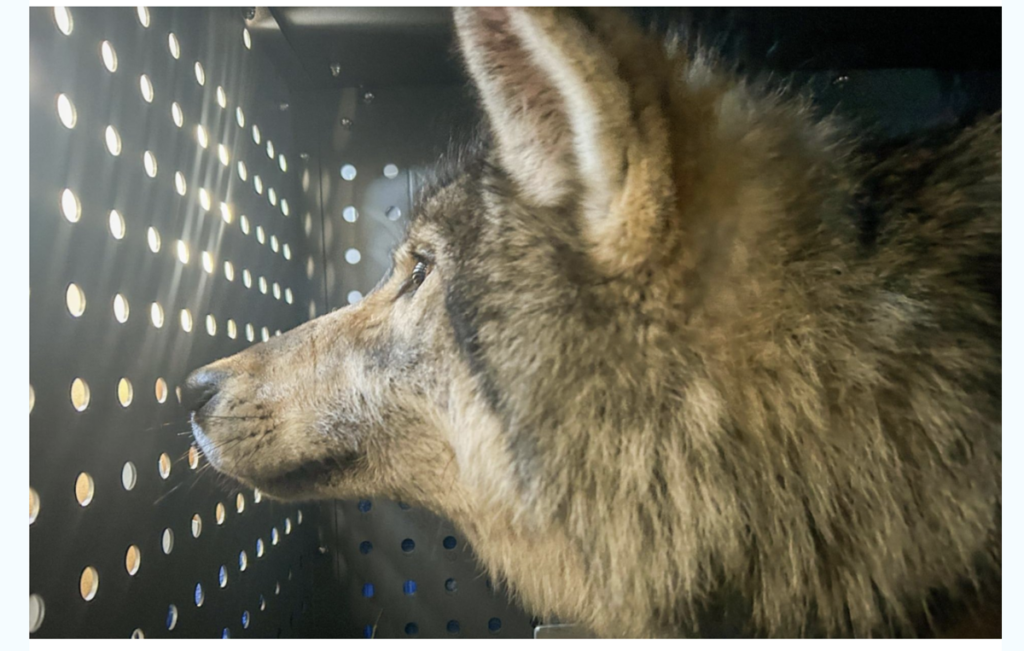
Hunter shot Colorado wolf after mistaking it for a coyote, wildlife office says
Marianne Goodland
marianne.goodland@coloradopolitics.com
Updated 12 hours ago
Colorado Parks and Wildlife said Monday that a female wolf from British Columbia that died in January was shot by a hunter who mistook her for a coyote. The wolf, identified as 2504‑BC, was one of 17 wolves relocated since...

A daring and fearless rescuer — is afraid of a debate | Dick Wadhams
Dick Wadhams
dick-wadhams@coloradopolitics.com
Updated 4 days ago
Victor Marx, the Republican nominee for governor who says he can exorcize demons and who claimed he has fearlessly rescued 45,000 women and children during 150 “high-risk” missions around the world, appears to be intimidated by the notion of debating...
Colorado’s ballot-initiative process again a battleground for deep pockets, special interests — not the people | Miller Hudson
Miller Hudson
miller-hudson@coloradopolitics.com
Updated 2 days ago
The Oxford English Dictionary defines a constitution as, “The set of fundamental principles according to which a state is constituted and governed, a body of rules prescribing the major elements of the structure and activities of any organization.” Somewhere in...

Democratic group aims Spanish-language TV ad at Gabe Evans in Colorado’s battleground 8th CD
Ernest Luning
ernest.luning@coloradopolitics.com
Updated 12 hours ago
A national group tied to House Democratic leadership launched a six-figure Spanish-language TV ad in Colorado this week targeting Republican U.S. Rep. Gabe Evans and the GOP’s signature budget legislation. The 30-second spot is part of $15 million in new...
PREV
PREVIOUS

We dream, we dare, we decouple — how Colorado turns values into policy | OPINION
By Kathy White Gov. Jared Polis’ final State of the State address was a clear victory lap. After eight years as governor, he used the moment to highlight accomplishments, reflect on progress and remind Coloradans what his administration has delivered. That is understandable. There is a real record to point to, and much of it […]

Enterprise fees surge as more of Colorado's budget escapes TABOR limits
More than 30 years after Colorado voters approved the Taxpayer’s Bill of Rights, a growing share of state spending now falls outside the voter-approved limits intended to restrain government growth. A new report shows that fee-funded “enterprises” — state-owned businesses exempt from TABOR’s revenue cap — have expanded dramatically, raising worries that lawmakers are increasingly […]