

Colorado governor candidates confront business climate, housing affordability woes
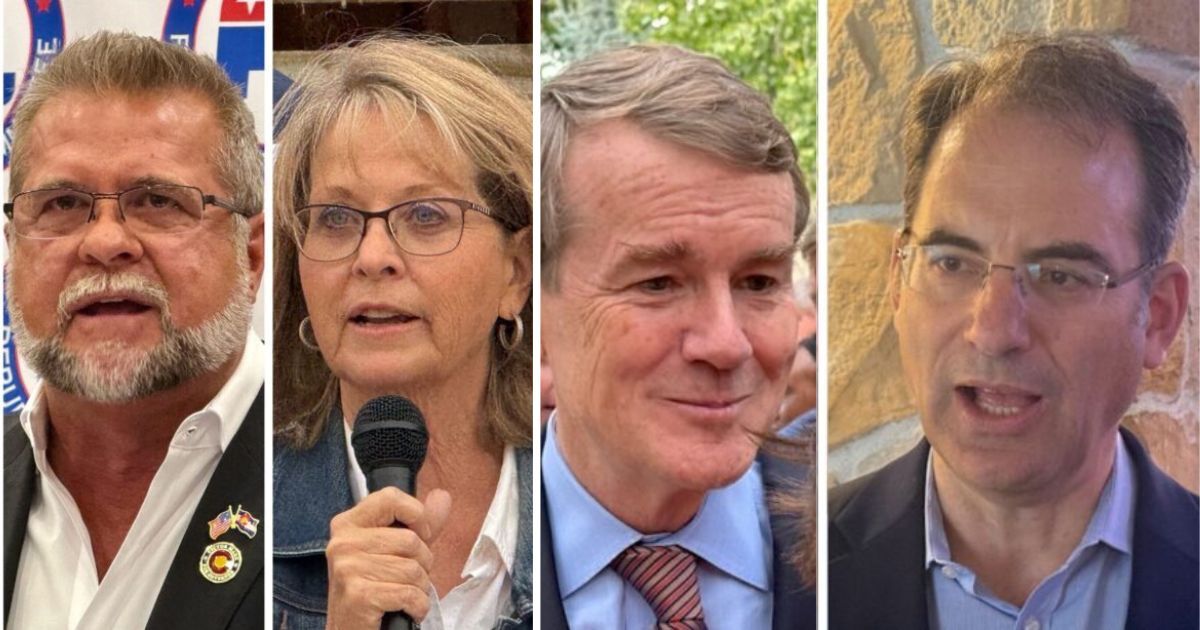
Four of the five major-party candidates for Colorado governor share common ground on two big issues: they see the perception that Colorado has become less business‑friendly as a serious concern, and they view housing affordability as central to the state’s economic future.
At a Thursday forum in Glendale, the two Democratic candidates — U.S. Sen. Michael Bennet and Attorney General Phil Weiser — joined two of the three Republicans — state Sen. Barbara Kirkmeyer and nonprofit leader Victor Marx— to discuss housing, data centers, land‑use policy, business regulation, and how to balance the state’s energy demands with carbon goals.
The forum — sponsored by 1st Bank/PNC and Land Title Guarantee and hosted by hosted by BOMA Denver, Colorado Concern, Downtown Denver Partnership, NAIOP Colorado and ULI Colorado — drew an audience of several hundred business leaders and was moderated by Colorado Politics Editor Luige del Puerto.
Weiser, in his remarks on business regulation and competitiveness, cited the example of a Colorado company that expanded into Oklahoma. Weiser said the CEO of Durango-based Agile Space Industries found “the wind at his back,” not in his face, when he wanted to expand. Much of that is due to the time it takes to get permits here, while in Oklahoma, it takes days, not months or even a year, as it is in Colorado, he said.
Colorado is also losing population. The state has been there before, when Gov. Roy Romer was in office in the 1980s. Romer, he said, believed in a “how can I help” style of leadership, one that brings people together to solve problems, the Democrat said.
Weiser said he has a “can-do, problem-solving” leadership style that he will bring to the governor’s office.
Kirkmeyer pointed to her 20 years as a county commissioner and the past six in the state Senate, where she serves as the ranking Republican on the Joint Budget Committee that recently finished crafting the state’s $48.8 billion budget. The committee tackled a budget deficit of more than $1 billion in crafting the state government’s spending plan for next year.
It’s important to get the state back on track, Kirkmeyer said, adding that eight years of one-party control have made an unaffordable mess of the state.
“I know where the problems are with state government,” she told the audience. “I know how to govern.”
Governors should ensure the state is open to business on Day One, and Kirkmeyer pledged to bring businesses and people back to Colorado.
Marx said he is the only non-politician among the candidates and that the challenges faced by businesses are created by politicians.
Colorado needs the business community to provide jobs for economic sustainability, and with businesses leaving, “we’ve got to turn some things around,” he said.
He acknowledged he isn’t an expert on business issues, but said he knows how to surround himself with those who are, asking the audience to join him to get things done.
Bennet said he is the only candidate with significant private-sector experience, beginning with his work for Phil Anschutz.
From there, he worked for then-Denver Mayor John Hickenlooper and later as the head of Denver Public Schools, before Hickenlooper appointed him to the U.S. Senate seat.
“I’m deeply worried about the direction Colorado is headed,” Bennet told the audience.
He said Colorado is losing businesses for the first time since the 1980s, including roughly 25% of its restaurants, and argued that Denver is now the “emptiest” large city in the country, a reference to a recent Wall Street Journal article, and the third‑least affordable.
“But I think that we can turn it around,” the Democratic senator said, pointing to state assets like space, national defense, energy and technology.
“The depth of these sectors is so much more profound than when I was working for Phil Anschutz all those years ago. And we have the imagination of the people of Colorado,” he added.
Candidates delve into Colorado’s one-party rule
What specific policy changes on land use, energy, permitting or taxation would the candidate prioritize in order to restore the state’s competitive edge?
When the state is under one-party control, said Weiser, it loses what Romer had brought to every conversation — what part of the truth is missing?
“When you have a regulatory policy conversation, and the people who would be affected by the regulation are not at the table, you’re not positioned to make good public policy,” Weiser said, adding a “cultural change” is required.
Weiser argued that when regulations stem from a single “anecdote” to a drafted bill and then becoming law, without the affected people ever feeling heard, it signals two needed cultural shifts — identifying the real problem a policy is meant to solve and evaluating whether the proposed solution actually works.

As an example, Weiser said the 2024 law regulating artificial intelligence went through the legislature too quickly and was signed too quickly. That shouldn’t have happened, he said.
“All of us could learn from that, and it could be better,” he added.
Kirkmeyer argued that the state’s challenges can’t be addressed by focusing on just one issue — whether it’s permitting delays, excessive permitting, over‑regulation, or high taxation. She said a governor must be prepared to evaluate all of these factors together and determine which should be prioritized.
She said she would task her executive directors on day one to claw back regulations that are overly burdensome and excessive.
Putting on her budget cap, Kirkmeyer pointed to last year’s special session, which, she said, primarily featured bills that raised taxes on corporations, rather than cut spending.
She would focus on fixes to the education system, where she said third graders are unable to read at a third-grade level. She also pledged to support healthcare industries and, with regard to taxation, not to ever call a special session that only increases taxes on businesses.
Marx cited housing affordability as his first priority, noting that it creates an environment that is not business-friendly.
“We’ve got to get people with competence back in positions of leadership and management of what’s been entrusted to us,” he said, adding that developing affordable housing is key.
He also pledged to protect the Taxpayer’s Bill of Rights, which requires a vote of the public before taxes can be raised.
Comparing the state to up to 15 years ago, Bennet said Colorado is no longer as competitive.
“We’ve allowed other places to compete more effectively,” he said, blaming the legislature, which he stressed hasn’t thought much about the “unintended consequences of mostly well-meaning legislation.”
Bennet’s plan, the U.S. senator said, is to build a coalition between families and businesses to address issues such as housing, child care costs and the lack of quality education.
Can Colorado balance carbon goals and energy affordability?
The candidates were also asked about balancing sustainability, carbon goals, and energy affordability.
Weiser pointed to solar, saying it’s the most abundant energy source right now. He would look to enable more solar and other clean energy sources, but that would also require more transmission infrastructure, he said.
He described his energy goals as clean, affordable, and resilient. The challenge, he said, is to achieve all three goals while keeping costs in mind.

Kirkmeyer indicated she isn’t on board with some of the state’s carbon reduction goals, but said that, given all the legislation passed in this area, the first step is to stop moving the goalposts.
She added, “Businesses, industry, everyone needs predictability, they need stability, and they need to be able to know what they’re investing in.” That’s why, she said, companies don’t invest in Colorado.
Marx said he would create a commission to develop solutions. He emphasized that, for example, the government should not mandate an all‑electric transition or assume that expanding government is inherently better.
Bennet argued that President Donald Trump has twice succeeded politically, in part, because of the energy and climate debates. He said that even though most Americans — and, if not them, their children — accept that climate change is real, these issues continue to shape voter behavior.
“We’ve lost to a person whose energy policy is literally Sarah Palin’s cartoon version of drill, baby, drill,” Bennet said. That energy policy for the United States, he said, is not good for the oil and gas industry, the “renewables” sector or innovation, he said.
Trump and Chris Wright, his energy czar, has vowed to “unleash” American energy and reverse policies they said have choked the oil and gas sector.
Colorado can lead in the transition to “renewable” energy, he said, but the state must meet the tests on affordability and reliability.
“That doesn’t mean that we should back off our 2050 climate goals. I think the only way we can achieve them is if we do have a balance,” he added.
The candidates received the questions in advance of the forum.

2026 Legends of Agriculture to be honored at fundraising dinner | NONPROFIT REGISTER
Thelma Grimes
thelma.grimes@coloradopolitics.com
Updated 12 hours ago
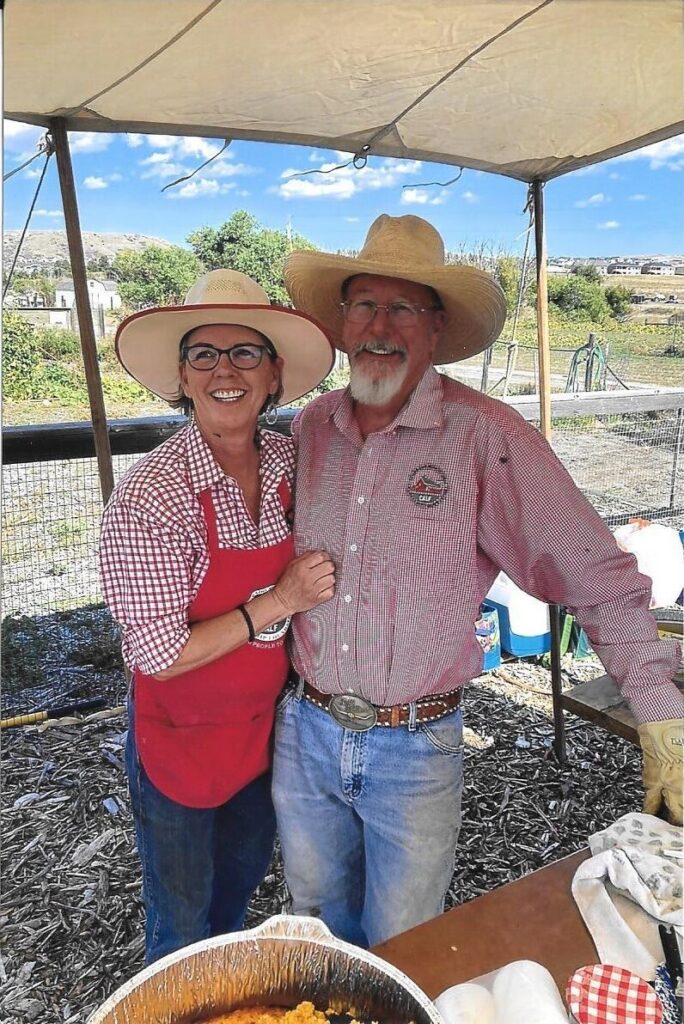
COLORADO AGRICULTURAL LEADERSHIP FOUNDATION Castle Rock News: Mark and Teri Moore have been selected as the 2026 Legends of Agriculture and will be honored at a Sept. 18 dinner benefiting the Colorado Agricultural Leadership Foundation (CALF). The event begins at 5 p.m. at CALF’s...
Colorado housing laws take effect, expanding tools for affordable and workforce housing
Marissa Ventrelli
marissa.ventrelli@coloradopolitics.com
Updated 2 days ago
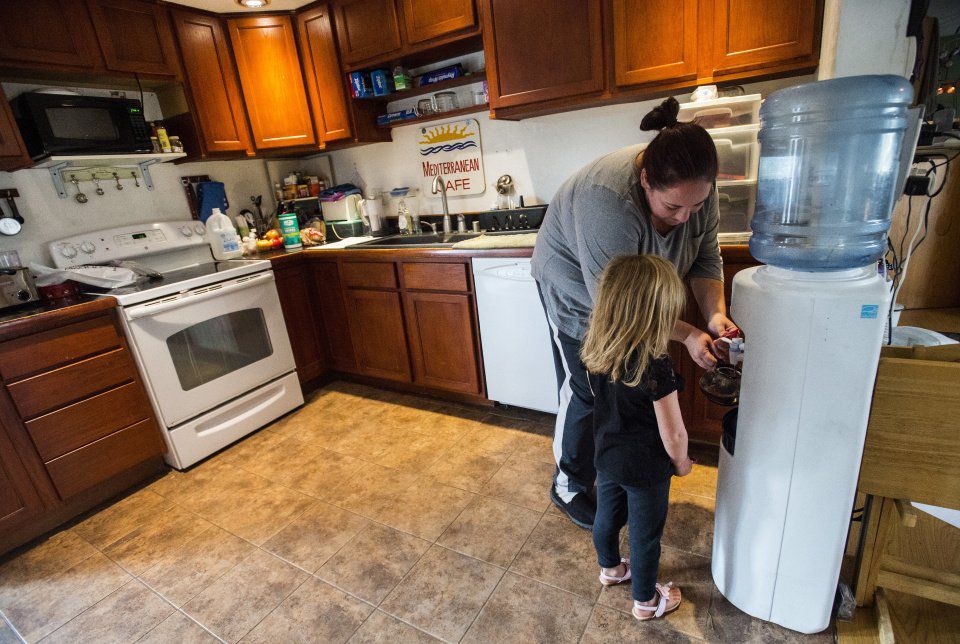
New housing laws taking effect on Aug. 12 in Colorado aim to boost affordability, improve homelessness response and ensure safer water systems for mobile‑home communities. The first bill, Senate Bill 001, allows municipalities to sell county- or town-owned property to...

Colorado drivers tap ‘Montana loophole’ to avoid high vehicle registration and tax costs
Marianne Goodland
marianne.goodland@coloradopolitics.com
Updated 2 days ago
Coloradans looking to avoid high vehicle registration fees have turned to what’s known as the “Montana loophole” — a strategy that surfaced recently at a luxury car event near the Cherry Creek Mall. Here’s how it works. A Colorado resident...

Denver mayor promises universal childcare, housing expansion in city address
Deborah Grigsby
deborah.smith@denvergazette.com
Updated 2 days ago
Nearly a year after Denver cut city jobs to close a $250 million budget gap, Mayor Mike Johnston used his third State of the City address to promise universal childcare and 20,000 homes as part of a new redevelopment vision...
Douglas County tables Crowsnest development proposal
Nicholas Fogleman
nicholas.fogleman@denvergazette.com
Updated 2 days ago
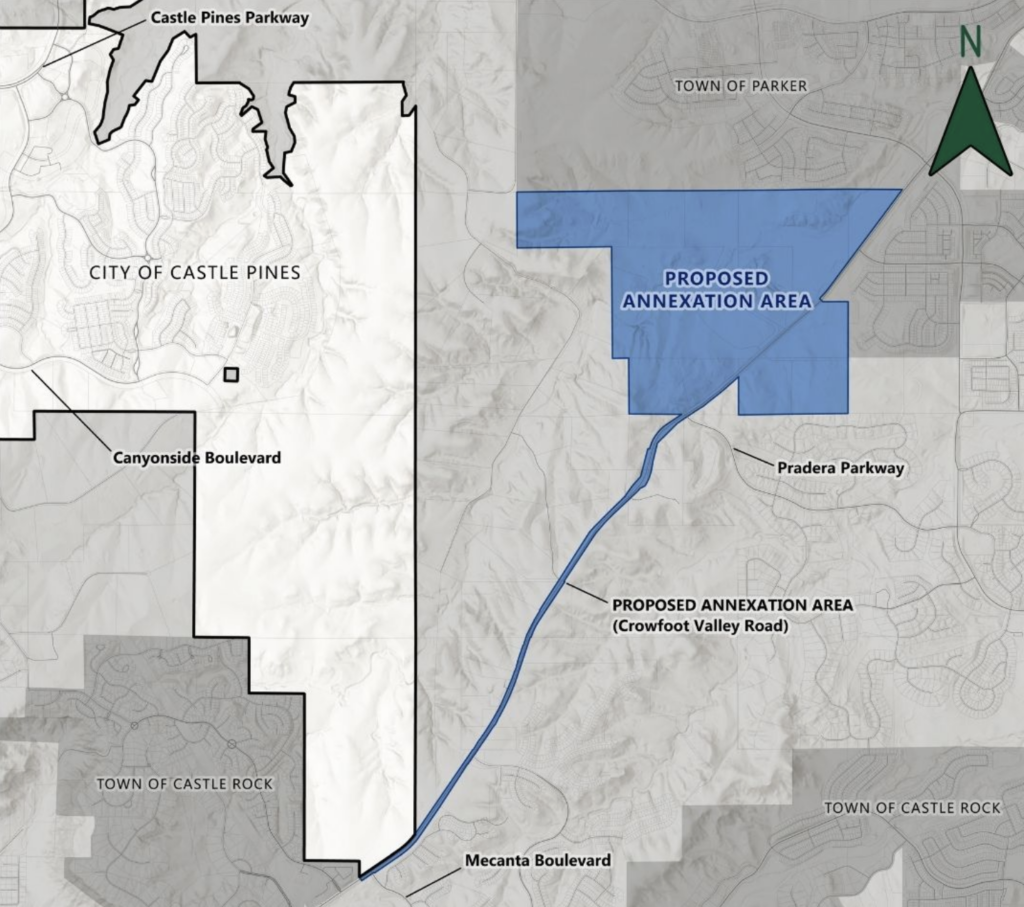
A proposal that could pave the way for future residential development in Douglas County will receive additional review after the Planning Commission voted Monday to table the Crowsnest land-use application following a lengthy public hearing. The application seeks to change...

Survey: Voters in Colorado’s 8th Congressional District back federal AI regulations
Marissa Ventrelli
marissa.ventrelli@coloradopolitics.com
Updated 3 days ago
A majority of both Democrats and Republicans in one of Colorado’s most competitive congressional districts say they support federal regulations on artificial intelligence, according to a recent survey. Members of both major parties residing in the state’s 8th Congressional District...
Aurora church tied to group that exploited homeless people is under scrutiny
David Migoya
david.migoya@gazette.com
Updated 3 days ago
Two regional Seventh-day Adventist conferences that oversee the activities of its member churches across several states have launched inquiries into an Aurora-based congregation tied to a Medicaid operation that exploited the homeless. The Rocky Mountain Conference and the Central States...

Aurora updating housing strategy, seeking residents input
Kyla Pearce
kyla.pearce@gazette.com
Updated 3 days ago
Aurora officials are updating the city’s housing strategy and asking for feedback from residents in a series of upcoming sessions. One session will happen in each ward starting on Wednesday. Wednesday’s session for Ward I takes place at the Martin...
Run for the Ring has a participation level for everyone | NONPROFIT REGISTER
Joanne Davidson Special to Colorado Politics
joanne-davidson-special-to-colorado-politics@coloradopolitics.com
Updated 6 days ago
CHILDREN’S DIABETES FOUNDATION Aurora News: The 12th annual Run for the Ring takes place on Aug. 1 and it has several participation levels. You can either walk or run a 5K course that begins and ends at the Barbara Davis Center for Diabetes on...

Record utility rate requests hit $9.2 billion nationwide in second quarter
Scott Weiser
scott.weiser@gazette.com
Updated 1 week ago
Colorado had no requests last quarter Electric and gas utilities sought a record $9.2 billion in rate increases nationwide during the second quarter, according to a new analysis by the consumer advocacy organization PowerLines, as utilities continue seeking billions for...
PREV
PREVIOUS

Vice President Vance to USAFA grads: Honor tradition, innovate for future
As artificial intelligence and space defense become more prevalent in warfare, Vice President JD Vance told the 2026 Air Force Academy graduating class to uphold their standards while embracing innovation on a cloudy Thursday morning. Marking the academy’s 68th graduating class and the United States of America’s 250th anniversary, Vance told this year’s 931 graduating […]
Gov. Jared Polis vetoes bills dealing with state budget, social media measure tied to Evergreen High School shooting
Gov. Jared Polis on Thursday issued the first vetoes of the 2026 legislation, striking down a social media bill that he also rejected a year ago. He rejected a total of four, including a bill that was intended to help balance the 2026-27 state budget. The measure — House Bill 1355 — was among the […]